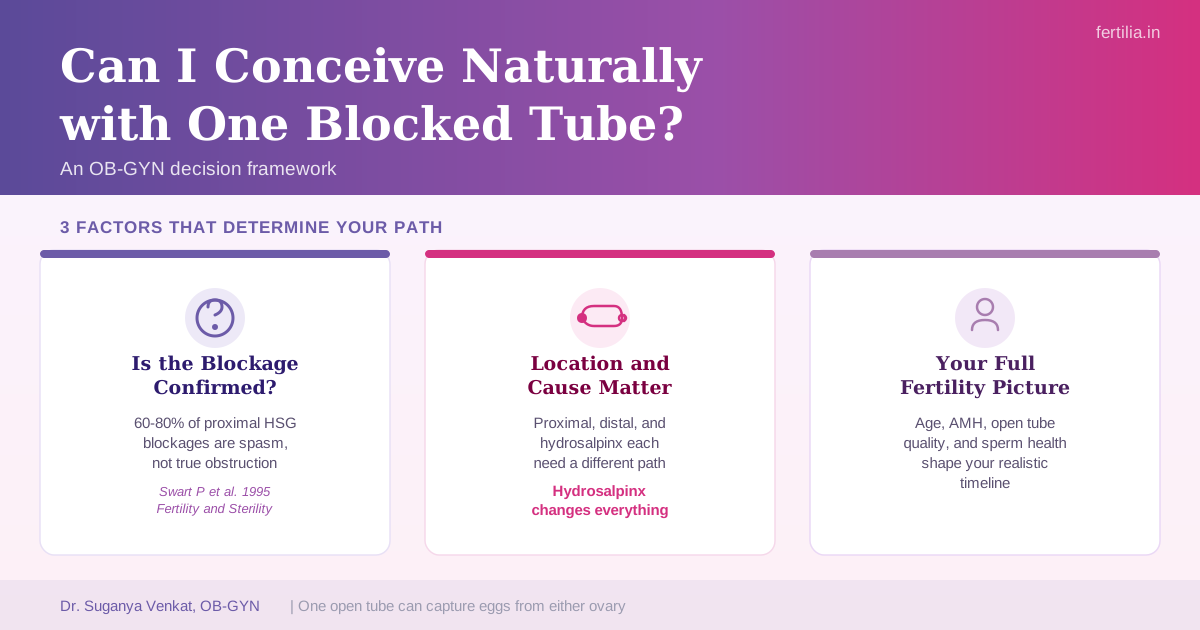
Yes, natural conception is possible with one healthy open fallopian tube. A report saying the other tube is blocked does not, by itself, mean you need IVF. The decision depends on whether the blockage is confirmed, where it is, whether there is a hydrosalpinx, and the fertility assessment of both partners.
If you have the report in front of you, look for three details: which side has free spillage, where dye stops on the other side, and whether the tube looks swollen. Those details are more useful than the word “blocked” alone.
I’m Dr. Suganya Venkat, an OB-GYN with 15+ years of experience. This guide explains how to discuss natural attempts, further testing and treatment with your doctor. The blocked fallopian tubes guide covers the causes and diagnostic tests in more detail.
Why One Open Tube Can Work for Both Ovaries
The open end of a fallopian tube sits near the ovary but is not fixed to it. It can sometimes pick up an egg released from the opposite ovary. That means ovulation on the side of a blocked or absent tube does not automatically make that cycle unusable.
Ross et al. studied spontaneous pregnancies after removal of one tube for an ectopic pregnancy. The corpus luteum, which indicates the ovary that released the egg, was on the opposite side to the remaining tube in 266 of 842 pregnancies (31.6%). This documents opposite-side pickup; it does not tell us the chance of conceiving in any given cycle or prove how efficient pickup is on either side (Human Reproduction, 2013, PMID 23381619).
The study involved women who had already conceived after salpingectomy, not all women trying with one blocked tube. Its percentage should not be used as your pregnancy probability. If you have had an ovary or tube removed, the guide to pregnancy with one ovary or one fallopian tube explains the anatomical differences.
When a Blocked-Tube HSG Result Needs Confirmation
A proximal or cornual block is near the junction between the uterus and tube. Temporary muscle contraction, mucus or debris can stop dye passing there and mimic permanent scarring.
In a prospective study by Dessole et al., 40 women with unilateral or bilateral proximal obstruction had a second HSG about one month later. Both tubes were patent in 24 of them, or 60 percent (Fertility and Sterility, 2000, PMID 10785234). This small study supports checking an uncertain result. It does not establish that all initial obstructions were caused by spasm, or that the same proportion applies to every centre.
A distal obstruction at the ovarian end, a hydrosalpinx, or a finding that fits prior infection or surgery deserves a different assessment. Your doctor should review the actual images as well as the report.
Possible next steps include repeat HSG, an ultrasound contrast test, or selective salpingography with possible tubal cannulation. Laparoscopy can inspect the surrounding pelvis when there is a reason for surgery, but is not a compulsory confirmation test for everyone. ASRM’s Fertility evaluation of infertile women, 2021 recommends a least-invasive approach tailored to the clinical question.
Before paying for another test in India, ask the centre:
- Will this test document each tube, or only show that fluid reaches the pelvis? A basic saline cavity scan cannot always distinguish one open tube from two.
- Is this a diagnostic test only, or could cannulation be performed if a proximal obstruction persists?
- Can I bring the original HSG images for review first?
- What is the full cost, including contrast, medicines and any separate procedure fee?
The HSG report walkthrough translates terms such as cornual block, free spill and loculation.
The Four Factors That Determine Your Path
1. Where Is the Blockage?
Proximal blockage without distal disease: selective salpingography or cannulation can sometimes clear mucus or debris. Restoring dye passage does not guarantee normal tube function. If the other tube is healthy, treating an isolated unilateral proximal obstruction is not always necessary. ASRM’s Role of tubal surgery in the era of assisted reproductive technology makes this point explicitly (2021, PMID 33642065).
Distal blockage or adhesions near the ovarian end: a surgeon may consider repair when damage is limited. With extensive scarring or a severely damaged inner lining, reopening a tube may not restore its ability to transport an egg safely. The choice between repair and IVF depends on anatomy, other fertility factors and the surgeon’s experience, as described in that same ASRM opinion.
Hydrosalpinx: a damaged, fluid-filled tube needs a separate discussion, especially before IVF. It is covered below.
2. What Is Causing the Blockage?
Prior pelvic infection, endometriosis or surgery can affect the tube itself or create adhesions around it. The cause helps your doctor judge whether repair is likely to help and whether the apparently open tube also needs closer assessment.
Genital tuberculosis is a relevant possibility in India when the history or imaging suggests it. But a blocked tube is not a TB diagnosis. The workup may require tissue sampling for culture, molecular testing and histology; no single negative test reliably excludes genital TB. A Mantoux test alone cannot establish active genital infection. Treatment can control infection without reversing established scarring, so the anatomy still matters afterward (Tzelios et al., Open Forum Infectious Diseases, 2022, PMID 36447614).
If you have been treated for TB, take the original test results, treatment record and any operation notes to your appointment. These help distinguish suspected active infection from old damage rather than repeating a generic panel.
A tube removed after an ectopic pregnancy is absent rather than blocked. If this is your history, ask about the condition of the remaining tube and early monitoring of your next pregnancy. Our ectopic pregnancy guide explains that follow-up.
3. Your Age and Ovarian Reserve
Age affects fertility and helps guide how long a supervised natural-conception trial is reasonable. AMH and antral follicle count help predict response to ovarian stimulation, but they do not count the number of natural cycles you have left. A low AMH result alone does not establish that natural conception is impossible.
ASRM’s 2021 fertility-evaluation opinion says ovarian reserve tests should support, not replace, counselling based on age and diagnosis. The fertility workup guide explains how the results fit together.
4. The Open Tube and the Rest of Your Fertility Assessment
Free dye spillage confirms a route through the tube. It does not directly test its microscopic lining or exclude adhesions that affect egg pickup. Further assessment is appropriate when the history, symptoms or images suggest disease, not automatically for every woman with one open tube.
Ovulation and your partner’s semen analysis matter too. Assessing both partners before deciding on a natural trial avoids making a plan from the HSG alone.
Want help understanding your HSG and the rest of your workup? Book an online consultation with Dr. Suganya on WhatsApp (₹399, video or phone, anywhere in India).
How Hydrosalpinx Changes the Plan
Hydrosalpinx means a tube is damaged, blocked and distended with fluid. Fluid reaching the uterus may impair implantation through altered endometrial receptivity, mechanical flushing or a possible direct effect on embryos. These are proposed mechanisms; saying the fluid is always “toxic to embryos” overstates what is known.
ASRM’s 2021 tubal-surgery opinion summarises evidence of poorer IVF outcomes with hydrosalpinx and supports removal or proximal occlusion before IVF for communicating hydrosalpinges when repair is unsuitable.
The randomised trial by Strandell et al. found delivery rates per included patient of 28.6 percent after salpingectomy versus 16.3 percent without it (P = 0.045). Clinical pregnancy rates per included patient were not statistically significantly different (P = 0.067). Benefits were also evident in the subgroup with ultrasound-visible hydrosalpinges (Human Reproduction, 1999, PMID 10548619). These findings concern IVF, not natural-conception rates.
For someone trying naturally with a healthy opposite tube, evidence is more limited and includes small observational series. Options can include repair in selected mild cases, removal or occlusion, followed by an individual conception plan. Removing one irreparably damaged tube does not automatically mean IVF is needed, but surgery has risks and cannot be promised to improve every woman’s fertility. Ask what is known about both tubes before deciding. The guide to hydrosalpinx and natural conception covers this discussion separately.
A Realistic Timeline for Trying Naturally
Arrange the fertility assessment now when tubal disease is known or suspected. The usual advice to wait 12 months under age 35 or six months from age 35 applies when there is no known cause requiring earlier assessment. ASRM’s 2021 fertility-evaluation guidance recommends evaluation without delay for suspected tubal disease. This means getting an informed plan, not automatically starting IVF.
After assessment, agree on three things with your doctor:
- Whether natural attempts are appropriate: considering both tubes, hydrosalpinx, ovulation, semen findings and your preferences.
- A review date: based on your age, how long you have already been trying and any treatment undertaken. An HSG should not reset the clock to another full year.
- What would change the plan: an unsuccessful agreed trial, a new finding, or a change in your preferences about treatment.
There is no universal age-37 cutoff or AMH value that requires every woman with one open tube to go straight to IVF. Your doctor can explain why a shorter or longer trial makes sense for you.
What the Research Can Tell You About Pregnancy Chances
There is no reliable single percentage for all women with one blocked tube. Studies mix different causes, levels of damage, procedures and follow-up periods. Pregnancy rates after repairing a damaged tube cannot simply be applied to a woman trying through her other, untreated tube.
ASRM’s 2021 tubal-surgery opinion describes much better surgical outcomes with limited disease than with severe damage. It also warns that cumulative pregnancy rates after surgery and per-cycle IVF rates are not directly comparable. Ask whether any percentage quoted to you refers to pregnancy or live birth, over what period, and in women with anatomy similar to yours.
Tracking Your Cycle with One Open Tube
Ovulation tracking can help with timing, but it cannot test whether a tube is functioning. LH strips may help identify the fertile window; follicular ultrasound can show which ovary has the developing follicle when monitoring is clinically useful.
Do not automatically skip a natural-attempt cycle because ovulation appears to be on the blocked side. Opposite-side pickup is possible, and the Ross study above did not establish per-cycle odds by ovulation side. Nor does every woman with regular cycles need repeated scans simply because one tube is blocked. Ask what monitoring would change in your treatment before paying for a series of scans.
The couple’s guide to natural conception covers timing alongside the broader workup.
When to Discuss IVF Rather Than Continue Natural Attempts
A specialist may recommend IVF when both tubes are confirmed unusable, tubal damage is extensive, there is a substantial male factor, or an agreed period of trying has not led to pregnancy. Age and expected response to treatment also inform the discussion. Hydrosalpinx needs its own management plan before embryo transfer.
IVF bypasses the tubes, but that does not guarantee an outcome or make an untreated hydrosalpinx irrelevant. Ask your specialist to explain the likely benefit, alternatives and costs for your circumstances.
Fertilia’s 90-day Fertility program can support a doctor-led plan alongside your investigations. Lifestyle support cannot reopen a scarred tube or replace a procedure when one is needed.
Practical Takeaways
- Get the images reviewed before treating an uncertain proximal HSG finding as permanent.
- Ask where the blockage is and whether there is a hydrosalpinx or damage around either tube.
- Assess both partners, including ovulation and semen findings.
- Agree on a review date instead of adopting a generic six- or twelve-month waiting rule.
- After a positive pregnancy test, contact your doctor early to plan confirmation of the pregnancy’s location.
The free Guide to Getting Pregnant helps you organise the workup and your questions.
Frequently Asked Questions
Can I get pregnant if one fallopian tube is blocked? Yes, if the other tube is healthy and functioning, natural conception is possible. The location and cause of the blockage, ovulation, age and semen findings guide the plan.
Ek tube band hone par kya pregnancy ho sakti hai? Yes, pregnancy can happen naturally with one healthy open tube. A report showing one blocked tube does not automatically mean IVF is needed; ask whether the finding is confirmed and whether the other tube is healthy.
What is the chance of getting pregnant with one blocked fallopian tube? There is no single dependable percentage for everyone. Figures from tubal-repair studies or from women who already conceived do not give your monthly probability. Ask for an estimate based on your diagnosis and a clear review date.
Does one blocked tube mean I need IVF immediately? No. Isolated unilateral proximal obstruction without other tubal abnormalities may not even need an intervention, as discussed in ASRM’s 2021 tubal-surgery opinion (PMID 33642065). IVF becomes more relevant when other findings make natural conception unlikely or when an agreed trial has not worked.
Can the other tube compensate for the blocked one? It can sometimes pick up an egg from the opposite ovary. This is documented after removal of one tube, but it cannot be guaranteed in every cycle. It is not a reason to calculate your chances as exactly half those of someone with two open tubes.
How does a hydrosalpinx affect my chances with the other tube open? It needs a separate specialist assessment. The evidence for treatment before IVF is stronger than the evidence about natural conception. With a healthy opposite tube, natural pregnancy may still be possible after appropriate management; removal or occlusion does not automatically require IVF afterward.
I have had one ectopic pregnancy. Can I try naturally with the remaining tube? Often, yes, after your doctor has reviewed the remaining tube and your recovery. RCOG’s ectopic-pregnancy information advises early contact after a positive test and notes that an ultrasound may be offered at six to eight weeks. Pain or bleeding needs earlier assessment; severe abdominal pain, shoulder-tip pain, dizziness or fainting warrants urgent in-person care rather than waiting for a scheduled scan.
Not sure which findings matter in your report? Message Dr. Suganya’s team to arrange an online consultation and bring your HSG images, semen analysis and previous treatment records. We can help you understand the options alongside your treating doctor.