A woman came to see me a few months ago. She had PCOS that was diagnosed in her late 20s, managed with the pill for most of her 30s, and now she had stopped the pill and wanted to start a family. She was 38.
Her GP had told her to go straight to IVF because of her age. A relative had told her that PCOS makes things even harder. She arrived with both of those voices in her head, wanting a clearer picture. “What are my actual chances?”
That question, PCOS plus 35-plus, what does it mean for natural pregnancy, comes up more than almost any other in consultations. The picture is more nuanced and in several ways more reassuring than either the alarmist or the oversimplified version you will find online.
This post works through what 35 actually does to fertility, what PCOS adds to that picture (including something that consistently surprises women), and what the practical preparation window looks like for a woman in her mid-to-late 30s with PCOS.
What 35 Changes Biologically
The fertility decline after 35 is real. It is also frequently misrepresented.
The biology: as women age, the process of egg maturation becomes less precise. When an egg prepares for release, the chromosomes must separate in a step called meiosis. This process becomes more error-prone with age, increasing the proportion of eggs that carry chromosomal abnormalities. An abnormal egg, if fertilised, is unlikely to implant or will miscarry early.
Ovarian reserve, the number of resting follicles remaining in the ovaries, also declines with age. AMH (anti-Mullerian hormone) is the standard blood marker for reserve and naturally falls from its peak in the mid-20s through the 30s and 40s.
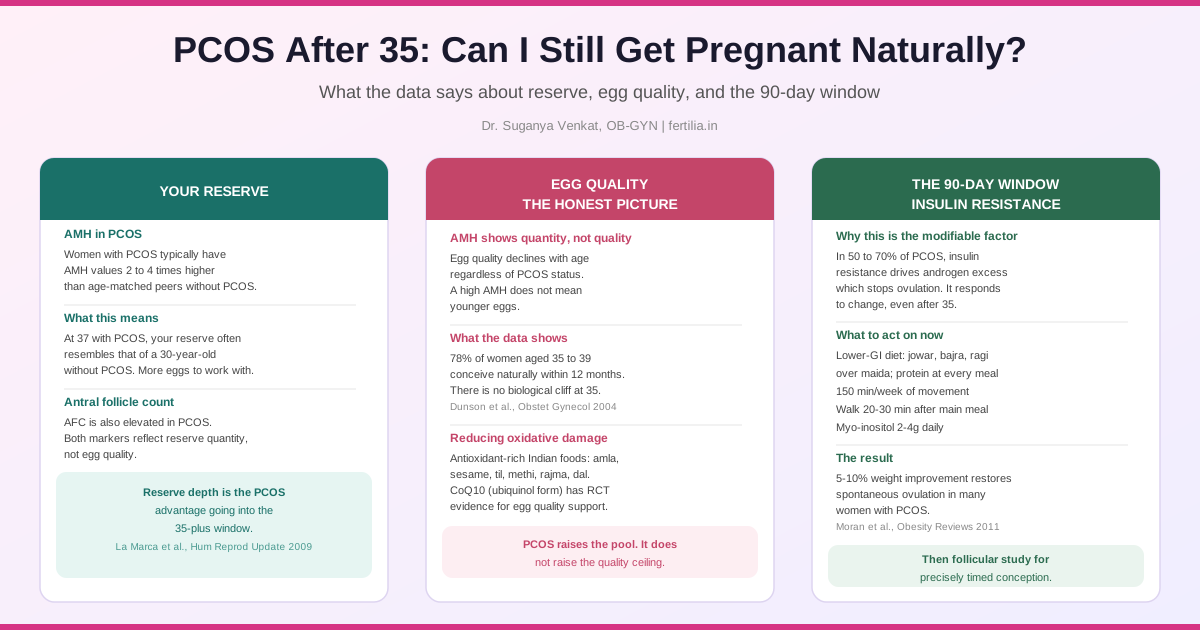
What the data says: Dunson and colleagues (Obstet Gynecol, 2004, PMID 14704244) followed couples trying to conceive naturally over 12 months and found that women aged 35 to 39 had a conception probability of approximately 78%, compared to around 92% in women aged 19 to 26. By 40 to 44, the rate was approximately 53%.
The 78% figure for 35-to-39-year-olds is worth pausing on. It is meaningfully lower than the early 20s, but nearly four in five women in that group conceived naturally within a year. There is no biological cliff at 35. The change is a gradual slope, not a sudden drop.
For the full fertility-by-age evidence base, the fertility after 35 guide covers this comprehensively. What this post adds is the PCOS layer on top of that.
PCOS at 35: The Reserve Advantage
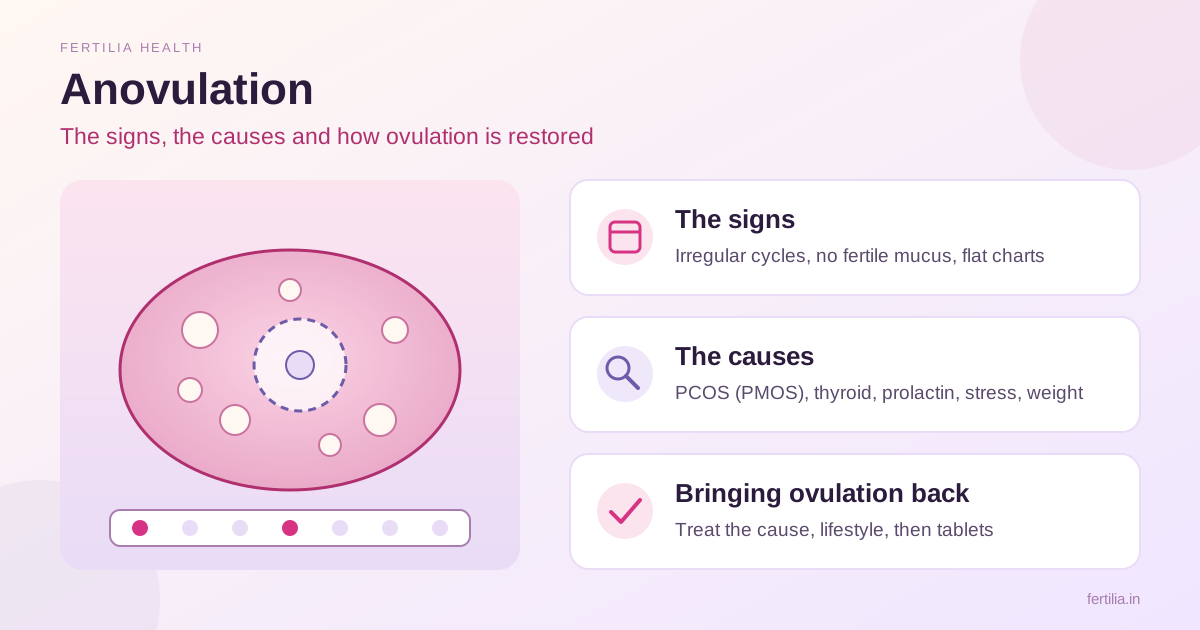
PCOS (also called PMOS: polyendocrine metabolic ovarian syndrome, the new international name since 2026) is primarily a problem with ovulation. The hormonal environment in PCOS disrupts normal follicle development. Instead of one dominant follicle maturing and releasing an egg each cycle, multiple small follicles stall partway through. The result is irregular cycles, unpredictable ovulation, and in some months no ovulation at all.
This is the central PCOS barrier to natural conception: not that eggs are unavailable, but that they are not releasing reliably.
Now for the part that surprises most women: PCOS is associated with significantly higher ovarian reserve than average. AMH values in women with PCOS are commonly two to four times higher than in age-matched women without PCOS (La Marca et al., Human Reproduction Update, 2009, PMID 19793843). Antral follicle counts are similarly elevated.
This pattern holds through the 30s. A 37-year-old with PCOS very often has an AMH value in the range of a 30-year-old without PCOS.
What this means, and what it does not mean: higher AMH in PCOS reflects a larger pool of resting follicles. This is the quantity dimension of ovarian reserve, and it is a genuine advantage compared to age-matched peers. What it does not tell you is egg quality. Egg quality declines with age in PCOS the same way it does for everyone. Higher reserve means more eggs to work with; it does not mean those eggs are younger.
The net picture for PCOS at 35-plus: reserve depth is a relative advantage compared to non-PCOS peers, but the ovulation problem remains the primary obstacle. Fix the ovulation problem, and that reserve advantage becomes meaningful.
To understand where your own reserve stands, the AMH guide for Indian women and the antral follicle count guide explain what the tests measure and how to interpret the numbers.
The Modifiable Factor: Insulin Resistance
In approximately 50 to 70 percent of women with PCOS, the driving mechanism is insulin resistance (Dunaif, 1997, PMID 9227444). Excess circulating insulin signals the ovaries to produce more androgens, particularly testosterone and DHEA-S. This androgen excess is what stalls follicle development and suppresses ovulation.
Why this matters for the over-35 question: insulin resistance is not age-locked. Egg quality declines gradually and cannot be reversed. Insulin resistance, by contrast, responds to targeted changes, often within weeks.
Three months of focused insulin-resistance management can restore spontaneous ovulation in women with PCOS. Kiddy and colleagues (Clinical Endocrinology, 1992, PMID 1559293) found that in obese women with PCOS, losing more than 5 percent of body weight was associated with a return of more regular cycles, and several of the women conceived. The biology that drives this does not stop responding at 35.
The changes that move insulin resistance most reliably:
Diet: Replacing rapid-release carbohydrates (white rice in very large portions, maida-based foods, sugary drinks) with lower-glycaemic options at each meal, and increasing protein with every meal: dal, rajma, paneer, egg, fish, or chicken. The goal is reducing the glucose spike after eating, which reduces the insulin spike that follows. Adding sabzi at every meal (not as an afterthought) and replacing some maida with jowar, bajra, or ragi roti makes a practical difference.
Movement: 150 minutes per week of mixed-intensity activity. A 20 to 30 minute walk after the main meal of the day has direct evidence for reducing post-meal glucose and is one of the most accessible daily changes.
Myo-inositol: A supplement with consistent evidence in insulin-resistant PCOS. Multiple randomised controlled trials have shown that 2 to 4 grams daily improves insulin sensitivity, reduces androgen levels, and restores ovulation. It is available in India without prescription.
Metformin: Where insulin resistance is significant and lifestyle changes alone have not normalised the cycle after two to three months, metformin (titrated from 500mg upward, by prescription) is a reasonable addition to restore ovulation.
The insulin resistance and PCOS guide covers the evidence and practical application. For the South Asian PCOS picture specifically, including why insulin resistance is particularly common in Indian women with PCOS, the PCOS and insulin resistance in Indian women post covers that ground.
If you have PCOS and are past 35 and want a clear picture of your specific situation, a consultation is the most efficient place to start. Your reserve numbers, the PCOS driver, and your partner's semen analysis together tell a much more specific story than age alone.
Message Dr. Suganya on WhatsApp to set up a video call.
The 90-Day Preparation Plan
For a woman with PCOS at 35-plus who wants to try naturally, three months of preparation covers both the assessments and the interventions.
Months 1 and 2: Get the baseline picture
Start the diet and movement changes immediately. These do not require test results to begin, and starting early means month three begins from a better baseline.
In parallel, the tests worth getting:
- AMH and antral follicle count: understand your reserve
- Day 2 FSH, LH, and oestradiol: baseline ovarian function
- Fasting insulin and fasting glucose, or HOMA-IR: quantify insulin resistance, not just blood sugar
- TSH with free T4: thyroid dysfunction is common alongside PCOS and directly suppresses ovulation
- Prolactin: elevated prolactin is treatable and can suppress ovulation independently of PCOS
- Semen analysis for your partner: male factor accounts for 40 to 50 percent of infertility cases. This is done in parallel, not after months of focusing only on you
Month 3: Targeted support
With the results in hand, the interventions become specific. Insulin resistance confirmed: myo-inositol or metformin added. Thyroid or prolactin issue found: addressed directly. By the end of month three, ovulation should be more predictable and the ovarian environment better prepared.
Month 4 onwards: Tracked conception attempts
With PCOS, cycle length varies and standard LH surge kits can be misleading because LH is often chronically elevated in PCOS without a true ovulatory surge. A follicular study, an ultrasound series that tracks the dominant follicle from around Day 9 to ovulation confirmation, gives the clearest picture of when conception-timed intercourse should happen.
For the full step-by-step framework, see the guide to conceiving naturally with PCOS and the ovulation tracking guide.
When to Escalate to IVF or IUI
At 35-plus with PCOS, the escalation conversation is earlier than it would be at 28, but not as immediate as many women fear.
Fertility medicine guidance for women over 35 recommends evaluation after six months of regular timed intercourse, rather than the standard 12 months for women under 35. For women over 38, three to four months is a reasonable evaluation threshold.
The PCOS piece modifies this. If cycles are still irregular after two to three months of insulin-resistance management, waiting six months of poorly-timed attempts is not the right strategy. The first escalation step is ovulation induction with letrozole (Letoval, Femara), now the first-line agent for PCOS-related anovulation per the 2023 international PCOS guidelines (Teede et al., 2023, PMID 37580314). Letrozole has replaced clomiphene citrate as the preferred choice in PCOS because it achieves better ovulation and pregnancy rates with fewer side effects.
IUI is reasonable if three to four letrozole-stimulated cycles with timed intercourse do not result in conception. IVF becomes the clear next step when: fallopian tubes are blocked, male factor is severe, or the combination of age and very low reserve makes the natural conception window genuinely narrow.
What this looks like in practice for a 37-year-old with PCOS and reasonable reserve: three months of preparation, then three to four stimulated cycles with letrozole and follicular monitoring. That is a seven to ten month window before IVF enters the conversation. For a 40-year-old with low reserve, that window is considerably shorter.
For a systematic decision guide on when IVF is and is not the appropriate next step, see the OB-GYN decision guide for IVF. The PCOS symptoms and root causes guide covers the different PCOS drivers and how they shape the fertility picture individually.
FAQ: PCOS After 35 and Natural Pregnancy
Is it harder to conceive with PCOS at 35 than without PCOS at 35?
In some ways yes, in some ways no. Without PCOS, the main fertility concern at 35 is declining egg quality and reserve. With PCOS, the ovulation barrier is added. However, PCOS at 35-plus typically comes with higher-than-average AMH and antral follicle counts compared to peers, which partially offsets the reserve concern. The ovulation problem is addressable. The combination is a real challenge but not categorically harder than PCOS at 28, where the same ovulation barrier exists and the age concern does not.
My AMH is 4.1 ng/mL at 37 and my doctor says I have many eggs. Does this mean I have more time?
A high AMH at 37 is reassuring about quantity of reserve, and in PCOS this range is not unusual. What AMH does not show is egg quality, which declines with age regardless of reserve level. A good AMH is a relative advantage, particularly if you move to IVF and need multiple eggs retrieved. It does not extend the egg-quality timeline. The priority remains: address ovulation and begin preparation.
How long should I try naturally with PCOS at 36 before seeing a doctor?
If cycles are regular enough to time intercourse (less than 45 days, cycle by cycle), six months of timed attempts is a reasonable threshold before formal evaluation. If cycles are irregular, or longer than 45 days, or genuinely unpredictable, do not wait six months. Go at three months. Irregular ovulation in PCOS means many of those months may not be timed to actual ovulation, so the six-month clock does not reflect six real attempts.
Does PCOS get worse at 35?
Clinically, many women find that PCOS androgen-excess symptoms such as acne and facial hair moderate somewhat after 35 as androgen production naturally declines. Insulin resistance can worsen with lifestyle factors over time but does not automatically spike at 35. The main shift after 35 is the age-related one: gradual egg-quality decline. PCOS itself does not typically worsen sharply at this age.
Should I start the 90-day preparation, or go straight to a fertility clinic?
Both in parallel is the most time-efficient approach. A fertility clinic baseline assessment tells you the reserve, tubal, and male-factor picture. Starting dietary and movement changes immediately means month three begins from a better baseline than if you waited for results first. The preparation and the assessment complement each other.
Can letrozole help me ovulate naturally at 36, or is that IVF territory?
Letrozole is an oral ovulation induction agent, not IVF. Taken for five days early in the cycle, it stimulates the ovary to develop a dominant follicle. Conception still happens naturally, or with IUI if needed. It is a well-supported first medical step for PCOS-related anovulation and sits well before IVF in the treatment sequence.
I am 39 with PCOS. Is IVF now the only realistic option?
Not automatically. The factors that determine whether natural conception remains realistic at 39 with PCOS are: your specific AMH and AFC, your partner’s semen analysis, and whether your tubes are open. If reserve is reasonable and tubes are patent, two to three letrozole-stimulated cycles with follicular monitoring at 39 is a legitimate first step. If that does not result in conception, IVF is the more time-efficient next step, and the higher-than-average reserve typical of PCOS often means egg retrieval goes well. The decision should be based on your individual picture, not age alone.
If you want to understand what your specific PCOS picture at 35-plus actually means, what your reserve results tell you, and what a realistic timeline looks like for you, a consultation is the place to work through that together.
Message Dr. Suganya on WhatsApp to book a video call. The free [guide to getting pregnant](/resources/guide-to-getting-pregnant/) is also a useful starting point for building the full picture.