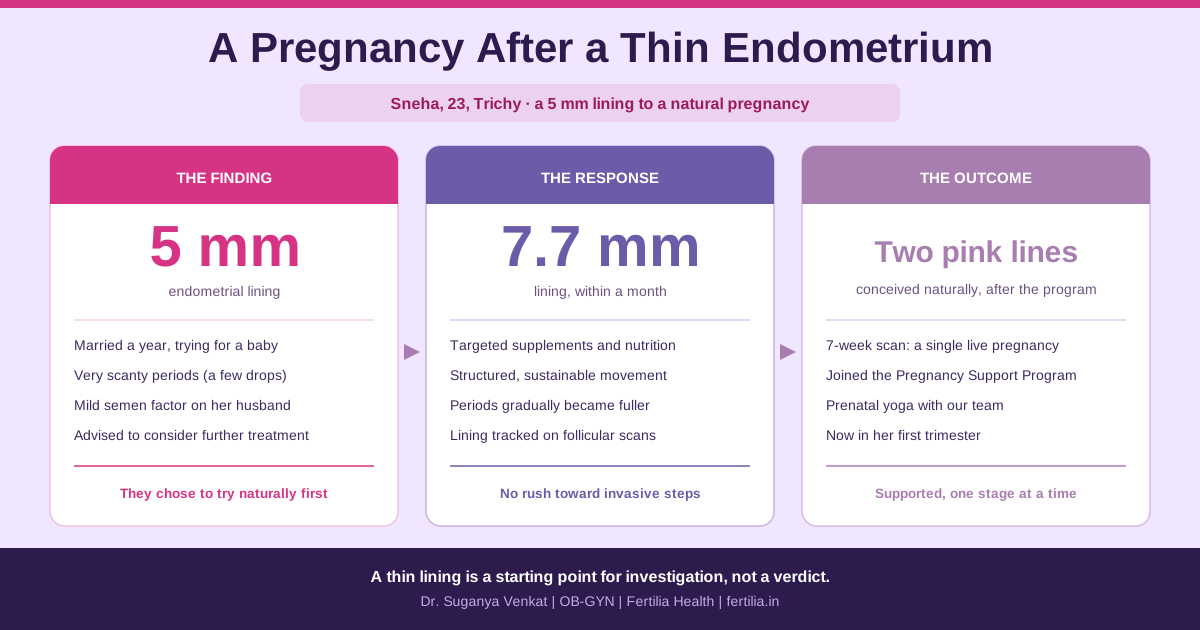
Name and city changed to protect privacy. Clinical details are shared with the patient’s consent.
When Sneha first wrote to us, her biggest worry was not a number on a report. It was her periods.
She was 23, married a little over a year, and she and her husband had started planning for a baby. But her cycles had always been very light. During a period, she would see only a few drops of bleeding, sometimes needing just one or two pads for the entire cycle. To her, it did not feel like a normal period at all, and somewhere underneath the worry was a quieter question that many women carry but rarely say aloud: is my body even working the way it should?
This is the story of how that question got an answer. It is one woman’s journey, not a promise of the same outcome for everyone, but it is a good illustration of what becomes possible when a thin lining is treated as a starting point for investigation rather than a verdict.
What This Story Covers
- Where Sneha started: a thin endometrium and very scanty periods
- The plan we built around her, and why it was not a crash diet
- How her body responded in the first month
- The pregnancy, and the care that continued afterwards
- What her story does and does not tell you about your own situation
Where She Started
When we reviewed Sneha’s history, something stood out immediately. On paper, a lot looked reassuring. Her height and weight were in the healthy range, her BMI was normal, her daily routine was reasonably good, and she had no major medical illnesses. The two things that did not fit were her very scanty flow and the difficulty she and her husband were having in conceiving.
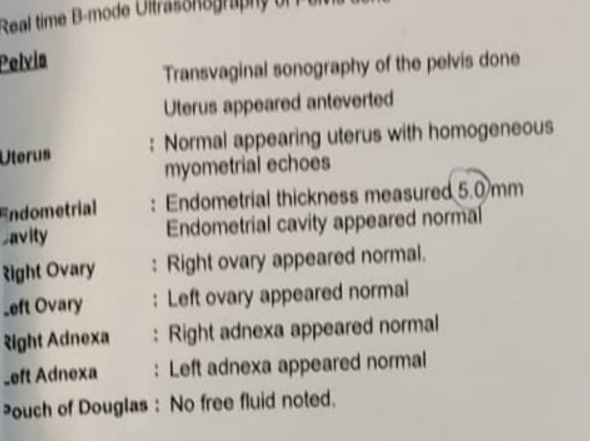
To understand the root cause, we suggested a scan. The finding explained a great deal: her endometrial lining, the inner layer of the uterus that thickens each month to receive a pregnancy, measured only around 5mm. A thin lining and very light periods often travel together, because the amount you shed each month reflects how much lining has built up in the first place.
On her husband’s side, the semen analysis showed mild abnormalities, nothing major. Taken together, none of these findings on their own would necessarily stop a pregnancy. But they were enough that another clinic had recommended moving toward further treatment.
Before taking that step, Sneha and her husband wanted to understand what was actually happening, and whether they could support things naturally first. That instinct, to pause and understand before escalating, is one I respect. A scan finding is information. It tells you where to look. It does not automatically dictate the next procedure.
The Plan We Built Around Her
The goal was simple to state and harder to do well: create the conditions in which her lining could develop properly and her cycle could find its rhythm, without rushing toward invasive steps before we knew whether her body would respond.
Her plan had three parts, all built around her real life:
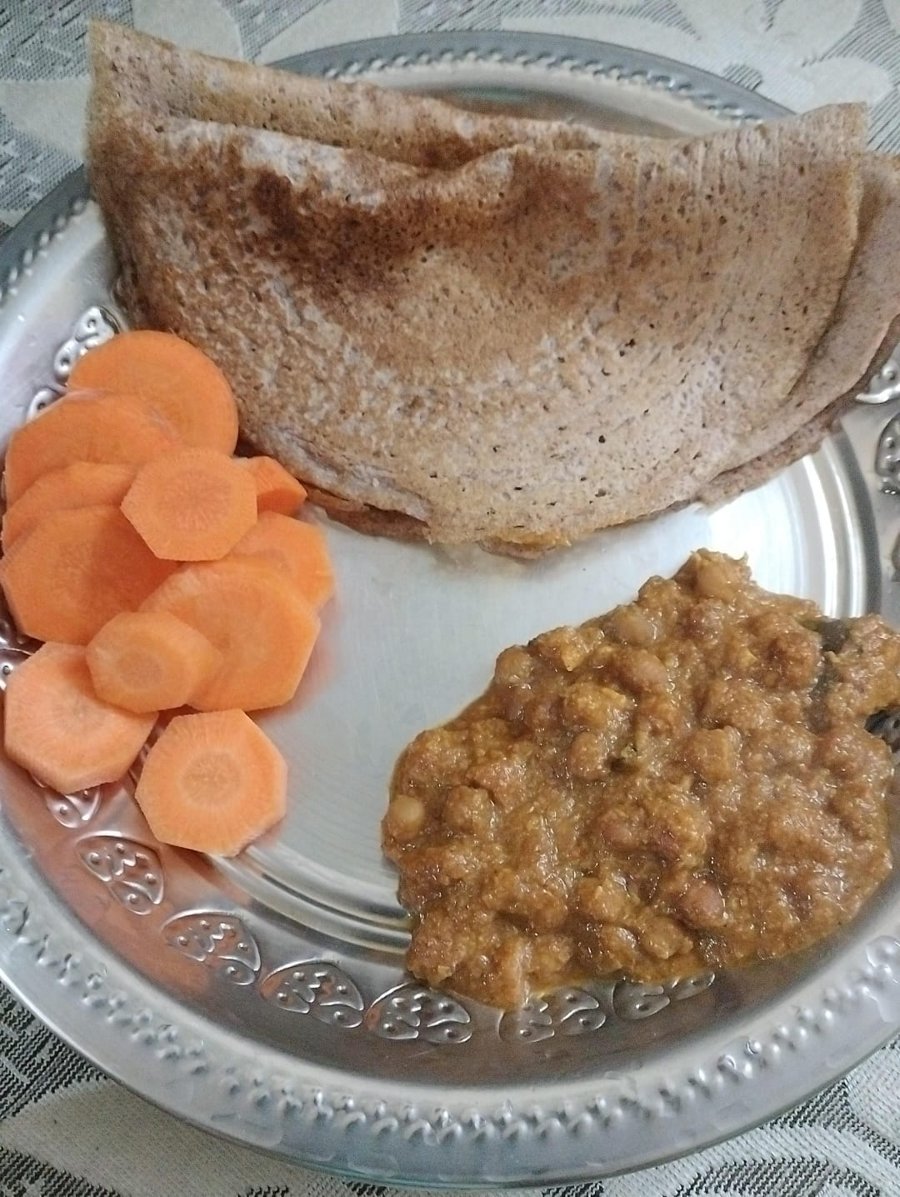
Targeted nutritional support. A fertility-focused eating pattern designed for hormonal balance and good uterine circulation, using everyday Indian foods rather than anything exotic or restrictive. This was never a crash diet. In fact, one of the early changes she noticed was that she could finish her meals comfortably, where before she struggled to. As she put it in one of her messages, “starting I can’t finish my plate full, now I’m finishing 90 percent of my plate.”
Structured, sustainable movement. Regular activity she could actually keep up with, to support circulation and overall metabolic health, not punishing workouts she would abandon in a week.
Consistent monitoring. This is the part that is not optional when you are working on a thin lining. We tracked her endometrium with follicular scans across her cycle, so we were never guessing. We could see, month by month, whether the lining was actually growing.
The science behind why each of these helps, and which foods and supplements matter for the uterine lining, is covered in detail in our guide to thin endometrium. The short version is that a thin lining driven by reversible factors, low estrogen, thyroid issues, or iron deficiency among the common ones, often responds when those factors are addressed and the lining is given circulation support and time.
This part matters. We worked alongside her existing care, not against it. If her lining had refused to respond, or a structural cause had surfaced, moving to medical or assisted treatment would have been the right call, and I would have said so. Supporting the body first is a way of sequencing care sensibly, with medicine ready the moment it is needed.
How Her Body Responded
What made Sneha’s journey work was not anything dramatic. It was consistency. She followed her plan sincerely, stayed active, and stayed patient. When she had doubts or felt discouraged, she reached out, and the team was there between every milestone.
Her body started responding quickly.
Within the first month, her flow changed. Instead of a few drops over a couple of pads, her period became fuller and healthier, now using four to five pads through the cycle. For a young woman who had lived with extremely scanty periods, this was an enormous reassurance. It was the first visible sign that her body was moving in the right direction.
In her own words, “I overcame my periods flow and I came to know what is the reason I’m getting lite flow and lining issue.” Understanding the why, not just the what, mattered to her as much as the change itself.
On follicular monitoring, the lining followed the same direction. A scan a little over a month in showed her endometrium had reached 7.7mm, comfortably within the range most of us like to see, alongside a follicle developing well.
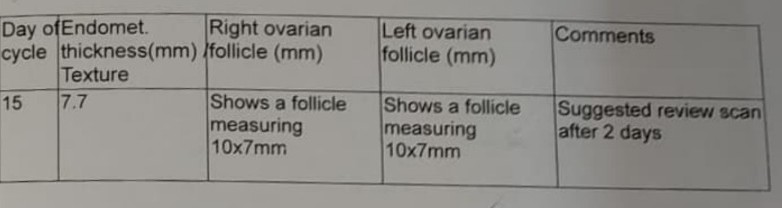
This is the data point that changes a decision. An untreated thin lining tells you very little. A lining that climbs from around 5mm to 7.7mm once the right support is in place tells you that you are dealing with a responsive endometrium, and that natural conception is a realistic goal worth pursuing. We explain how to read this pattern, and when it suggests escalating instead, in Can I Conceive Naturally with Thin Endometrium?
She stayed consistent right through the three-month program. By the time it ended, the habits had become hers. She felt confident enough to carry them forward on her own.
One conversation can change the direction of your month. If you have been told your lining is thin, or your periods have become very light, message Dr. Suganya directly on WhatsApp. She will read your situation herself and tell you whether a conversation with our team is the right next step for you.
Talk to Dr. Suganya on WhatsApp
The News
About two months after she finished the program, a message arrived from Sneha. She was pregnant.
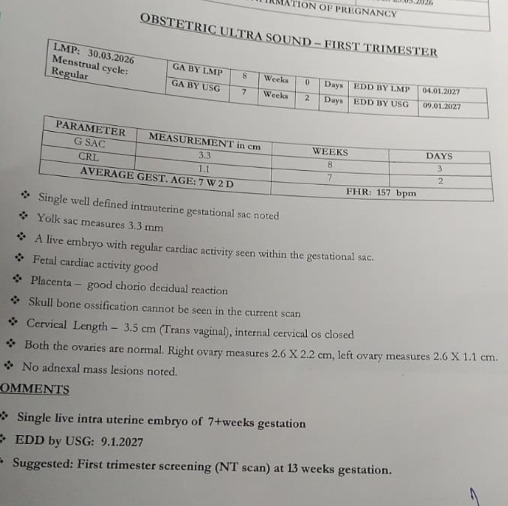
She had conceived naturally, without the further treatment she had once been advised to consider. Her early scan confirmed it: a single live intrauterine pregnancy at seven weeks.
A journey that had begun with worry about a thin lining and scanty periods had become one of the happiest moments of her and her husband’s lives. To watch someone move from a few drops of bleeding each month to a healthy cycle and then a pregnancy is, honestly, one of the most rewarding parts of this work.
The Care That Continued
Her story did not end at the positive test, and this part matters just as much.
After conceiving, Sneha joined our Pregnancy Support Program so the guidance would continue through her pregnancy, not stop at the moment it began. That meant trimester-specific nutrition, pregnancy-safe lifestyle support, and steady reassurance as she moved into a phase that is exciting and anxious in equal measure.
She also took part in our prenatal yoga sessions with the team. After one of them she wrote, “the yoga session was very helpful and calming for me. I learned simple and practical techniques that I can easily follow in my daily routine.” In early pregnancy, calm is not a luxury. It is part of the care.
Today, Sneha is progressing through her first trimester, and we are honoured to keep supporting her, one stage at a time.
What Her Story Tells You, and What It Does Not
Sneha’s outcome does not guarantee the same result for everyone with a 5mm lining. Fertility is shaped by many factors, and every woman’s picture is different. It would be dishonest to suggest otherwise.
What her story does illustrate is genuine and worth holding onto:
A thin lining is often a starting point, not a dead end. When the endometrium is not structurally damaged and the cause is reversible, the lining can frequently be supported to develop normally. The decision between trying naturally and moving to assisted treatment should rest on your specific picture, not on a single scan number in isolation.
The response is the real information. Whether your lining improves when given proper support over two to three monitored cycles tells you far more than the first measurement ever could.
Scanty periods deserve a closer look, not a shrug. Very light flow can be the visible sign of a lining that is not building up well, and it is worth investigating rather than dismissing. If your periods have changed, our guide on irregular periods and natural solutions is a good place to start.
Support that continues changes things. Not a single consultation followed by silence, but guidance that stays with you from preparation through pregnancy.
How Dr. Suganya Works With You
Dr. Suganya Venkat is an OB-GYN with over 15 years of clinical experience. She holds a DNB in OB-GYN from GKNM Hospital, Coimbatore, an MD in Pathology from CMC Vellore, and an MBBS with 5 gold medals from SRMC. She treats fertility as a clinical situation that usually has a root cause, and works with her team to address it through a structured 90-day program.
She consults online across India, so no travel is needed beyond a video call, and your scans, reports, and bloodwork can all be reviewed digitally. She works alongside your existing gynaecologist or fertility clinic, never in place of them. If a medical step is the right next move for you, she will tell you. If a few months of preparation will change the outcome, she will say that too. If building the lining and the wider conception picture is the goal, the 90-day Fertility program brings the medical, nutritional, and lifestyle pieces into one plan.
Frequently Asked Questions
Is Sneha’s story real?
Yes. Sneha is a real patient in our program, and the clinical details, scans, and outcome are from her actual journey. Her name and city have been changed to protect her privacy, and her story is shared with her consent. Her journey was first featured briefly in our May 2026 patient stories; this is the fuller version.
Can you really get pregnant with a 5mm lining?
It is possible, and Sneha is one documented example. Whether it is realistic in your case depends on the cause of the thinness, whether the lining responds to treatment, your age, and the rest of your fertility picture. A lining that improves with support, as hers did from around 5mm to 7.7mm, is a very different situation from one that stays thin despite appropriate management. We go through that decision in detail in Can I Conceive Naturally with Thin Endometrium?
Why were her periods so light, and is that linked to the thin lining?
Often, yes. The amount you shed each month reflects how much endometrial lining has built up. A thin lining commonly shows up as very scanty flow. As the lining developed with support, Sneha’s flow became fuller too, which is exactly the pattern you would expect.
How long did it take?
Her flow improved within the first month, and her lining reached a healthy thickness a little over a month into the plan. She completed the three-month program and conceived naturally about two months after it ended. Timelines vary from person to person, and we are honest about that rather than promising a fixed calendar.
Did she have to stop trying naturally and do IVF?
No. She had been advised to consider further treatment before she came to us, but because her lining responded well and the rest of her picture allowed it, she conceived naturally without needing that step. For some women, assisted treatment genuinely is the right path, and we say so when it is.
What if my lining does not respond the way hers did?
That is important information, not a failure. If a lining shows no improvement across two to three monitored cycles of proper support, it points to looking more carefully for a cause, such as adhesions, or to discussing assisted treatment. The right next step depends on what your body is telling us. The honest fertility workup guide explains the tests that help answer this.
How do I start a conversation with Dr. Suganya?
Send a WhatsApp message to +91 9940270499 describing your situation in a few lines. Dr. Suganya reads these herself. If a consultation with our team is the right next step, she will tell you. If you need something else first, she will say that too.
If Your Story Sounds Like Sneha’s
You do not need to be in the most difficult possible situation to ask for help. A thin lining on a scan, periods that have become very light, or months of trying without success are all reasons enough to reach out.
If any part of Sneha’s journey felt like yours, that is reason enough to start a conversation.
Message Dr. Suganya on WhatsApp
She will read your message herself and tell you what the right next step is for you.