There is a particular moment many women know well. You are in the bathroom during your period, and you pass a clot. For a second your stomach drops. Is that blood? Is something wrong? Should I be worried?
Let me answer the most important part first, because I do not want you sitting with that worry while you read: passing some clots during a period is normal and extremely common, and on its own it is usually a sign of nothing more than a heavy flow. Your body is doing exactly what it is built to do. That said, the size, the frequency and what comes with the clots can tell you whether it is worth a closer look. This guide will help you tell the difference calmly, without spiralling.
For more on this, read our guide on First Period (Menarche).
For more on this, read our guide on Short Menstrual Cycles.
For more on this, read our guide on Brown Discharge Before Your Period.
What this guide covers
We will go through why clots form in the first place, what is well within the normal range, what falls outside it, what heavier clotting can point to, and when it is genuinely worth seeing a doctor. The aim is to leave you informed and steady, not frightened.
Why period clots form in the first place
This is the part that makes everything else make sense. As your uterine lining sheds, tiny blood vessels open and bleed. Your body has natural anti-clotting substances that keep menstrual blood liquid as it leaves, so on a light day you rarely see clots at all.
But on a heavy day, or when blood has been pooling because you were sitting or lying down for a while (overnight, say, or during a long journey), the blood comes faster than those anti-clotting substances can keep up with. So it does what blood is designed to do when it gathers: it clots. When you then stand or move, that collected, partly clotted blood is released, and you see it.
In other words, a clot is usually just a sign that the flow was heavy or that blood had been sitting for a while. It is a normal coagulation response, not a sign of a clotting disorder. Understanding this takes a lot of the fear out of it.
What is normal
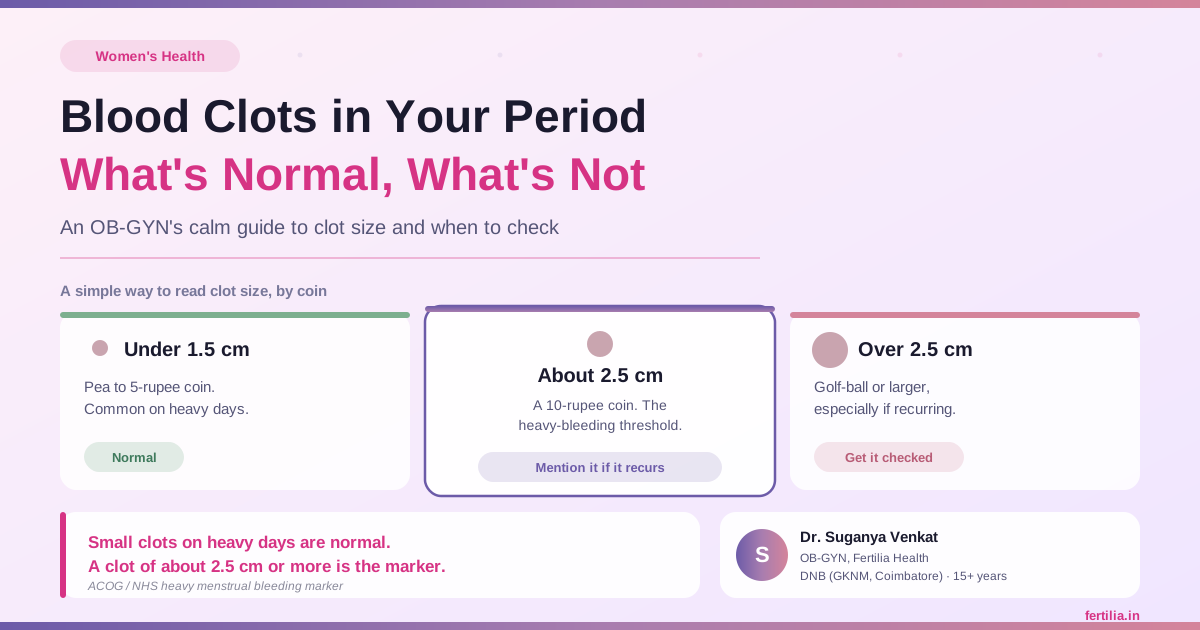
Passing some blood clots during your period is normal. Clots form when your flow on a heavy day outpaces the natural anticoagulants in your uterus, so a little blood gels on the way out. As a rule of thumb, clots smaller than about a 10-rupee coin (2.5 cm), passed on your heaviest days, are not a cause for concern. The following are all well within the normal range and, on their own, are not a cause for concern:
- Small clots, roughly the size of a pea, a raisin, or up to about a 5-rupee coin.
- Clots on the heaviest days, usually day 1 or 2 of your period.
- Clots first thing in the morning, or after you have been sitting for a long time, because blood pooled and gathered.
- Colour that varies from bright red to dark, almost brown or blackish red. Darker blood is simply older blood that took a little longer to leave, not bad blood.
If your clots are small, occasional, and tied to your heavy days, and your periods are otherwise manageable, this is your body working normally.
What is not normal, and worth checking
Clots become worth a conversation with a doctor when the pattern shifts. The single most useful marker is size:
| Clot size | What it usually means |
|---|---|
| Smaller than a 5-rupee coin (under about 1.5 cm) | Within the normal range, especially on heavy days |
| Around a 10-rupee coin (about 2.5 cm) | The threshold doctors use for heavy bleeding. Worth mentioning if it happens most cycles |
| Larger than a 10-rupee coin (over about 2.5 cm), golf-ball or lemon sized | Outside the normal range. Worth getting checked, particularly if it recurs |
| Larger than your palm | Get seen soon, regardless of the rest of your flow |
Internationally, doctors treat a clot the size of a coin of about 2.5 cm or larger as a marker of heavy menstrual bleeding. Alongside size, these patterns are worth raising:
- Clots most cycles, not just occasionally.
- Soaking through a pad or tampon every hour or two for several hours, or needing to double up on protection.
- Periods lasting longer than seven days.
- Clots together with feeling tired, breathless on stairs, dizzy or unusually pale, which can point to iron-deficiency anaemia from cumulative blood loss.
- Clots with severe pain that goes beyond your usual period cramps.
For more on this, read our guide on Period Cramps Home Remedies.
For more on this, read our guide on Period Pain (Dysmenorrhea). None of these mean something frightening is happening. They simply mean the bleeding is heavy enough that it is worth understanding why, so it can be eased.
If your clots have changed and you are not sure where you sit on this, you are welcome to message Dr. Suganya on WhatsApp. Consultations are online, across India, so you can talk it through from home.
What heavier clotting can point to
When clotting is heavy or new, a doctor looks for a reason, and the reassuring truth is that the common reasons are all findable on a simple scan and all treatable. The usual ones are:
- Fibroids. Common, non-cancerous muscle growths in the uterus that can cause heavy, clotty periods.
- Adenomyosis, where lining tissue grows into the muscle wall of the uterus, causing heavy and painful periods. Our guide to adenomyosis: symptoms, causes and treatment explains it fully.
- Polyps, small benign growths on the lining.
- Hormonal cycles without ovulation. When ovulation does not happen in a cycle, the lining can build up thicker than usual and then shed heavily. This is common in conditions like PCOS and around big hormonal transitions.
- Thyroid problems, which can quietly disrupt periods and are easily checked with a blood test.
For more on this, read our guide on Menstrual Cycle 101.
- Less commonly, a bleeding or clotting disorder, which is more likely if you have had heavy periods since your very first ones.
For more on this, read our guide on Scanty or Very Light Periods. A pelvic ultrasound and a few blood tests (a full blood count, ferritin, and thyroid function) usually point clearly to which, if any, of these is at play. The point of looking is not to find something scary. It is to explain what is happening so it can be settled.
When to see a doctor without delay
Most clotting is not urgent. But please seek same-day or emergency care if:
- You are soaking through a full pad every 30 minutes for two hours or more.
- You feel faint, dizzy, or your heart is racing, which can be signs of significant blood loss.
- You have severe pelvic pain that is different from your usual cramps.
And if you might be pregnant, or recently were, and you pass clots with cramping or bleeding, contact your doctor promptly, because the assessment is different in that situation.
Outside of these, it is worth booking an unhurried appointment if your clots are regularly larger than a coin of about 2.5 cm, if heavy clotty periods are a recent change, or if you are feeling drained and run-down around your cycle.
What helps
The encouraging part is that heavy, clotty periods are very treatable once the cause is understood. Depending on what is found, options range from simple medicines taken only on your heavy days (such as tranexamic acid, which reduces flow by roughly 40 to 50 percent), through hormonal options including the hormonal IUS, to procedures in the small number of cases that need them. Our pillar guide on heavy periods: causes and every treatment option lays out the full ladder so you can see where you might fit.
In the meantime, two practical things help. First, look after your iron, because months of heavy bleeding quietly deplete it. Build in iron-rich Indian foods such as palak, methi, rajma, kala chana, black sesame (til) and dates, paired with a vitamin C source like amla or lime; our iron-rich foods guide has more. Second, keep a brief record of your clots and flow for a cycle or two, which makes any appointment far more useful.
If your periods are also irregular or unpredictable, the picture often makes more sense alongside our guide on irregular periods: causes and what helps.
What you can do this week
- If your clots are small and only on heavy days, you can relax. That is normal.
- Note the size of your largest clots against a 5-rupee or 10-rupee coin, how often they come, and how you feel afterwards.
- Ask for a ferritin test, not just haemoglobin, if you feel tired or breathless around your period.
- If the clots are regularly larger than about 2.5 cm, or this is a new change, book an unhurried appointment. There is almost always a clear, treatable explanation.
If you would like a calm second opinion on whether your clots are worth investigating, you are welcome to send Dr. Suganya a message on WhatsApp. There is no pressure, only an honest conversation.
Frequently Asked Questions
Are blood clots during a period normal? Yes. Passing some clots, especially small ones on your heaviest days, is normal and very common. Clots form when blood flows faster than your body’s natural anti-clotting substances can keep up with, or when blood has pooled while you were sitting or lying down. On their own, small occasional clots are usually nothing to worry about.
What size of period clot is too big? Doctors use a clot the size of a coin of about 2.5 cm (around a 10-rupee coin) as the threshold for heavy menstrual bleeding. Clots smaller than that, roughly pea, raisin or 5-rupee-coin sized, are generally within the normal range. Clots that are regularly larger than 2.5 cm, or as big as a golf ball or lemon, are worth getting checked, particularly if they happen most cycles or leave you feeling drained.
Why am I suddenly passing big clots when I never used to? A new pattern of large clots is the most useful reason to get checked, not because it is likely to be something serious, but because there is usually a clear, treatable explanation. Common reasons include fibroids, adenomyosis, polyps, cycles without ovulation, or a thyroid issue. A pelvic ultrasound and a few blood tests usually identify which one, and most are very manageable once found.
Do period clots mean I have a clotting disorder? Almost never. Period clots are a normal response to heavy flow, not a sign that your blood clots too easily elsewhere in the body. A clotting or bleeding disorder is only considered in specific situations, most often when a woman has had very heavy periods since her very first ones, or has other bleeding symptoms such as easy bruising. Your doctor can check this simply if there is reason to.
For more on this, read our guide on Irregular Periods in Teenagers. When should clots send me to a doctor straight away? Seek same-day care if you are soaking through a full pad every 30 minutes for two hours or more, if you feel faint, dizzy or have a racing heart, or if you have severe pelvic pain unlike your usual cramps. If you are or might be pregnant and pass clots with bleeding or cramping, contact your doctor promptly. Outside of these, heavy clotting is worth an unhurried appointment rather than an emergency visit.
This is general information and not a substitute for a personal consultation. If you are in your 40s and your periods have become heavy and unpredictable, our sister site Menolia covers heavy bleeding in perimenopause. And if heavy bleeding is taking over your life, the hormonal IUS as an alternative to surgery is worth understanding.