When a teenage girl’s period does not show up on schedule, or arrives twice in six weeks and then disappears for two months, the first instinct is to assume something is wrong. That instinct is understandable. But in many cases, the pattern is not a sign that something has gone wrong. It is a sign that the hormonal system is still finding its rhythm.
Understanding when irregular cycles in a teenager are developmentally expected, and when they cross into territory that warrants a proper evaluation, is what this post walks through. Not every irregular period needs a blood panel. Not every irregular period can be simply waited out. Knowing the difference is what helps parents and teenagers make good decisions.
If your daughter has just had her first period and you are wondering what normal looks like in those early months, the companion post on the first period and what to expect covers that specific territory. This post picks up from there.
The two-year window after menarche: why irregular cycles are expected
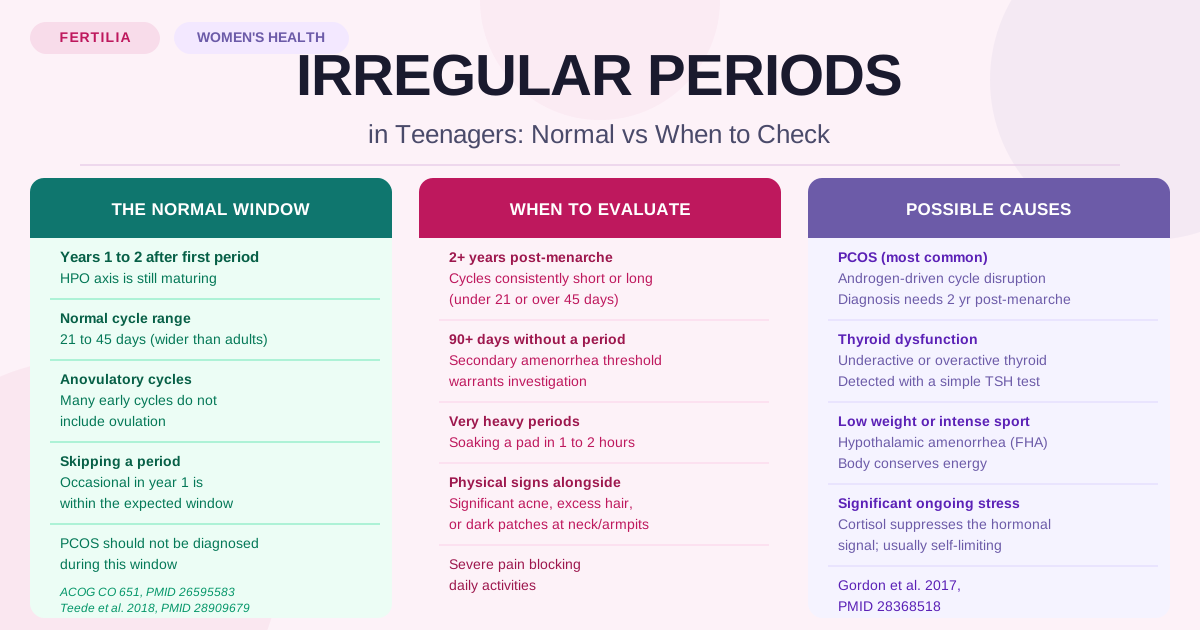
After the first period, the brain, pituitary gland, and ovaries are setting up a three-way signalling system called the hypothalamic-pituitary-ovarian (HPO) axis. This system is what eventually produces a regular adult menstrual cycle, with ovulation happening reliably mid-cycle and a period arriving 12 to 16 days later. Getting that system to run smoothly takes time, and the standard estimate is one to two years after menarche.
For more on this, read our guide on Menstrual Cycle 101. During this calibration period, many cycles do not result in ovulation. These are called anovulatory cycles, and they are a normal feature of early adolescent development. The American College of Obstetricians and Gynecologists (ACOG) defines the normal cycle length range for adolescents in the first year or two after menarche as 21 to 45 days (ACOG Committee Opinion 651, 2015, PMID 26595586). A cycle that comes after 30 days one month and 42 days the next is within this range. Skipping one period in the first year, though worth noting, is often within the expected window.
This is also why the international PCOS (PMOS) guideline recommends against diagnosing polycystic ovary syndrome during the first two years after menarche. Teede et al. (2018, PMID 30052961) explicitly note that the hormonal irregularity that would be clinically significant in an adult is part of normal development in an early adolescent, and that diagnosing too early risks overtreating a normal process. For more on how PCOS is evaluated in teenagers specifically, the post on PCOS in teenagers explains the diagnostic process in detail.
That said, there are patterns, even within the first two years, that are worth discussing with a doctor. Very long gaps without a period (more than three months), extremely heavy or painful periods, or any of the physical features described below are worth raising even during this early window.
After two years: cycle patterns worth evaluating
Once two years have passed since the first period, the HPO axis should be producing more regular cycles. At this point, cycle patterns that would be expected in an adult apply. The following warrant a proper evaluation.
Cycles that are consistently shorter than 21 days or longer than 45 days. An occasional short or long cycle is not a concern. A persistent pattern suggests that ovulation is not occurring reliably.
Going more than three months without a period. A single missed period has many causes, most of them benign. Three consecutive months without a period (secondary amenorrhea) is the clinical threshold at which investigation becomes appropriate, regardless of how recently menarche occurred.
Very heavy periods. Heavy bleeding is defined as soaking through a thick pad or tampon in one to two hours consistently over several hours. This has identifiable causes and should be evaluated rather than managed with extra products. The general guide to irregular periods in women covers the full range of adult causes, many of which also apply to teenagers.
Any combination of irregular cycles alongside specific physical features. Significant acne that does not respond to ordinary skincare, increased hair growth on the face, chin, chest, or abdomen, or darkening and thickening of the skin at the neck or underarms (called acanthosis nigricans): these features alongside irregular cycles are the clinical picture that prompts investigation for a hormonal cause.
PCOS in teenagers: what to look for and what evaluation involves
PCOS (also now referred to as PMOS in updated international literature) is the most common hormonal cause of irregular periods in women of reproductive age, including adolescents. But the approach to evaluating it in teenagers requires care.
As already noted, irregular cycles in the first two years after menarche are expected, so a cycle that does not follow a neat pattern does not, by itself, mean PCOS. What prompts investigation is the combination of irregular cycles alongside clinical signs of androgen excess: persistent, significant acne; increased hair growth on the face, chin, upper lip, chest, abdomen, or inner thighs; or acanthosis nigricans at the neck, armpits, or groin.
If several of these features are present alongside irregular cycles, and two years have passed since menarche, a clinical evaluation makes sense. This would typically include:
- A menstrual history covering how long cycles have been irregular and what the pattern looks like
- A clinical examination for signs of androgen excess
- Blood tests including total and free testosterone, DHEA-S, TSH (to rule out thyroid dysfunction), and fasting glucose or insulin where indicated
- A pelvic ultrasound may be considered in older adolescents, with the understanding that polycystic-appearing ovaries on ultrasound are common in teenagers and do not, on their own, confirm a PCOS diagnosis
A proper evaluation, rather than a prescription based on a single irregular cycle, protects teenagers from being overtreated. The PCOS symptoms and diagnosis guide explains what the diagnostic criteria involve across different age groups.
If you are unsure whether your daughter’s cycle pattern warrants an evaluation, Dr. Suganya Venkat offers online consultations for teenagers and adults across India via video call. Message on WhatsApp at wa.me/919940270499 with a brief description of what you are seeing, and she will help you determine what, if anything, the next step should be.
Thyroid problems and irregular periods in teenagers
The thyroid gland has a greater effect on the menstrual cycle than most people realise, and this applies equally to teenagers. Both an underactive thyroid (hypothyroidism) and an overactive thyroid (hyperthyroidism) can cause irregular cycles.
In hypothyroidism, low thyroid hormone levels disrupt the pituitary’s signalling to the ovaries, leading to infrequent or absent periods. In hyperthyroidism, excess thyroid hormone similarly disrupts the hormonal axis, often producing lighter or less frequent periods. Krassas et al. (1999, PMID 10468932) documented menstrual disturbances in a significant proportion of women with thyroid dysfunction, including younger women.
The test is a single blood draw for TSH (thyroid-stimulating hormone). If the result is outside the normal range, treatment is straightforward and usually restores cycle regularity within a few months. For more on how thyroid levels affect hormonal health across the reproductive years, the post on thyroid function and hormonal health covers the relationship in detail.
This is one reason a TSH is included in most evaluations of irregular periods in teenagers. Thyroid dysfunction is not rare, and it is fully treatable.
Low body weight, intense exercise, and the absent period
A specific form of menstrual disruption worth understanding in teenagers is functional hypothalamic amenorrhea. This occurs when the brain reduces or stops the hormonal signals to the ovaries, not because of a disease in the ovary itself, but as a protective response to insufficient energy availability.
In teenagers, this most commonly happens in three situations:
- Very low body weight or significant unintentional weight loss
- Restrictive eating patterns
- Intense athletic training, particularly in gymnastics, long-distance running, or dance
When the body does not have enough energy to support all its functions, it deprioritises reproduction. Periods become irregular or stop entirely. The Endocrine Society’s clinical practice guideline on functional hypothalamic amenorrhea describes this as a neuroendocrine response to low energy availability, not a disease state (Gordon et al., 2017, PMID 28368518).
The International Olympic Committee has described a broader pattern called Relative Energy Deficiency in Sport (RED-S), recognising the cascade of health effects, including menstrual disruption, that occurs when training demands consistently outpace energy intake (Mountjoy et al., 2014, PMID 24620037). For teenage athletes whose periods have become irregular or stopped, this is worth discussing with both a doctor and, where applicable, a coach or trainer.
The path forward is not a prescription. It is adequate nutrition, appropriate recovery, and where an eating pattern has become problematic, appropriate support for that. Periods usually return once energy availability is restored.
How significant stress affects the menstrual cycle
Cortisol, released during periods of stress, can suppress the pulsatile release of GnRH (gonadotropin-releasing hormone) from the hypothalamus. GnRH is the starting signal for the hormonal cascade that leads to ovulation. When that signal is suppressed, cycles become irregular or temporarily stop.
For teenagers, common triggers include extended exam preparation, significant emotional upheaval, a family change, or an extended period of disrupted sleep. This kind of disruption is usually self-limiting. Once the acute period resolves or stress is managed, cycles typically return to their previous pattern.
If stress is ongoing or accompanied by other symptoms such as persistent low mood, sleep problems, or withdrawal from activities, it is worth addressing in its own right, not only for its effect on the period.
What to track and what to tell your doctor
If you are keeping an eye on your daughter’s cycle, or if she is tracking her own, a few months of consistent records make a clinical consultation considerably more useful.
The first day of each period. Day 1 of the cycle is the first day of bleeding. Recording this date for at least three to six months gives a clear picture of cycle length patterns.
Flow. A simple description of light, moderate, or heavy for each day gives the doctor useful information about whether the issue affects timing, volume, or both.
Any associated symptoms. The type and location of any pain, mood changes around the period, significant acne changes, or any new physical features.
Duration. How many days each period lasted.
A simple notebook works. Period tracking apps (Clue, Flo, or similar) are also straightforward. Three to six months of data before a consultation is genuinely useful and reduces the chance of a decision being made on the basis of a single anomalous cycle.
When you do see a doctor, useful questions to raise include: What is likely causing this pattern? What tests, if any, are appropriate at this stage? Is there a reason to start any treatment now, or is watchful waiting the right approach? What patterns should we monitor over the coming months?
A note on the contraceptive pill for “regulating” the cycle
It is common for teenage girls in India to be prescribed an oral contraceptive pill after a period of irregular cycles, with the explanation that it will regulate the period. This is worth understanding clearly.
The pill does not regulate the natural menstrual cycle. It replaces the hormonal cycle with a pharmaceutical one, producing a withdrawal bleed that looks like a period but is a different physiological event. When the pill is stopped, the underlying cycle returns to where it was before, because the original cause has not been addressed.
This does not mean the pill is the wrong choice. For teenagers with severe period pain, suspected endometriosis, or other specific clinical needs, it can be entirely appropriate. But as a default response to irregular cycles in a teenager who has been menstruating for a year or two, it is worth asking what specific benefit is being targeted and whether identifying and addressing the underlying cause would serve her better.
Your daughter’s gynaecologist is the right person to make this decision for her specific situation. This note is a prompt to have that conversation before starting, not a reason to refuse a prescription.
What irregular periods are called in Tamil and Hindi
The medical picture is the same regardless of the language used to search for it. But knowing the local terms helps teenagers and parents find accurate information in the language they think in.
In Hindi, irregular periods are commonly referred to as aniyamit mahavari (अनियमित माहवारी). A period that does not come on time is often described as mahavari sahi nahi aana (माहवारी सही नहीं आना), meaning “period not coming properly.” A missed period is mahavari nahi aana.
In Tamil, irregular periods are often described as onrillatha maadhavidaai or neram aagama vara maadhavidaai (meaning “period not arriving on time”). An absent period may be described as maadhavidaai niruttham (माadhavadai niruttham). (Tamil native script is flagged for Dr. Suganya’s sign-off before publication.)
For specific questions about your daughter’s cycle pattern, evaluation for PCOS or thyroid problems, or any concern about her menstrual health, Dr. Suganya Venkat is available for online consultations across India via video call. Message on WhatsApp at wa.me/919940270499 with a brief description of what you have observed.
Frequently asked questions
At what age is an irregular period in a teenager considered normal? In the first two years after the first period, irregular cycles are developmentally expected. The HPO axis is still maturing, and many early cycles are anovulatory. ACOG defines the normal cycle length range for adolescents in this window as 21 to 45 days (ACOG Committee Opinion 651, 2015, PMID 26595586). After two years post-menarche, cycles that are consistently outside the normal adult range (24 to 38 days) warrant evaluation.
What are the main causes of irregular periods in teenagers? The most common cause in the first two years is normal HPO axis maturation. Beyond that window, causes worth evaluating include PCOS, thyroid dysfunction (both underactive and overactive), low body weight or restrictive eating, intense athletic training (functional hypothalamic amenorrhea or RED-S), and significant ongoing stress. Each has a different clinical picture and a different path forward.
How can I tell if my daughter’s irregular periods are due to PCOS? PCOS in a teenager typically shows up as a combination of irregular cycles alongside signs of androgen excess: persistent significant acne, increased hair growth on the face or body, or darkening and thickening of the skin at the neck or armpits (acanthosis nigricans). Irregular cycles without these features, particularly in the first two years after menarche, are not sufficient to diagnose PCOS. A proper clinical evaluation, rather than a diagnosis based on a single symptom, is the right approach.
Can stress cause irregular periods in a teenager? Yes. Elevated cortisol from significant or prolonged stress can suppress the hormonal signal from the hypothalamus, disrupting ovulation and making cycles irregular or causing them to stop temporarily. This is usually self-limiting and cycles typically normalise once the stress period passes. If stress is ongoing or accompanied by mood changes or sleep problems, it warrants attention in its own right.
Should my daughter be put on the pill for irregular periods? The oral contraceptive pill replaces the natural cycle with a pharmaceutical cycle and does not address the underlying cause of irregularity. For specific clinical needs such as severe pain or suspected endometriosis, it can be appropriate. As a default response to irregular cycles in a teenager, it is worth asking your doctor what specific benefit is being aimed for and whether identifying the underlying cause would be more useful. The guide to which doctor to see for irregular periods helps with the decision of who to consult first.
Can intense sport or dance training stop a teenager’s period? Yes. Training with insufficient calorie intake can cause functional hypothalamic amenorrhea, sometimes described as Relative Energy Deficiency in Sport (RED-S). The body reduces hormonal signals to the ovaries when energy intake does not meet energy expenditure. Missing periods in a teenage athlete is not simply normal for sporty girls. It should be discussed with a doctor, and adequate nutrition is usually the key part of restoring the cycle.
When should I take my daughter to see a gynaecologist for irregular periods? An evaluation is appropriate if: periods have been irregular for more than two years since menarche; she has gone more than three months without a period; bleeding is very heavy; she has signs of androgen excess such as significant acne, increased facial or body hair, or darkening at the neck or armpits; or there is unexplained significant weight change. The Period Health resource has a downloadable guide covering what to track and when to seek help.