A woman in her late twenties tells me she has had severe period pain since she was sixteen. She takes four to five painkillers over the first two days of every cycle. She misses one day of work each month. She has been told by three different doctors that periods are supposed to hurt and she just needs to manage.
For more on this, read our guide on First Period (Menarche). When I take her full history, everything about her symptom pattern points to endometriosis. She has had pain for over a decade. She is only now being asked the right questions.
This is not rare. Women with endometriosis wait an average of seven to ten years from first symptom to diagnosis (Nnoaham et al. 2011 Fertil Steril, PMID 21718982). In India, where painful periods are frequently normalised and rarely spoken about openly, that gap can be even longer.
This post is for women who have significant period pain and are wondering whether the pain is within the expected range or whether it is pointing to something that should be investigated.
Primary vs Secondary Dysmenorrhea: The Clinical Distinction
The medical term for painful periods is dysmenorrhea. There are two types, and they have different causes.
Primary dysmenorrhea is pain caused by prostaglandins, chemical compounds the uterine lining releases during menstruation. Prostaglandins cause the uterus to contract, temporarily reducing blood flow to the uterine muscle and producing cramping. This type usually begins on the first day of bleeding, eases within 48 to 72 hours, and responds reasonably to ibuprofen or mefenamic acid taken at the right time.
Secondary dysmenorrhea is pain caused by an underlying condition in the pelvis or uterus. Endometriosis is the most common cause. Adenomyosis, fibroids, pelvic inflammatory disease, and ovarian cysts are others.
The distinction matters because secondary dysmenorrhea does not go away by managing the pain symptom alone. When there is an underlying cause, that cause needs to be addressed.
Many women who spend years “just managing” their period pain have secondary dysmenorrhea that has not yet been identified.
When Is Period Pain Too Much?
Some cramping in the first day or two of a period is expected. Pain that disrupts your daily life is not.
Two questions help separate normal from worth investigating:
Does the pain limit what you can do? If you cannot work, study, or carry out normal tasks on your heaviest days, that is functional impairment. It is a clinical signal, not a personal weakness.
Does standard pain medication control it? Ibuprofen (400mg every six to eight hours, taken with food, starting at the first sign of pain) should reduce primary dysmenorrhea to a manageable level within an hour. If it makes no real difference, or if the pain returns strongly between doses, that response pattern is significant.
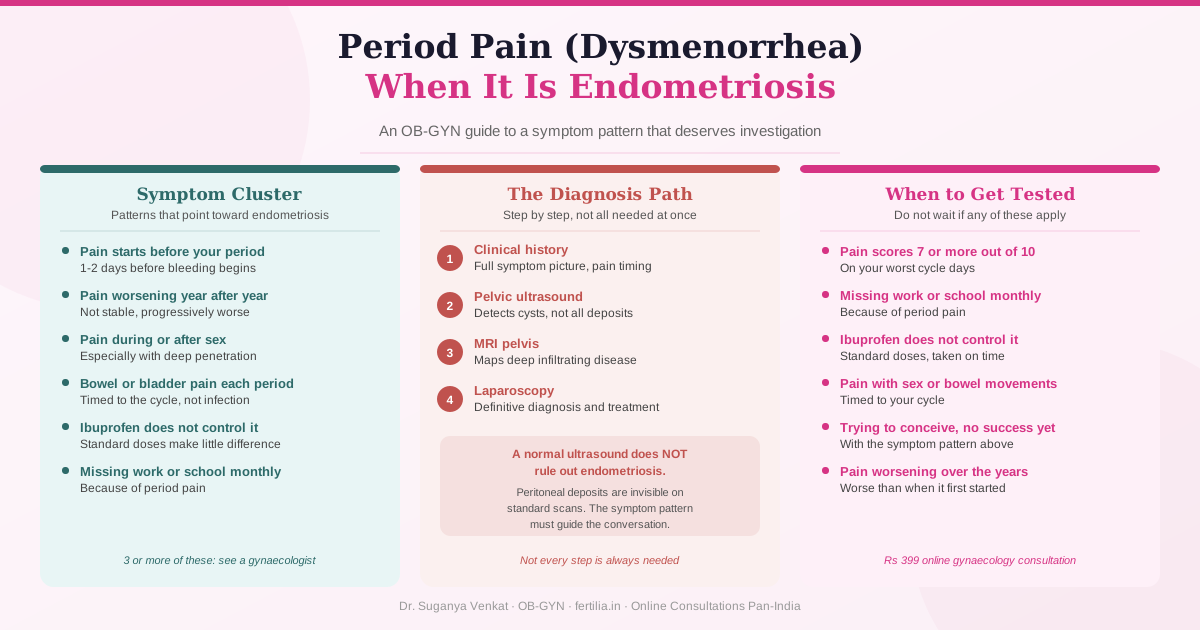
Clinically, we use the Visual Analogue Scale (VAS) to assess pain, where 0 is no pain and 10 is the worst imaginable. Pain that consistently scores 7 or above on your worst cycle days, especially pain not adequately controlled by anti-inflammatory medication at standard doses, warrants a gynaecological assessment.
The Symptom Cluster That Points Toward Endometriosis
No single symptom confirms endometriosis. But there is a specific cluster that, taken together, raises the probability significantly. If you recognise three or more of the following, a conversation with your gynaecologist is overdue.
Pain that starts before your period. In primary dysmenorrhea, cramping typically begins on day one of the bleed. In endometriosis, pain often starts one to two days before bleeding begins. This pre-menstrual onset is a recognisable and clinically useful marker.
Pain that has worsened over the years. Primary dysmenorrhea often improves or stabilises over time, particularly after a pregnancy. If your period pain has progressively worsened cycle by cycle and year by year, that trajectory matters. Pain that started manageable at seventeen and is now severe at twenty-five is not just a case of getting less tolerant. It is more likely a worsening underlying process.
Pain during or after sex. Endometriosis frequently forms deposits on the ligaments behind the uterus and in the space between the uterus and rectum. This causes a specific type of pain during deep penetration, often worsening around ovulation or the days before a period. If you have been avoiding sex or finding it painful at certain times of the month, mention this to your doctor. A guide to telling dyspareunia apart from other causes of painful sex is covered in the dyspareunia and vaginismus comparison.
Pain with bowel movements or urination during your period. When endometriosis deposits involve the bowel or bladder, the contractions of these organs during menstruation can cause pain specifically timed to those days. Some women describe a stabbing sensation during defecation or urination around their period, distinct from any infection.
Non-cyclical pelvic pain. Some women with endometriosis have a background pelvic ache that is present throughout the month and that worsens at menstruation. If your pain is not confined to period days, that is clinically important.
Pain not responding to standard ibuprofen. Primary dysmenorrhea responds well to prostaglandin-inhibiting anti-inflammatory medication taken on time and at an adequate dose. When the pain is driven by endometriosis deposits rather than prostaglandins alone, the same medications are far less effective.
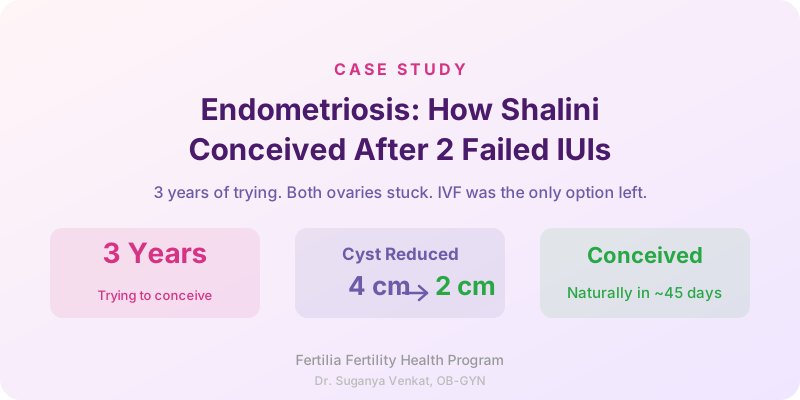
Infertility presenting as a concern. A significant proportion of women first encounter an endometriosis diagnosis not because of pain, but because they have been trying to conceive without success. Endometriosis is found in approximately 25 to 50 percent of women investigated for infertility (ESHRE 2022 Endometriosis Guidelines). If you have been trying for over a year without success and you also have any of the pain features above, endometriosis should be part of your diagnostic evaluation.
If you have been living with severe period pain and are not sure whether it deserves investigation, a video consultation with Dr. Suganya gives you a structured review of your full symptom picture and a clear recommendation on next steps. The consultation is ₹399 and available pan-India. Message directly on WhatsApp: wa.me/919940270499.
Why Diagnosis Is Delayed
Period pain is minimised in many Indian households. Women are told by relatives, and sometimes by doctors, that pain during periods is normal and expected. Some degree of cramping is normal. Pain that wipes you out for two days is not.
Women also adapt quietly. When pain has been present since adolescence, you restructure your life around it without noticing. You stop making plans on the first day of your cycle. You keep painkillers in every bag. You have learned which foods and positions help and which make it worse. This adaptation is not evidence that the pain is acceptable. It is evidence of how much has been quietly tolerated.
Endometriosis is also not visible from the outside. There is no blood test for it. A standard pelvic ultrasound will miss many forms of it. The condition requires a specific clinical history and, in many cases, specific imaging or a surgical procedure to diagnose. A doctor who is not actively asking the right questions can miss it.
None of this means you should accept the situation. It means you need to be specific about your symptoms when you seek assessment.
If you are also noticing changes like spotting between periods, the guide to spotting between periods helps identify which patterns are worth mentioning to a gynaecologist.
How Endometriosis Is Diagnosed
Diagnosis follows a stepwise process. Not every step is required for every woman.
Step 1: Clinical history. A thorough account of your symptom pattern is the foundation. A gynaecologist who asks specifically about pain timing relative to your period, pain with sex, bowel and bladder symptoms during menstruation, and how your pain has changed over years is doing the right assessment. Come prepared with this information. Note when the pain starts in your cycle, how it scores out of ten on the worst days, what medications you take and whether they help, and whether you have missed activities because of it.
Step 2: Pelvic examination. A vaginal examination can detect nodularity or tenderness in the ligaments behind the uterus. When present, this finding is clinically useful.
Step 3: Transvaginal ultrasound (TVS). A pelvic ultrasound is the most common first imaging investigation. It is sensitive for detecting endometriomas (endometriosis cysts on the ovaries) and, when performed by a sonographer with specific training, can detect some forms of deep disease. However, the most common type, peritoneal endometriosis (small deposits on the lining of the pelvis), is largely invisible on standard ultrasound. A normal scan does not rule out endometriosis.
Step 4: MRI pelvis. An MRI provides more detail than ultrasound for deep infiltrating endometriosis, particularly deposits near the bowel, bladder, and uterosacral ligaments. Your gynaecologist may recommend this if the clinical picture suggests deep disease or if surgical planning is being discussed.
Step 5: Laparoscopy. A diagnostic laparoscopy, where a camera is passed through a small abdominal incision under general anaesthesia, is the only test that definitively confirms endometriosis. Deposits can be directly visualised, and a biopsy provides histological confirmation. Treatment can often be performed in the same procedure.
The European Society of Human Reproduction and Embryology (ESHRE) 2022 endometriosis guidelines acknowledge that starting empirical medical treatment based on a convincing clinical presentation, without waiting for surgical confirmation, is appropriate in many situations. Laparoscopy is not always the first step.
When Laparoscopy Makes Sense
Laparoscopy is not a routine investigation for every woman with period pain. It is a day-procedure surgery under general anaesthesia with its own small risks. The decision depends on your full picture.
Consider laparoscopy when:
Medical management has been tried for three to six months and has not adequately controlled your symptoms. Imaging suggests an endometrioma or significant deep disease that may benefit from surgical treatment. You are also investigating infertility and the clinical picture raises endometriosis as a likely contributor. You need a definitive diagnosis for your own understanding or for planning the next steps in treatment.
If your pain is reasonably managed on medication and you are not currently trying to conceive, your gynaecologist may appropriately recommend continuing medical treatment without surgery for now. That is proportionate management, not avoidance.
What Happens After a Diagnosis
A confirmed endometriosis diagnosis opens the door to targeted treatment.
Medical management includes hormonal therapy to suppress the oestrogen-driven growth of endometriosis deposits. The combined oral contraceptive pill, the levonorgestrel-releasing intrauterine system, progestogen-only pills, or GnRH analogues are all used depending on your symptoms, fertility intentions, and preferences. These significantly reduce pain in most women.
Surgical treatment removes or ablates deposits at laparoscopy. For women with endometriomas, cyst excision or drainage may be recommended depending on size and symptom picture.
If fertility is part of your current concern, the approach shifts. Suppressive hormonal therapy does not improve fertility while you are taking it. The endometriosis and fertility guide and the decision guide for natural conception with endometriosis cover this in detail.
For a broader overview of period health, including what patterns to track, the Period Health Resource is a practical starting point.
For more on this, read our guide on Period Cramps Home Remedies.
India-Relevant Practical Support
An anti-inflammatory approach to nutrition does not cure or treat endometriosis, but it may reduce the systemic inflammatory load that contributes to pain in some women. The following additions fit naturally into daily Indian cooking:
Haldi (turmeric), taken with a small amount of fat and black pepper for absorption, is the most researched anti-inflammatory spice in the Indian kitchen. Alsi (ground flaxseed) is rich in omega-3 fatty acids and can be stirred into dahi or added to roti dough. Rajma, kala chana, and moong dal provide plant protein and fibre that support gut health. Palak and methi offer magnesium, which supports smooth muscle function and may reduce uterine cramping severity.
These are additions to your existing meals alongside whatever treatment your gynaecologist recommends, not replacements for medical care.
When speaking to a doctor, being specific about your symptoms helps considerably. Saying: “My pain starts two days before my period. It scores nine out of ten on the worst days. I take 400mg ibuprofen three times a day and it reduces to six. I missed one day of work last month. I have had this since I was seventeen and it has worsened over the past three years.” That level of detail is harder to dismiss and gives your doctor exactly what they need to investigate properly.
Frequently Asked Questions
How do I know if my period pain is endometriosis or just normal cramps? Normal primary dysmenorrhea starts on day one of bleeding, eases within 48 to 72 hours, and responds to standard ibuprofen doses taken on time. Endometriosis-related pain often starts before the bleed, may persist or worsen across subsequent cycle days, and frequently does not respond well to anti-inflammatory medication at standard doses. If your pain causes functional impairment (missing work, school, or normal activities) and has done so repeatedly, a gynaecological assessment is warranted.
Is endometriosis common? Endometriosis affects approximately 10 percent of women of reproductive age globally, roughly 190 million women worldwide (Zondervan et al. 2020 N Engl J Med, PMID 32212520). Indian data suggests similar prevalence, though diagnosis rates are lower because of delayed presentation and the widespread normalisation of period pain.
My ultrasound was normal. Does that mean I do not have endometriosis? Not necessarily. A standard pelvic ultrasound is sensitive for endometriomas (ovarian cysts from endometriosis) but misses peritoneal deposits, the most common form of the condition. A normal scan does not rule out endometriosis. If your symptom pattern is consistent with it, the diagnostic conversation should continue regardless of what the scan shows.
For more on this, read our guide on Ovarian Cyst on Ultrasound. Can endometriosis be treated without surgery? In many cases, yes. Hormonal therapy suppresses endometriosis activity and significantly reduces pain for most women. Surgery is considered when medical management is insufficient, when imaging shows structural disease that benefits from surgical treatment, or when a definitive diagnosis is needed alongside fertility planning.
Does endometriosis always mean I will have trouble conceiving? No. Many women with endometriosis conceive naturally. The impact on fertility depends on the stage and location of disease, whether the tubes are open, age, and how long the condition has been present. Some women discover the diagnosis while investigating infertility and go on to conceive without difficulty after appropriate management.
What is the difference between endometriosis and adenomyosis? In endometriosis, uterine-lining-like tissue grows outside the uterus. In adenomyosis, it grows into the muscular wall of the uterus. Both cause painful, often heavy periods. They can coexist. The adenomyosis guide explains the differences in more detail.
If I have had period pain since I was a teenager, is it too late to get a diagnosis? No. Women receive an endometriosis diagnosis at every stage of life, including those who have had symptoms for twenty years. Diagnosis at any point opens access to targeted treatment that can meaningfully improve quality of life.
If your period pain has been written off as something to simply manage, or if you have recognised yourself in the symptom cluster above, a structured assessment changes what is available to you. A video consultation with Dr. Suganya gives you a thorough review of your full symptom history, a clear explanation of what investigations make sense for your picture, and a management plan aligned with your stage of life and fertility plans.
Message Dr. Suganya on WhatsApp: wa.me/919940270499. The consultation is ₹399 and available online pan-India.