For years, many women are told that their periods are simply heavy, simply painful, and that this is just how their body is. They learn to plan their month around two or three days when leaving the house feels impossible. They carry an extra set of clothes. They take painkiller after painkiller and quietly accept that this is their normal.
Quite often, when one of these women is finally examined and scanned properly, there turns out to be a real, named reason for all of it. The reason is frequently a condition called adenomyosis. And the most important thing I can tell you, right at the start, is this: it has a name, it can be explained, and in most cases it can be treated without anyone reaching first for surgery.
If you have spent years being told that nothing is wrong, I understand why you might be wary of yet another label. So let me walk you through what adenomyosis actually is, how it is found, and the full range of what can be done about it, calmly and honestly.
What this guide covers
This is a plain-language walk through adenomyosis: what it is, the symptoms that point to it, who tends to get it and why, how a doctor confirms it, and the treatment options from the gentlest to the most definitive. I will be honest about what each option can and cannot do, and about where surgery genuinely belongs in the picture.
What adenomyosis actually is
In a healthy uterus, the lining (the endometrium) sits on the inside and sheds each month as your period. The wall of the uterus underneath is muscle (the myometrium).
In adenomyosis, some of that lining tissue grows into the muscle wall where it does not belong. That misplaced tissue still responds to your hormones every month, so it bleeds and swells inside the muscle, with nowhere to escape. Over time the uterus becomes bulky, boggy and tender, and the trapped bleeding sets off inflammation in the muscle. That is what produces the two hallmark problems: very heavy periods and deep, dragging period pain.
For more on this, read our guide on Period Pain (Dysmenorrhea). It is often described as the quieter sibling of endometriosis, where similar lining tissue grows outside the uterus instead of inside the wall. The two frequently occur together. Around 4 in 10 women with endometriosis also have adenomyosis on imaging.
The symptoms that point to it
Adenomyosis does not look the same in every woman. Some have one dominant symptom, some have several, and a small number have almost none at all. The common ones are:
- Heavy menstrual bleeding. Soaking through pads quickly, passing clots, periods that drag on. If you are not sure what counts as heavy, our guide on blood clots in your period: what is normal and what is not walks through the markers.
- Painful periods (dysmenorrhoea). Often a deep, cramping or dragging pain that can be more severe than the cramps you had earlier in life, and that may start a day or two before bleeding.
- A feeling of pressure or heaviness low in the abdomen, sometimes with bloating that women describe as looking a few months pregnant by the end of the day.
- Pain during or after sex, because the uterus is tender and enlarged.
- Tiredness, breathlessness on stairs, pale skin. These are signs of iron-deficiency anaemia from months of heavy bleeding, and they are easy to overlook because they come on so gradually.
Many women have lived with these for so long that they no longer register them as a problem worth raising. If any of this sounds like your last several years, it is worth a proper conversation.
Who gets it, and why
The honest answer is that we do not fully know what causes adenomyosis. The leading explanation is that the natural boundary between the lining and the muscle wall gets disrupted, and lining tissue then works its way into the muscle. Several things are linked to a higher chance of it:
- Age. It is most often diagnosed in women in their 40s, though with better scanning we now recognise it in younger women too. Being younger does not rule it out.
- Having had children, especially more than one pregnancy.
- Previous surgery on the uterus, such as a caesarean section, a fibroid removal (myomectomy), or a D&C.
- Coexisting endometriosis.
None of these are things to feel guilty about. A caesarean, for example, is often a necessary and life-saving decision, and the small associated risk of adenomyosis does not change that. These are simply patterns that help a doctor know when to look more closely.
How it is diagnosed
For a long time, adenomyosis could only be confirmed by examining the uterus under a microscope after a hysterectomy, which is part of why it was so under-recognised and so often dismissed as just bad periods. That has changed.
Today the first step is a good transvaginal ultrasound, ideally read by someone experienced in looking for it. In skilled hands it picks up the typical features (a bulky uterus, a thickened and uneven muscle wall, small cysts within the muscle) with an accuracy of around 78 percent. When the picture is unclear, or when surgery is being planned, an MRI can map it in more detail. Your doctor will usually also check a full blood count to see whether the bleeding has left you anaemic, and may check your thyroid, since thyroid problems can also cause heavy periods.
The point of these tests is not to alarm you. It is the opposite: to replace years of you do not know what with a clear name and, from there, a clear plan.
If you suspect this might be your story and want to think through the next step, you are welcome to message Dr. Suganya on WhatsApp. Consultations are online, across India, so you can talk it through from wherever you are.
Treatment: why surgery is rarely the first answer
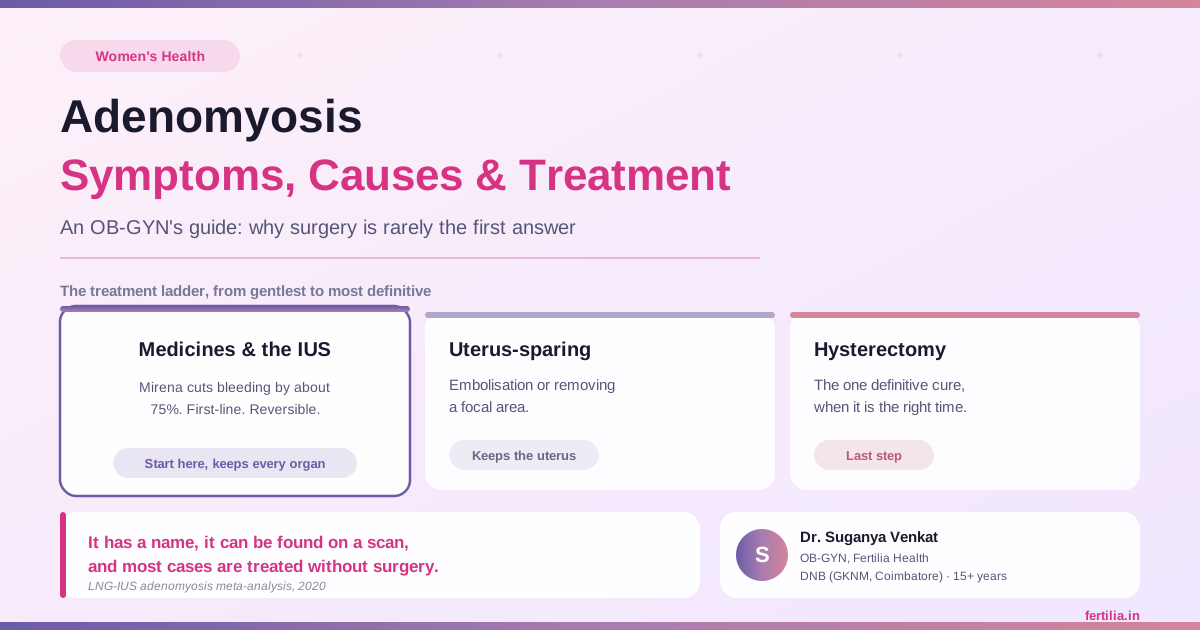
Here is the part that too few women are ever told. Hysterectomy is the only treatment that removes adenomyosis completely, and for some women, after they have completed their family and tried other things, it is genuinely the right and freeing choice. But it is the last rung on the ladder, not the first. For most women there is a great deal worth trying first, and the goal of all of it is the same: calm the bleeding and the pain so that life becomes liveable again.
Let me take you up the ladder, from the gentlest options to the most definitive.
Supporting your body and treating the anaemia
This does not cure adenomyosis, but it matters more than people realise. Months of heavy bleeding quietly drain your iron stores, and that is a large part of why you feel so exhausted. Ask your doctor to check your ferritin (your iron stores), not just your haemoglobin, because ferritin can be low long before haemoglobin drops. Iron-rich Indian foods are worth building in regularly: methi leaves, palak, rajma, kala chana, black sesame (til), moringa leaves, and dates, paired with a vitamin C source like amla, lime or tomato to help absorption. Our iron-rich Indian foods guide has a fuller list. Avoid tea or coffee right after meals, since the tannins block iron uptake.
Medicines for the bleeding and the pain
For the heavy days, tranexamic acid can reduce blood loss by roughly 40 to 50 percent, and it is taken only on the days you bleed, not every day. For pain, anti-inflammatory tablets such as mefenamic acid both ease the cramps and modestly reduce the flow. These do not change the underlying adenomyosis, but for milder cases they can be enough to make periods manageable.
The hormonal IUS (Mirena): the option most women are never offered
For adenomyosis specifically, the hormonal IUS, of which Mirena is the best-known brand, is one of the most effective non-surgical treatments we have, and it is recommended internationally as a first-line option for heavy menstrual bleeding. It is a small device placed inside the uterus during a short clinic visit, with no surgery and no general anaesthesia. It releases a tiny amount of hormone directly into the lining, which gradually becomes very thin, so there is far less to bleed and far less to drive the pain.
The evidence in adenomyosis is genuinely good. In studies of women with adenomyosis, menstrual blood loss typically falls by around 75 percent or more, and period pain scores drop dramatically, with many women going from severe pain to little or none. In one study, average pain scores fell from 7 out of 10 before insertion to 1 out of 10 afterwards. These benefits hold up over two to three years of follow-up.
What makes this matter so much is what it can replace. Because it works directly on the lining and is fully reversible, it lets many women avoid major surgery altogether while keeping their uterus and their ovaries. It is not right for everyone, and the first three to six months can bring irregular spotting before things settle, so it asks for a little patience at the start. Our full, plain-language guide to the hormonal IUS as an alternative to hysterectomy walks through how it feels, the myths, the honest limits, and the cost, and is worth reading before any decision.
Other hormonal medicines
Some women are offered an oral progestin such as dienogest, which can quieten adenomyosis and reduce pain. In specific situations, usually before surgery or to settle severe symptoms for a short while, a doctor may use GnRH agonist injections, which temporarily switch off the ovaries. These are powerful but are generally used only short term, often with add-back hormones to protect against side effects. Your gynaecologist will judge whether either of these fits your situation.
Uterus-sparing procedures
Between medicines and hysterectomy, there are options that treat the adenomyosis while keeping the uterus. Uterine artery embolisation reduces the blood supply to the affected tissue. In selected cases, a surgeon can remove a focal area of adenomyosis (an adenomyomectomy). These are more specialised and are not right for every woman, but they exist, and they are worth asking about, particularly if keeping your uterus matters to you.
Hysterectomy: the definitive option, when it is the right time
Removing the uterus is the one treatment that ends adenomyosis for good. For a woman who has completed her family, who has tried other measures, and whose symptoms are still taking over her life, it can be a genuine relief and the right decision. The important thing is that it should be a choice made after the gentler steps, not the first and only door offered. A hysterectomy in a private hospital in India typically costs from about Rs 85,000 to over Rs 1,00,000 and needs weeks of recovery, whereas a hormonal IUS device is capped at about Rs 3,659 (roughly Rs 6,000 to Rs 9,000 all in) and is done in a single short visit. That difference, in both the body and the budget, is exactly why it is worth trying the gentler steps first.
Your gynaecologist handles the examination, the scan and the medical assessment. What I would gently encourage, if heavy painful periods are taking over your life, is to ask the question out loud: are there steps we can try before surgery? It is a fair question, and you have every right to ask it.
Adenomyosis and getting pregnant
If you are hoping to conceive, the word adenomyosis can feel frightening. Let me steady that. Adenomyosis can make conception and implantation a little harder for some women, but many women with adenomyosis do go on to have healthy pregnancies, sometimes naturally and sometimes with help such as IVF, where a short course of hormonal treatment before the embryo transfer can improve the odds. The treatment plan looks different when pregnancy is the goal (a Mirena, for instance, would not be used while you are trying to conceive), so this is exactly the kind of thing to map out with a doctor who knows your full picture. If your cycles are also irregular, our guide on irregular periods: causes and what helps is a useful companion read.
What you can do this week
- Keep a simple note for one or two cycles: how many pads you use a day, whether you pass clots and roughly how big, how many days you bleed, and any pain or tiredness. This gives your doctor far more to work with than heavy.
- Ask specifically for a ferritin test alongside your haemoglobin if you feel constantly tired.
- If you have been told for years that it is just bad periods but the periods are ruling your life, ask for a transvaginal ultrasound. You are allowed to ask for a clear explanation.
- Remember that surgery is one option among several, and usually not the first.
If you are tired of guessing and would like to talk it through with someone who will take it seriously, you are welcome to send Dr. Suganya a message on WhatsApp. There is no pressure, only an honest conversation about what might help.
Frequently Asked Questions
Is adenomyosis a serious or dangerous condition? Adenomyosis is not cancer and it is not life-threatening. What makes it serious is its effect on quality of life: the heavy bleeding can cause iron-deficiency anaemia, and the pain can be genuinely disabling. The good news is that it responds well to treatment, and the symptoms usually improve a great deal once a clear plan is in place. It also tends to settle on its own after menopause, when the hormones that feed it fall away.
What is the difference between adenomyosis and fibroids? Both can cause heavy, painful periods and a bulky uterus, and they sometimes occur together, so they are easy to confuse. Fibroids are firm, distinct lumps of muscle that grow in or on the uterus. Adenomyosis is lining tissue spread diffusely within the muscle wall, which makes the whole uterus boggy and tender rather than lumpy. A good ultrasound, and sometimes an MRI, can tell them apart, and the distinction matters because it changes which treatments work best.
For more on this, read our guide on Heavy Periods After 35. Can adenomyosis be treated without a hysterectomy? Yes, and for most women that is exactly where treatment should start. Options include tranexamic acid and anti-inflammatory tablets for the bleeding and pain, the hormonal IUS (Mirena), oral progestins such as dienogest, and uterus-sparing procedures. Hysterectomy is the only treatment that removes adenomyosis completely, but it is the last step, considered after the gentler options and usually only once a woman has completed her family.
Does the Mirena really work for adenomyosis? For many women, yes, and the evidence behind it is good. In women with adenomyosis, the hormonal IUS typically reduces menstrual blood loss by around 75 percent or more and brings a large fall in period pain, with benefits lasting two to three years. It works by thinning the uterine lining, it keeps your ovaries and uterus intact, and it is fully reversible. It is not right for every woman, so your gynaecologist will help you decide.
Can I still get pregnant if I have adenomyosis? Many women with adenomyosis do conceive and carry healthy pregnancies. It can make conception a little harder for some, and your doctor may suggest specific support, including a short course of hormonal treatment before IVF in some cases. The plan is tailored to whether you are trying to conceive now, so the best step is an honest conversation that takes your fertility goals into account.
This is general information and not a substitute for a personal consultation. If your heavy, painful periods are part of the perimenopause transition in your 40s, our sister site Menolia covers heavy bleeding in perimenopause in more detail. For the full picture of treatment choices, see heavy periods: causes and every treatment option.