Period Day 1. The hot water bottle is already out. There is a strip of Meftal-Spas on the counter. Someone’s mother has sent a voice note about ajwain water. She is managing pain, following inherited advice, and wondering which parts of this routine make a difference and which are simply habit passed down through the family.
This post works through all of it. The remedies with solid clinical evidence come first. The traditional Indian options that have a physiological basis follow. It also covers when to take medication, how to combine approaches, and when period pain is telling you something that needs an OB-GYN’s attention.
This post covers primary dysmenorrhea, the cramping caused by prostaglandins in a structurally normal uterus. For pain that may point to endometriosis or adenomyosis, see when period pain points to endometriosis.
Why Period Cramps Happen
Understanding the mechanism helps make sense of why each remedy works.
When the uterine lining sheds at the start of the period, it releases chemicals called prostaglandins, particularly prostaglandin F2alpha. These cause the uterine muscle to contract. Strong contractions temporarily reduce blood flow to the uterine wall, producing ischemic pain similar in character to a muscle cramp. The concentration of prostaglandins in the uterine lining correlates with the severity of pain: women with more significant dysmenorrhea tend to have higher prostaglandin levels (Dawood MY. Obstet Gynecol. 2006;108(2):428-41. PMID: 16880317).
Primary dysmenorrhea typically begins within a few hours of bleeding starting, peaks on Day 1, and eases progressively through Days 2 and 3 as the lining is shed and prostaglandin release slows.
This mechanism matters because it is the target of the two most effective interventions: heat and NSAIDs. For more on how a normal cycle works, see menstrual cycle 101.
Heat Therapy: The Best Non-Drug Option
A heating pad or hot water bottle applied to the lower abdomen is the most evidence-backed non-pharmaceutical option for period cramps.
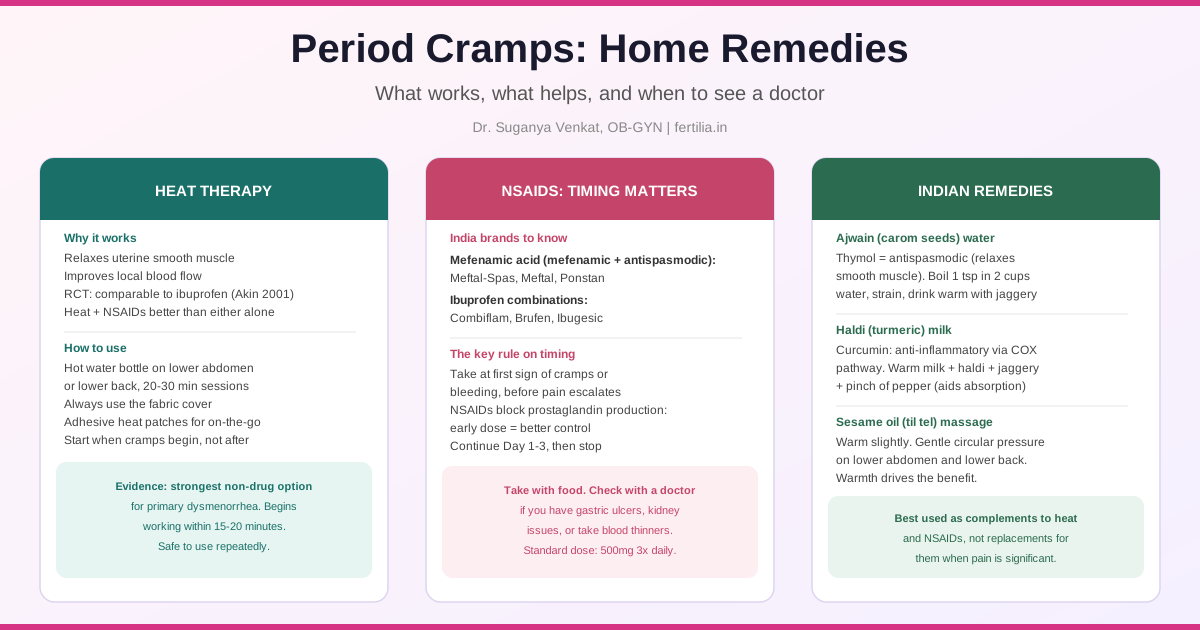
In a randomised controlled trial, Akin and colleagues tested continuous low-level heat (at 40 degrees Celsius) against ibuprofen and against placebo in women with primary dysmenorrhea. The heated patch provided pain relief comparable to ibuprofen, and the combination of heat plus ibuprofen worked better than either alone (Akin MD et al. Obstet Gynecol. 2001;97(3):343-9. PMID: 11239634).
Heat works through two mechanisms. It relaxes smooth muscle, directly reducing uterine spasm. It also improves local blood flow to the uterine wall, which temporarily lost circulation due to the contractions. Both effects are fast-acting and begin within 15 to 20 minutes.
How to use it at home:
- A standard rubber hot water bottle, filled with warm water (not boiling), works well. Apply it to the lower abdomen or lower back for 20 to 30 minutes. Always use the fabric cover to avoid skin burns.
- Adhesive heat patches (available at most Indian pharmacies) are useful when you need to move around during the day.
- Lying with a hot water bottle on your lower abdomen while resting is the most effective way to get the full benefit.
Heat is safe, inexpensive, and effective. It is the right first step when cramps begin.
NSAIDs: When to Take Them and How
Non-steroidal anti-inflammatory drugs (NSAIDs) are the most effective medication for primary dysmenorrhea. A Cochrane review covering 80 trials and over 5,000 women found that NSAIDs are significantly more effective than placebo for dysmenorrhea, with no single NSAID clearly superior to others (Marjoribanks J et al. Cochrane Database Syst Rev. 2015;7:CD001751. PMID: 26224322).
The two most commonly used in India are:
Mefenamic acid (sold as Ponstan, Meftal, and Meftal-Spas). Standard dose: 500 mg three times daily with food. Meftal-Spas adds dicyclomine, an antispasmodic that specifically targets smooth muscle cramping. For women whose pain has a significant cramping quality, this combination is often more effective than mefenamic acid alone.
Ibuprofen (available as Brufen, Combiflam, and Ibugesic). Standard dose: 400 mg three times daily with food. Combiflam adds paracetamol, which provides additional general pain relief.
The Timing Principle
The most important thing about NSAIDs and period pain is when you take them.
NSAIDs work by blocking prostaglandin synthesis. If prostaglandins have already built up and the pain is at its worst before you take the tablet, the medication has to work against an established load. The result is slower and less complete relief.
Take the first dose at the very onset of cramping or bleeding, before the pain escalates. Continue for the first two to three days of the cycle, then stop. Women who start medication early consistently report better pain control than those who wait until pain is severe.
Who should check with a doctor before taking NSAIDs:
- Women with a history of peptic ulcers or significant gastric irritation
- Women on anticoagulants or other medications with NSAID interactions
- Women with kidney disease or reduced kidney function
- Women trying to conceive (NSAIDs in the second half of the cycle can theoretically affect implantation, though evidence here is mixed; brief use on Day 1-2 is generally considered low-risk)
If you have any of these, a short WhatsApp consultation is the simplest way to get a recommendation specific to your situation.
WhatsApp Dr. Suganya for an online consultation, available pan-India. She can advise on the right medication for your cycle and rule out any conditions that need further investigation.
Indian Home Remedies: What Has a Physiological Basis
Several traditional Indian remedies have a plausible mechanism even where formal clinical evidence is limited. Here is what the evidence supports for each.
Ajwain (Carom Seeds) Water
Ajwain seeds contain thymol, a compound with documented antispasmodic and mild analgesic properties. Antispasmodics relax smooth muscle, which is the same muscle type involved in uterine cramping. The mechanism is plausible.
Controlled trials specifically testing ajwain water for dysmenorrhea are limited. However, the antispasmodic action of thymol is established in the pharmacology literature, and warm ajwain water has been used across generations in Indian households for abdominal cramping of various kinds.
To prepare: bring one teaspoon of ajwain seeds to a boil in two cups of water, reduce heat and simmer for five minutes, strain, and drink warm. A small piece of jaggery can be added.
Ajwain water is not a substitute for an NSAID when pain is moderate to severe. As a warm, soothing drink in the early hours of the cycle for mild cramps, or as a complement to medication, it is worth using.
Haldi (Turmeric) Milk
Curcumin, the active compound in turmeric (haldi), inhibits enzymes in the same inflammatory pathway that NSAIDs target, producing anti-inflammatory effects. Small randomised trials have tested curcumin supplementation for primary dysmenorrhea and found reductions in pain severity. The evidence base is still early-stage, and the effect size in food or a single cup of haldi doodh is considerably weaker than a standard NSAID dose.
For mild discomfort, or in the days running up to the period as a preventive measure, a cup of warm haldi milk in the evening is a reasonable practice with no downside.
To prepare: warm one cup of full-fat milk (cow’s or buffalo’s), stir in half a teaspoon of haldi powder, add jaggery or a small amount of honey to taste, and optionally a pinch of black pepper (pepper improves curcumin absorption). Drink warm.
Warm Sesame Oil (Til Tel) Massage
Massage over the lower abdomen with warm sesame oil is a common Indian home remedy for period pain. The warmth component follows the same principle as the heating pad: heat relaxes uterine smooth muscle and improves local circulation. The pressure of massage adds a counterirritation effect, providing a competing sensory signal that can temporarily reduce pain perception.
Controlled evidence specific to sesame oil massage for dysmenorrhea is limited. The warmth is the component best supported by evidence. If you find this approach helpful, it is the heat doing the most work.
To use: warm a small amount of sesame oil (til tel) until comfortably warm, not hot. Apply with gentle circular pressure over the lower abdomen and lower back for 10 to 15 minutes.
What About Castor Oil Packs?
Castor oil packs (a cloth soaked in castor oil applied with warmth) are a traditional remedy for pelvic pain in several Indian home-medicine traditions. There is limited clinical evidence for their use specifically in dysmenorrhea. The warmth component provides the same benefit as a hot water bottle. If you find them helpful, continue.
For more on this, read our guide on Ruptured Ovarian Cyst.
Hydration and Gentle Movement
Staying Hydrated
Staying well-hydrated through the first two days of the cycle helps the body process prostaglandins. Warm fluids are generally more comfortable than cold during cramping: warmth has a mild antispasmodic effect, and cold liquids can worsen cramping for some women.
Good options: warm water, rasam, coconut water (nariyal pani), warm jeera water, or ajwain water. A target of 8 to 10 glasses of fluid through the day is a reasonable baseline.
Gentle Movement
Heavy exercise training on Day 1 at the peak of cramping tends to be uncomfortable and often makes women feel worse. Gentle movement, by contrast, promotes circulation, encourages prostaglandin clearance, and can ease discomfort.
A 20 to 30 minute walk, or gentle yoga poses such as child’s pose, supine twist, or supported bridge, is a reasonable option. Most women find they can return to their usual exercise routine from Day 2 or Day 3 once the peak pain has passed.
Period Pain Terminology Across Indian Languages
Period pain is searched and discussed in several languages across India.
| Language | Common term | Notes |
|---|---|---|
| Hindi | mahavari mein dard (माहवारी में दर्द) | Literally: pain during the monthly cycle |
| Tamil | maadhavidaay vali | Roman transliteration; Tamil script pending Dr. Suganya sign-off |
| Telugu | nela sancharam lo noppi | Roman transliteration |
| Kannada | masika novu | Roman transliteration |
The mechanisms and remedies covered here apply regardless of what the pain is called in your household.
When Home Remedies Are Not Enough
The following patterns suggest the pain is not straightforward primary dysmenorrhea, and an OB-GYN evaluation is useful:
Pain that begins before bleeding starts. Primary dysmenorrhea typically starts with the onset of flow, or within a few hours of it. Pain that precedes bleeding by several hours or days can point to endometriosis.
Pain that worsens each year. Prostaglandin-driven pain tends to remain relatively stable over time. Progressively worsening pain year-on-year is a signal worth investigating for secondary causes.
NSAIDs providing little or no relief. If standard doses of mefenamic acid or ibuprofen do not control your pain, this is worth exploring rather than simply increasing doses indefinitely.
Pain that continues beyond Day 2 or 3. Primary dysmenorrhea generally eases significantly by Day 3. Pain running through the full period or beyond may point to an underlying cause.
Pain alongside heavy bleeding, spotting between periods, or pain during intercourse. Each of these in combination with period pain widens the diagnostic picture.
For a fuller guide to when period pain needs investigation, read period pain and endometriosis: what the symptoms mean. If you also have heavy periods, heavy periods: causes and every treatment option covers what to expect from an evaluation. Women with irregular cycles alongside painful periods may find irregular periods: causes, when to worry and what helps useful as well.
Period pain that responds to heat and two to three days of mefenamic acid is manageable at home. The approach above, starting with heat and medication together, supplemented by ajwain water and haldi milk, covers most of what the evidence supports. If your pain is not responding to these measures, or the pattern has changed, that is the right moment to have a proper OB-GYN consultation.
WhatsApp Dr. Suganya to talk through your cycle history. She consults online, pan-India, and can advise on the next steps for your situation.
Frequently Asked Questions
Is it safe to take mefenamic acid every month for period cramps?
Taking mefenamic acid (Meftal or Meftal-Spas) for two to three days each cycle is considered safe for most women with no underlying gastric or kidney conditions. The recommended dose is 500 mg three times daily with food. If you find yourself needing higher doses than this, needing medication for more days than usual, or finding the medication stops working over time, those are worth discussing with an OB-GYN.
Does ajwain water help with menstrual cramps?
Ajwain contains thymol, which has antispasmodic properties that relax smooth muscle. The clinical evidence specifically for period pain is limited, but the mechanism is physiologically plausible. Many women find warm ajwain water helpful for mild cramps or as a complement to medication. It is not a replacement for NSAIDs when pain is significant.
Can haldi milk relieve period pain? (Kya haldi doodh mahavari mein dard kam karta hai?)
The curcumin in turmeric has anti-inflammatory effects through the same pathway NSAIDs use, though the effect is considerably weaker at food-level doses. Small trials suggest it may reduce dysmenorrhea severity over time. A warm glass of haldi doodh is a helpful complement and may be useful as a preventive measure in the days before the period. For moderate to severe pain on Day 1, it is not a substitute for mefenamic acid or ibuprofen.
Why does a hot water bottle help so much?
Heat relaxes uterine smooth muscle (reducing the spasm that causes cramping) and increases blood flow to the uterine wall, which brief but intense contractions temporarily starve of circulation. A randomised trial found heat at 40 degrees Celsius comparable to ibuprofen for period pain relief, and the combination of heat plus ibuprofen was more effective than either alone. The result: the first hour after applying a hot water bottle genuinely does reduce cramping, not just distract from it.
Should I avoid exercise during my period?
Not entirely. Heavy training on Day 1 at the peak of cramping tends to make women feel worse. Light movement, such as a 20 to 30 minute walk or gentle yoga, can help by promoting circulation and easing muscle tension. Most women return comfortably to their usual exercise routine from Day 2 or 3 once the peak pain has passed.
My cramps have been getting worse every year. Is that normal?
Stable cramping from cycle to cycle is the typical pattern for primary dysmenorrhea. Pain that worsens year on year, pain that starts before bleeding, or pain that stops responding to NSAIDs can point to secondary dysmenorrhea: endometriosis, adenomyosis, or another underlying condition. A gynaecologist evaluation is the appropriate next step. See when period pain points to endometriosis for what that evaluation involves.
What if home remedies are not managing my cramps at all?
If heat and standard doses of mefenamic acid or ibuprofen are not bringing your pain under control, there are further options: hormonal approaches that reduce prostaglandin levels, investigation for secondary causes, or an adjusted medication plan. The starting point is a consultation with an OB-GYN who can take your full cycle history and advise on the direction that fits your situation. WhatsApp Dr. Suganya to begin that conversation.