You have had a period every month for years. But do you know what your body is doing during those other 21 to 28 days?
Most of us were taught a rough outline in school biology. Rarely were we taught what the four phases look like from the inside, which hormones drive each one, or why two women can both have a “regular” cycle and yet have cycles that are 10 days apart in total length.
That gap has real consequences. It affects how you interpret your own symptoms, how you time intercourse when you are trying to conceive, how you read a Day 3 blood test report, and whether a change in your cycle registers as something worth investigating or something to wait out.
This post lays out the four phases of the menstrual cycle, the four main hormones that drive each phase, and what a normal cycle looks like across different women. It is the foundational reference that everything else, whether it is understanding PCOS, tracking ovulation, or interpreting a follicular study, builds on.
What is the menstrual cycle?
The menstrual cycle is the monthly process by which the body prepares for the possibility of pregnancy. Day 1 is the first day of your period. The last day is the day before your next period begins. The cycle then repeats.
It is governed by a back-and-forth signalling system between three structures: the hypothalamus (in the brain), the pituitary gland (at the base of the brain), and the ovaries. The hypothalamus initiates with a signal, the pituitary amplifies it, the ovaries respond with hormones, and the hormone output feeds back to the brain to adjust the next signal. This system is called the hypothalamic-pituitary-ovarian (HPO) axis.
Because the HPO axis responds to signals from across the body, it can be disrupted by stress, significant weight changes, thyroid dysfunction, and poor sleep. Understanding this helps explain why your cycle is sensitive to things that seem unrelated to reproduction.
What does a normal cycle look like?
Normal cycle length in an adult is 24 to 38 days, measured from the first day of one period to the first day of the next. Normal bleeding duration is up to 8 days. You may see 21 to 35 days quoted elsewhere, including in older textbooks and on many websites; FIGO narrowed the range when it standardised these definitions, and 24 to 38 is what gynaecologists work with today. When bleeding falls outside these patterns, the possible causes are worked through using the FIGO PALM-COEIN classification (Munro MG et al., Fertil Steril, 2011; PMID 21496802).
The 28-day figure is a population average, not a standard every woman is expected to match. A consistent 24-day cycle is normal. A consistent 33-day cycle is normal. What matters more than the number is whether your cycle is consistent within your own baseline.
Variation that is worth paying attention to includes:
- Cycles that have recently become noticeably shorter or longer than your established pattern
- Cycle length that varies by more than 7 to 9 days from month to month
- Cycles that have stopped altogether
- Flow that has suddenly become much heavier or much lighter than usual
If irregular periods are already something you are navigating, the guide to irregular periods, causes, and what helps covers the most common causes and what each one typically looks like.
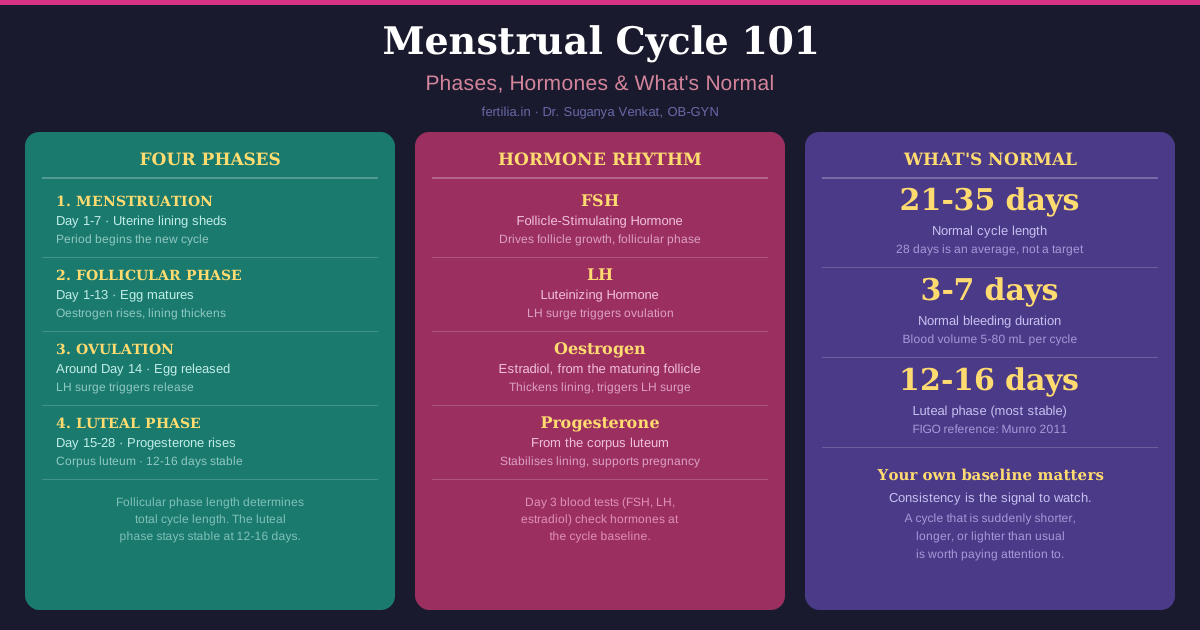
Phase 1: Menstruation (Day 1 to approximately Day 3-7)
Your period is the start of your cycle, not the end of it. This distinction has clinical importance: when a doctor orders a Day 3 blood test for FSH, LH, and estradiol, Day 3 means the third day of your period, which is the third day of the new cycle.
Menstruation occurs because progesterone drops at the end of the previous cycle. Without progesterone support, the uterine lining (endometrium) loses its structural foundation and sheds. The uterus contracts to expel it. These contractions are driven by prostaglandins, which is why anti-inflammatory medications such as ibuprofen reduce period pain: they lower prostaglandin production.
What sheds is the lining your body built during the previous cycle in preparation for a potential pregnancy. When pregnancy does not occur, the corpus luteum regresses, progesterone falls, and that lining is no longer needed.
Period colour ranges from bright red to dark red or brownish, particularly at the very start and end of bleeding. Both are within the normal range.
Phase 2: The follicular phase (Day 1 to approximately Day 13)
The follicular phase overlaps with menstruation. While you are bleeding, your body has already begun preparing the next egg for release.
The pituitary releases FSH (Follicle-Stimulating Hormone). FSH travels to the ovaries and stimulates a cohort of follicles to begin developing. Each follicle is a small fluid-filled sac containing one egg. Most follicles in that cohort begin developing but stop; one becomes dominant and continues maturing over 10 to 14 days.
As the dominant follicle grows, it produces estradiol (a form of oestrogen). Rising estradiol does two things: it causes the uterine lining to thicken and become receptive, and eventually it triggers the pituitary to release a surge of LH (Luteinizing Hormone).
The length of the follicular phase is the primary driver of variation in total cycle length. It can be as short as 10 days in some women and as long as 18 to 20 days in others, and it can vary within the same woman from cycle to cycle. A woman with a 24-day cycle likely has a short follicular phase; a woman with a 35-day cycle likely has a long one. The phase after ovulation is far more stable in duration, so the follicular phase is where the variation sits.
A follicular study (serial ultrasound monitoring) tracks this phase directly, watching the dominant follicle grow until it is ready to release. If you have had a follicular study and want to understand what the measurements mean, the follicular study guide covers the normal values and what an abnormal report indicates.
Phase 3: Ovulation (typically around Day 13-15 in a 28-day cycle)
The LH surge is the trigger for ovulation. Approximately 24 to 36 hours after the LH surge peaks, the dominant follicle ruptures and releases its egg. This is ovulation.
The released egg travels down the fallopian tube toward the uterus. It remains viable for 12 to 24 hours. Sperm can survive in the female reproductive tract for up to 5 days. This is why the fertile window spans the 5 days before ovulation and the day of ovulation itself: intercourse on any of those days can result in fertilisation.
Home ovulation predictor kits (LH strips) detect the urinary LH surge. A positive result means ovulation is likely within 24 to 36 hours. If you are timing intercourse for conception, the day of a positive LH test and the following day are the highest-probability days.
Physical signs that accompany ovulation in some women include a change in cervical mucus (which becomes clearer, more stretchy, and slippery around ovulation, resembling raw egg white), mild one-sided lower abdominal discomfort, and a small rise in basal body temperature that persists for at least 3 days after ovulation. The ovulation symptoms and tracking guide covers all of these methods with practical guidance.
Phase 4: The luteal phase (Day 15 to Day 28 in a 28-day cycle)
After ovulation, the follicle that released the egg collapses and transforms into a structure called the corpus luteum. The corpus luteum is a temporary endocrine gland. Its main output is progesterone.
Progesterone during the luteal phase:
- Matures and stabilises the uterine lining, making it ready to receive a fertilised egg
- Raises basal body temperature by 0.2 to 0.5 degrees Celsius
- Causes the second-half-of-cycle symptoms many women notice: breast tenderness, bloating, mood changes, and fluid retention
The luteal phase is typically 12 to 16 days long, and it is considerably more stable from cycle to cycle than the follicular phase (Lenton et al., Br J Obstet Gynaecol, 1984; PMID 6743610). Counting back 14 days from when your period arrives gives a reasonable estimate of when ovulation occurred.
If fertilisation happens, the embryo implants in the lining and begins producing hCG (human chorionic gonadotropin). hCG signals the corpus luteum to keep producing progesterone, which maintains the lining and supports the early pregnancy. This is why early pregnancy tests detect hCG.
If fertilisation does not happen, the corpus luteum regresses after approximately 14 days. Progesterone falls, the lining sheds, and the cycle begins again.
When the luteal phase is consistently shorter than 10 to 12 days, it is called a luteal phase defect, and it can make it harder for a fertilised egg to implant. The luteal phase defect guide covers what this looks like, how it is assessed, and what can be done about it.
If you have questions about your cycle, your hormone test results, or whether a change in your pattern warrants evaluation, the most direct route is a short video consultation. Dr. Suganya Venkat sees patients from across India.
WhatsApp to book a consultation with Dr. Suganya Venkat
The four hormones: a summary
| Hormone | Where it comes from | Role in the cycle |
|---|---|---|
| FSH | Pituitary gland | Stimulates follicle growth in the ovaries |
| Estradiol (Oestrogen) | Maturing follicle | Thickens the uterine lining; triggers the LH surge |
| LH | Pituitary gland | The LH surge triggers ovulation |
| Progesterone | Corpus luteum | Matures the lining; maintains early pregnancy |
This sequence explains why Day 3 blood tests are drawn on Day 3 specifically. It is the hormonal baseline: FSH and LH are at their cycle low, and estradiol has not yet begun rising from the new cycle’s developing follicle. Elevated Day 3 FSH suggests the ovaries are not responding as expected and the pituitary is compensating by producing more. Elevated Day 3 estradiol can suppress FSH artificially and mask an elevated result, which is why many clinicians check both together.
For a full breakdown of what Day 3 results mean and how to read the numbers in a report, the Day 3 FSH, LH and estradiol guide covers each hormone, what the reference ranges mean, and when results are borderline.
What disrupts the menstrual cycle?
The HPO axis responds to conditions across the body. Common disruptions include:
Stress: Raised cortisol suppresses GnRH, the signal from the hypothalamus that starts the hormonal cascade. Under prolonged or acute stress, ovulation can be delayed by several days, lengthening the total cycle. Once the stressor resolves, the follicular phase usually returns to baseline.
Body weight and energy availability: Significant underweight, rapid weight loss, or intense exercise without adequate caloric intake can suppress HPO axis activity. The result is delayed ovulation, very light cycles, or cycles stopping altogether. This pattern is called functional hypothalamic amenorrhea when cycles stop entirely.
Thyroid dysfunction: Both hypothyroidism and hyperthyroidism alter the hormonal feedback loop and can disrupt cycle regularity, ovulation, and flow. The guide to thyroid and fertility explains why thyroid function matters for the cycle and what to test for.
PCOS (also called PMOS since the 2026 Lancet rename): In PCOS, insulin resistance and elevated androgens interfere with the normal rise of estradiol from the developing follicle. Without the estradiol peak, the LH surge does not occur, and the egg is not released. The result is long, irregular, or absent cycles. PCOS is the most common hormonal cause of irregular cycles in women of reproductive age. The PCOS guide covers the underlying mechanisms and management in detail.
Perimenopause: In the years approaching menopause, FSH rises as the ovaries become less responsive to it. The follicular phase often shortens first, which is why cycles tend to get shorter before they become irregular and eventually stop.
Changes in flow are covered in dedicated posts: heavy periods and their causes and very light or scanty periods.
What your cycle tells you about your health
A regular menstrual cycle is one of the clearest indirect markers of hormonal health in a woman of reproductive age. It reflects that the HPO axis is functioning, that oestrogen and progesterone are rising and falling in sequence, and that the thyroid and adrenal systems are not significantly disrupted.
Changes in the cycle, whether in timing, duration, flow, or associated symptoms, are often among the first visible signals that something has shifted systemically. Thyroid disorders, PCOS, anaemia, significant nutritional gaps, and early perimenopause all tend to announce themselves through the menstrual cycle before they show up as other symptoms.
In India, many women are not routinely asked about their cycle in general consultations unless they present with a specific period complaint. Knowing your own baseline pattern, and being able to describe a recent change clearly, makes any clinical conversation significantly more productive.
The Period Health resource has printable cycle-tracking charts and a guide to what to note each month.
For more on this, read our guide on Period Cramps Home Remedies.
What the cycle is called in Tamil and Hindi
In Tamil, the menstrual cycle is called maadhavidaai chakram (monthly cycle). The period itself is maadhavidaai (மாதவிடாய்). In everyday spoken Tamil, it is also commonly referred to as “monthly.”
In Hindi, the cycle is called masik chakra (मासिक चक्र) or maahvari ka chakra. The period itself is maahvari (माहवारी). In colloquial speech across much of India, “periods aa gaye” or “time ho gaya” are the phrases in routine use.
Understanding the clinical terms for the cycle’s four phases helps considerably when a doctor explains a test result or a scan report. A Day 3 FSH test, a follicular study, and a Day 21 progesterone test all map directly back to this four-phase framework.
Your menstrual cycle is a monthly window into your hormonal health. If you would like to understand your specific pattern, make sense of a test result, or investigate a change in your cycle, Dr. Suganya Venkat is available for online video consultations from anywhere in India.
WhatsApp Dr. Suganya to book an online consultation
Frequently asked questions
Is a 28-day cycle the only normal menstrual cycle?
No. A 28-day cycle is a population average, not a standard. Normal cycle length ranges from 24 to 38 days. A consistent 25-day cycle is within the normal range. A consistent 36-day cycle is within the normal range. What matters most is consistency within your own baseline from month to month. If your cycle sits just below 24 days and has always done so, that is worth mentioning at your next visit rather than worrying about, because a stable short cycle and a newly shortening one are investigated quite differently.
How do I know if I am ovulating?
The most reliable at-home method is a urine LH test (ovulation predictor kit). A positive result means the LH surge has occurred and ovulation is expected within 24 to 36 hours. Other signs that suggest ovulation include a shift in cervical mucus to a clearer, more stretchy, slippery texture around ovulation; mild one-sided lower abdominal discomfort (mittelschmerz); and a small rise in basal body temperature that persists for at least 3 days. Tracking two to three cycles gives a clearer picture of your pattern.
What is the difference between the follicular and luteal phase?
The follicular phase runs from Day 1 of the cycle to ovulation. It is the variable phase: its length determines total cycle length because it depends on how long the dominant follicle takes to mature. The luteal phase runs from after ovulation to the day before the next period. It is more fixed at 12 to 16 days across most cycles. The follicular phase is driven primarily by rising oestrogen; the luteal phase is driven by progesterone from the corpus luteum.
Why does my cycle length change from month to month?
Most month-to-month variation comes from changes in the follicular phase. How quickly the dominant follicle matures depends on ovarian response, cortisol levels, sleep quality, nutritional status, and systemic factors. A stressful month, an illness, or significant travel can delay ovulation by several days and lengthen the cycle. The luteal phase after ovulation tends to remain stable at around 14 days regardless. So if your cycle runs from 26 to 30 days across different months, ovulation is likely shifting between Day 12 and Day 16.
What is a luteal phase defect and does it affect fertility?
A luteal phase defect is when the luteal phase is consistently shorter than 10 to 12 days, usually because the corpus luteum does not produce enough progesterone to sustain the uterine lining long enough for a fertilised egg to implant. It can be associated with periods that arrive earlier than expected, light flow, and difficulty conceiving. The luteal phase defect guide covers evaluation, what tests are useful, and what management options exist.
Period ke phases kya hote hain? (What are the phases of the menstrual cycle?)
Menstrual cycle ke char phases hote hain. Pehla phase menstruation hai jab uterus ki lining shed hoti hai (approximately Day 1 se Day 5-7 tak). Doosra phase follicular phase hai jab ovaries mein egg mature hota hai aur estrogen badhta hai (Day 1 se ovulation tak). Teesra phase ovulation hai jab mature egg release hota hai (28-day cycle mein approximately Day 14). Chautha phase luteal phase hai jab progesterone badhta hai aur uterine lining pregnancy ke liye tayaar rehti hai. Agar pregnancy nahi hoti, progesterone girta hai aur lining shed ho jaati hai, aur naaya cycle shuru hota hai.
Can PCOS (PMOS) affect the menstrual cycle?
Yes, significantly. PCOS (also known as PMOS following the 2026 Lancet rename) is characterised by elevated androgens and, in many women, insulin resistance. Both interfere with the normal rise of estradiol from the developing follicle. Without an adequate estradiol peak, the LH surge does not occur and ovulation is skipped. The result is cycles that are long, unpredictable, or absent. Addressing the underlying hormonal imbalance through lifestyle changes and, where needed, medical treatment can restore more regular ovulation in many women. The PCOS guide covers the drivers and management options.