Everyone tells a new mother to expect tiredness. Broken sleep, a newborn’s round-the-clock needs, and a body still recovering from delivery are all real, and all exhausting on their own. That is exactly why postpartum anaemia is so easy to miss: the symptom it causes, fatigue, is the one symptom every new mother already has an explanation for.
But there is a difference between the tiredness of interrupted sleep and the tiredness of a body that does not have enough iron to carry oxygen efficiently. The first eases with rest. The second does not, no matter how much a mother sleeps when the baby finally does, because rest cannot fix a haemoglobin problem.
This post explains why postpartum anaemia happens, why it is under-diagnosed, which symptoms should prompt a blood test rather than a nap, when that test should happen, and what treatment actually looks like, including for mothers who are breastfeeding.
What this post covers:
- Why postpartum anaemia is so common, and why delivery itself is the biggest risk factor
- Why the diagnosis gets missed, and how to tell it apart from ordinary new-mother fatigue
- When to test, and what the numbers mean
- Treatment: oral iron first, IV iron when needed, and what to expect from each
- Iron and breastfeeding, addressed directly
- Food as support, not a substitute for treatment
Why Postpartum Anaemia Is So Common
Two things stack on top of each other in the weeks around delivery, and together they explain why postpartum anaemia is one of the most common, and most overlooked, conditions in new mothers.
The first is pregnancy itself. Iron demands rise through pregnancy to support the growing baby and placenta, and by the third trimester many women are running on thinner iron reserves than they realise, even with prenatal supplementation. India’s own numbers make this concrete: the fifth National Family Health Survey (NFHS-5, 2019-21) found that 57% of women aged 15 to 49 in India are anaemic, and pregnancy adds further demand on top of an already-common baseline deficiency.
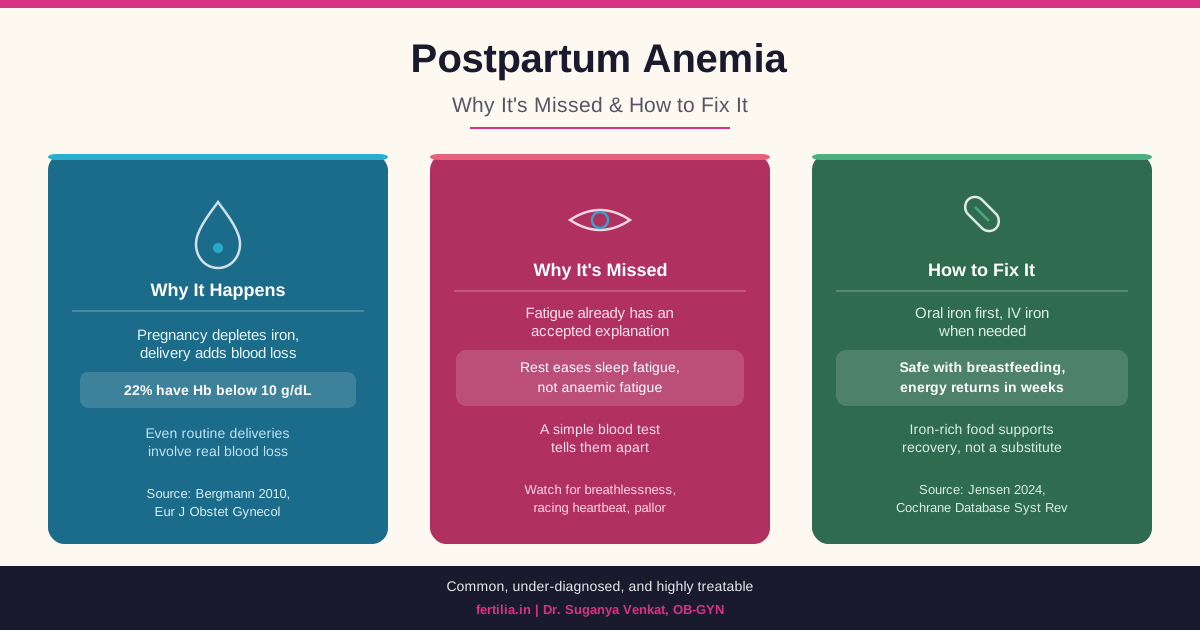
The second is blood loss at delivery, and this is the part that surprises most mothers. Even a routine, uncomplicated vaginal delivery involves a measurable amount of blood loss, and a caesarean typically involves more. A large German study of over 43,000 deliveries found that 22% of mothers had a haemoglobin below 10 g/dL after delivery, and identified estimated delivery blood loss as the single most important risk factor for severe postpartum anaemia, more significant than any other factor measured, including pre-existing anaemia in pregnancy (Bergmann RL et al., European Journal of Obstetrics & Gynecology and Reproductive Biology, 2010, PMID 20303210). In other words, blood loss that obstetric teams consider entirely normal for the delivery itself is still often enough to tip an already-depleted mother into anaemia.
Layer the two together, pregnancy-depleted stores plus routine delivery blood loss, and it becomes clear why postpartum anaemia is common rather than rare. A Cochrane review on the subject notes that postpartum iron deficiency anaemia may affect up to half of women who have just given birth in lower- and middle-income settings (Jensen MCH et al., Cochrane Database of Systematic Reviews, 2024, PMID 39670550). This is not a rare complication. It is closer to an expected consequence of childbirth that we do not screen for consistently enough.
Why the Diagnosis Gets Missed
If postpartum anaemia is this common, why does it go undiagnosed so often? A few reasons, and each is worth naming plainly, because none of them reflect anything a mother did wrong.
Fatigue already has an accepted cause. A mother who says “I am exhausted” in the weeks after delivery is met with total agreement, from family, from friends, from her own expectations. Nobody questions it, which means nobody thinks to test for it either. Anaemia’s most obvious symptom hides in plain sight behind a symptom everyone already expects.
The postpartum visit schedule can leave a gap. Many mothers are seen once soon after delivery and then not again in a structured way until the six-week check. If a haemoglobin check is not routinely built into that early window, weeks can pass with a mother functioning on a haemoglobin level that is quietly making her recovery, her mood, and her ability to care for her baby harder than it needs to be.
Attention is, understandably, on the baby. Feeding, weight gain, jaundice checks, and sleep patterns dominate the early weeks. A mother’s own bloodwork is easy to deprioritise when a newborn is the one being watched most closely.
The symptoms of anaemia can look like “just” postpartum adjustment. Breathlessness on a short walk, a fast heartbeat while feeding, poor concentration, or persistent low mood can all be attributed to new-motherhood in general, when in a genuinely anaemic mother they have a specific, correctable cause.
None of this is anyone’s failure. It is a genuine blind spot in how postpartum care is typically structured, and understanding it is the first step to closing it for yourself.
Symptoms That Suggest More Than Normal Tiredness
Some fatigue is expected after childbirth. The following symptoms are the ones that suggest the fatigue has a cause beyond broken sleep, and are worth mentioning to your doctor rather than waiting out.
- Breathlessness on mild exertion. Feeling out of breath walking to the bathroom, climbing a flight of stairs, or carrying the baby, activities that would not have winded you before pregnancy.
- A racing or pounding heartbeat, particularly while resting, feeding, or with only light activity.
- Dizziness or lightheadedness, especially on standing up.
- Pale skin, pale inner eyelids, or pale nail beds, a sign family members sometimes notice before the mother does.
- Persistent tiredness that does not lift with rest. This is the key distinguishing feature. If a mother sleeps a full stretch and still feels drained rather than restored, that pattern deserves a blood test.
- Headaches, poor concentration, or a sense of mental fog beyond what sleep deprivation alone typically produces.
- Cravings for ice, starch, or clay (pica), an unusual but recognised sign of significant iron deficiency.
The distinguishing feature across nearly all of these is that they persist or worsen even on the nights the baby sleeps longer. Ordinary sleep-deprivation fatigue tracks with how much sleep you actually got. Anaemic fatigue does not track that closely, because rest does not correct low haemoglobin.
If any of this sounds familiar and you have not had your haemoglobin checked since delivery, message me on WhatsApp and we can talk through whether a test is warranted and how to get one done.
When to Test, and What the Numbers Mean
A postpartum haemoglobin check is a simple blood test, the same complete blood count (CBC) used to screen for anaemia at any other time, and it is worth requesting even if it is not automatically offered.
Timing. If you had anaemia diagnosed during pregnancy, or if you had significant blood loss at delivery (a postpartum haemorrhage, or an estimated blood loss your care team flagged as higher than usual), a haemoglobin check in the first days after delivery, before discharge, is appropriate. For mothers without a specific flag, a check at your first postpartum follow-up, and again at the six-week visit if symptoms persist, is a reasonable and practical schedule to ask for. If you are feeling any of the symptoms above and it has been more than a week or two since delivery with no check done, do not wait for the six-week visit. Ask for the test sooner.
What the numbers mean. Postpartum anaemia is generally defined as a haemoglobin below 12 g/dL, with a haemoglobin below 10 g/dL considered a more significant deficiency that typically calls for active treatment rather than dietary support alone, and a level below 8 g/dL flagged for closer clinical attention (Bergmann RL et al., European Journal of Obstetrics & Gynecology and Reproductive Biology, 2010, PMID 20303210). Your own doctor will interpret your specific number in the context of your symptoms, your delivery, and your feeding pattern, so treat these as general reference points rather than a self-diagnosis tool.
A ferritin test, which measures your body’s iron stores rather than the haemoglobin in circulation right now, adds useful detail, particularly if your haemoglobin is borderline but you are still symptomatic. Our complete guide to iron deficiency anaemia covers how to read a full CBC and ferritin panel if you want the detail behind these two tests.
Treatment: Oral Iron First, IV Iron When Needed
The reassuring part of postpartum anaemia is that it is one of the most treatable conditions a new mother can have. Once identified, correcting it is usually straightforward.
Oral iron is the standard first-line treatment. For most mothers with mild to moderate postpartum anaemia, a course of oral iron tablets, typically continued for a few months, corrects haemoglobin levels effectively (Pavord S et al., British Journal of Haematology, 2012, PMID 22512001). The most common side effect is constipation and, less often, stomach upset, both manageable with dietary fibre, adequate fluids, and taking the tablet with food if the empty-stomach dose is not tolerated.
Intravenous (IV) iron is reserved for more significant deficiency or poor oral tolerance. If your haemoglobin is significantly low, if you cannot tolerate oral iron even after adjusting how you take it, or if your doctor judges that you need your iron stores corrected faster than tablets alone would achieve, IV iron is a safe and well-established option. A 2024 Cochrane review comparing the two found that IV iron probably reduces fatigue slightly faster in the first few weeks after delivery compared to oral tablets, though the two approaches showed little difference in fatigue by four weeks, and oral iron caused meaningfully more constipation than IV iron across the trials reviewed (Jensen MCH et al., Cochrane Database of Systematic Reviews, 2024, PMID 39670550). The review’s own conclusion is a useful one to hold onto: haemoglobin numbers are a helpful marker, but how you actually feel, your fatigue, your ability to function, your recovery, is what treatment is ultimately measured against.
What to expect either way. Correcting postpartum anaemia is not instant. Oral iron typically takes several weeks to meaningfully raise haemoglobin, and even IV iron, which acts faster, still needs your body time to use the iron to rebuild your red blood cell supply. Most mothers notice an improvement in energy within a few weeks of starting appropriate treatment, with fuller correction over one to three months. Your doctor will usually recheck your haemoglobin partway through treatment to confirm it is working and adjust the plan if needed.
If you have been feeling this kind of exhaustion since delivery and want help figuring out whether it is anaemia, reach out on WhatsApp and we can go through your symptoms and next steps together, over a video consultation.
Iron and Breastfeeding: Addressed Directly
A common, understandable worry is whether taking iron tablets or having an IV iron infusion is safe while breastfeeding. It is. Iron supplementation, whether oral or intravenous, is considered compatible with breastfeeding, and treating a breastfeeding mother’s anaemia is important precisely because her own iron status does not meaningfully deplete her breast milk’s iron content, but her fatigue and recovery absolutely affect her ability to feed, hold, and care for her baby day to day. Correcting your anaemia supports your recovery and your capacity to breastfeed, rather than working against it. If you have specific concerns about a particular iron formulation, your doctor or the prescribing team can confirm the specific product is breastfeeding-compatible, which the great majority are.
Food Supports Recovery, But It Does Not Replace Treatment
Iron-rich Indian foods have a real role in supporting recovery: ragi, dates, jaggery, moong dal, and dark leafy greens like methi and palak all contribute meaningfully to a mother’s iron intake, especially when paired with a vitamin C source like amla or lemon, which improves how much iron the body absorbs from a plant-based meal. Our detailed iron-rich foods guide walks through a full sample meal plan built around these ingredients.
But it is worth being direct about the limits of food alone: if a blood test has confirmed a haemoglobin low enough to need treatment, diet supports the recovery, it does not substitute for oral or IV iron. The gap between “food iron” and a diagnosed deficiency is usually too large for meals alone to close within a useful timeframe, particularly while a new mother’s body is also recovering from delivery and, for many, supporting breastfeeding. Think of food as reinforcing the treatment your doctor prescribes, not as an alternative to it.
Frequently Asked Questions
How common is postpartum anaemia?
Very common. Research suggests postpartum iron deficiency anaemia can affect as many as half of new mothers in some settings, and a large delivery-outcomes study found 22% of mothers had a haemoglobin below 10 g/dL after delivery. Given how many Indian women already enter pregnancy with some degree of anaemia (NFHS-5 found 57% of women aged 15-49 in India are anaemic), the postpartum period is a particularly common time for it to surface or worsen.
Why does postpartum anaemia get missed so often?
Mainly because its main symptom, fatigue, already has an accepted explanation in new motherhood: broken sleep and the demands of a newborn. Without a specific haemoglobin check, doctors and mothers alike can attribute genuinely anaemic fatigue to normal postpartum adjustment.
How do I know if I have postpartum anaemia or just normal new-mother tiredness?
The clearest distinguishing sign is that anaemic fatigue does not track with how much sleep you actually got, it persists even after a longer stretch of rest. Breathlessness on mild activity, a racing heartbeat, dizziness, and pale skin or nail beds are additional signs that point toward anaemia rather than sleep deprivation alone. A blood test is the only way to know for certain.
When should I get my haemoglobin checked after delivery?
If you had anaemia in pregnancy or notable blood loss at delivery, a check before hospital discharge is appropriate. Otherwise, your first postpartum follow-up visit is a reasonable time to ask for one, and definitely by the six-week visit if any of the symptoms above have been present. Do not wait if you are already feeling unwell.
Is it safe to take iron tablets while breastfeeding?
Yes. Iron supplementation, oral or intravenous, is considered safe and compatible with breastfeeding. Treating your anaemia supports your own recovery and energy, which in turn supports your ability to breastfeed and care for your baby, rather than posing any risk to your milk.
What is the difference between oral iron and IV iron for postpartum anaemia?
Oral iron tablets are the standard first-line treatment and work well for most mothers with mild to moderate anaemia, though they can cause constipation. IV iron is used for more significant deficiency or when oral iron is not tolerated, and research shows it may ease fatigue slightly faster in the first few weeks, though the two approaches tend to even out by around a month. Your doctor will recommend the option that fits your specific haemoglobin level and how you are tolerating treatment.
Can diet alone fix postpartum anaemia?
Iron-rich foods support recovery and are genuinely useful alongside treatment, but if a blood test has confirmed anaemia, food alone is usually not enough to correct it within a reasonable timeframe. Treat diet as a support to the oral or IV iron your doctor prescribes, not a replacement for it.
How long does it take to recover from postpartum anaemia?
Most mothers notice improved energy within a few weeks of starting appropriate treatment, with fuller correction of haemoglobin over roughly one to three months. Your doctor will typically recheck your levels partway through to confirm the treatment is working.
Postpartum anaemia is one of the most under-recognised, and most fixable, parts of the fourth trimester. At Fertilia, Dr. Suganya Venkat sees this pattern often: a new mother who has quietly accepted exhaustion as the price of motherhood, when a simple blood test and a few months of the right treatment could have given her real energy back. If your tiredness has not lifted the way you expected it to, message us on WhatsApp and we will help you get the right test and the right treatment, over a video consultation, at your own pace.
For related reading, see our guides to iron deficiency anaemia, postpartum hair loss, postpartum warning signs, and postpartum depression. You can also download our Postpartum Care Guide for a printable summary of the full six-week recovery timeline.