If your doctor has mentioned postpartum hemorrhage, or you are simply reading ahead of your delivery date, the most important thing to know first is this: it is anticipated, and it is actively managed at every stage of a normal hospital delivery, before it even becomes a concern. Every labour room in India that handles deliveries has a specific protocol running the moment your baby is born, precisely because of this possibility. You are not walking into an unmanaged risk.
This guide covers what postpartum hemorrhage (PPH) actually is, why it happens, what happens in the hospital if it does, and the prevention steps that are already standard practice at the vast majority of Indian hospitals. If you already read our postpartum warning signs guide, you have seen heavy bleeding as one of ten red-zone signs to watch for at home. This post goes deeper: the full clinical picture, for women who want to understand PPH specifically, whether that is out of general preparation or because they are being monitored for it.
What this post covers:
- What postpartum hemorrhage means, and the difference between primary and secondary PPH
- Why it happens: uterine atony and the other recognised causes
- Risk factors worth raising with your obstetrician antenatally
- What actually happens in hospital, step by step
- How PPH is prevented as standard practice during delivery
- What secondary PPH looks like at home, weeks after discharge
What Postpartum Hemorrhage Means
Postpartum hemorrhage is bleeding after delivery that is heavier than the body’s normal recovery process. Clinically, it is generally defined as blood loss of 500 mL or more after a vaginal delivery, or 1000 mL or more after a cesarean, though the number itself matters less to you as a patient than the pattern your care team is trained to recognise: bleeding that continues or increases when it should be settling, or bleeding accompanied by dizziness, a racing pulse, or a drop in blood pressure.
There are two recognised categories, and the distinction matters because they are managed differently:
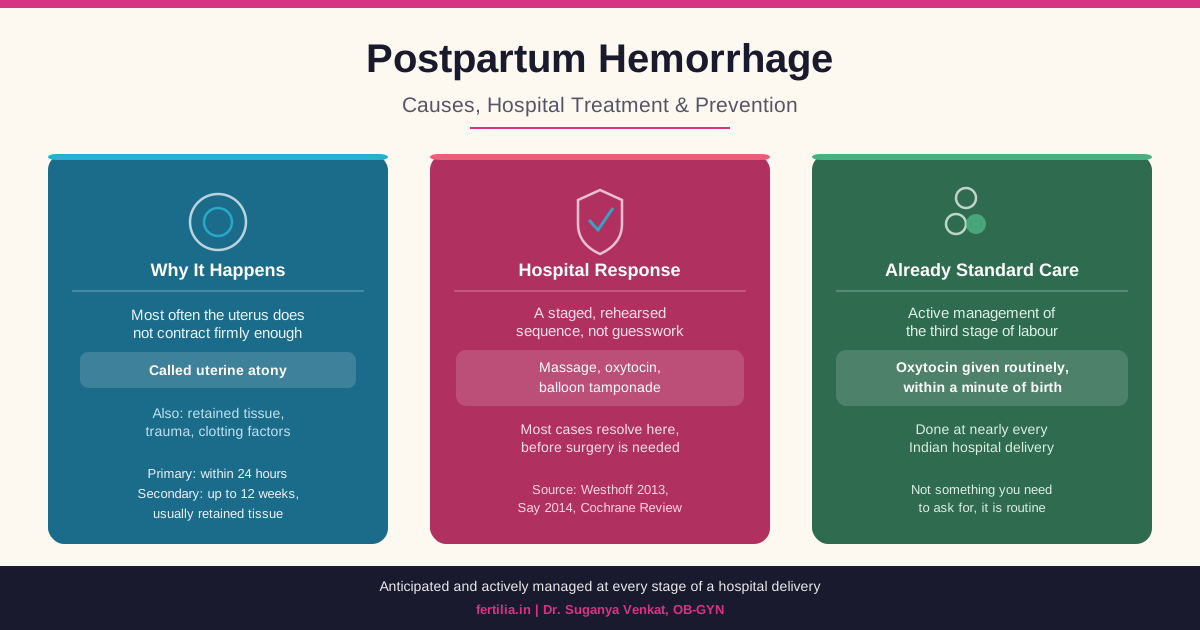
Primary PPH happens within the first 24 hours after delivery. This is the more common and more familiar picture, and it is what hospital teams are actively watching for in the hour immediately following birth. Most cases of primary PPH are caused by uterine atony, which we will come to below.
Secondary PPH happens anytime from 24 hours after delivery up to 12 weeks postpartum. It is less common, often shows up after you have already gone home, and is usually caused by retained placental tissue or infection rather than atony. This is the form our postpartum warning signs guide flags as a home red-zone sign: soaking through one pad an hour, or passing clots larger than a lime, at any point in the six weeks after delivery, warrants going to hospital.
Globally, hemorrhage is among the leading direct causes of maternal death, accounting for approximately 27% of maternal deaths worldwide (Say L et al., Lancet Global Health, 2014, PMID 25103301). That statistic is the reason the prevention and response protocols described below exist and are followed as rigorously as they are. The gap between that global figure and outcomes at a well-equipped hospital following standard protocol is the entire subject of this guide.
Why Postpartum Hemorrhage Happens
Uterine Atony: The Most Common Cause
After delivery, the uterus is supposed to contract firmly, almost like a fist closing. Those contractions compress the blood vessels at the site where the placenta was attached, which is what stops the bleeding naturally. Uterine atony is when the uterus does not contract firmly enough, or relaxes again after an initial contraction. It is the underlying cause in the large majority of primary PPH cases.
Atony itself has recognisable contributors: a uterus that was overstretched during pregnancy (twins, a larger baby, or excess amniotic fluid), a long labour, a very fast labour, or a uterus that has delivered several babies before and has less muscle tone as a result.
Other Recognised Causes
Retained placental tissue. If any part of the placenta or membranes stays attached inside the uterus after delivery, the uterus cannot contract fully around that area, and bleeding continues. This is also the leading cause of secondary PPH, sometimes surfacing days or weeks after a woman has gone home.
Trauma. Tears to the cervix, vaginal wall, or perineum during delivery, or in rarer cases a uterine rupture, can cause significant bleeding that is separate from the uterus’s own contraction. This is why your obstetrician examines the birth canal carefully after delivery, whether or not there was a visible tear.
Clotting disorders. Conditions that affect the blood’s ability to clot normally, whether a pre-existing condition or one that develops during pregnancy (such as severe preeclampsia affecting clotting factors), can make any bleeding harder for the body to stop on its own.
Obstetric teams sometimes use the shorthand “the four Ts” to remember these categories: Tone (atony), Tissue (retained placenta), Trauma (tears), and Thrombin (clotting problems). This checklist approach is part of why response times in a hospital setting are fast.
Risk Factors Worth Raising With Your Obstetrician
None of the factors below mean hemorrhage will happen. They mean your care team plans with extra readiness, which is exactly the point of antenatal risk assessment. Worth mentioning to your obstetrician if any apply to you:
- A previous postpartum hemorrhage in an earlier pregnancy
- A multiple pregnancy (twins or more)
- A prolonged labour, or a labour that needed significant augmentation
- A larger baby (macrosomia)
- Placenta previa or an abnormally attached placenta
- Iron-deficiency anaemia going into delivery, which lowers your reserve if bleeding does occur
If any of these apply to you, your obstetrician will typically plan your delivery at a facility with blood bank access and immediate surgical backup, and will often have uterotonic medication drawn up and ready before delivery even begins. This is routine planning that happens as a matter of course, well before any labour room needs it.
If you are pregnant now and want to talk through your own risk factors and delivery plan, message me on WhatsApp and we can go through it together over a video consultation.
What Happens in Hospital, Step by Step
This is the part most women searching this topic actually want to understand, and it is worth walking through in order, because the sequence itself is reassuring: each step is a well-rehearsed, low-drama response before anything more significant is needed.
Step 1: Uterine massage. The very first response to heavier-than-expected bleeding is firm, rhythmic massage of the uterus through the abdominal wall. This directly stimulates the uterine muscle to contract, and for atony caught early, it is often enough on its own.
Step 2: Uterotonic medication. If massage alone is not sufficient, medications that make the uterus contract are given, almost always starting with oxytocin, given intravenously or by injection. This is first-line treatment and works for the majority of atony cases. If oxytocin alone is not enough, additional uterotonic medications (such as methylergometrine or a prostaglandin agent, chosen based on your specific situation and any contraindications) are added in sequence. A large Cochrane review of prophylactic oxytocin during delivery found it substantially reduces the risk of blood loss over 500 mL compared to no prophylactic treatment (Westhoff G et al., Cochrane Database of Systematic Reviews, 2013, PMID 24173606), which is part of why oxytocin is the default first step both for prevention and for treatment.
Step 3: Checking for retained tissue or trauma. Alongside medication, your obstetrician examines whether any placental tissue remains, or whether a tear is contributing to the bleeding. Retained tissue is removed, and any tears are repaired. This step often happens in parallel with Step 2, not after it, since a hospital team works through the “four Ts” simultaneously rather than one at a time.
Step 4: Balloon tamponade. If bleeding continues despite medication, a specialised balloon device can be placed inside the uterus and inflated, applying direct pressure to the site that is bleeding, similar in principle to pressing on a wound from the inside. This step resolves the large majority of cases that reach this point, without needing surgery.
Step 5: Surgical intervention. Surgery is the escalation step, used only when the measures above have not controlled the bleeding. Depending on the specific situation, this can range from a procedure to place compression sutures around the uterus, to arterial procedures that reduce blood flow to the area, up to a hysterectomy in the rare cases where every other option has been exhausted and the bleeding is life-threatening. The overwhelming majority of postpartum hemorrhage cases are fully resolved at Steps 1 through 4. Surgery, and hysterectomy specifically, is a last-resort measure used in a small minority of cases.
Throughout this sequence, your care team is also replacing lost blood volume with IV fluids and, if needed, a blood transfusion, and continuously monitoring your blood pressure, pulse, and oxygen levels. This is why delivering at a facility with blood bank access matters, particularly if you have any of the risk factors above.
How Postpartum Hemorrhage Is Prevented
Active management of the third stage of labour is the standard practice that prevents most postpartum hemorrhage before it starts, and it happens at essentially every hospital delivery in India today, whether or not you have any risk factors.
Active management means three things happen routinely right after your baby is born, before any bleeding problem has occurred:
A uterotonic medication, almost always oxytocin, is given immediately after delivery, usually within one minute of the baby being born. This is the single most effective preventive step, and the medication is already prepared and ready at every delivery as a matter of routine.
Controlled cord traction is used to help deliver the placenta promptly and completely, reducing the chance that fragments are left behind.
Uterine massage is performed after the placenta is delivered to encourage the uterus to contract and stay contracted.
Because oxytocin is given as routine at essentially every Indian hospital delivery today, active management is already the standard of care your delivery team follows, without you needing to request it. What is worth asking your obstetrician about antenatally, particularly if you have any of the risk factors listed above, is simply confirming that your delivery hospital has blood bank access and 24-hour surgical backup, which is standard at any recognised maternity facility and worth a direct question if you are choosing between options.
Secondary PPH: What to Watch For After You Go Home
Because secondary PPH can appear well after discharge, it is worth restating plainly here rather than assuming you will remember a general checklist from your hospital stay. In the weeks after you go home, go to hospital if you notice:
- Soaking through one full sanitary pad within an hour
- Passing clots larger than a lime
- Bleeding that increases in volume or brightness after it had been getting lighter
- Feeling faint, dizzy, or your heart racing alongside the bleeding
These are exactly the red-zone criteria covered in the postpartum warning signs guide, and they apply through the full 12-week window in which secondary PPH can occur, not just the first days home. Retained tissue and infection, the two most common causes of secondary PPH, both respond well to prompt treatment once identified. There is no benefit to waiting to see if it settles on its own.
Frequently Asked Questions
What is considered postpartum hemorrhage?
Clinically, blood loss of 500 mL or more after a vaginal delivery, or 1000 mL or more after a cesarean. In practice, your care team is watching for the pattern of bleeding, whether it is continuing or increasing when it should be settling, alongside signs like dizziness or a racing pulse, rather than measuring a precise volume in the moment.
What is the most common cause of postpartum hemorrhage?
Uterine atony, where the uterus does not contract firmly enough after delivery to compress the blood vessels at the placental site. It accounts for the large majority of primary PPH cases (those occurring within the first 24 hours).
Can postpartum hemorrhage be prevented?
Yes, and it already is, as a routine part of nearly every hospital delivery in India through active management of the third stage of labour: a uterotonic medication given right after birth, controlled delivery of the placenta, and uterine massage. This combination substantially lowers the chance of significant blood loss and happens as routine at almost every delivery.
How is postpartum hemorrhage treated in hospital?
Treatment follows a staged sequence: uterine massage first, then uterotonic medications (starting with oxytocin), checking for and addressing retained tissue or trauma, and if bleeding continues, a balloon tamponade device. Surgery is reserved for the small number of cases where these steps do not control the bleeding.
What is the difference between primary and secondary postpartum hemorrhage?
Primary PPH occurs within the first 24 hours after delivery and is most often caused by uterine atony. Secondary PPH occurs anywhere from 24 hours to 12 weeks after delivery, usually after you have gone home, and is most often caused by retained placental tissue or infection.
How much bleeding after delivery is too much?
At home, the practical guide is: soaking through one full pad in under an hour, or passing clots larger than a lime, or feeling dizzy or faint alongside the bleeding. Any of these warrant going to hospital rather than waiting.
Does having had postpartum hemorrhage before mean it will happen again?
A previous PPH does raise the chance of it happening again, which is exactly why it is one of the risk factors your obstetrician plans around antenatally. It does not mean it will happen again, and knowing about it in advance means your delivery team can plan your birth at a facility with full readiness and have uterotonic medication prepared before you even begin labour.
Postpartum hemorrhage is one of those topics that sounds frightening in the abstract and far less so once you understand how thoroughly it is anticipated and managed at every stage of a hospital delivery. At Fertilia, Dr. Suganya Venkat’s Postpartum Recovery program supports women through the full six weeks after delivery, including working through your individual risk factors and delivery plan before you ever reach the labour room. If you have questions specific to your pregnancy, message us on WhatsApp and we will go through it together, over a video consultation, at your own pace.
For related reading, see our guides to postpartum warning signs, placenta previa, iron-deficiency anaemia, and VBAC in India. You can also download the Postpartum Care Guide for a printable summary of the full six-week recovery timeline.