You have seen the two lines on the test, and a few days later you feel it: a dull, tugging ache low in your tummy, the same kind of ache that usually means your period is about to start. Your first thought is that something has gone wrong. You check your underwear every time you go to the bathroom, and you wonder whether to call someone or wait.
If this is where you are, take a breath. Mild cramping is one of the most common things women feel in the first weeks of pregnancy. In a US study that followed 341 newly pregnant women every day from 2 to 7 weeks after conception, 85% reported lower abdominal cramping (Sapra KJ et al., Hum Reprod, 2016, PMID 26936888). Most of the time it is the uterus growing and the body adjusting, and it settles on its own.
A small number of cramps do need a doctor to look the same day, and knowing which ones lets you relax about the rest. Here is what this post covers:
- Why cramps happen in weeks 4 to 12, and what ordinary cramping feels like
- What it means when cramps come with spotting
- One-sided pain and the signs of an ectopic pregnancy
- Other causes that are not the uterus at all (constipation, gas, bladder)
- What you can do at home, and which painkillers to avoid
- When to get checked the same day, and what the doctor will look at
Why Your Uterus Cramps in the First Weeks
Implantation. Around 6 to 12 days after ovulation, the embryo settles into the lining of the uterus. Some women notice a light, short-lived ache at this time, sometimes with a little pink or brown spotting. Our guide to implantation bleeding explains how this differs from the start of a period.
The uterus starts growing. In the first trimester the uterus grows from about the size of a small fist towards the size of a grapefruit, and blood flow to the pelvis rises. The muscle and the tissues that hold it in place stretch as this happens, which many women feel as a mild, period-like pulling low in the middle of the tummy. It tends to come and go over days, rather than building up steadily.
Progesterone slows the gut. The same hormone that supports the pregnancy relaxes the muscle of the bowel. Food moves more slowly, gas builds up, and constipation becomes common. That discomfort sits in the same part of the body, so it is easy to read it as uterine cramping.
The ovary is busy too. In early pregnancy the corpus luteum, the small structure on the ovary left behind after ovulation, keeps making progesterone until the placenta takes over. It can form a small fluid-filled cyst and cause a dull ache on one side. This usually settles by the second trimester, but one-sided pain should still be checked once (see below), because the scan is how your doctor tells a harmless ovarian cyst apart from something that needs treatment.
After sex. Some women notice mild tightening or cramping for a while after sex or orgasm in early pregnancy. This usually eases with rest. Bleeding after sex is something to mention to your doctor.
After IVF or IUI. Progesterone support, the stimulated ovaries and the procedure itself can all add to cramping and bloating in the first weeks. Our guide to the two-week wait after IUI or embryo transfer walks through which sensations are expected.
What Ordinary Early Pregnancy Cramping Feels Like
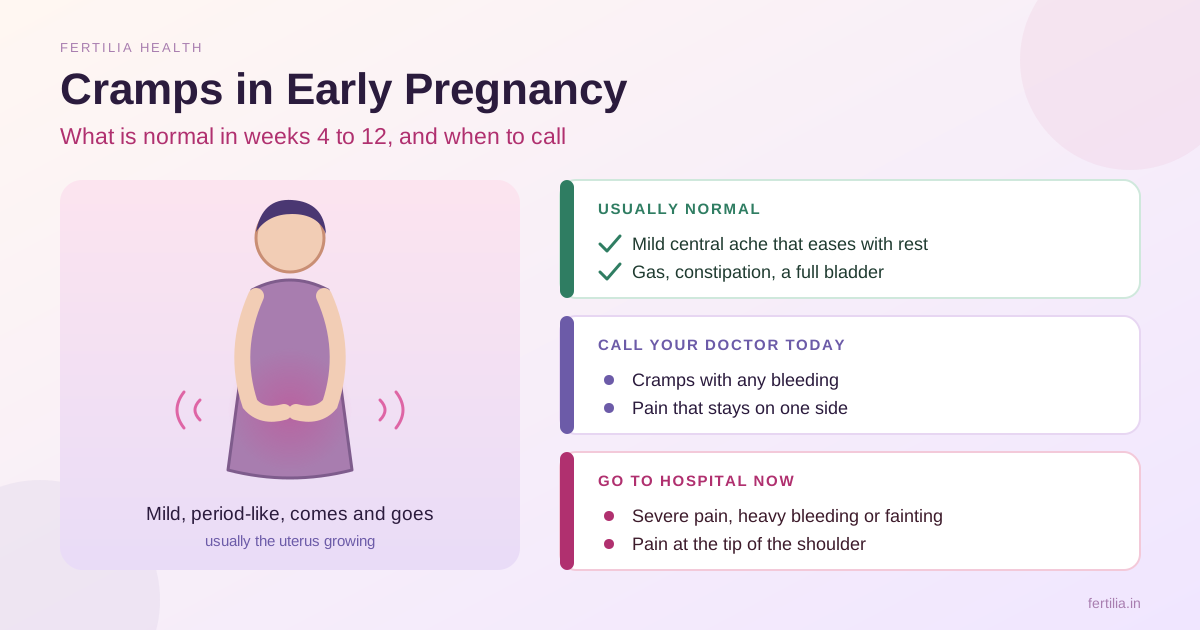
The cramps that are part of a healthy early pregnancy usually share a few features:
- Mild. Like a light period cramp or a dull pulling, not pain that makes you stop what you are doing.
- Central or on both sides, low in the pelvis.
- Comes and goes. It may last minutes, ease when you lie down or change position, and come back later in the day.
- Settles with rest, a warm drink, passing gas or opening your bowels.
- No bleeding at all.
- You otherwise feel well. No fever, no dizziness, no pain on passing urine.
If your cramps fit this picture, with no bleeding, you do not need an emergency visit. It is still worth mentioning them at your next antenatal check, especially if they are new or changing. If there is any spotting or bleeding with the cramps, call your doctor the same day, especially if you have not yet had a scan showing the pregnancy inside the uterus.
Cramps that come with a sharp, brief twinge on one side when you stand up, cough or turn over are often round ligament pain. That is more typical from the second trimester onwards, and our guide to round ligament pain explains it in detail.
Cramps With Spotting: What the Studies Show
Seeing blood alongside cramps is frightening, so here is what the research says, plainly.
Bleeding in the first trimester is common. In a community study of 4,539 pregnant women, about a quarter reported some bleeding. Most of it was spotting or light, most episodes lasted less than three days, and most happened between weeks 5 and 8. Of the spotting and light-bleeding episodes, 28% came with some pain. Leaving aside bleeding at the time of a miscarriage itself, 12% of the women who had bled and 13% of those who had not went on to miscarry (Hasan R et al., Ann Epidemiol, 2010, PMID 20538195).
The US study mentioned above looked at it from the other direction. The chance of losing the pregnancy among women who had cramping (27%) was about the same as in the group as a whole (28%). That overall figure is higher than you may have heard because the women used sensitive daily home tests, which picked up very early losses that would usually pass unnoticed as a slightly late period. What stood out in that study was vaginal bleeding, and most of all bleeding together with cramping (Sapra KJ et al., Hum Reprod, 2016, PMID 26936888).
What this means for you:
- Cramps alone, mild, no bleeding: common and usually part of a healthy pregnancy.
- Light spotting that fades, with mild cramps: common too. Call your doctor the same day for advice, especially if you have not yet had a scan showing the pregnancy inside the uterus.
- Bleeding with cramps, or bleeding that is getting heavier: call your doctor the same day. This does not mean a loss is certain. Many women with exactly this go on to a healthy pregnancy, and an early scan and blood test are how your doctor finds out what is happening. Our guide to threatened miscarriage explains what that term means and what happens next, and our post on subchorionic hematoma covers one common, often harmless, cause of bleeding seen on a scan.
One-Sided Pain: Why Doctors Ask About an Ectopic Pregnancy
An ectopic pregnancy is one that implants outside the uterus, most often in a fallopian tube (American College of Obstetricians and Gynecologists, Obstet Gynecol, 2018, ACOG Practice Bulletin No. 193, PMID 29470343). It cannot continue, and if it is missed, the tube can rupture and bleed. That is why your doctor takes one-sided pain seriously in the first weeks, even though most one-sided aches turn out to be the ovary, gas or constipation.
Call your doctor the same day for:
- Pain on one side of the lower tummy that is persistent
- Pain with spotting or bleeding, especially if you have not yet had a scan showing the pregnancy inside the uterus
- Pain when you open your bowels, or pressure in the back passage
Go to a hospital emergency now, without waiting, for:
- Severe pain, or pain that keeps getting worse
- Pain at the tip of the shoulder, which can come from blood irritating the diaphragm
- Feeling faint, dizzy, very weak, or a racing heart
Some women carry a higher chance of an ectopic pregnancy. A large French study of 803 ectopic pregnancies found that a past pelvic infection and smoking were the main risk factors, with age, previous miscarriage, a history of infertility and past use of an intrauterine device also playing a part (Bouyer J et al., Am J Epidemiol, 2003, PMID 12543617). Women who have had an ectopic pregnancy before, or tubal surgery, are often offered an early scan to confirm where the pregnancy is.
The reassuring part: according to ACOG Practice Bulletin No. 193 (2018), most tubal ectopic pregnancies that are detected early can be treated successfully, either with minimally invasive surgery or with a medicine called methotrexate. Early detection is what makes that possible, and your part is simply to act on the signs above. Our guide to ectopic pregnancy covers diagnosis, treatment and future fertility.
💜 Worried about cramps in your first trimester? Message Dr. Suganya on WhatsApp to book a ₹399 video consultation. Share how many weeks you are, where the pain sits, and any scan or hCG reports you have, and we will go through them with you. If the pain is severe, or you feel faint or are bleeding heavily, go to your nearest hospital emergency first.
Cramps That Are Not Coming From the Uterus
Several common first-trimester problems cause lower tummy pain that feels like cramping:
Constipation. In a study that followed pregnant women with weekly stool diaries, about 24% had constipation in the first trimester, and iron supplements were one of the factors linked with it (Bradley CS et al., Obstet Gynecol, 2007, PMID 18055731). The cramping often eases after a bowel movement. Our guide to pregnancy constipation has Indian food remedies and tips on taking iron tablets more comfortably.
Gas and bloating. Slower digestion means more trapped gas, which can cause sharp, shifting pains on either side. Our guide to pregnancy gas and bloating explains what helps.
Urinary infection. Burning when you pass urine, needing to go very often, or a dull ache just above the pubic bone can point to a urinary infection, which is common in pregnancy and needs treatment with a pregnancy-safe antibiotic. Fever, back pain on one side or vomiting needs a same-day check. Our guide to UTI in pregnancy covers which antibiotics are used and when.
What You Can Do at Home
For mild cramps that fit the “ordinary” picture above:
- Rest and change position. Lie on your side with a pillow between your knees, or sit with your feet up for 15 to 20 minutes.
- Use gentle warmth, not heat. A warm (not hot) compress or a warm bath can ease the ache. Avoid very hot baths, saunas, or a hot-water bag held against your tummy for long periods in early pregnancy, since overheating your core is best avoided in the first trimester.
- Drink water steadily. Too little fluid makes constipation worse. Tender coconut water, buttermilk (moru/chaas) and plain water through the day all count.
- Keep your bowels moving. Add fibre gradually with dal, vegetables, fruit, and a spoon of soaked flaxseed or isabgol if your doctor agrees. A short walk after meals helps both gas and constipation.
- Empty your bladder regularly. A full bladder presses on the growing uterus and adds to the discomfort.
- Keep a short note. Jot down when the cramps come, how long they last, where they sit, and whether there is any spotting. This helps your doctor far more than a description from memory.
Painkillers in early pregnancy
If you need a painkiller, paracetamol is the usual choice in pregnancy; take it at the dose your doctor advises. Avoid ibuprofen, diclofenac, naproxen and similar anti-inflammatory painkillers (NSAIDs) unless your doctor has specifically recommended one. A large Canadian registry study linked NSAID use during pregnancy with a higher chance of miscarriage (Nakhai-Pour HR et al., CMAJ, 2011, PMID 21896698). In a US cohort, NSAIDs were linked to a higher miscarriage risk, while paracetamol was not (Li DK et al., BMJ, 2003, PMID 12919986). Many period-pain tablets and muscle gels sold in India contain an NSAID, so read the label before you take one out of habit.
If your doctor has prescribed low-dose aspirin for a specific reason, such as reducing the risk of pre-eclampsia, keep taking it as advised. That is a planned treatment, and our guide to blood thinners in pregnancy explains who it is for.
When to Get Checked
Go to a hospital emergency now if you have:
- Severe pain, or pain that keeps getting worse over a few hours
- Heavy bleeding (soaking a pad in an hour), or passing clots or tissue
- Pain with fainting, dizziness, a racing heart, or shoulder-tip pain
- Fever with tummy pain
Call your doctor the same day if you have:
- Cramps with any bleeding, particularly before your first scan
- Pain that stays on one side
- Burning on passing urine, or pain with vomiting
- Cramps after IVF with rapid weight gain, a swollen tummy or reduced urine. Our guide to OHSS explains why this matters.
Mention it at your next visit if:
- Your cramps are mild, come and go, and ease with rest
- There has been no bleeding, and you otherwise feel well
What Your Doctor Will Look At
When you call about early pregnancy cramps, your doctor will usually want to know how many weeks you are, where the pain is, whether there is bleeding, and whether you have had a scan yet. Depending on the answers, the next steps may include:
- A transvaginal scan to confirm the pregnancy is inside the uterus and, from about 6 to 7 weeks, to look for a heartbeat. Our guide to the early pregnancy scan at 6 to 8 weeks explains what is seen when.
- Serial beta hCG blood tests 48 hours apart if it is too early for the scan to give a clear answer. Our guide to beta hCG levels explains why one number is rarely enough.
- A urine test to check for infection.
For most women, the check ends with a normal result and a clear plan for the weeks ahead.
What It Is Called in Tamil, Hindi and Telugu
Many women search for this in their own language. These are the everyday phrases they use:
| Language | Common search terms |
|---|---|
| Tamil | Pregnancy la vayiru vali; pregnancy aarambathula kizh vayiru vali; period vali maadhiri pregnancy la |
| Hindi | Pregnancy me pet me dard; shuruaati pregnancy me pet me marod; period jaisa dard pregnancy me |
| Telugu | Pregnancy lo kadupu noppi; early pregnancy lo kadupu noppi; periods noppi laaga pregnancy lo |
| English (search) | Cramps in early pregnancy; period like cramps pregnant; mild cramping early pregnancy |
When you speak to a doctor, the words “cramps”, “lower tummy pain” or “period-like pain” are well understood, so use whichever comes most naturally.
Practical Takeaways
- Mild, period-like cramping that comes and goes is very common in weeks 4 to 12 and usually reflects a growing uterus.
- Constipation, gas and a full bladder cause a lot of early “cramps”; easing them often eases the pain.
- Cramps with bleeding, or pain that stays on one side, deserve a same-day call to your doctor.
- Severe pain, heavy bleeding, fainting or shoulder-tip pain need a hospital emergency now.
- Paracetamol is the usual painkiller choice; avoid NSAIDs unless your doctor advises one.
- A short symptom note (time, place, duration, bleeding) makes any consultation quicker and more useful.
Frequently Asked Questions
Is it normal to have cramps in early pregnancy?
Yes. Mild cramping is one of the most common early pregnancy symptoms. In a US study that recorded symptoms daily from 2 to 7 weeks after conception, 85% of women reported lower abdominal cramping. Mild, central cramps that come and go and ease with rest are usually caused by the uterus growing and stretching.
Pregnancy me pet me dard hona normal hai? (Is tummy pain normal in early pregnancy?)
A mild, period-like ache low in the tummy is common in the first three months and is usually normal. Pain that stays on one side, or comes with any bleeding or spotting, needs a call to your doctor the same day. Severe pain, or pain with dizziness, fainting or shoulder-tip pain, needs a hospital emergency now.
How do I tell pregnancy cramps from period cramps?
They can feel very similar, which is why so many women worry. Early pregnancy cramps are usually milder, come and go over days, and are not followed by a full, heavy flow. If you have a positive test and then develop period-like bleeding with cramps, call your doctor the same day for a scan and blood test.
What kind of cramps can mean an ectopic pregnancy?
Pain that is on one side and persistent, especially with spotting, should be checked the same day. Severe or worsening pain, or pain with shoulder-tip pain, dizziness or fainting, needs a hospital emergency now. A scan confirms where the pregnancy is. When an ectopic pregnancy is found early, it can usually be treated successfully with medicine or minimally invasive surgery.
Can I take a painkiller for cramps in early pregnancy?
Paracetamol at the dose your doctor advises is the usual choice. Avoid ibuprofen, diclofenac, naproxen and other NSAIDs unless your doctor has specifically recommended one, because studies have linked them to a higher chance of miscarriage. Check the label of period-pain tablets and muscle gels, since many contain an NSAID.
I have cramps but no bleeding at 6 weeks. Should I worry?
Mild cramps without bleeding at 6 weeks are common and usually part of a healthy pregnancy. Rest, fluids and easing constipation often help. Call your doctor the same day if the pain stays on one side or any bleeding starts, go to a hospital emergency if the pain becomes severe or you feel faint or dizzy, and otherwise mention the cramps at your next antenatal visit.
Can cramps after IVF or IUI be normal?
Yes. Progesterone support, the stimulated ovaries and the procedure itself can all cause cramping and bloating in the first weeks. Call your fertility doctor promptly if the cramps come with rapid weight gain, a swollen tummy, reduced urine, breathlessness or bleeding.
You Do Not Have to Guess Alone
As an OB-GYN with more than fifteen years of practice, Dr. Suganya Venkat hears the same question in the first trimester more than almost any other: “I have period-like cramps, is the baby okay?” On a video consultation she asks where the pain sits, how long it lasts, and whether there is any bleeding, then looks at your scan or hCG reports. For most women, those answers point to an ordinary, growing pregnancy. For the few who need a scan the same day, she tells them so clearly, and what to ask for at their local scan centre. Fertilia’s Pregnancy Care program looks after these early worries alongside your regular antenatal care with your own obstetrician.
💜 Want someone to look at your cramps, reports or symptoms with you? Message Dr. Suganya on WhatsApp to book a ₹399 video consultation, available online across India. You can also download our free pregnancy guide for week-by-week support through your first trimester and beyond.