IVF treatment in India costs ₹1.5 lakh to ₹3.5 lakh per cycle in 2026, all-in: the base procedure, stimulation medications, and ICSI where it is needed. The reason that figure catches people off guard is the way IVF is priced. Most fertility clinics in India advertise IVF packages starting at ₹90,000 to ₹1,20,000. Those numbers are real. They are also the base procedure fee: the cost of egg retrieval, fertilisation in the lab, and embryo transfer only. The stimulation medications that make your ovaries produce multiple eggs are billed separately. So is ICSI if the sperm needs to be injected individually. So is embryo freezing, frozen embryo transfer (FET), and monitoring scans above the basic package.
For more on this, read our guide on Egg Freezing Cost in India 2026. By the time all of this is added together, the actual per-cycle cost for most patients in India lands between ₹1.5 lakh and ₹3.5 lakh.
For more on this, read our guide on IUI Cost India 2026. This guide gives you the honest breakdown from the ground up: what is typically included in the base package versus billed separately, a component-by-component cost table, verified city-by-city numbers for 2026, and three realistic budget scenarios for one, two, or three cycles.
For more on this, read our guide on HSG Test Cost India 2026. If you are still deciding whether IVF is the right step, read Do You Need IVF? An OB-GYN’s Honest Decision Framework first. To compare IVF with IUI on cost, success rates, and which applies to your situation, see IUI vs IVF: Which Do You Actually Need?.
IVF Cost India 2026: Quick Answer
Realistic per-cycle total, all main components included:
| Setting | Realistic Per-Cycle Total |
|---|---|
| Government hospital / medical college | ₹20,000–₹80,000 |
| Standalone private fertility clinic (non-chain) | ₹1.2–₹2.0 lakh |
| Metro private clinic (Bangalore, Mumbai, Delhi, Chennai) | ₹1.5–₹3.0 lakh |
| Fertility chain (Apollo, Nova, Cloudnine, Oasis, Birla) | ₹2.0–₹3.5 lakh |
Verified from published clinic pricing, fertility aggregator data, and specialist cost guides. Checked June 2026. Ranges reflect base IVF with standard add-ons including stimulation medications, monitoring, and ICSI where applicable. Higher end includes blastocyst culture, embryo freezing, and FET.
What the “Base Package” Actually Covers
When a clinic advertises IVF at ₹90,000 or ₹1,20,000, the base package typically covers:
- Egg retrieval procedure (oocyte pickup)
- Standard fertilisation in the lab
- Embryo transfer (usually day 3)
- Semen processing
- Operation theatre charges and anaesthesia
- Basic monitoring scans (sometimes included, sometimes not)
What is almost always billed separately:
| Extra Item | Why It Is Not in the Base Price |
|---|---|
| Stimulation medications | Varies widely by age and ovarian reserve |
| ICSI | Required when sperm quality is reduced; separate lab procedure |
| Blastocyst culture (day 5) | Advanced lab service; extra embryologist time |
| Embryo freezing and first-year storage | Cryopreservation facility and running cost |
| Frozen embryo transfer (FET) | Separate cycle with its own medications and monitoring |
| Additional monitoring scans | Many clinics charge per scan above a basic number |
| Pre-IVF diagnostic tests | AMH, FSH, semen analysis, uterine assessment |
| Consultation fees | Sometimes included, often charged separately |
| PGT (genetic testing) | Optional, significant add-on |
| Donor eggs or donor sperm | An entirely separate budget category |
This is not unique to any one clinic. It is how IVF is priced across the industry in India. The advertised number is always the procedure fee; the full cost is the sum of all components.
Component-by-Component Cost Breakdown (India, 2026)
Stimulation Medications
Medications are the largest variable cost in an IVF cycle and the item most often underestimated during initial consultations. Gonadotropin injections stimulate the ovaries to produce multiple eggs over 10 to 14 days before retrieval.
| Patient Age | Typical Medication Cost |
|---|---|
| Under 35 | ₹40,000–₹50,000 |
| 35 to 38 | ₹50,000–₹70,000 |
| Over 38 | ₹70,000–₹90,000+ |
Women with low ovarian reserve (low AMH or low antral follicle count) may need higher doses regardless of age, pushing costs toward the upper range. Generic equivalent medications, where prescribed, can reduce this component by 30 to 40 percent without affecting outcomes.
ICSI
ICSI (intracytoplasmic sperm injection) involves injecting a single sperm directly into each egg rather than letting fertilisation happen in a dish. It is recommended when sperm count, motility, or morphology is below normal ranges, when there has been poor fertilisation in a previous cycle, or when very few eggs are retrieved.
Cost in India: ₹15,000 to ₹65,000 depending on the clinic and city.
ICSI is added to a large share of IVF cycles in India, though we are not going to put a percentage on it, because India has no national ART registry publishing that figure and every number circulating online traces back to nothing. What matters for your budget is simpler: if a male factor has been identified or is suspected, expect ICSI to be recommended, and ask for it to be priced separately in your estimate.
Blastocyst Culture
Standard embryo transfer happens on day 3 of development. Blastocyst culture extends this to day 5 or day 6, allowing embryos to develop further in the lab before transfer. Day-5 embryos have somewhat higher implantation potential in many studies, but not all embryos survive to blastocyst stage. Your doctor will advise whether it is appropriate given your embryo number and quality.
Cost: ₹10,000 to ₹30,000.
Embryo Freezing and Storage
Spare embryos from an IVF cycle can be frozen (cryopreserved) for future use. Freezing is also used in a “freeze-all” strategy: stimulate, retrieve, freeze all embryos, and transfer in a later cycle when the uterine environment has recovered from stimulation.
Cost: ₹20,000 to ₹50,000 for cryopreservation, with first-year storage usually included. Annual storage renewal is charged separately after the first year.
Frozen Embryo Transfer (FET)
An FET is the procedure to transfer a previously frozen and thawed embryo. It is a lighter cycle: no stimulation injections, just a lining preparation protocol with oestrogen and progesterone, monitoring scans, and the transfer.
Cost: ₹30,000 to ₹85,000 per FET cycle (including medications for lining preparation).
Pre-IVF Diagnostic Tests
Before starting a cycle, most clinics require a baseline assessment: AMH, FSH, LH, and estradiol on day 3 of the cycle; antral follicle count ultrasound; full semen analysis; uterine cavity assessment (saline sonography or hysteroscopy); and an infectious disease screen (HIV, HBsAg, VDRL) for both partners.
If you have already completed a thorough fertility workup, several of these tests will be available and will not need repeating. A guide to what tests make up a complete workup is here: The Honest Fertility Workup.
Cost: ₹10,000 to ₹35,000 depending on what has already been done and how the clinic bundles tests.
Genetic Testing (PGT)
Preimplantation genetic testing screens embryos for chromosomal abnormalities before transfer. It is most relevant for women over 37, those with recurrent pregnancy loss, or where a specific genetic condition runs in the family. It is not part of a routine IVF cycle for most patients.
Cost: ₹50,000 to ₹1,50,000 or more. This is a significant add-on. Ask specifically what the test changes about the clinical decision before agreeing to it.
City-by-City IVF Cost in India (Verified 2026)
These are realistic all-in totals for a complete cycle including stimulation medications, monitoring, and ICSI where applicable, not the base procedure fee alone.
| City | Realistic Per-Cycle Total |
|---|---|
| Delhi / NCR | ₹1.1–₹2.5 lakh |
| Gurugram / Noida | ₹1.2–₹2.6 lakh |
| Mumbai | ₹1.5–₹3.0 lakh |
| Bangalore | ₹1.4–₹2.5 lakh |
| Hyderabad | ₹1.6–₹2.8 lakh |
| Chennai | ₹1.45–₹2.75 lakh |
| Coimbatore and tier-2 cities | ₹1.0–₹2.0 lakh |
| Government hospital (where available) | ₹20,000–₹80,000 |
Source: drpankajtalwar.com IVF cost data, drhrishikeshpai.com 2026 breakdown, arcivf.com, indiraivf.com pricing guides. Verified June 2026. These are estimates; always request a written itemised quote before starting a cycle at any clinic.
Metro cities charge more because of infrastructure costs, specialist fees, and in many cases, brand premium for the larger chains. A standalone fertility specialist in a tier-2 city often delivers equivalent lab standards and clinical care at a meaningfully lower total cost.
Three Realistic Budget Scenarios
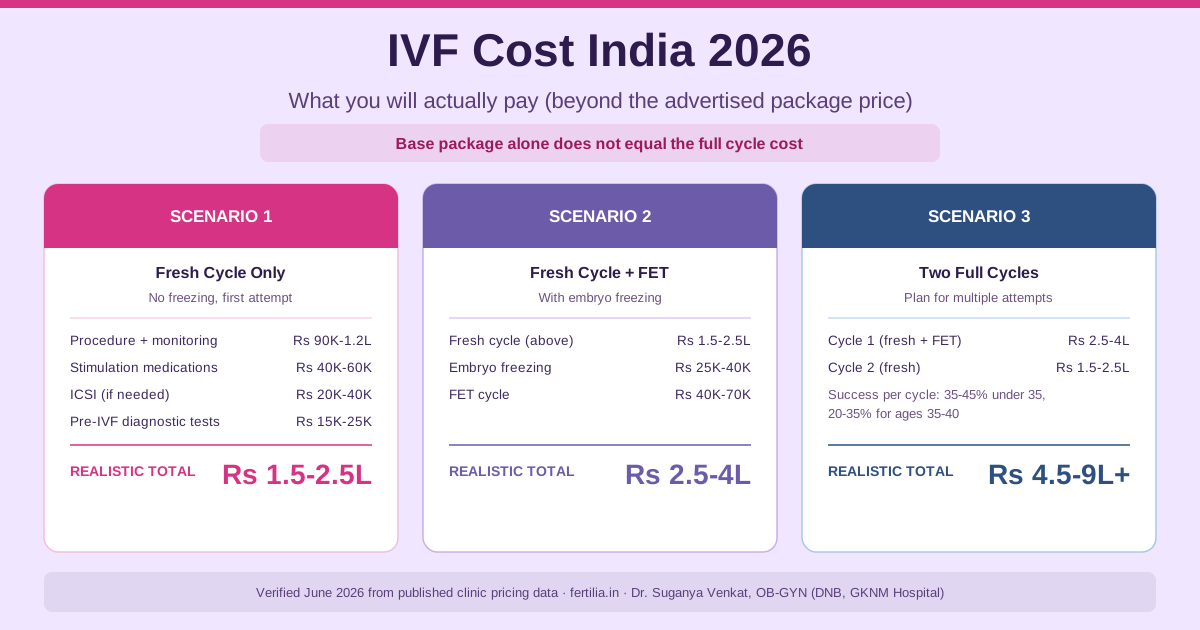
Scenario 1: One Fresh Cycle, No Freezing
Relevant for a first cycle attempt, good ovarian reserve, patient under 35, sperm quality adequate.
| Component | Estimated Cost |
|---|---|
| Base procedure and monitoring | ₹90,000–₹1,20,000 |
| Stimulation medications | ₹40,000–₹60,000 |
| ICSI (if needed) | ₹20,000–₹40,000 |
| Pre-IVF diagnostic tests | ₹15,000–₹25,000 |
| Consultations | ₹5,000–₹10,000 |
| Realistic total | ₹1.5–₹2.5 lakh |
Scenario 2: Fresh Cycle Plus Embryo Freezing and FET
Relevant for a freeze-all strategy, or when one or two extra embryos are available after a fresh transfer that did not result in pregnancy.
| Component | Estimated Cost |
|---|---|
| Fresh cycle components (above) | ₹1.5–₹2.5 lakh |
| Embryo freezing | ₹25,000–₹40,000 |
| FET cycle | ₹40,000–₹70,000 |
| Realistic total | ₹2.5–₹4.0 lakh |
Scenario 3: Two Full Fresh Cycles
This is the scenario many couples do not plan for at the outset. Per-cycle success rates at private clinics in India for women under 35 typically range from 35 to 45 percent. For women between 35 and 40, approximately 20 to 35 percent. These are clinical pregnancy rates; live birth rates are slightly lower. A single cycle does not always succeed, and that is a reality worth planning around financially before starting.
Two full cycles: ₹3.0–₹5.0 lakh or more.
This is said not to discourage, but so that financial planning is accurate from the beginning rather than a source of added stress during treatment.
IVF decisions are better made with a clear picture of your individual situation than from a general guide. Dr. Suganya offers online video consultations pan-India at ₹399. She will review your reports, explain what the numbers mean for your specific case, and advise honestly on what options are available, including whether there are steps worth trying before a full IVF cycle.
Message Dr. Suganya on WhatsApp
Government Hospital IVF
Government medical colleges in several Indian states offer IVF at substantially reduced cost through their reproductive medicine departments. The challenges are real: waiting lists can be long, eligibility criteria apply in some programs, not every city has an active program, and the package may not include all add-ons.
Approximate government hospital cost: ₹20,000 to ₹80,000 per cycle where programs exist.
This is a genuine option for couples for whom private IVF cost is a significant barrier. It requires calling the hospital’s reproductive medicine or fertility department directly to understand availability, the wait time, and what is covered.
Cumulative Cost Across Multiple Cycles
Most fertility guidelines recommend evaluating treatment strategy after 3 to 4 IVF cycles with a patient’s own eggs, taking into account embryo quality, uterine factors, and individual age and reserve. This is not a fixed number; the conversation depends on what the cycles show.
Cumulative cost across three cycles: ₹4.5 to ₹9 lakh or more, depending on add-ons and city.
Some clinics offer multi-cycle packages (typically 2 to 3 cycles at a bundled price) at 15 to 25 percent less than individual cycle pricing. These can make financial sense if you are committed to multiple attempts, but read the terms carefully before signing: what the package includes, what happens if the first cycle succeeds, and what is refunded if you discontinue.
The Two Variables That Move the Total Cost Most
Medications. A 33-year-old with good ovarian reserve may need ₹40,000 in stimulation medications; a 39-year-old with diminished reserve may need ₹80,000 to ₹1,00,000. No clinic can predict this precisely until your first baseline scan and the early monitoring scans during stimulation.
Whether ICSI, blastocyst culture, and FET are needed. Each adds ₹30,000 to ₹1,00,000 to the base procedure. For most couples with a male factor component, ICSI is very likely to be recommended. For couples with more embryos than expected, freezing and FET become relevant.
The three to four months before an IVF cycle are also an opportunity to work on egg quality through nutrition, sleep, and reducing oxidative stress. This does not change the cost calculation, but it can improve the baseline you are working from. A detailed guide is here: How to Improve Egg Quality Before IVF.
Practical Notes on Pricing
Ask for a written itemised quote. Verbal estimates during a consultation often do not include all components. A written breakdown, itemised by procedure, medication, and add-ons, is how you compare clinics on equal terms and plan accurately.
Generic medications are a legitimate option. Generic gonadotropins are bioequivalent to branded versions. A doctor who is open to discussing generics without resistance is generally focused on outcomes rather than product margins. This alone can save ₹10,000 to ₹20,000 per cycle.
Tax deductions generally do not apply. Section 80D covers health-insurance premiums, CGHS contributions and preventive health check-ups, not fertility treatment, so do not budget on the assumption that your IVF spend is deductible. If you have a specific situation, ask a chartered accountant rather than planning around it.
Fertility chain pricing includes significant overhead. Large chains carry infrastructure costs, marketing spends, and in some cases, a brand premium that an independent specialist does not. An experienced reproductive endocrinologist at a standalone clinic frequently delivers equivalent lab outcomes and clinical care at a lower total price.
Frequently Asked Questions
How much does IVF treatment cost in India? IVF treatment in India costs ₹1.5 lakh to ₹3.5 lakh per cycle in 2026, all-in. That figure covers the base procedure, stimulation medications, and ICSI where it is needed, and it is the realistic number to plan around rather than the ₹90,000 to ₹1.2 lakh base package most clinics advertise. Government medical college programs, where available, offer the same treatment at ₹20,000 to ₹80,000 per cycle, with the trade-off of longer waiting lists.
What is the average IVF cost in India in 2026? A realistic all-in cost for one IVF cycle in India in 2026 is ₹1.5 to ₹2.5 lakh at a private standalone fertility clinic, rising to ₹2.0 to ₹3.5 lakh at fertility chains in metro cities. Government hospitals offer IVF at ₹20,000 to ₹80,000 where programs are available. The key qualifier is “all-in”: the base package advertised by many clinics (₹90,000 to ₹1,20,000) excludes stimulation medications, ICSI, and other common add-ons.
Why do clinics advertise IVF at ₹90,000 when it actually costs more? The advertised figure is the base procedure fee: egg retrieval, fertilisation, and embryo transfer. Stimulation medications (typically ₹40,000 to ₹90,000), ICSI (₹15,000 to ₹65,000), embryo freezing, FET, and monitoring scans are billed as separate line items. This is industry-wide practice, not limited to specific chains. Asking for a written itemised quote that includes all anticipated components is the way to compare clinics fairly.
IVF ki kitni cost hoti hai India mein? India mein ek private clinic mein pura IVF cycle ka kharcha, dawaiyon aur ICSI milake, typically ₹1.5 lakh se ₹3 lakh ke beech hota hai. Government hospital mein yeh ₹20,000 se ₹80,000 tak ho sakta hai, lekin waiting list hoti hai. Tier-2 cities mein cost metro se thoda kam hota hai.
Is ICSI always needed with IVF? Not always. Standard IVF, where sperm and egg are placed together in a dish, is sufficient when sperm count, motility, and morphology are within normal ranges and there has been no prior fertilisation failure. ICSI is recommended when sperm parameters are below normal, when fertilisation in a previous cycle was poor, or when very few eggs are retrieved. Your doctor reviews the semen analysis and makes the call after egg retrieval.
What is the IVF success rate in India? Reported success rates at private clinics in India range from 35 to 45 percent per cycle for women under 35, and 20 to 35 percent for women aged 35 to 40. These figures are not standardised across clinics. When comparing published success rates, ask whether the figure is clinical pregnancy rate (heartbeat seen on scan) or live birth rate, and whether it is per retrieval or per transfer. A 39-year-old with good ovarian reserve and good embryo quality can have outcomes comparable to a younger patient with diminished reserve.
For more on this, read our guide on IUI Success Rate India 2026. Does IVF cost include the FET if the fresh cycle fails? No. An FET is a separate procedure billed as a separate cycle. The cost is ₹30,000 to ₹85,000 for the FET cycle, which includes lining preparation medications and monitoring. Some multi-cycle packages include one FET, but verify this explicitly before signing a package deal.
Are there cost-saving options for IVF in India? Three practical options: generic stimulation medications can reduce medication cost by 30 to 40 percent without affecting outcomes. Government hospital programs offer significantly lower costs for eligible patients. Multi-cycle packages from private clinics (2 to 3 cycles) typically offer 15 to 25 percent per-cycle savings compared to individual cycle pricing.
The most useful thing a consultation can add is a specific picture of your situation: what your ovarian reserve looks like, what your likely medication response will be, whether ICSI is going to be needed, and whether there are steps worth taking before committing to a full IVF cycle. That clarity makes budgeting far more accurate than any general guide, and the 90-day IVF Support program is there to prepare your body in the weeks before a transfer.
Message Dr. Suganya on WhatsApp for a ₹399 Online Consultation
Consultation is online, pan-India, via video call or phone.