A version of this conversation comes up in my online consultations most months. A woman shares her IVF quotation on the call, and two lines near the bottom have numbers next to them and no explanation: laser assisted hatching, and embryo glue. Together they can add Rs. 30,000 to Rs. 50,000 to the cycle. She said yes to both at the clinic, because saying no to something described as improving your chances feels almost impossible when you are the one hoping. Then she got home, looked at the total, and wanted to understand what she had agreed to.
I am Dr. Suganya Venkat, an OB-GYN, and across fifteen years and more than a thousand pregnancies the add-on question has become one of the most common things women bring me from a fertility clinic. Here is what these two are, and what the trials show for each.
The short version, before the detail. The two are not equivalent, and the evidence points in different directions. For assisted hatching, the largest systematic review could not establish a live birth benefit, and the European fertility society recommends against it. For hyaluronan-enriched transfer medium (the category EmbryoGlue belongs to), the same body of Cochrane evidence found a moderate-quality live birth benefit in one specific setting, and the same society recommends it. So a clinic offering you both is not offering you one thing twice.
What Assisted Hatching Is
Every egg, and then every early embryo, sits inside a thick protein coat called the zona pellucida. Before an embryo can implant in the uterine lining, it has to break out of that coat. Embryologists call this hatching.
Assisted hatching is a laboratory step done shortly before transfer, in which the embryologist thins the zona pellucida or makes a small hole in it, using a laser, a fine acid solution, or a mechanical tool. In India it is almost always offered as laser assisted hatching, sometimes abbreviated LAH on your quotation. The idea behind it is straightforward and reasonable: if the coat is thicker or harder than usual, perhaps because of the woman’s age or because the embryo has been frozen and thawed, helping the embryo out might improve implantation.
It is a real technique with a sensible rationale. The question is whether it changes the outcome that matters, which is a baby.
What the Trials Show for Assisted Hatching
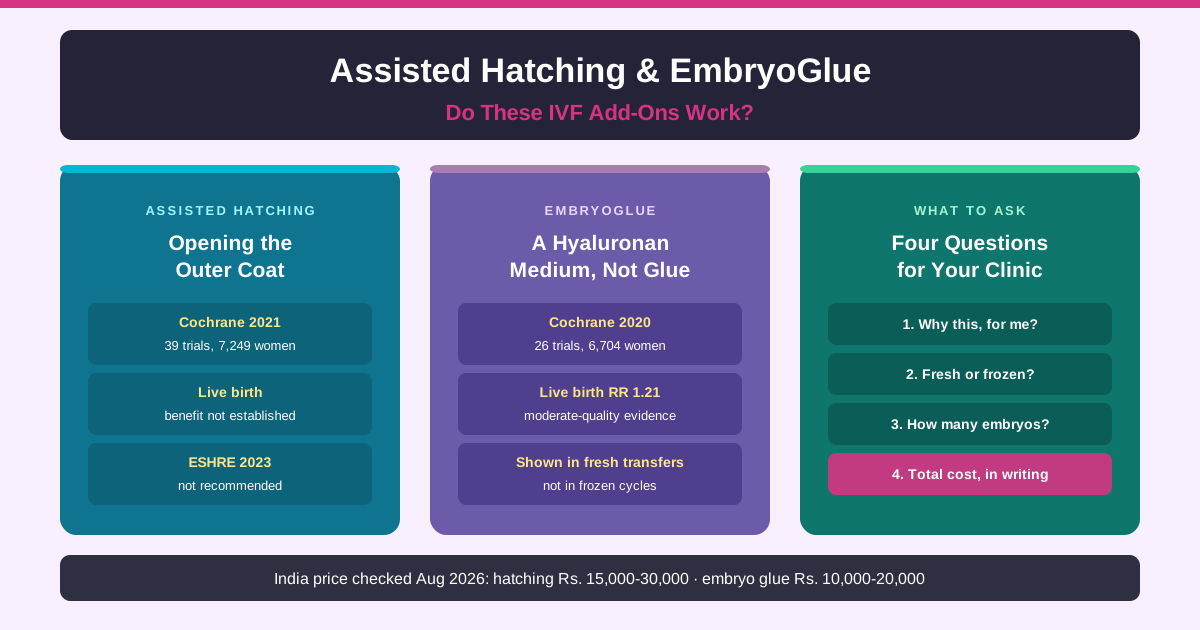
The most complete answer comes from a Cochrane systematic review published in March 2021, which pooled 39 randomised controlled trials covering 7,249 women (Lacey et al., Cochrane Database of Systematic Reviews, PMID 33730422). This is a large evidence base by fertility standards.
Three findings from it are worth knowing.
Live birth. Only 14 of those 39 trials reported live birth at all, and across them the reviewers concluded they were uncertain whether assisted hatching improved it (odds ratio 1.09, 95% confidence interval 0.92 to 1.29, 2,849 women, low-quality evidence). Put in plain terms, if the live birth rate without hatching is around 28 percent, the rate with it sits somewhere between 27 and 34 percent, a range that includes no benefit at all.
Clinical pregnancy. Pooling all 39 trials, clinical pregnancy looked slightly better with hatching (odds ratio 1.20). But among the 14 trials that also tracked live birth, the effect largely disappeared (odds ratio 1.07, 95% CI 0.92 to 1.25). A signal that shrinks when you look at the higher quality subset is a signal to treat carefully.
Multiple pregnancy. This is the part rarely mentioned at the quotation stage. Assisted hatching was associated with a higher multiple pregnancy rate (odds ratio 1.38, 95% CI 1.13 to 1.68, 18 trials, 4,308 women). If the twin rate without hatching is around 9 percent, with hatching it sits closer to 10 to 14 percent. Twin pregnancies carry higher risks of preterm birth, growth restriction, and maternal complications, so this matters for how the transfer is planned.
The professional bodies have read the same data and landed in the same place. ESHRE, the European Society of Human Reproduction and Embryology, published a 42-recommendation good practice document on IVF add-ons in Human Reproduction in November 2023 (ESHRE Add-ons working group, PMID 37747409). Its own summary of that exercise is worth quoting, because it describes the whole field rather than one add-on: of the 42 recommendations, none could be based on high-quality evidence and only four on moderate-quality evidence. Its recommendation on this one is a single sentence: “Assisted hatching is not recommended.” The reasoning in its summary table is that there is no evidence of benefit on live birth or miscarriage rate, alongside the complication of an increased multiple pregnancy rate.
The UK regulator, the HFEA, rates assisted hatching grey on its traffic-light scale for improving the chance of having a baby for most fertility patients, meaning it cannot rate effectiveness because there is insufficient moderate or high quality evidence (hfea.gov.uk, assisted hatching page, checked August 2026). That same page quotes the UK’s National Institute for Health and Care Excellence: “Assisted hatching is not recommended because it has not been shown to improve pregnancy rates.”
Is there any group it helps?
This is the fair question, because “no average benefit” and “no benefit for anyone” are different statements. ESHRE’s review notes a subgroup analysis suggesting that in women with a poor prognosis, assisted hatching may slightly improve the clinical pregnancy rate (odds ratio 1.68), but not the live birth rate. A subgroup finding inside low-quality evidence is a reason to keep studying something, not a reason to pay for it as though the answer were settled. The HFEA page puts it plainly: some believe assisted hatching leads to higher birth rates in specific subgroups, and there is no high quality evidence supporting its use for any patient group.
If your clinic recommends it specifically for you, ask what in your history prompted that, such as a documented thick zona on a previous cycle or a particular thaw history. A reason you can hear and ask questions about tells you the decision was made about your case.
If you are looking at an IVF quotation right now and cannot tell which lines are core treatment and which are optional, an online consultation can help you read it before you sign. WhatsApp us at +91 99402 70499 to set up a call.
What EmbryoGlue Is
EmbryoGlue is a brand name, and the name does the technique no favours. Nothing is glued. It is a culture medium enriched with hyaluronan (also called hyaluronic acid), the solution the embryo sits in for a short period immediately before it is loaded into the transfer catheter.
Hyaluronan is one of the major molecules already present in the female reproductive tract, and its concentration in the uterus rises around the time of implantation. It promotes cell-to-cell adhesion and it makes the fluid more viscous, which has been proposed to reduce the chance of the embryo being expelled after transfer. Standard transfer media contain a low concentration. The enriched media used as an add-on contain what the literature calls a functional concentration, 0.5 mg per ml, against a low concentration of 0.125 mg per ml. The embryo is soaked in it for roughly 10 minutes to a few hours before transfer.
So the intervention is a change of fluid, not a procedure done to the embryo. That distinction matters when you weigh risk.
What the Trials Show for EmbryoGlue
Here the evidence base looks different, and it is worth saying so clearly rather than folding it into a general suspicion of add-ons.
A Cochrane systematic review published in September 2020 pooled 26 randomised trials covering 6,704 participants (Heymann et al., Cochrane Database of Systematic Reviews, PMID 32876946). Comparing transfer media with the functional hyaluronan concentration against media with no or low concentration, it found:
- Live birth probably increases (risk ratio 1.21, 95% CI 1.10 to 1.31, 10 trials, 4,066 women, moderate-quality evidence). If live birth without it is around 33 percent, with it the figure sits between 37 and 44 percent.
- Clinical pregnancy probably increases (risk ratio 1.16, moderate-quality evidence).
- Multiple pregnancy also increases (risk ratio 1.45, 95% CI 1.24 to 1.70, moderate-quality evidence), attributed largely to combining the medium with transferring more than one embryo.
- Miscarriage may fall slightly, but when only the trials at low risk of bias were analysed the result was inconclusive.
ESHRE’s 2023 add-ons guideline reaches a recommendation that is unusual in that document, most of the 42 recommendations are against routine use: “Hyaluronic acid addition to transfer media is recommended. Monitoring of the multiple pregnancy rate is still advisable.” Its summary table adds a practical instruction alongside it, that the use of hyaluronic acid should be combined with a single embryo transfer policy.
The HFEA rates hyaluronate-enriched pre-transfer culture medium amber rather than green (hfea.gov.uk, hyaluronate enriched pre-transfer culture medium page, checked August 2026), because the evidence across studies conflicts: two high quality studies support it, others in the review were of moderate quality, and it considers further high quality studies necessary before the benefit can be relied upon. An amber rating from one body and a recommendation from another are not in conflict. They are two organisations applying different thresholds to the same imperfect literature, and where that leaves you is with a reasonable option rather than a settled one.
The three conditions that decide whether it applies to you
This is the part that gets lost when embryo glue is offered as a flat yes or no, and it is where a specific conversation with your embryologist is worth more than any article.
1. Fresh transfer or frozen transfer. The benefit above was demonstrated largely in fresh transfers. As ESHRE’s reading of that same data notes, three of the trials in the Cochrane review were performed only in frozen embryo transfer cycles (713 women together) and showed no evidence of a beneficial effect. A later randomised, double-blind trial of 550 frozen transfer cycles found no improvement in live birth with 0.5 mg/ml hyaluronic acid compared with standard transfer medium (Yung et al., Fertility and Sterility, October 2021, PMID 33845988). If your clinic is planning a frozen embryo transfer, this is the single most important question to raise about this line item.
2. Your own eggs or donor eggs. A 2022 analysis separating the two found that in autologous cycles (a woman’s own eggs) live birth rose from 32 percent to 39 percent with hyaluronan-enriched medium, whereas in donor oocyte cycles the effect was small and did not reach significance (Heymann et al., Human Reproduction, 2022, PMID 35595183). The donor data set was small, so this is a gap in the evidence rather than proof of no effect, but it is worth asking about if you are in a donor egg cycle.
3. Concentration and soak time. The benefit was tied to the functional 0.5 mg/ml concentration, not the low one. And of the eight trials using less than 10 minutes of exposure, three found no significant effect. These are laboratory protocol details, and your embryologist will know them. It is entirely reasonable to ask what concentration and what exposure time the lab uses.
The Two Side by Side
| Assisted hatching | EmbryoGlue (hyaluronan medium) | |
|---|---|---|
| What it is | Laser, acid or mechanical thinning or opening of the embryo’s outer coat | Transfer medium enriched with hyaluronan at 0.5 mg/ml |
| Best evidence | Cochrane 2021, 39 trials, 7,249 women | Cochrane 2020, 26 trials, 6,704 women |
| Effect on live birth | Uncertain (OR 1.09, CI includes no effect) | Probably increases (RR 1.21, moderate quality) |
| Effect on multiple pregnancy | Increased (OR 1.38) | Increased (RR 1.45) |
| ESHRE 2023 | Not recommended | Recommended, with single embryo transfer |
| HFEA rating | Grey (insufficient evidence) | Amber (conflicting evidence) |
| Where the benefit was seen | No group with high quality support | Fresh transfers, own eggs, functional concentration |
| Typical India price | Rs. 15,000 to Rs. 30,000 | Rs. 10,000 to Rs. 20,000 |
What These Cost in India
Prices below come from published Indian clinic pages checked in August 2026. Confirm your own clinic’s figure in writing, since add-on pricing varies by city and is sometimes bundled.
| Add-on | Published India price | Source checked August 2026 |
|---|---|---|
| Laser assisted hatching | Rs. 15,000 to Rs. 25,000 | Cloudnine Fertility, IVF cost breakdown page |
| Laser assisted hatching | Rs. 15,000 to Rs. 30,000 | SCI IVF Hospital, laser assisted hatching page |
| Embryo glue | Rs. 10,000 to Rs. 20,000 | India IVF Fertility, embryo glue cost page (Delhi NCR) |
For context on where these sit within a full cycle, the IVF cost breakdown for India sets out what the base cycle covers and what is billed separately. The HFEA makes a point on its add-ons page that is worth repeating for anyone self-funding: if you are paying for your own treatment, it may be worth considering whether that money buys more as an additional cycle than as an add-on to a single one.
How to Have This Conversation With Your Clinic
Fertility clinics offering these add-ons are not doing something underhand. Implantation failure is a genuinely unsolved problem, embryologists watch good embryos fail to implant every week, and interventions with a plausible mechanism get adopted while the trials catch up. That is how most of medicine has always moved. Your aim in this conversation is not to challenge your doctor. It is to come away knowing why each line on your quotation is there for your case.
Four questions cover it:
- Why this add-on, for me? A specific reason (a thick zona noted previously, a particular thaw pattern, a fresh transfer with my own eggs) is a different answer from “we include it as standard”.
- Is my transfer fresh or frozen, and does that change your advice? For hyaluronan-enriched medium, the published evidence says it should.
- How many embryos are we transferring? Both add-ons raise the multiple pregnancy rate, and both bodies quoted above pair hyaluronan use with a single embryo transfer policy.
- What is the total added cost, in writing? Add-on lines are easier to compare across clinics when they are itemised.
If you want a second opinion on a plan before you commit, that is an ordinary thing to ask for and no good clinic minds. For the broader set of things worth checking before you choose where to have treatment, see the IVF clinic checklist, and for the other add-on most often bundled alongside these two, the guide to PGT-A testing covers who genuinely benefits from embryo genetic testing. If repeated transfers have failed, the post on recurrent implantation failure covers the wider workup rather than any single add-on.
Practical Takeaways
- Assisted hatching does not have evidence behind it for routine use. ESHRE’s 2023 add-ons guideline (Human Reproduction, PMID 37747409) recommends against it, NICE has not found improved pregnancy rates, and the HFEA rates it grey (both positions as published on hfea.gov.uk, checked August 2026). If it is offered, ask for the specific reason it is being offered to you.
- EmbryoGlue sits in a different category. Moderate-quality Cochrane evidence supports a live birth benefit, and ESHRE recommends it, which places it among a small minority of add-ons the society endorses.
- Ask whether your transfer is fresh or frozen before deciding on it. The frozen transfer trials, including a 550-cycle randomised trial, did not show benefit.
- Both raise the twin rate. Pair either one with a single embryo transfer, and say so to your clinic.
- A cycle without add-ons is still a proper cycle. Standard IVF is the treatment that has been proven to work. Add-ons are optional extras on top of it, by definition.
- Get the itemisation in writing. It makes comparison possible and takes the pressure out of a decision made at a desk.
Frequently Asked Questions
Q: Does assisted hatching improve IVF success rates?
Not in a way the evidence can confirm. The 2021 Cochrane review of 39 randomised trials in 7,249 women found uncertain effects on live birth (odds ratio 1.09, confidence interval 0.92 to 1.29). Clinical pregnancy looked slightly better across all trials but the effect faded in the higher quality subset. ESHRE’s 2023 guideline recommends against it, and the HFEA rates it grey for lack of sufficient moderate or high quality evidence.
Q: Is EmbryoGlue worth the money?
It has better evidence than most IVF add-ons. A 2020 Cochrane review of 26 trials found that hyaluronan at the functional 0.5 mg/ml concentration probably increases live birth (risk ratio 1.21, moderate-quality evidence), and ESHRE recommends its use. The important qualifier is setting: the benefit was demonstrated mainly in fresh transfers using a woman’s own eggs. Trials confined to frozen transfer cycles did not show it. Ask your clinic which situation applies to you before deciding.
Q: Is embryo glue actually glue?
No. It is a transfer medium enriched with hyaluronan, a molecule that occurs naturally in the reproductive tract and rises in the uterus around implantation. It makes the transfer fluid more viscous and supports cell-to-cell adhesion. Nothing is stuck to anything, and the embryo is not altered by it.
Q: Do these add-ons carry any risk?
Neither carries a known additional risk to the woman herself, and the HFEA states that hyaluronate-enriched medium has no additional known risks for the woman or the child. Two points are worth noting. Any laboratory procedure performed on an embryo, including hatching, carries some risk of damaging it. And both add-ons were associated with higher multiple pregnancy rates in the trial data, which is a reason to pair them with a single embryo transfer.
Q: My clinic includes both in the package. Should I ask to remove them?
That is a conversation to have with your treating doctor rather than a decision to make from an article, because your embryo quality, age, transfer type, and cycle history all bear on it. What is reasonable in every case is to ask why each one is being recommended for you specifically, and what it adds to the total. A clinic recommending the same full add-on package to every patient regardless of history is worth asking more questions of.
Q: Assisted hatching kya hota hai aur kya ye zaroori hai? (What is assisted hatching, and is it necessary?)
Assisted hatching mein embryologist embryo ki bahari parat, zona pellucida, ko laser se patla karta hai ya usmein chhota sa chhed banata hai, transfer se thodi der pehle. Iska maqsad implantation aasaan banana hai. Lekin 2021 ki Cochrane review, jismein 39 trials aur 7,249 mahilayein thi, live birth mein saaf faayda nahi dikha payi, aur ESHRE ki 2023 guideline ise routine istemal ke liye recommend nahi karti. Ye zaroori step nahi hai. Agar aapko suggest kiya ja raha hai, toh apne doctor se poochhiye ki aapke case mein iska specific kaaran kya hai.
(In assisted hatching the embryologist thins or makes a small hole in the embryo’s outer coat shortly before transfer, with the aim of easing implantation. The 2021 Cochrane review of 39 trials in 7,249 women could not establish a live birth benefit, and ESHRE’s 2023 guideline does not recommend it for routine use. It is not a required step. If it is being suggested, ask your doctor for the specific reason in your case.)
Q: If I skip both, am I lowering my chances?
Standard IVF and ICSI are the treatments proven to work, and a cycle without add-ons is a complete cycle. That is the position both ESHRE and the HFEA start from: for most patients, a routine cycle of proven treatment is effective without add-ons. For hyaluronan-enriched medium in a fresh transfer with your own eggs there is a reasonable case for including it, and that case is worth discussing. Declining assisted hatching, on the current evidence, is not giving anything up. If you are still weighing whether IVF is the right step at all, the IVF decision framework may be a better place to start than any add-on question.
Have an IVF quotation with add-ons on it and want help working out which ones apply to your situation? I offer online consultations across India and for women abroad. WhatsApp at +91 99402 70499 to set up a video call, or start with the complete guide to getting pregnant for an overview of the whole fertility journey.