The report arrives as a dense table: Toxoplasma IgG, Toxoplasma IgM, Rubella IgG, Rubella IgM, CMV IgG, CMV IgM, HSV 1 and 2. Some rows say “reactive”, some say “non-reactive”, and one or two have a number with an arrow next to it. If you have looked at a TORCH report and wondered whether “positive” means your baby is at risk, you are far from alone. In my video consultations, this is one of the reports women most often send me in a hurry.
Most of the time, the answer is calmer than the report looks. This post explains what the TORCH panel tests, how to read the two types of antibody on it, why a positive result is often a sign of an old infection, and when testing for these infections is useful at all.
Here is what this post covers:
- What the letters T, O, R, C and H stand for
- How to read IgG and IgM, and what the IgG avidity test adds
- Each infection in turn, and what a result means in pregnancy
- Why routine TORCH screening is not part of antenatal care in every country
- When targeted testing does make sense, and the simple habits that lower your risk
What the TORCH Test Covers
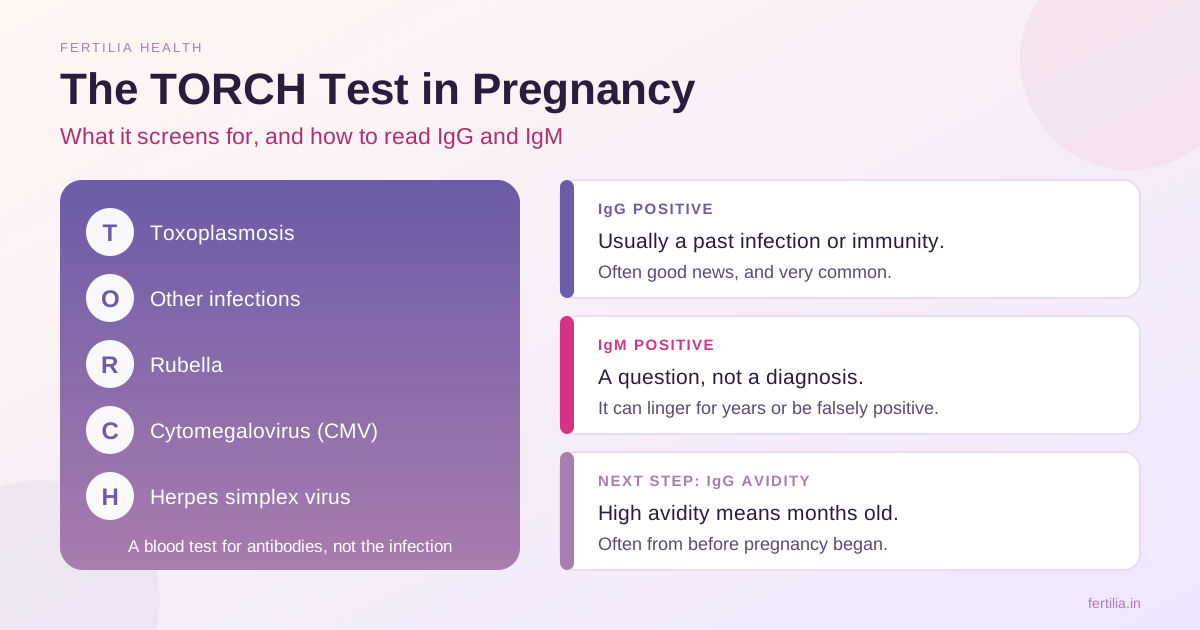
TORCH is an acronym for a group of infections that can pass from a mother to her baby during pregnancy: Toxoplasmosis, Other (usually syphilis, varicella-zoster or chickenpox, and parvovirus B19), Rubella, Cytomegalovirus (CMV) and Herpes simplex virus (HSV) (Fitzpatrick D et al., Prenat Diagn, 2022, PMID 34893980).
In India, a standard “TORCH panel” usually means blood tests for antibodies against four of these: toxoplasma, rubella, CMV and HSV. The “Other” infections are tested separately when needed. Syphilis (the VDRL test) is already part of the routine booking blood tests at your first antenatal visit, along with HIV and hepatitis B, as we cover in our first trimester tests guide.
The panel does not look for the infection itself. It looks for antibodies, which are the proteins your immune system makes after meeting an infection. That distinction matters for everything that follows.
IgG and IgM: How to Read the Report
Each infection on the panel usually has two rows.
IgG is the long-lasting antibody. It appears a few weeks after an infection and usually stays for life. A positive (reactive) IgG almost always means you met that infection at some point in the past, often years ago, without knowing. For rubella, a positive IgG usually means you are immune, either from vaccination or a past infection. In most cases, a positive IgG is reassuring.
IgM is the early antibody. It rises soon after a new infection, so a positive IgM is often read as “infected right now”. This is where most of the worry comes from, and most of the misreading. IgM has two well-documented problems:
- It can stay positive for months or years after the infection has passed.
- It can be falsely positive, because some natural IgM antibodies react to the test even when the infection was never there.
Both problems are described for toxoplasma (Teimouri A et al., J Clin Microbiol, 2020, PMID 32321784). For CMV, IgM can also linger after a first infection, and it is produced again when an old infection reactivates, so a positive CMV IgM is a poor marker of a new infection on its own (Prince HE et al., Clin Vaccine Immunol, 2014, PMID 25165026).
The scale of this is easy to underestimate. A US reference laboratory reviewed 451 patients whose toxoplasma IgM and IgG had both come back positive at ordinary labs. On expert testing, 74% had an old (chronic) infection, 22% had a recent one, and 2% were not infected at all. The authors concluded that a positive IgM and IgG from a non-reference lab cannot tell a recent infection from an old one (Dhakal R et al., J Clin Microbiol, 2015, PMID 26354818).
The IgG Avidity Test: The Follow-Up That Gives the Answer
When toxoplasma or CMV IgM comes back positive, the usual next step is an IgG avidity test, done on the same type of blood sample. Avidity measures how tightly your IgG antibodies grip the infection. After a new infection, the grip is weak, and it strengthens steadily over about six months.
So:
- High avidity means the infection happened months ago. For CMV, high avidity rules out a new infection in the previous 3 months (Prince HE et al., Clin Vaccine Immunol, 2014, PMID 25165026). For toxoplasma, it rules out an infection in the previous 4 months (Teimouri A et al., J Clin Microbiol, 2020, PMID 32321784).
- Low avidity points towards a recent infection, and that is when a specialist review is arranged.
If your test was done in early pregnancy and avidity comes back high, the infection most likely happened before you conceived, and it is not the new infection that pregnancy care is concerned with.
Each Infection, One at a Time
Toxoplasmosis
Toxoplasma is a parasite picked up from undercooked meat, unwashed vegetables and fruit, soil, and cat faeces. Most adults who catch it have no symptoms. What matters in pregnancy is a new infection during the pregnancy itself. A positive IgG with a negative IgM usually means a past infection, and when the test is done early in pregnancy this is reassuring. Your doctor may still look further if the first test was done late in pregnancy, if a scan shows something unexpected, or if your immunity is lowered. A positive IgM needs an avidity test before anyone draws a conclusion, for the reasons above.
Rubella
Rubella (German measles) is the one infection on the usual four-part panel with a vaccine, which is why the rubella IgG test is mostly about immunity. A positive rubella IgG is good news. If it is negative, there is no vaccine option during pregnancy, and the MMR vaccine is given after delivery. The full plan, including what to do before your next pregnancy, is in our guide to rubella titres and pregnancy vaccines. A positive rubella IgM on its own is uncommon and should be confirmed before any conclusion, because false-positive rubella IgM is a recognised problem (De Santis M et al., Reprod Toxicol, 2006, PMID 16580940).
Cytomegalovirus (CMV)
CMV is a common virus, often passed through the saliva and urine of young children. Many women in India carry CMV IgG. In one study of 165 pregnant women at AIIMS Rishikesh, 61.8% were CMV IgG positive and 80% were rubella IgG positive (Deka S et al., Cureus, 2022, PMID 35273887). A positive CMV IgG is a very common result, and on its own it is not a diagnosis.
The risk to the baby is highest after a first-ever (primary) CMV infection during pregnancy, and much lower for women who already carried the virus before conceiving (Prince HE et al., Clin Vaccine Immunol, 2014, PMID 25165026). Even when the virus does reach the baby, serious effects depend heavily on timing. A meta-analysis of 17 studies measured “fetal insult” in babies who caught CMV after a first-ever maternal infection, defined as prenatal findings in the baby’s central nervous system that led to termination of pregnancy, or neurological symptoms at birth. It was found in 28.8% after an infection around conception and 19.3% after a first-trimester infection, and in 0.9% after a second-trimester infection and 0.4% after a third-trimester infection. Hearing loss and developmental delay were measured as separate outcomes (Chatzakis C et al., Am J Obstet Gynecol, 2020, PMID 32460972).
If a recent primary infection is confirmed early in pregnancy, there is now a treatment option to discuss with a fetal medicine specialist. In a randomised trial of women with a primary CMV infection around conception or in the first trimester, the oral antiviral valaciclovir lowered the rate of the virus reaching the baby: 11% of amniocentesis samples were positive in the valaciclovir group against 30% with placebo (Shahar-Nissan K et al., Lancet, 2020, PMID 32919517). This is a specialist decision made with your treating team, not a medicine to start on your own.
Herpes Simplex Virus (HSV)
HSV 1 and 2 cause cold sores and genital herpes. Many adults carry HSV IgG without ever having had a noticeable sore. The main risk to a baby comes from a first genital herpes infection caught close to delivery. In a study of 7,046 pregnant women whose blood tests showed they were at risk of HSV, infection with antibody development (seroconversion) completed by the time of labour was not associated with an increase in illness in the newborn, while infection acquired near the time of labour was associated with newborn herpes (Brown ZA et al., N Engl J Med, 1997, PMID 9262493). For most women, the HSV rows on a TORCH report change nothing about their care. What does help is telling your obstetrician if you have ever had genital sores, so the last weeks of pregnancy can be planned.
💜 Holding a TORCH report with a “reactive” result and not sure what it means? Message Dr. Suganya on WhatsApp to book a ₹399 video consultation. Send a photo of the report, and we will go through each row with you.
Why Routine TORCH Screening Is Not Advised for Everyone
It surprises many women to learn that the full TORCH panel is not a routine antenatal test in some countries, including the UK, and the reasons are useful to know if you are deciding whether to have it.
The UK National Screening Committee, which advises the NHS on screening programmes, does not recommend screening pregnant women for toxoplasmosis. Its stated reasons include that the screening test would wrongly suggest toxoplasmosis in many women who do not have it (UK NSC toxoplasmosis recommendation, 2016 review, view-health-screening-recommendations.service.gov.uk, checked 15 October 2026). The same committee stopped screening for rubella susceptibility in pregnancy on 1 April 2016, reasoning that pregnant women cannot be vaccinated and that childhood MMR vaccination is the better protection (UK NSC rubella susceptibility recommendation, 2012 review, same site, checked 15 October 2026). For CMV, its March 2026 review still does not recommend screening, though it noted new research suggesting antenatal CMV screening may help identify women with a primary infection, and recommended a formal review of that evidence (UK NSC cytomegalovirus recommendation, March 2026 review, same site, checked 15 October 2026).
Even when the TORCH panel is ordered for a specific reason, its yield can be low. A systematic review of 2,538 pregnancies tested because of a scan finding (most often extra amniotic fluid, a small baby, or a bright-looking bowel) found 26 confirmed cases of congenital CMV and no confirmed cases of toxoplasmosis, rubella or HSV. The authors called for an end to reflex ordering of the full TORCH panel, arguing that it gets in the way of more appropriate investigation of the scan finding (Fitzpatrick D et al., Prenat Diagn, 2022, PMID 34893980).
In India the practice is different. Rubella immunity is commonly checked at booking, and a TORCH panel is still often ordered, particularly before IVF, after a miscarriage, or when a scan shows something unexpected. That is a reasonable conversation to have with your obstetrician. Knowing how the results are read helps you ask the right follow-up question when something comes back “reactive”.
When Targeted Testing Makes Sense
Testing for a specific infection is useful when there is a specific reason. Common ones include:
- A finding on your scan that can occasionally be linked to infection, such as a baby measuring small, extra amniotic fluid, or certain changes noted on the anomaly scan. Our guides to fetal growth restriction and polyhydramnios explain how infection fits among the other, more common causes.
- A flu-like illness with fever, swollen glands or a rash during pregnancy.
- Close contact with someone who has rubella, chickenpox or slapped cheek (parvovirus), especially if you are unsure of your immunity.
- Planning a pregnancy, when knowing your rubella and chickenpox immunity lets you be vaccinated before conceiving.
If a test does suggest a recent infection, the next steps are measured: an avidity test, a detailed scan, and if needed a referral to a fetal medicine specialist. In some cases, amniocentesis can check whether an infection has reached the baby. Our amniocentesis guide explains how the procedure itself is done.
A note on miscarriage. A TORCH panel is often ordered after a pregnancy loss, but a positive IgG at that point usually reflects an old infection. If you have had two or more losses, the tests that find a cause are a different set, covered in our guide to recurrent pregnancy loss tests.
Simple Habits That Lower Your Risk
These infections are uncommon in pregnancy, and everyday habits lower the chance further. For CMV, there is direct evidence that simple hygiene works. In a study of pregnant women without CMV immunity who were at risk of a first CMV infection for personal or work reasons, those given hygiene advice had a 1.2% rate of new infection during pregnancy, against 7.6% in a comparison group who were neither tested for nor told about CMV during pregnancy (Revello MG et al., EBioMedicine, 2015, PMID 26501119).
- Wash your hands with soap after changing nappies, feeding a toddler, wiping a runny nose or handling toys.
- Avoid sharing food, spoons, cups or toothbrushes with young children, and kiss them on the forehead or cheek rather than the mouth.
- Cook meat, eggs and chicken through, and wash vegetables, fruit and greens well, especially leafy greens bought loose from the market.
- Wear gloves when gardening or handling soil, and wash your hands afterwards.
- Ask someone else to clean a cat’s litter, or use gloves if you must.
Our pregnancy dos and don’ts guide covers food and pet safety in more detail.
What It Is Called in Everyday Language
In clinics across India the test is simply the “TORCH test” or “TORCH profile”, and lab reports may write it as “ToRCH”, with an IgG and an IgM row for each infection. In Hindi-speaking families, the question is often typed as “TORCH test kya hota hai” or “TORCH test positive ka matlab”. In Tamil Nadu the English name is used as is. Whatever the name, the reading is the same: look at IgG and IgM separately, and treat a positive IgM as a question for follow-up testing, not a verdict.
Practical Takeaways
- TORCH stands for toxoplasmosis, other infections, rubella, CMV and herpes.
- A positive IgG usually means a past infection or immunity, which is often good news.
- A positive IgM is not a diagnosis. It can persist for months or years or be falsely positive. For toxoplasma and CMV, the usual follow-up is an IgG avidity test, and rubella and herpes results are checked in other ways.
- High avidity means the infection is months old, often from before pregnancy.
- The UK National Screening Committee does not recommend screening every pregnant woman for toxoplasmosis, CMV or rubella susceptibility (view-health-screening-recommendations.service.gov.uk, checked October 2026). Testing for a specific reason is more useful.
- Syphilis, HIV and hepatitis B are tested separately at booking, and those tests matter for every pregnancy.
- Handwashing around young children, well-cooked food and washed vegetables lower your risk.
Frequently Asked Questions
What is the TORCH test in pregnancy?
It is a blood test for antibodies against infections that can pass from a mother to her baby: toxoplasmosis, rubella, cytomegalovirus (CMV) and herpes simplex virus, with “Other” covering infections such as syphilis, chickenpox and parvovirus that are tested separately. It shows whether you have met these infections before, and sometimes whether an infection may be recent.
What does a positive TORCH IgG mean in pregnancy?
A positive IgG usually means you had that infection in the past, often years ago, and your body has built long-lasting antibodies. For rubella, it usually means you are immune. On its own, a positive IgG is not a sign of a current infection and is a very common result.
What does a positive TORCH IgM mean in pregnancy?
IgM can point to a recent infection, but it can also stay positive for months or years after an old infection or come back falsely positive. In one US reference laboratory review, 74% of women with positive toxoplasma IgM and IgG turned out to have an old infection. For toxoplasma and CMV, a positive IgM is usually followed by an IgG avidity test before any conclusion is drawn. A positive rubella IgM is confirmed with further testing, and herpes IgM is not a reliable guide, so suspected herpes is assessed by your doctor, with a swab test of any sores.
Is the TORCH test necessary in pregnancy?
It is not part of routine antenatal screening in some countries, such as the UK, partly because a screening result can wrongly suggest an infection that is not there. It is useful when there is a specific reason: a scan finding, a feverish illness with a rash, contact with rubella or chickenpox, or checking immunity before pregnancy. Discuss with your obstetrician whether you have a reason for it.
What is the IgG avidity test?
It measures how tightly your IgG antibodies bind to the infection. The grip strengthens over about six months after a new infection. A high avidity result means the infection happened months ago, which in early pregnancy usually means before you conceived. A low result points towards a recent infection and leads to a specialist review.
Is CMV IgG positive in pregnancy dangerous?
A positive CMV IgG on its own usually means you had CMV in the past, which is common in India. The risk to the baby is much lower in women who already carried CMV before pregnancy than after a first-ever infection during pregnancy. If CMV IgM is also positive, an avidity test helps work out the timing.
TORCH test kya hota hai aur positive ka matlab kya hai?
The TORCH test checks antibodies against toxoplasma, rubella, CMV and herpes. A positive IgG usually means an old infection or immunity. A positive IgM is often an old or false result rather than a new infection. For toxoplasma and CMV it is followed up with an IgG avidity test, and for rubella and herpes your doctor uses other checks.
Talking It Through
I’m Dr. Suganya Venkat, an OB-GYN with over 15 years of experience, and a TORCH report with one “reactive” row is one of the reports women at Fertilia most often ask me to go through. Read row by row, with the avidity result where needed, it nearly always becomes a clear plan, and usually a reassuring one.
💜 Want help reading your TORCH report or deciding whether you need one? Message Dr. Suganya on WhatsApp to book a ₹399 video consultation, available online across India. You can also download our free pregnancy guide for a trimester-by-trimester view of the tests ahead.