Your doctor looked at the scan, measured your baby, and said the words that made your heart drop: “the baby is measuring small.” Perhaps it was said gently, perhaps hurriedly, but by the time you got home you had typed every frightening combination into a search bar and convinced yourself something terrible was happening.
Let me tell you what IUGR is, because the term sounds far scarier than the reality for most pregnancies that carry it. IUGR, or intrauterine growth restriction, is also called fetal growth restriction or FGR. It means your baby is measuring smaller than expected for how many weeks along you are. That is all the term tells you on its own. It does not tell you why, it does not tell you what to do, and it does not say the baby is in danger. Those answers come from the scans, the Doppler studies, and the monitoring your team does next, and that is what this guide walks you through.
For more on this, read our guide on Growth Scan & Doppler in Pregnancy. Most importantly, let me tell you this upfront: being told your baby is small does not mean you failed, it does not mean you did something wrong, and it is not a punishment. It is a finding on a scan, and findings on scans are what allow the right care to happen. For the great majority of babies flagged as small, close monitoring and sometimes an earlier delivery mean a healthy baby at the end.
What IUGR (Fetal Growth Restriction) Means
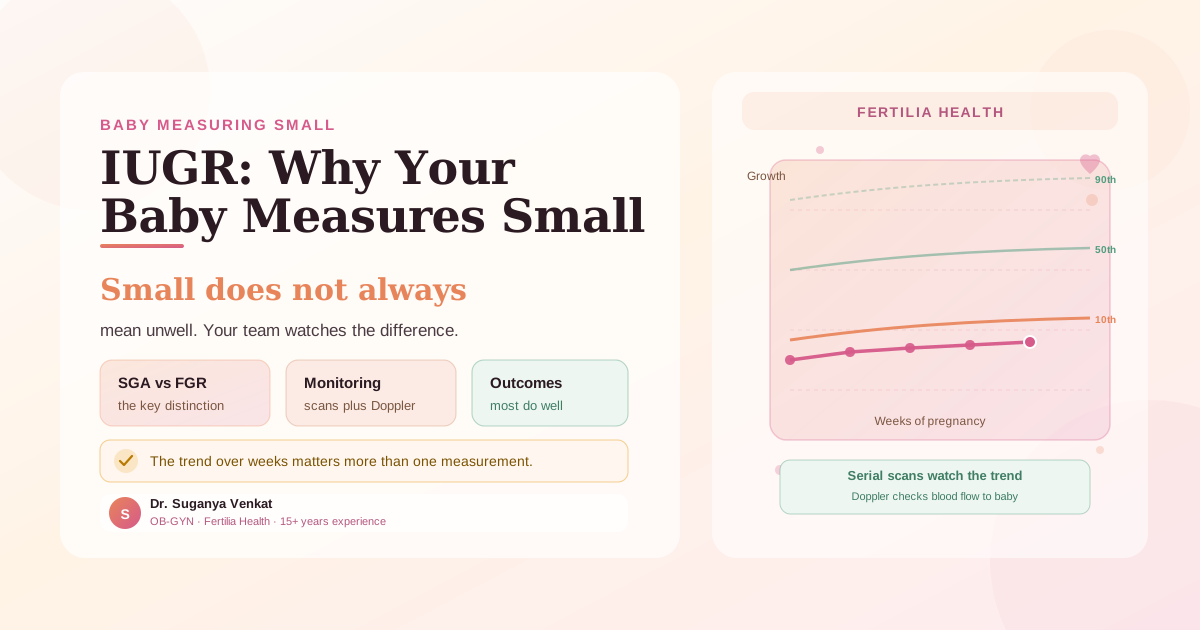
IUGR, intrauterine growth restriction, is a term that describes a baby whose estimated weight or abdominal circumference on ultrasound is below the 10th centile for the gestational age. In simpler words, the baby is measuring smaller than 90 percent of babies at the same stage of pregnancy.
The key thing to understand right away is this: small does not always mean unwell. Some babies are simply meant to be smaller, just as some adults are shorter than others. A baby whose parents are both of slight build may be small on every scan and be perfectly healthy. What matters is whether the baby is small because that is their natural size, or small because they are not getting what they need to grow properly.
That distinction is where a lot of the monitoring and the careful language comes in. Doctors separate small-for-gestational-age (SGA), which simply means a baby below the 10th centile, from fetal growth restriction (FGR), which means a baby who is not growing as expected because the placenta is not delivering enough oxygen and nutrients (Gordijn et al., Ultrasound in Obstetrics and Gynecology, 2016, PMID 26909664). An SGA baby may be small but thriving. An FGR baby needs closer watching and sometimes earlier delivery.
Your team figures out which category your baby falls into by looking at the growth trend over serial scans, measuring blood flow through the umbilical cord with Doppler ultrasound, checking your blood pressure and general health, and sometimes looking at the amount of fluid around the baby. It is a picture built over weeks, not from a single measurement.
The Difference Between SGA and FGR: Why It Matters
This is the single most reassuring distinction to hold on to, so it is worth stating clearly.
A baby who is small-for-gestational-age (SGA) is below the 10th centile on the growth chart, but is following their own growth curve steadily, has normal Doppler flows, normal fluid around them, and no signs that they are struggling. These babies are often just constitutionally small. They may have a small mother, or small parents, or simply be at the smaller end of the healthy range. They do not need intervention, just reassurance and an extra scan or two to confirm the trend stays steady.
A baby with fetal growth restriction (FGR) is one whose growth is genuinely restricted, usually because the placenta is not working as well as it should. The baby may have been growing normally and then flattened off, or the Doppler study may show abnormal blood flow, or the fluid around the baby may be low. These are the babies who benefit from closer monitoring, and sometimes from an earlier planned delivery to avoid waiting too long.
What does this mean for you? It means that if your baby is labelled SGA after one scan, it does not automatically mean there is a problem. It earns you a follow-up scan. If your baby is labelled FGR, it means your team is watching carefully so they can time the delivery at the safest point, which is exactly what monitoring is for. Either way, the label is not the same as a bad outcome. It is the start of the right care.
What Causes IUGR or Fetal Growth Restriction
The question every woman asks is, “what did I do wrong?” and the answer, almost always, is nothing. IUGR is rarely caused by something the mother did or could have prevented. It is usually a problem with the placenta or a medical condition that affects how the baby gets nourishment, and those things are not in your control.
Here are the common causes, so that instead of blaming yourself you can understand what is being monitored.
Placental insufficiency
The most common cause of true fetal growth restriction is that the placenta, the organ that feeds the baby, is not working at full capacity. The blood vessels in the placenta may be narrower than they should be, or the placenta may be smaller, or it may have formed in a way that is not quite optimal. This is not something you caused by lifting something, by working, or by any normal activity. It is simply how the placenta developed.
Maternal high blood pressure or pre-eclampsia
Raised blood pressure in pregnancy can affect how well the placenta delivers blood to the baby, and pre-eclampsia is one of the more common reasons a baby measures small. If you have been diagnosed with gestational hypertension, close monitoring of both you and the baby is the standard care, and it works.
Anaemia
Low haemoglobin means your blood is carrying less oxygen, and that can sometimes mean the baby gets a little less too. Anaemia is very common in Indian women and very treatable, so if your haemoglobin is low, taking iron properly and eating iron-rich foods is one of the concrete things you can do.
Smoking
If you smoke, stopping is the single most effective thing you can do to help your baby grow better. Smoking reduces the oxygen your baby gets, and stopping, even partway through pregnancy, makes a real difference.
Infection
Certain infections in pregnancy, such as toxoplasmosis, cytomegalovirus, or rubella, can occasionally affect the baby’s growth. These are tested for if there is a reason to suspect them, and they are uncommon.
Carrying twins or multiples
Twins naturally grow more slowly than singletons in the later weeks of pregnancy, simply because there are two babies sharing the same space and the same placenta’s output. Twin pregnancies are watched more closely for exactly this reason.
Chromosomal or structural problems in the baby
Rarely, a baby who is very small may have a chromosomal condition or a structural problem. If your team is concerned about this, they will suggest further tests such as an amniocentesis or a detailed anomaly scan. Most small babies do not have a chromosomal cause, but when there is a reason to check, the tests are available.
For more on this, read our guide on Anomaly Scan (TIFFA).
Your baby is measuring small and you are trying to make sense of the scans? Dr. Suganya Venkat reads through your growth charts and Doppler reports with you, explains what your numbers mean, and helps you feel steadier. Chat on WhatsAppHow IUGR Is Monitored
This is where the care happens, and it is the most reassuring part of the whole picture. Once a baby is flagged as small, your team does not sit back and hope. They watch, and the watching is the medicine.
Serial growth scans
You will have ultrasound scans every two to four weeks, sometimes more often, to track whether the baby is continuing to grow along their curve or whether the growth is flattening off. The trend is what matters, not the single measurement.
Doppler ultrasound of the umbilical artery
A Doppler study measures blood flow through the umbilical cord. If the flow is normal, it is a very reassuring sign that the baby is getting what they need. If the flow is abnormal, it tells your team that the placenta is struggling and closer watching, or an earlier delivery, may be needed. A Cochrane review found that using Doppler ultrasound in high-risk pregnancies reduces the risk of perinatal death, which is exactly why it is done (Alfirevic et al., Cochrane Database of Systematic Reviews, 2017, PMID 28613398).
Amniotic fluid measurement
The amount of fluid around the baby is one sign of how well the baby is doing. If the fluid is lower than expected, it can mean the baby is conserving resources, and it is flagged for closer watching. If you want to understand what low fluid means in more detail, our guide to low amniotic fluid covers it.
Biophysical profile and CTG monitoring
Later in pregnancy, you may be asked to come in for a CTG (cardiotocography), which monitors the baby’s heartbeat, or a biophysical profile, which is an ultrasound score that looks at the baby’s movements, breathing practice, tone, and fluid. These are all ways of checking that the baby is coping well.
Fetal movement awareness
You know your baby’s movement pattern better than any machine. If your baby’s movements reduce, slow down, or change, you call the hospital the same day. It is not overreacting. It is exactly what you are meant to do. If you are unsure what normal movement is, our guide to fetal movement explains it.
What You Can Do When Your Baby Is Measuring Small
This is the part where a lot of well-meaning but wrong advice lives, so it is worth being clear about what helps and what does not.
Attend every scan and monitoring visit
The monitoring is the single most important thing. Skipping a scan because you are tired of hospitals or because “last time it was fine” is the one thing that can turn a manageable finding into a missed one. Go to every visit.
Eat steadily and well
Good nutrition supports whatever the placenta can deliver, and it supports your own health too. A plate that includes enough protein, enough calories, iron-rich foods like dal and green leafy vegetables, and calcium is a sensible everyday step. But be very clear on this: there is no miracle food that makes a baby grow faster. No amount of almonds, no special fruit, no grandmother’s recipe can override a placenta that is not delivering what the baby needs. Eating well is a supportive step, not a cure.
If you want a complete, evidence-based plan for eating through pregnancy, our healthy pregnancy guide walks through it, and if you have been diagnosed with gestational diabetes, the diet plan in that guide shows how to manage blood sugar while still eating enough for the baby.
Stop smoking
If you smoke, stopping now is the single most effective thing you can do. Stopping even halfway through pregnancy improves the baby’s growth and their oxygen supply. It is not too late.
Rest, but not strict bed rest
Older advice used to suggest strict bed rest for a small baby, and it is now known that continuous bed rest carries its own risks and does not help the baby grow. Gentle, normal activity within your doctor’s limits is usually encouraged. If your doctor has told you to rest more, follow their specific advice, but do not assume you need to lie down for months unless that is what you have been told.
Know the red flags
Heavy bleeding, a gush or steady leak of fluid, reduced fetal movements, severe headache, vision changes, or upper abdominal pain mean a same-day call to your hospital. These are the signs that need urgent checking, not waiting for the next scheduled visit.
When Is Delivery Planned Early?
The goal is always to keep the baby inside long enough to grow and mature, but sometimes the safest call is to deliver a little earlier, before the baby reaches full term, if staying inside is becoming harder than being outside.
Your obstetrician decides the timing based on the baby’s Doppler flows, the growth trend, the fluid, the gestational age, and your own health. If the Doppler shows that blood flow is getting worse, or the baby has stopped growing, or the fluid is very low, an earlier delivery may be planned. This is not a failure. It is a carefully timed decision that gives the baby the best chance, and it is made with you, not to you.
Many babies with IUGR are delivered by planned caesarean, because it allows the delivery to happen at a chosen time when the neonatal team is ready and when the baby is monitored closely throughout. Some are delivered vaginally, depending on the situation. What matters is the outcome, which is a healthy baby and a recovering mother, and there is more than one path to that. If it helps to see the full picture of how delivery decisions are made, our guide to normal delivery versus caesarean walks through it.
What Happens After Delivery
Most babies with IUGR who are delivered at the right time, based on good monitoring, do very well. If the baby is born early, they may need some time in the neonatal unit for feeding support, warmth, and sometimes help with breathing, but the great majority catch up in growth over the first year and go on to be healthy children.
The fact that a baby was small inside does not define their future. It is a challenge they faced before birth, and with the right care, it is one they move past.
How Care Works: Your Hospital Leads, We Support Between Visits
IUGR is monitored, and if needed delivered, by your own obstetrician, in person, at a hospital. The scans, the Doppler studies, the CTG monitoring, and the decision on when to deliver are all theirs to manage, and that is exactly where those decisions belong.
Where our program helps is the space between those hospital visits, which for a woman carrying a small baby can feel very long and very frightening. That support layer includes understanding what your Doppler report means, eating well without the pressure to “make the baby grow” with food, knowing what activity is sensible, recognising the few red flags that need a same-day call, and having someone to ask when the worry feels heavy.
We do this online, pan-India, over a video call, alongside your medical team and never instead of them. Dr. Suganya is an OB-GYN, so the guidance you get between visits speaks the same language as the care you get at the hospital. If at any point something needs to be seen or treated in person, we tell you clearly and quickly. IUGR is one of the reasons a pregnancy is often labelled high-risk, which we explain in full in our guide to high-risk pregnancy.
FAQ: IUGR and Fetal Growth Restriction
What does IUGR mean in pregnancy?
IUGR stands for intrauterine growth restriction. It means your baby is measuring smaller than expected for the number of weeks you are along, usually below the 10th centile on the growth chart. It does not automatically mean the baby is in danger. It means your team will watch the baby more closely with serial scans and Doppler studies to see whether the baby is small-but-healthy or genuinely not getting enough from the placenta.
Is a baby measuring small always a problem?
No. Some babies are simply constitutionally small, just as some adults are shorter than others. The key is whether the baby is small but growing steadily along their own curve with normal blood flow (SGA, small-for-gestational-age), or whether the growth has slowed or stopped and the Doppler is abnormal (FGR, fetal growth restriction). Your team uses serial scans to tell the difference.
What causes IUGR or fetal growth restriction?
The most common cause is placental insufficiency, where the placenta is not delivering enough oxygen and nutrients to the baby. Other causes include maternal high blood pressure or pre-eclampsia, anaemia, smoking, infection, carrying twins, or rarely a chromosomal or structural problem in the baby. It is almost never something the mother did or could have prevented.
Can I do anything to help my baby grow if they are measuring small?
Attend every monitoring scan and visit, eat steadily with enough protein and calories, stop smoking if that applies, and know your baby’s movement pattern. Good nutrition supports what the placenta can deliver, but be clear that there is no miracle food that makes a baby grow faster. The monitoring is the medicine, not the diet.
How is IUGR monitored during pregnancy?
Your team uses serial growth scans every two to four weeks, Doppler ultrasound to measure blood flow through the umbilical cord, amniotic fluid measurement, biophysical profile or CTG monitoring, and your awareness of fetal movements. The trend over time is what matters, not a single measurement.
When is delivery planned early for a baby with IUGR?
If the Doppler shows that blood flow is getting worse, or the baby has stopped growing, or the fluid around the baby is very low, your obstetrician may plan an earlier delivery. This is not a failure. It is a carefully timed decision that gives the baby the best chance when staying inside is becoming harder than being outside. The timing is based on the monitoring and is decided with you.
Can a baby with IUGR be born healthy?
Yes. With close monitoring and sometimes an earlier planned delivery, most babies with IUGR are born healthy. If they are born early, they may need some time in the neonatal unit, but the great majority catch up in growth over the first year and go on to be healthy children.
The Bottom Line
Being told your baby is measuring small is frightening, but it is not a verdict. It is a finding on a scan, and findings on scans are what allow the right monitoring to happen. For the great majority of small babies, close watching and sometimes an earlier delivery mean a healthy baby at the end.
You do not have to hold the worry alone between scans. For steady support through a pregnancy where the baby is measuring small, alongside your own obstetrician, Dr. Suganya’s Pregnancy Care program helps you understand your growth charts and Doppler reports, eat sensibly without the pressure to “fix” it with food, and stay calm and prepared through the weeks that matter most.
Want calm, well-informed support through a pregnancy with a small baby? Dr. Suganya Venkat helps you understand your scans, know what you can do, and steady the worry, all alongside your own hospital team. Chat on WhatsApp
Dr. Suganya Venkat is an OB-GYN with a DNB from GKNM Hospital, Coimbatore, an MD Pathology from CMC Vellore, and 5 Gold Medals in MBBS from SRMC. She has 15+ years of clinical experience in obstetrics and women’s health.