Your scan report said polyhydramnios, or that the amniotic fluid is more than expected, and your doctor said they would watch it closely. Perhaps it came with a raised AFI number you did not understand, or a suggestion to get a glucose test, and you left feeling uncertain whether this is something to worry about.
Let me explain what polyhydramnios means, because for many women the finding is mild, has no clear cause, and simply earns them a few extra scans through pregnancy. Even when there is a cause, such as gestational diabetes, it is usually manageable, and most women with polyhydramnios go on to healthy deliveries.
This guide walks you through what too much amniotic fluid is, what the numbers on your scan mean, the causes worth knowing, how it is monitored, and the question most women ask first: is this dangerous?
What Polyhydramnios Is
Amniotic fluid is the water that surrounds your baby inside the amniotic sac. It cushions the baby, allows movement, helps the lungs develop, and keeps the umbilical cord from being compressed. The amount changes through pregnancy and is carefully balanced by how much your baby swallows and produces.
Polyhydramnios means more fluid than expected. It is the opposite of oligohydramnios, where the fluid is too low. In medical practice, it describes a scan finding rather than a diagnosis on its own.
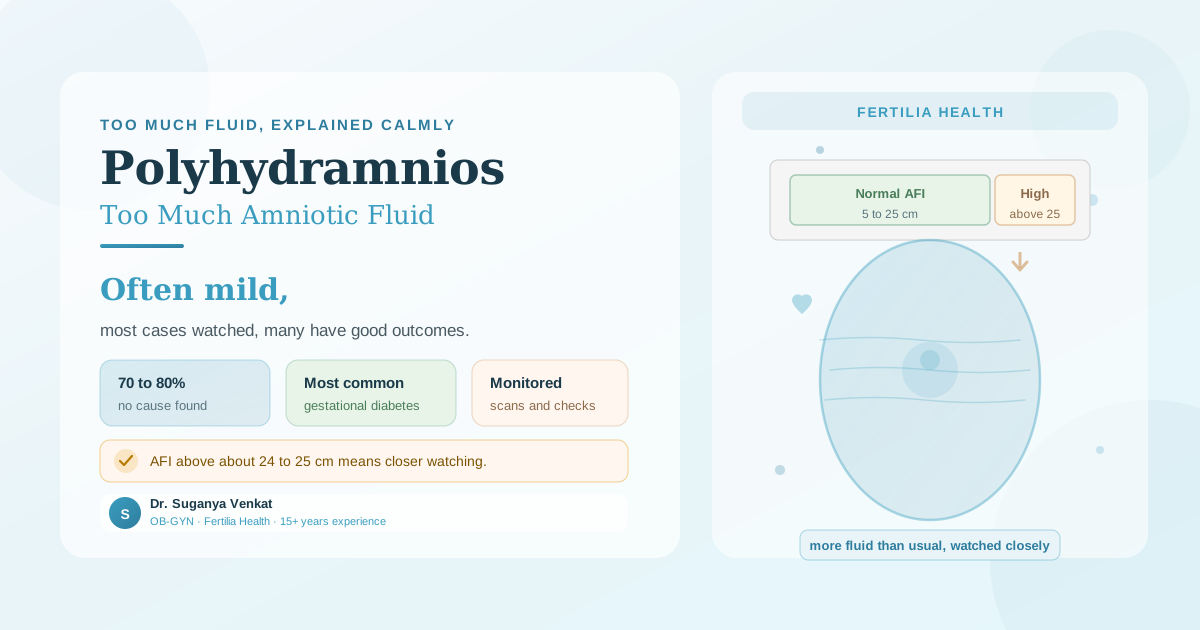
The important reassurance is this: most diagnosed cases are mild. In one Austrian hospital cohort, 68.8% had no identified cause, 19.8% involved maternal diabetes, and 8.5% involved congenital anomalies (Kollmann et al., Ultraschall in der Medizin, 2014; PMID 24729436). Those figures describe that cohort, not every pregnancy. Mild, stable cases often have reassuring outcomes, while every case still deserves an appropriate workup.
What the Numbers Mean: AFI and the Normal Range
On a scan, the fluid is measured in one of two ways:
- Amniotic fluid index (AFI): the sonographer measures the deepest pocket of fluid in four areas of the uterus and adds them up. A normal AFI is roughly 5 to 25 cm, though the exact number varies a little with how far along you are.
- Single deepest pocket (SDP), also called maximum vertical pocket (MVP): the depth of the single largest pocket of fluid. A normal SDP is roughly 2 to 8 cm.
Using these measures:
- Polyhydramnios usually means an AFI of 25 cm or more, or an SDP above 8 cm. A 2026 study examined whether using both measurements improves risk classification (Petrecca et al., American Journal of Obstetrics & Gynecology MFM, 2026; PMID 42314800). Some centres use slightly different thresholds, which is why your report is read alongside the rest of your pregnancy, not on a number alone.
- Mild polyhydramnios is an AFI between about 25 and 30 cm. This is the most common category, and it is often watched with repeat scans rather than treated.
- Moderate polyhydramnios is an AFI of about 30 to 34.9 cm, and severe polyhydramnios is 35 cm or more. These categories may need closer assessment and management.
One thing worth remembering: a single measurement is a snapshot. Measurements can vary with the baby’s position and technique. This is why polyhydramnios is usually rechecked, and why your doctor looks at the trend over time rather than one reading.
What Causes Polyhydramnios
There is rarely one dramatic reason. The causes range from the entirely benign to the ones that need medical attention:
- Idiopathic (no cause found). This is the most common scenario. No cause is found in many cases. In the Kollmann cohort, 68.8% were idiopathic, but the proportion varies by population and severity.
- Gestational diabetes. Raised blood sugar in the mother is an important identifiable cause. High glucose passes to the baby, the baby produces more urine, and the fluid rises. This is why a glucose tolerance test is usually part of the workup. Our guide to gestational diabetes in India explains the OGTT numbers and the diet plan.
- How the baby swallows or moves fluid. Occasionally the baby is not swallowing the usual amount of fluid, which can happen with certain gastrointestinal or neurological differences, or with an obstruction. These are usually picked up on the anomaly scan.
- Twin pregnancy, especially twin-to-twin transfusion syndrome (TTTS). In TTTS, one twin gets more blood flow than the other, and the fluid around each baby becomes unbalanced. This is a specific condition that needs specialist monitoring.
- Infection. Rarely, a maternal infection such as parvovirus can cause polyhydramnios.
- Anaemia in the baby. This is uncommon, but it can happen if the baby’s blood group is incompatible with the mother’s, or with certain genetic conditions.
- The baby’s heart or chest. Very occasionally, polyhydramnios is linked to how the baby’s heart or lungs are developing, which the anomaly scan looks for.
For many women, either no cause is found or glucose regulation is part of the explanation. Both findings lead to a defined monitoring plan.
Scan showed too much amniotic fluid and not sure what to do? Dr. Suganya Venkat reads your report with you, explains your AFI in plain language, and helps you understand what will help and what needs closer attention. Chat on WhatsApp
How Polyhydramnios Is Found and Monitored
Polyhydramnios is usually found on a routine scan, often the anomaly scan at around 20 weeks or a growth scan later in pregnancy. You may not have felt anything unusual, which is why it can come as a surprise.
The monitoring plan typically includes:
- A repeat scan to confirm the finding, since a single reading can be misleading, and to check the trend.
- A glucose tolerance test if you have not had one already, to check for gestational diabetes.
- A detailed anatomy scan if the anomaly scan was not recent, to look at the baby’s swallowing, stomach, heart, and kidneys.
- Growth scans to check the baby’s size, because polyhydramnios is sometimes seen alongside a larger baby, particularly if diabetes is the cause.
- Monitoring the baby’s movements. Your baby’s movements are the everyday reassurance between scans, and a noticeable drop is always worth a same-day call.
- A conversation about delivery timing and method if the fluid remains high as you approach your due date.
Most women with mild polyhydramnios feel entirely well. Some notice a tighter, more uncomfortable belly than usual, or breathlessness because the larger uterus presses on the diaphragm. These are reasons to mention at your visit, not reasons to panic. If you feel sudden severe pain, a gush of fluid, or regular contractions, those deserve a same-day hospital call.
What Polyhydramnios Can Make More Likely
Polyhydramnios is flagged because it can, in some cases, make certain complications a little more likely. It is worth being clear about what these are, without catastrophising them.
- A tight, uncomfortable belly. The extra fluid can make your belly feel stretched and heavy, and can press on your diaphragm, making you breathless. This is a comfort issue more than a medical one.
- The baby lying awkwardly. With more room to move, the baby is a little more likely to settle into a breech or transverse position near term. This is one reason your team will check the baby’s lie closer to your due date.
- A higher chance of preterm labour. The extra fluid can stretch the uterus, and that stretching can, in some cases, trigger contractions earlier than expected. This is not a certainty, just a reason your team watches you more closely. If labour starts early, you go to hospital straight away, and your team will manage it.
- Cord prolapse. If your waters break and there is a lot of fluid, there is a small risk the umbilical cord could slip down ahead of the baby. This is rare, and it is one reason you are asked to go to hospital promptly if your waters break.
- Heavier bleeding after birth (postpartum haemorrhage). A uterus that has been stretched by extra fluid sometimes contracts less well after delivery, which can lead to heavier bleeding. This is anticipated and managed by your delivery team.
These are the reasons your pregnancy is watched more closely, not predictions of what will happen. Many women with mild polyhydramnios need monitoring rather than treatment. An Indian case-control study found that 82% of its idiopathic cases were mild, but it also found higher preterm birth and perinatal complications than in controls, so follow-up remains important (Lallar et al., Journal of Obstetrics and Gynaecology of India, 2015; PMID 26405400).
How Polyhydramnios Is Managed
The management depends on the cause and how severe the fluid increase is.
For mild polyhydramnios with no identifiable cause (idiopathic): The most common plan is simply to watch it. You will have repeat scans to check the baby’s growth and the fluid level, and you will be asked to stay alert to your baby’s movements and to go to hospital promptly if your waters break or you think labour has started. Many women in this category go on to a normal, healthy delivery at term.
If the cause is gestational diabetes: Controlling your blood sugar is the single most useful thing you can do. Treating gestational diabetes supports maternal and fetal health; the fluid trend is then followed on repeat scans. The gestational diabetes is managed with diet and monitoring, and occasionally with medication if needed. Our gestational diabetes guide explains the Indian diet plan in full.
For moderate to severe polyhydramnios: If the fluid is very high and causing significant discomfort or risk, your obstetrician may offer a procedure called amnioreduction, where some of the fluid is drained. This is done only in specific situations and is not common. Your doctor will explain if it applies to you.
Delivery planning: If polyhydramnios persists near term, your team will talk to you about the safest timing and method for delivery. Delivery timing is individualised. Mild idiopathic polyhydramnios alone does not automatically mean early induction. Whether you can have a vaginal delivery depends on the baby’s position, the cause of the fluid, and your overall situation, and it is a decision made with your obstetrician.
Polyhydramnios is also one of the common reasons a pregnancy is classified as higher risk, which simply means closer monitoring, not a crisis. Our guide to high-risk pregnancy explains what that label means and how care works.
How Care Works: Your Hospital Leads, We Support Between Visits
Polyhydramnios is monitored, investigated, and managed by your own obstetrician, in person, at a hospital. The scans that measure your fluid, the tests that look for a cause, and the delivery plan are all led by your medical team. That is exactly where it should happen, and it does not change.
Where our program helps is the space between those hospital visits, which for a woman carrying a pregnancy with high fluid can feel long and uncertain. That support layer includes understanding what your AFI means, knowing what your glucose numbers should be if diabetes is part of the picture, eating well through a pregnancy you are trying hard to protect, staying comfortable when your belly feels tight, recognising the few red flags that need a same-day call, and having someone to steady the worry.
We do this online, pan-India, over a video call, alongside your medical team and never instead of them. Dr. Suganya is an OB-GYN, so the guidance you get between visits speaks the same language as the care you get at the hospital. If at any point something needs to be seen or treated in person, we tell you clearly and quickly.
Call Your Hospital the Same Day If
- Your baby’s movements are noticeably reduced
- Your waters break or you feel a sudden gush of fluid
- You develop regular contractions, sudden severe abdominal pain, marked breathlessness, or rapidly increasing discomfort
Do not use an online consultation as the first stop for these symptoms. Contact your own maternity team or go to the nearest hospital.
What You Can Do Now
- Attend your repeat scan. The follow-up scan and the trend over time are what decide the plan. It is the single most useful thing you can do.
- Get the glucose test if it is offered. Gestational diabetes is the most common treatable cause, and catching it early helps.
- If you have diabetes, control your blood sugar. Good glucose control is the one thing in your hands that genuinely helps reduce the fluid when diabetes is the cause.
- Stay alert to your baby’s movements. A noticeable drop in movement deserves a same-day call.
- Go to hospital promptly if your waters break. With polyhydramnios, there is a small extra reason to be seen quickly, so do not wait at home.
- Ask about the baby’s position near term. With more room to move, the baby may settle into a position that needs a conversation about delivery method.
FAQ: Polyhydramnios and Too Much Amniotic Fluid
What is polyhydramnios?
Polyhydramnios means more amniotic fluid than expected, usually an amniotic fluid index (AFI) of 25 cm or more or a single deepest pocket above 8 cm. Most diagnosed cases are mild, and many have no identified cause, but severity and cause are separate questions that your team assesses.
What causes polyhydramnios?
One important identifiable cause is gestational diabetes, where high blood sugar leads to the baby producing more urine. Other causes include how the baby swallows or moves fluid, twin pregnancy (especially twin-to-twin transfusion syndrome), and rarely maternal infection or differences in how the baby’s organs are forming. In most cases, no specific cause is found.
Is polyhydramnios dangerous?
For most women with mild polyhydramnios, the pregnancy is healthy and the outcome is good. The finding means your team will watch you more closely, because there is a little more chance of the baby lying awkwardly, preterm labour, or heavier bleeding after birth. These are reasons to monitor, not predictions. Severe polyhydramnios is less common and may need treatment.
How is polyhydramnios treated?
Mild idiopathic polyhydramnios is usually watched with repeat scans rather than treated. If the cause is gestational diabetes, treating it supports maternal and fetal health while repeat scans track the fluid. Severe polyhydramnios may occasionally need a procedure to drain some of the fluid, but this is rare. The delivery plan is tailored to your situation.
Can I have a normal delivery with polyhydramnios?
Many women with polyhydramnios go on to a safe vaginal delivery, especially when the fluid is only mildly raised and the baby is in a good position. Your team may monitor you more closely during labour, and the delivery timing and method are decided with your obstetrician based on the baby’s position, the cause of the fluid, and your overall situation.
What is a normal amniotic fluid level?
A normal amniotic fluid index (AFI) is roughly 5 to 25 cm, and a normal single deepest pocket (SDP or MVP) is roughly 2 to 8 cm. Below that range is called low (oligohydramnios) and above it is called high (polyhydramnios). The exact number varies a little with your stage of pregnancy and is read alongside your baby’s wellbeing, not on its own.
How is polyhydramnios different from oligohydramnios?
Polyhydramnios is too much amniotic fluid, while oligohydramnios is too little. They are opposite findings with different causes, urgency, and management. Your obstetric team interprets either finding alongside gestational age, membrane status, placental function, and fetal wellbeing.
The Bottom Line
Mild, stable polyhydramnios is usually not an emergency, but it still deserves the planned tests and follow-up. Sudden pain, contractions, marked breathlessness, reduced movements, or ruptured membranes need prompt hospital assessment.
If you are facing this, you do not have to carry the worry alone between hospital visits. For steady support through a polyhydramnios pregnancy, alongside your own obstetrician, Dr. Suganya’s Pregnancy Care program helps you understand your scans, manage any glucose or diet changes, and stay calm and prepared through the weeks that matter most.
Want calm, well-informed support through a polyhydramnios pregnancy? Dr. Suganya Venkat helps you understand your scans, manage your nutrition if diabetes is part of the picture, and steady the worry, all alongside your own hospital team. Chat on WhatsApp
Dr. Suganya Venkat is an OB-GYN with a DNB from GKNM Hospital, Coimbatore, an MD Pathology from CMC Vellore, and 5 Gold Medals in MBBS from SRMC. She has 15+ years of clinical experience in obstetrics and women’s health.