She searched for “sex therapy in India” and then closed the tab. Not because she did not need the help. Because she was not sure what sex therapy actually was. Whether it involved sitting in a room saying things she had barely said out loud. Whether she would have to bring her husband. Whether something physical happened that nobody had told her about.
I am Dr. Sandhiya Loganathan, a psychiatrist at Fertilia with a focus on women’s psychosexual health. I receive referrals for sex therapy regularly, and I see how often what stops women is not reluctance to seek help but simply not knowing what they are agreeing to.
This post explains what sex therapy is, what happens inside a session, who it benefits, and what it costs in India today. If you have been wondering whether it is something that might help you, this is the place to start.
What Sex Therapy Is (and What It Is Not)
Sex therapy is a form of psychotherapy that focuses specifically on sexual concerns. The term you may hear from a clinician is psychosexual therapy, and it sits at the intersection of psychology and sexual health.
This is different from general therapy. General therapy addresses mood, anxiety, grief, trauma, and relationship patterns broadly. Sex therapy focuses on the sexual dimension: pain with penetration, the psychological component of sexual avoidance, the communication that has broken down between partners because of a sexual difficulty, and the anxiety that builds around physical intimacy over time. Skill in general psychotherapy does not transfer automatically to psychosexual concerns. They are related fields with genuinely different areas of specialisation, and it is worth finding someone trained in the one you need.
What sex therapy is not:
It is not about teaching sexual techniques. It is not sexually explicit in any way. There is no physical contact between therapist and client, ever. It is a talking therapy, with structured exercises that the individual or couple practises privately at home between sessions, at their own pace. Nothing takes place in the consulting room that would not take place in any other psychological therapy room.
The framework most psychosexual therapists use is built around two evidence-based approaches. The first is cognitive behavioural therapy (CBT), which targets the thought patterns and fear cycles that keep the body braced and the mind in anticipation of something bad happening. The second is a set of graduated, non-pressure home exercises, developed by sex researchers Masters and Johnson and refined over the following decades, that work by replacing the association between intimacy and fear with one between intimacy and safety. These exercises begin with touch that carries no expectation of intercourse and build very gradually, at a pace the person or couple sets. The progression is determined by comfort, not by a calendar.
Who Benefits from Sex Therapy
Sex therapy is well-suited to specific concerns. Within the scope of what I cover in my practice, these are the groups where it makes the clearest difference.
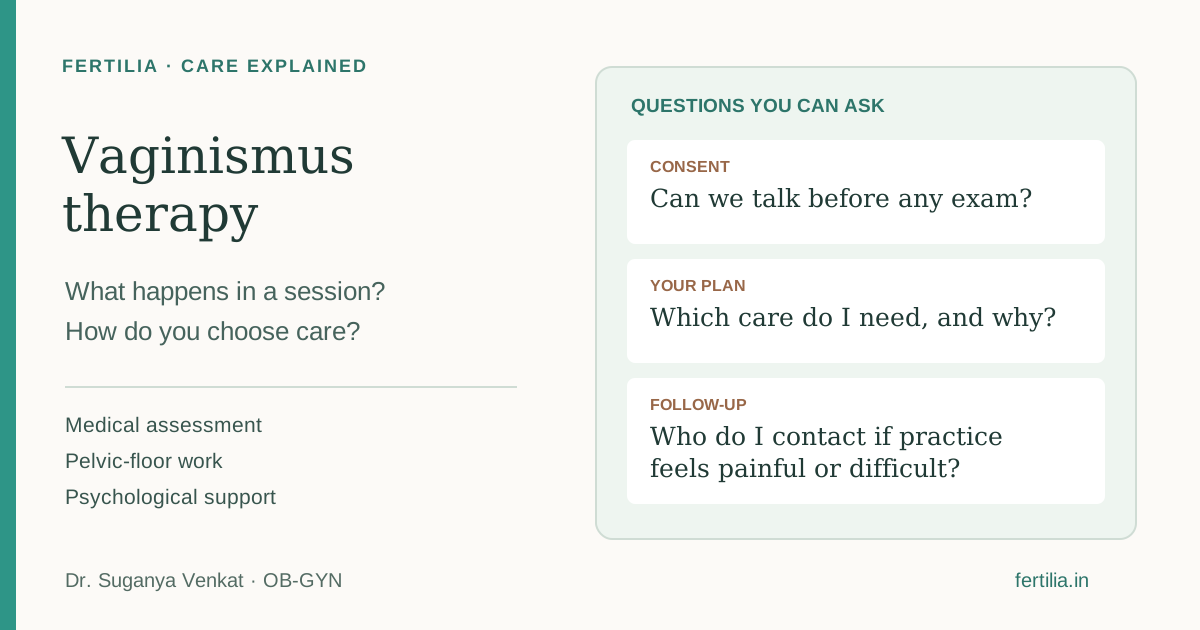
Women with vaginismus. Vaginismus is an involuntary tightening of the muscles around the vaginal opening when penetration is attempted. The physical treatment involves pelvic floor work and a graduated dilator protocol. But for many women, the muscle response began as a fear response, and the fear does not lift on its own once the body starts to cooperate physically. That fear layer is where sex therapy comes in: it addresses the anticipatory dread, the avoidance patterns, and the negative thought cycles that keep the body guarded even as the physical work progresses. The full picture of vaginismus treatment includes this psychological component alongside the medical and physiotherapy work.
Women with sexual pain that has a physical cause being treated. Some women have dyspareunia (pain with intercourse) with an identified physical origin that their gynaecologist is managing. The medical treatment addresses the cause. But alongside it, there is often a layer of dread and avoidance that has set in after months or years of painful attempts, and that layer does not resolve automatically when the physical cause is treated. Sex therapy works in parallel with medical care, not instead of it.
Couples where sexual pain has affected the relationship. When pain during sex continues for months or years, the relationship around it changes. One partner withdraws to avoid causing pain. The other feels guilt, confusion, or quietly wonders whether they are still wanted. The space between them grows in ways neither knows how to close. Sex therapy, with both partners present or with individual sessions for each, addresses the communication patterns and the assumptions that have accumulated, not just the physical symptom.
Women with persistent fear or avoidance of penetration. If the thought of penetration reliably triggers dread, a racing heart, or a shutdown response, and if that fear has become the thing shaping intimacy decisions, sex therapy is the appropriate tool. The anxiety-pain cycle that underlies sexual avoidance responds well to the same methods used in anxiety treatment, adapted specifically for the sexual context.
Women returning to intimacy after a painful birth or delivery. Post-delivery sexual pain has physical causes, often addressed by a pelvic floor physiotherapist. But some women also carry a fear component from a traumatic birth experience, and that fear shapes how they approach intimacy long after the physical healing is complete. Sex therapy addresses that psychological dimension.
If you are wondering whether your concern has a physical or psychological cause, or both, an initial assessment clarifies the picture before anything else.
What Happens in a Session
The first session in sex therapy is mostly listening.
Your therapist will ask about your history: not just the history of the specific sexual concern but how it started, what has already been tried, what your relationship looks like now, and what you hope treatment will give you. There is no assessment that involves physical examination. Sex therapy is entirely verbal.
By the end of the first session, you and your therapist will typically have a shared understanding of what the concern is, what is driving it, and a rough direction for the work ahead. The therapist will not assign anything to do before the next appointment until you have both agreed on the approach.
In the sessions that follow, the work is structured around your specific situation. For couples, this often includes home exercises they practise between sessions and discuss at the next appointment: beginning with forms of touch that carry no pressure, then building gradually. For individuals, the work may focus on cognitive restructuring (identifying and challenging the thoughts that maintain the fear or avoidance), relaxation techniques timed to the moments anxiety peaks, and a very gradual, self-paced approach to the specific feared situation.
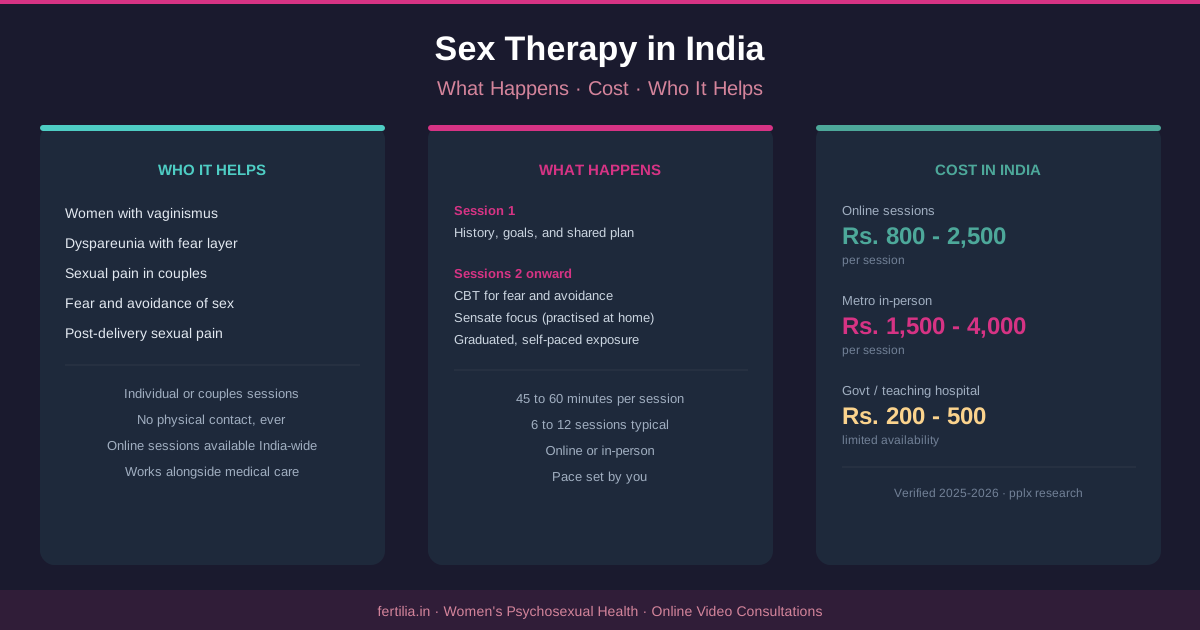
Sessions are typically 45 to 60 minutes. A standard course of sex therapy runs between six and twelve sessions, though this varies. Some people find the work moves faster than expected; others benefit from a longer course. Progress is not linear, and a good therapist will adjust the pace based on where you are.
Online sessions are now widely available across India. Video call sessions work well for this kind of therapy. Many women find that being in the privacy of their own home makes the conversations easier than a clinic setting. The exercises that are part of the process are always practised at home regardless of whether the session is online or in-person, so the format of the session itself does not change the nature of the work.
If you are not sure whether what you are experiencing fits this description, or whether sex therapy is part of what would help you, you can speak with me over a video call.
Talk to Dr. Sandhiya on WhatsApp
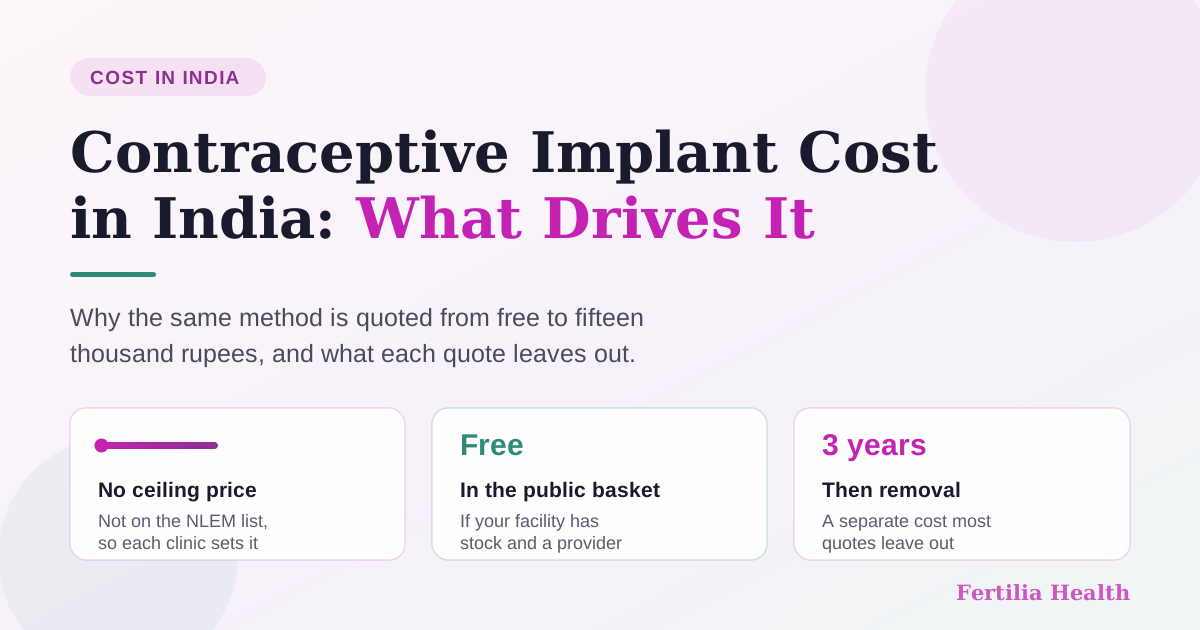
The Cost of Sex Therapy in India
These are the verified price ranges for 2025 to 2026.
Online sessions: Rs. 800 to Rs. 2,500 per session. This is the most common access point and the widest in terms of practitioner availability.
In-person sessions in metro cities (Delhi, Mumbai, Bengaluru, Hyderabad, Chennai): Rs. 1,500 to Rs. 4,000 per session. Senior clinicians with extensive specialisation sit toward the higher end.
Tier-2 cities and smaller towns: Rs. 800 to Rs. 2,000 per session in-person, often comparable to online rates for any practitioner accessible to those areas.
Government and teaching hospitals: Rs. 200 to Rs. 500 per session where available, typically through psychiatry outpatient departments. Dedicated psychosexual therapy at government institutions is limited, and wait times vary considerably.
A full course of six to twelve sessions therefore costs between Rs. 5,000 and Rs. 48,000 depending on practitioner experience, city, and format. This compares to the overall cost of vaginismus treatment in India, which includes the medical, physiotherapy, and psychological layers together.
If cost is a barrier, ask specifically about package pricing: some practitioners offer a discounted rate for an agreed number of sessions booked together. Online platforms that list psychosexual therapists sometimes have lower introductory rates as well.
How to Find a Sex Therapist in India
India does not yet have a single licensing body exclusively for sex therapists. In practice, here is what to look for.
RCI registration, if the practitioner is a clinical psychologist. The Rehabilitation Council of India registers clinical psychologists and is a recognised professional credential.
Psychiatry training is also a sound base, particularly for concerns with a strong anxiety or avoidance component. A psychiatrist who has built a practice in psychosexual health has training in both the medical and the psychological dimensions of the concern.
Specific experience in psychosexual therapy. Ask directly before booking: how many clients have you worked with for this specific concern? What approach do you use? A practitioner who can describe their framework clearly (CBT, sensate focus, graduated exposure, or EMDR for trauma-linked avoidance) is more likely to have genuine experience in this area than one who gives a vague answer.
Online availability. If you are not in a metro city, look for practitioners who offer video consultations. Most established psychosexual therapists in India now do.
Understanding the difference between a psychiatrist, psychologist, and counsellor helps when you are reading through practitioner listings and trying to work out who does what.
How Sex Therapy Works Alongside Medical Care
Sex therapy is not a replacement for medical assessment or physical treatment. If pain during sex has a physical cause, that cause needs a gynaecologist’s evaluation. If the pelvic floor is involved, a pelvic floor physiotherapist brings skills that a psychologist does not have.
The approach that works best is an integrated one. At Fertilia, when a woman comes in with vaginismus or sexual pain, the treatment combines the gynaecological layer (Dr. Suganya Venkat’s assessment and medical management), the pelvic floor layer (Dr. Maitri Daga’s physiotherapy and dilation work), and the psychological layer, which is my work with the anxiety, avoidance, and relationship difficulty that have built up over the months or years the problem has been present. Each layer addresses something the others cannot.
Sex therapy as a standalone tool is appropriate when the primary driver is psychological: when the body has been cleared medically, when the physical pain has resolved but the fear has not shifted, or when the relationship impact is the thing that now needs the most attention. Finding out whether you can treat vaginismus without a therapist depends on the specific makeup of what is driving it for you.
Sex Therapy in Indian Languages
Sex therapy searches in India are conducted mainly in English, even among people whose first language is Tamil, Hindi, or Telugu. The terms below reflect the search language most people actually use alongside some Roman transliteration you may encounter.
| Language | Common search term | Notes |
|---|---|---|
| Hindi | sex therapy, yaun samasya ki therapy (Roman) | English terms dominate searches |
| Tamil | sex therapy, udaluravu samasya (Roman) | English terms widely used |
| Telugu | sex therapy, laingika samasya chikitsa (Roman) | English terms widely used |
| General | psychosexual therapy, sex counselling | Used interchangeably in India |
Most practitioners who offer psychosexual therapy in India conduct sessions in English, Hindi, or their regional language. When booking, ask about the session language if this matters to you.
FAQ
What is the difference between sex therapy and general therapy?
General therapy covers mood, anxiety, grief, relationship conflict, and other broad psychological concerns. Sex therapy focuses specifically on sexual concerns: pain with intimacy, the psychological component of sexual avoidance, and couples communication around sexual difficulty. Psychosexual therapy and general therapy draw on different specialisations. If the concern does not involve a sexual dimension, therapy in India is a better starting point than a sex therapist.
Do both partners need to attend sex therapy?
Not necessarily. Sex therapy for vaginismus and sexual pain is often started with the individual, particularly in early stages when the work centres on the person’s own fear cycle and body response. Couples sessions are added when the relational and communication dimensions need their own attention. Some people find it easier to begin alone and bring their partner in later. The therapist will guide you on what makes sense at each stage.
Is sex therapy available online in India?
Yes. Most practising psychosexual therapists in India now offer video consultations. Online sessions work well for this kind of therapy. The privacy of your own space often makes conversations easier, and the exercises that form part of the process are always practised at home regardless of session format.
How long does sex therapy take to show results?
Most people notice a shift in their thinking and anxiety within the first four to six sessions. The larger changes in physical comfort or relational ease typically come after two to three months of consistent work. Six to twelve sessions is the standard range. Progress depends on the specific concern, the pace that feels safe for the person, and how consistently the between-session exercises are practised.
Is sex therapy covered by insurance in India?
Most private insurance plans in India do not cover psychotherapy, including sex therapy. Government employee health schemes (CGHS, ECHS) vary. Some mental health platforms offer session packages that reduce the per-session cost. It is worth asking your insurer directly, as coverage is expanding in some plans.
Can sex therapy help if my husband does not want to come?
Yes. Individual sex therapy is valuable on its own. If your concern is primarily your own fear response, avoidance, or pain experience, working on that individually makes real progress. Whether your partner joins later is a separate question. The therapy does not require a willing partner to begin.
Yaun samasya ki therapy kab karni chahiye (when should one pursue sex therapy)?
When the sexual concern is affecting your quality of life or your relationship, and when it has been present long enough that you know it is not resolving on its own. There is no threshold you have to meet before it is worth addressing. If it is affecting your daily life or your relationship, that is reason enough to start.
If you are considering sex therapy as part of addressing vaginismus, sexual pain, or the relational impact of a sexual concern, I am available for a conversation. You can reach me directly at Fertilia for a video consultation.
Talk to Dr. Sandhiya on WhatsApp
To read about the full Fertilia vaginismus program and how the psychological, physiotherapy, and medical layers work together, that page gives the complete picture.