Someone told her to try therapy. Maybe it was a friend who had been going for a few months and said it helped. Maybe it was a doctor who wrote the word in a referral letter. Maybe it was a quiet moment when she sat with what she was feeling and thought: I cannot keep doing this alone.
She looked it up. She found names, platforms, prices. She still did not know what would happen inside that room. What do you say? Does the therapist just sit and listen? Do you have to cry? Will they ask about your childhood? What if you run out of things to say?
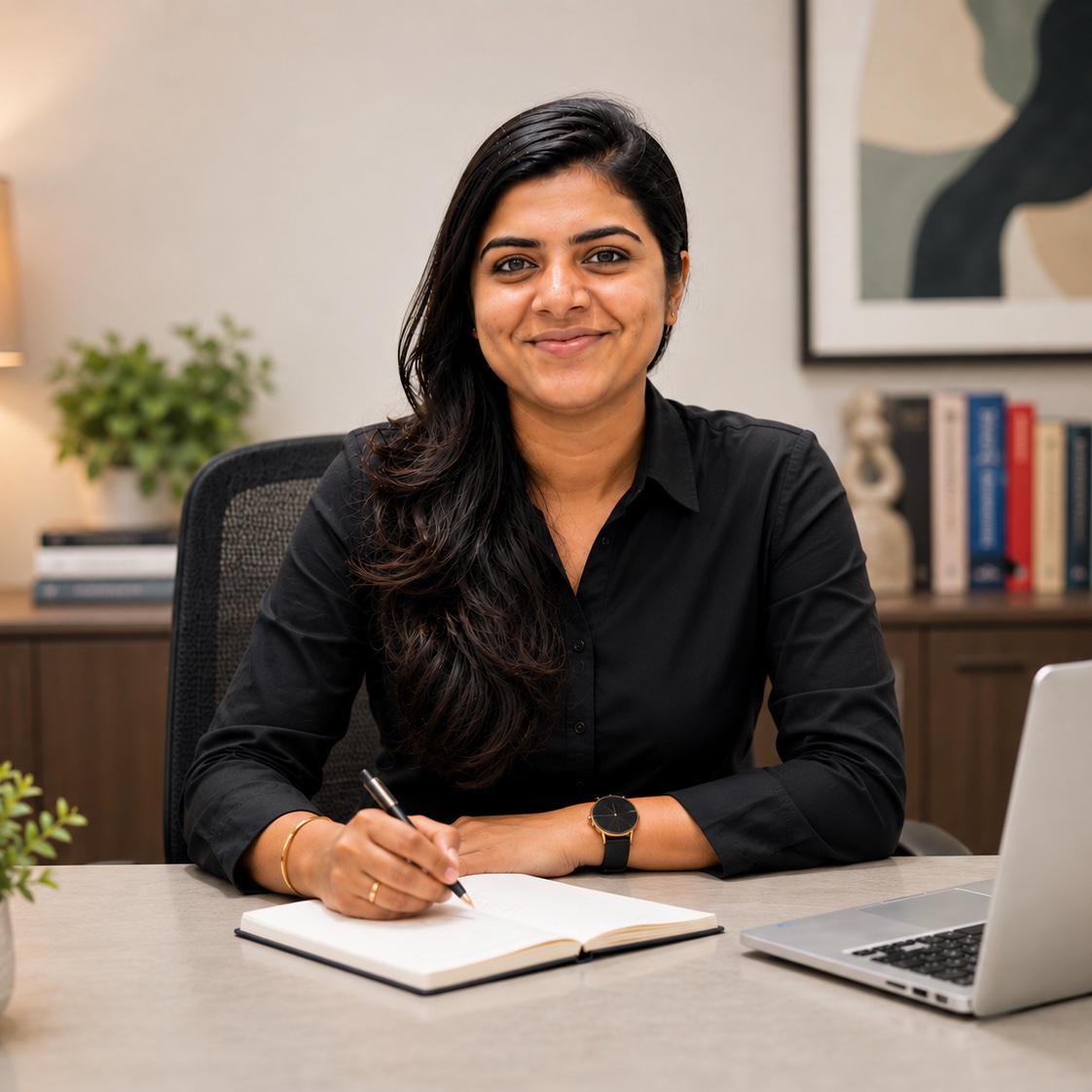
I am Dr. Sandhiya Loganathan, a psychiatrist at Fertilia with a focus on women’s mental health. I work alongside therapists, refer women to them often, and see how frequently what stops women from going is not reluctance but simply not knowing what to expect. This post is for anyone who is ready to consider therapy but wants to understand what it is before taking that first step.
What Happens in Your First Therapy Session
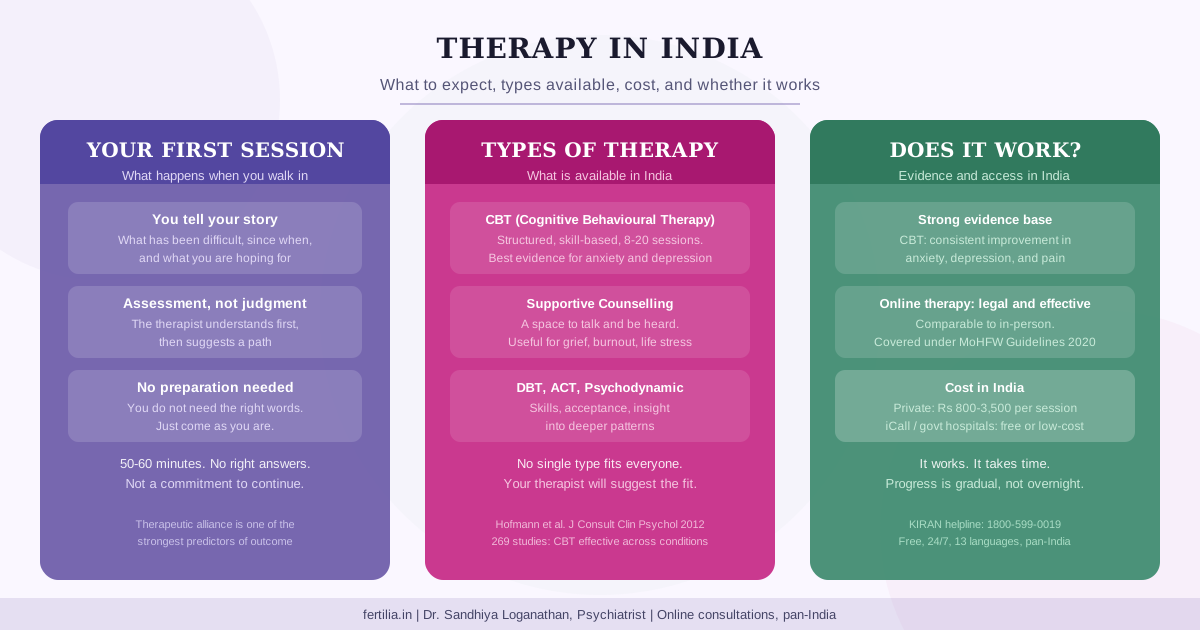
The first session is usually an intake or assessment. The therapist’s goal is to understand who you are, what you have been experiencing, and what brought you in.
You will likely be asked:
- What has been difficult lately, and since when
- How it is affecting your sleep, your daily life, your work, and your relationships
- Whether you have been through something like this before, or tried any support previously
- What you are hoping to get from therapy
You do not need to have prepared answers. You do not need to arrive with a neatly summarised problem or a clear diagnosis. “I have been feeling off for a while and I am not sure why” is a completely valid starting point.
Most first sessions run for 50 to 60 minutes. At the end, the therapist will usually share their initial impression, suggest which approach might help, and discuss how often to meet. Once a week is standard at the start; some people shift to fortnightly sessions once the initial work is done.
The first session is not a commitment to a long process. You are there to see whether this person and this space feel workable. A good therapist expects that some people will not return after the first session, and takes no offence if you decide to find someone else.
Types of Therapy in India
The word “therapy” covers many different approaches. Here is a plain-language guide to the main ones you will encounter in India.
Cognitive Behavioural Therapy (CBT)
CBT is the most widely researched form of therapy available. It works by examining the relationship between thoughts, feelings, and behaviours. The central idea is that unhelpful thought patterns drive difficult emotions, and that learning to recognise and change those patterns produces lasting improvement in how you feel.
CBT sessions are structured. There is usually a brief review of the past week, focused work on a specific skill or pattern, and a task between sessions: keeping a thought diary, practising a breathing technique, or testing a particular assumption in real life. It is typically time-limited: 8 to 20 sessions for most conditions.
Supportive Counselling
This is what many people picture: a safe, non-judgmental space to talk through what is happening in your life. It is less structured than CBT, more focused on being heard and reflecting. It is useful for life transitions, grief, burnout, relationship stress, and any situation where what you need most is to process out loud with someone who will not react the way the people in your life do.
Dialectical Behaviour Therapy (DBT)
DBT was developed from CBT and focuses on managing intense emotions, tolerating difficult moments, and improving relationships. It teaches a specific set of skills: mindfulness, emotional regulation, distress tolerance, and interpersonal effectiveness. Originally developed for borderline personality disorder, its skills are now used broadly for emotion dysregulation and self-harm.
Acceptance and Commitment Therapy (ACT)
ACT focuses on psychological flexibility: accepting difficult thoughts and feelings without letting them drive behaviour, and moving toward what matters most to you. It is useful when someone has been trying to eliminate anxiety or difficult feelings through control, and found that the effort of control is taking more energy than the feelings themselves. A growing number of therapists in India are trained in ACT.
Psychodynamic Therapy
Psychodynamic therapy looks at how earlier relationships and experiences shape current patterns. It tends to be less structured and longer-term, suited to people who notice the same relational patterns repeating, or who want to understand themselves more deeply rather than only managing current symptoms.
For an overview of which type of professional to approach for mental health support in India (psychiatrist, clinical psychologist, or counsellor), see our guide on who to see for mental health in India.
What the Evidence Shows
The evidence for therapy is strong.
A major meta-analysis by Hofmann and colleagues (Journal of Consulting and Clinical Psychology, 2012; PMID 23459093), covering 269 studies, found that CBT produces significant, consistent improvements across a wide range of conditions: anxiety disorders, depression, panic disorder, health anxiety, chronic pain, and more. For most anxiety conditions, effects are large and durable, with gains maintained at follow-up a year or more later. For depression, therapy and medication together tend to produce better outcomes than either alone, though therapy alone is effective for mild to moderate severity.
One thing the research consistently emphasises: the relationship between you and your therapist predicts outcomes as well as the specific technique used. Feeling safe, heard, and understood in the room matters. If that is not how the first few sessions feel, it is worth saying so to the therapist, or looking for someone different.
Therapy does not produce a dramatic shift in the first few sessions. Most people describe it as cumulative: a skill applied in one difficult moment, a pattern noticed and named, a week that was slightly less overwhelming than it would have been before. Over time, these compound.
If you are unsure whether therapy is the right next step, or want to think through what kind of support fits your situation, you can reach Dr. Sandhiya directly on WhatsApp. A single online consultation (Rs 399) can help clarify what you are looking for before committing to a longer process.
How Long Therapy Takes, and What It Costs
How long
For a time-limited concern (a stressful period, grief, a specific anxiety), 8 to 12 sessions of CBT or supportive counselling is often enough to produce meaningful change. Many people notice something shifting within 4 to 6 sessions.
For longer-standing patterns (anxiety or depression that has returned multiple times, complex grief, relationship difficulties with roots in earlier experience), therapy tends to run for 6 to 12 months of regular sessions. This is not a sign that something is harder to treat; some things take more time because they have been in place for longer.
A good therapist will review progress with you regularly. You should not feel locked into an indefinite process. Many people pause therapy for a period and return later when circumstances change.
The cost of therapy in India
| Setting | Approximate cost per session |
|---|---|
| Government hospital (psychiatry or psychology OPD) | Free or Rs 0-100 |
| Non-profit / NGO counselling | Rs 0-500 |
| Online therapy platforms (iCall TISS, InnerHour, YourDost) | Rs 800-1,800 |
| Private therapist, Tier 2 city | Rs 1,000-2,500 |
| Private therapist, metro city | Rs 1,500-3,500 |
| Clinical psychologist at a private hospital | Rs 2,000-4,000 |
At weekly sessions, mid-range therapy costs approximately Rs 4,000-8,000 a month. Many therapists offer fortnightly sessions after an initial phase, which reduces the monthly cost significantly.
Free and low-cost options in India:
- iCall (TISS, Mumbai): low-cost online counselling for adults across India
- NIMHANS (Bengaluru): walk-in outpatient psychology services, free
- Government district hospitals: most now have a clinical psychology department with subsidised or free consultations
- KIRAN helpline: 1800-599-0019, free, 24/7, available in 13 Indian languages including Tamil and Hindi
A note on costs: The figures above reflect commonly reported ranges as of mid-2026. Confirm the fee directly with your therapist, as rates vary widely by city, experience level, and platform.
Online Therapy in India
Since 2020, online therapy has become a mainstream option. The Ministry of Health and Family Welfare’s Telemedicine Practice Guidelines (2020) explicitly cover mental health consultations: a licensed psychiatrist or clinical psychologist can legally and ethically provide therapy over video call or phone in India.
Multiple systematic reviews have found that internet-based CBT produces outcomes comparable to face-to-face CBT for anxiety and depression in outpatient settings. Online delivery also reduces barriers: no commute, no waiting room, and for many women, less exposure to the stigma of being seen walking into a mental health clinic.
Practical considerations:
- Use a private space where you feel comfortable speaking openly
- A stable internet connection matters more than video quality
- Many therapists offer evening and weekend slots for online sessions, which in-person appointments rarely allow
- Online therapy is not suitable for acute psychiatric crisis, conditions requiring close in-person monitoring, or when a comprehensive in-person assessment is needed first
Finding a Therapist: Practical Steps
Look for registered practitioners. Clinical psychologists in India are registered with the Rehabilitation Council of India (RCI). Psychiatrists are registered with the National Medical Commission (NMC). Counsellors do not yet have a mandatory registration body in India, so ask directly about training and credentials.
Ask about the approach. A therapist trained specifically in CBT will offer a structured, skill-based process. “Integrative therapy” means the therapist draws from multiple approaches. Ask what that means in practice for your specific concern.
Online directories. The iCall platform, the Vandrevala Foundation (helpline: 1860-2662-345, free, 24/7), and the NIMHANS e-SANJEEVANI portal can help you find trained practitioners in India at a range of price points.
The first session is not a long-term commitment. You can meet a therapist once and decide whether to continue. If it does not feel right, finding someone else is a practical step, not a failure.
Stigma, Privacy, and Common Questions
Will the therapist judge me?
Professionally and ethically, no. Confidentiality is a core obligation for all mental health practitioners in India. What you share in sessions stays there, with specific exceptions (such as immediate risk of serious harm, which your therapist will explain at the start).
My family will want to know what I talk about.
Your therapist will not share the content of sessions with family members, your employer, or anyone else without your explicit consent. You are not required to tell anyone that you are attending therapy, or what you discuss there.
My family thinks therapy is only for people who are seriously unwell.
India’s treatment gap for mental health is estimated at 70 to 92 percent (NIMHANS National Mental Health Survey, 2015-16). Most people who could benefit from mental health support do not access it, not because the need is rare, but because stigma, cost, and lack of information stand in the way. The Mental Health Care Act 2017 recognises the right to mental healthcare for every Indian citizen. Seeking therapy for anxiety, grief, burnout, or relationship stress is not a sign that something is seriously wrong. It is a practical response to something that is making your life harder.
Do I have to talk about my childhood?
Not in all therapy types. CBT focuses almost entirely on current thought patterns and behaviours. Psychodynamic therapy does explore earlier experiences, but the pace is yours, and you only go where you feel ready.
For more on what anxiety in women looks like and when to seek help, and how depression in women differs from ordinary low mood, those posts have the clinical detail. If you are managing the emotional weight of burnout and the mental load, or the particular stress of trying to conceive, therapy is one of the pathways covered in each of those posts.
When to Consider Therapy
You do not need to be in crisis to benefit from therapy. Many women come for situations that feel manageable but consistently draining: an anxiety that has been in the background for years, a grief they have not been able to fully process, a relationship that keeps replaying the same difficulty, a sense that they are functioning but not quite well.
You do not need to wait until something becomes unbearable. You do not need a diagnosis. The threshold for therapy is: something in your life is causing you difficulty, and you would like a structured space to work through it.
For women managing postpartum anxiety or the emotional adjustment to new motherhood, the body image concerns that can arise after pregnancy or weight change, or the cycle of grief that accompanies fertility treatment, therapy offers something that good advice cannot: a relationship and a process, over time.
Frequently Asked Questions
What should I say in my first therapy session?
You do not need to prepare anything. Come with a rough sense of what has been difficult recently and what brought you to make the appointment. The therapist will guide the session. If you are not sure what to say, saying that is a completely valid starting point.
Therapy kitne sessions mein kaam karti hai? (How many sessions does therapy usually take?)
For a specific, time-limited concern, most people see meaningful progress within 8 to 12 sessions of CBT. For longer-standing patterns, therapy often runs for 6 to 12 months of regular sessions. A good therapist will review progress with you after the first 4 to 6 sessions.
How much does therapy cost in India?
Private therapy typically costs Rs 800 to Rs 3,500 per session depending on the therapist, city, and mode. Free options include iCall (TISS, Mumbai), government hospital psychology departments, and the KIRAN helpline (1800-599-0019). Online therapy platforms generally run Rs 800 to Rs 1,800 per session.
Is CBT the only type of therapy available in India?
No. CBT is the most researched, but supportive counselling, DBT, ACT, and psychodynamic therapy are all used by practitioners in India. The right approach depends on what you are dealing with. Your therapist will usually suggest what they feel best fits your situation.
Does online therapy work as well as in-person therapy?
For most outpatient conditions (anxiety, depression, burnout, grief, relationship stress), internet-based therapy produces comparable outcomes to face-to-face therapy, based on multiple systematic reviews. Online therapy in India is also legal under the Ministry of Health and Family Welfare’s Telemedicine Practice Guidelines (2020).
How do I know if therapy is working?
Progress is usually gradual. Useful signs: a difficult situation handled slightly differently than you would have before, a pattern recognised and named, certain situations feeling less overwhelming. If after 6 to 8 sessions nothing has shifted, it is worth raising that directly with your therapist.
Can therapy help with fertility stress, PCOS anxiety, or postpartum adjustment?
Yes. Women managing fertility treatment, PCOS, or the postpartum period often benefit considerably from the structured, confidential space therapy provides. CBT and supportive counselling reduce distress and help build coping skills for situations that are medically supported but can feel emotionally isolating. See our guide on trying to conceive and mental health for more on the fertility side of this.
If you want to talk through what might help in your specific situation, reach out to Dr. Sandhiya on WhatsApp. The Rs 399 consultation is a single session, with no obligation to continue.
If you are not ready for that step yet, the KIRAN helpline (1800-599-0019, free, 24/7, in 13 languages including Tamil and Hindi) is available whenever you are ready to speak to someone.