You roll over in bed at 36 weeks and notice it: red, angry bumps running directly through your stretch marks, spreading toward your hips and thighs. You switch on the light. The itch is relentless, and the internet you turn to tells you that itching in late pregnancy can mean cholestasis, which can mean complications for the baby.
In most cases of this specific rash, starting in the stretch marks and radiating outward, you are looking at PUPPS. And PUPPS carries no risk to your baby whatsoever.
In the online consultations I hold for women across India at Fertilia, PUPPS-related calls are among the most common in the third trimester. I am Dr. Suganya Venkat, an OB-GYN with over fifteen years of clinical experience, and the pattern is consistent: a woman at 35 or 36 weeks, first pregnancy, often carrying a larger-than-average baby, alarmed by an itch she cannot explain. Once the diagnosis is confirmed and the treatment started, the fear lifts considerably.
This guide covers what PUPPS is, what it looks like, why it happens, how to tell it from ICP, and how to treat it safely.
What Is PUPPS?
PUPPS stands for pruritic urticarial papules and plaques of pregnancy. Pruritic means itchy; urticarial refers to the raised, hive-like appearance; papules are small bumps; plaques are larger inflamed patches. Together, the name describes a specific type of itchy, raised rash that appears only in pregnancy.
It is the most common inflammatory dermatosis (skin condition) of pregnancy, occurring in roughly 1 in 160 to 200 pregnancies. In the United Kingdom it is also called PEP, short for polymorphic eruption of pregnancy. Same condition, different name.
PUPPS is not infectious, not contagious, and not a sign of any underlying disease. The pregnancy itself produces it, and delivery resolves it.
What PUPPS Looks and Feels Like
PUPPS has a recognisable pattern. Once you know it, you can identify it without needing a formal dermatology consultation in most cases.
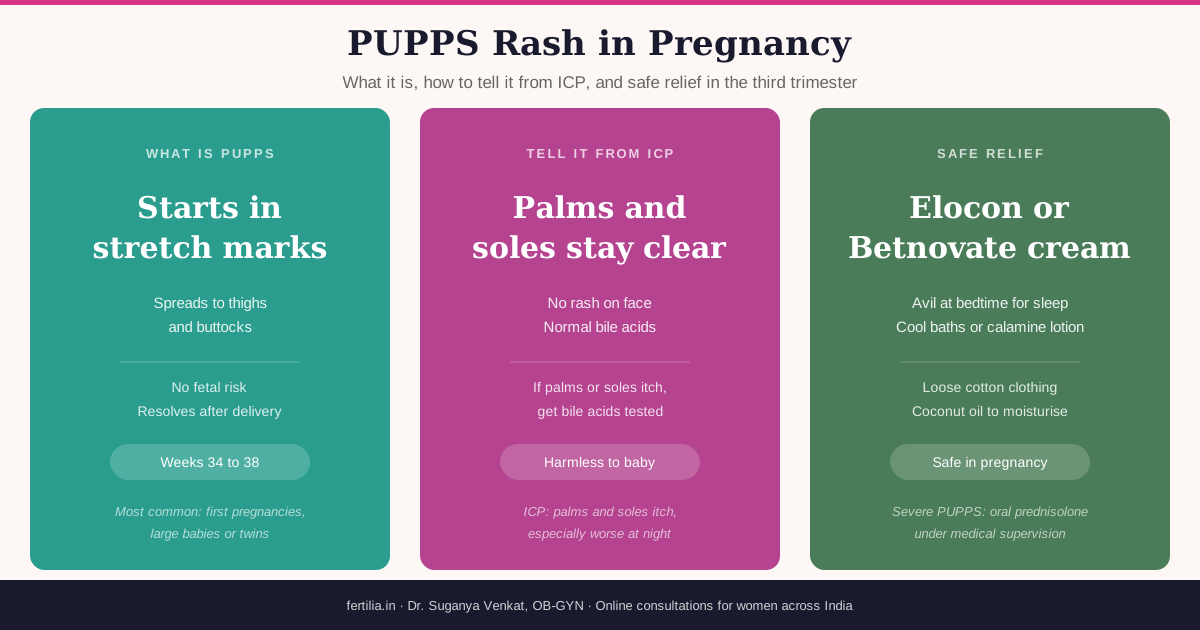
Where it starts: The rash almost always begins inside the stretch marks on the abdomen. This is one of its most characteristic features. The red, raised bumps trace the lines of the striae, as though the stretch marks themselves are inflamed. In some women the bumps cluster into larger patches.
Where it spreads: From the abdomen, the rash moves to the thighs, buttocks, and occasionally the upper arms. In more extensive cases it spreads across most of the trunk.
What stays clear: The face is not affected. The palms of the hands and the soles of the feet remain clear. The belly button itself is typically spared, even when the surrounding skin is involved.
These three “clear” areas matter clinically, because the condition you need to rule out, ICP (intrahepatic cholestasis of pregnancy), behaves very differently.
What the itch feels like: The itch of PUPPS is intense, often severe. Many women describe it as the most relentless discomfort of their entire pregnancy. It tends to worsen at night. Scratching brings no real relief and damages the skin further. The bumps can occasionally develop small blister-like tops in severe cases.
When it appears: PUPPS typically develops between weeks 34 and 38. In a small number of women it appears shortly after delivery before resolving over the following two weeks.
Why PUPPS Happens
Two overlapping mechanisms have been identified.
The first is mechanical skin stretch. Late pregnancy stretches the abdominal skin far beyond any prior experience. This extreme stretching is thought to disrupt the collagen architecture within the deeper layers of the skin, triggering a local inflammatory response. The fact that PUPPS begins precisely in the stretch marks, where the skin has been most deformed, supports this explanation.
The second mechanism involves fetal cell microchimerism. Research, including work by Rudolph et al. (Br J Dermatol, 2006), found that small amounts of fetal cells can travel into the maternal circulation and reach maternal skin. In PUPPS, the stretch-induced micro-disruption of the skin barrier is thought to allow these fetal cells to enter the dermis. The maternal immune system mounts a response to unfamiliar fetal genetic material, producing the inflammatory rash.
This fetal-cell hypothesis also explains several well-established patterns:
- PUPPS is most common in first pregnancies: the abdomen stretches most dramatically when this happens for the first time
- Large babies increase the risk: greater stretch means more skin disruption
- Twin and multiple pregnancies carry a higher likelihood than single-baby pregnancies
- Pregnancies with male babies may provoke a stronger response, since male fetal DNA is immunologically more foreign to the mother
For the same reason, PUPPS tends not to recur with the same severity in subsequent pregnancies. The abdominal skin has already adapted to large-scale stretching.
PUPPS vs ICP: The Difference That Matters
Itching in the third trimester can be PUPPS or ICP. ICP is a liver condition in which bile acids accumulate in the blood. At high levels, it carries a risk of fetal complications and requires monitoring and management. It is important to be clear about which condition is present.
The pattern of itch helps separate them.
| Feature | PUPPS | ICP |
|---|---|---|
| Where itch is worst | Stretch marks on abdomen, thighs | Palms of hands and soles of feet |
| Worse at night | Yes | Yes, especially on palms and soles |
| Visible rash | Yes, red bumps and plaques | Usually no primary rash; scratching marks only |
| Face | Clear | Clear |
| Palms and soles | Clear | Predominantly affected |
| Bile acid levels (blood test) | Normal | Elevated |
| Liver function tests | Normal | Often elevated |
| Risk to baby | None | Risk at very high bile acid levels |
| When it resolves | 1 to 2 weeks after delivery | Shortly after delivery |
The single most useful clinical pointer: if your palms or soles itch at all, a serum bile acid test should be done. If the itch is concentrated in your stretch marks and your hands and feet are clear, PUPPS is the far more likely explanation.
For a full explanation of ICP, how it is tested, and what the results mean, read our guide to itching in pregnancy and obstetric cholestasis.
Safe Treatment for PUPPS in Pregnancy
PUPPS does not need treatment to protect the baby. It is managed for the mother’s comfort. Given how severe the itch can be, especially at night, comfort is not a minor consideration.
Topical Steroids
Moderate-potency topical steroids are the most effective first-line treatment. They reduce skin inflammation and ease the itch significantly within a few days of consistent use.
Commonly available in India:
- Mometasone furoate 0.1% cream (Elocon): Apply a thin layer to the affected patches once daily. Widely available at pharmacies.
- Betamethasone valerate 0.1% cream (Betnovate): An alternative of similar potency, also widely available.
Both are considered safe in the third trimester at the doses needed for PUPPS. High-potency steroids such as clobetasol are generally avoided in pregnancy. Applying any topical steroid over very large surface areas for prolonged periods is also not recommended. Your doctor or dermatologist will confirm which formulation is appropriate and for how long.
Oral Antihistamines
For nights when the itch prevents sleep, an antihistamine taken at bedtime helps considerably.
- Chlorpheniramine (Avil 4mg): A safe option in the second and third trimesters, with a mild sedating effect that suits bedtime use. It quiets the itch enough to allow sleep.
- Cetirizine (Alerid 10mg, Zyrtec 10mg): A non-sedating antihistamine considered safe in pregnancy for most women. Better for daytime use.
Always use antihistamines as directed and check with your doctor if you have any other conditions or are taking other medications.
Self-Care at Home
These measures do not eliminate the rash but reduce the severity of the itch:
- Cool baths or cool compresses on the worst-affected areas bring temporary but real relief
- Calamine lotion soothes the skin surface and reduces the urge to scratch
- Loose, cotton clothing prevents friction that worsens the inflammation
- An unfragranced moisturiser or plain coconut oil applied after bathing keeps the skin hydrated and reduces dryness-driven itch
- Keeping nails short limits skin damage from unavoidable scratching
Avoid fragranced soaps and shower gels on the affected skin. Avoid hot water in the bath or shower, as heat increases skin inflammation.
For Severe Cases
If topical steroids and antihistamines are not giving enough relief, a short course of oral prednisolone is sometimes prescribed for severe PUPPS. This is safe in pregnancy under medical supervision and brings rapid relief. Do not self-prescribe.
Dealing with an intense itch at 35 or 36 weeks and not sure what you are looking at? A brief online consultation with Dr. Suganya Venkat at Fertilia can confirm whether this is PUPPS or whether a blood test for ICP is needed. WhatsApp to book a video call.
When to Get a Blood Test
PUPPS itself does not require a blood test for diagnosis. However, your doctor should check a serum bile acid level and liver function tests in any of these situations:
- Your palms or soles itch, even mildly: this pattern is more consistent with ICP and needs to be ruled out
- The itch is extreme and does not respond to topical treatment within a few days: consider investigating
- There is little or no visible rash, or it looks atypical: ICP rarely causes a primary rash; when the itch is disproportionately severe compared to what you can see, investigate
- Your urine has darkened or your stools look pale: both can indicate liver involvement
A serum bile acid level below 10 µmol/L with normal liver function tests confirms that ICP is not the diagnosis. Management can then be purely symptomatic.
If you would like to understand more about third-trimester risk monitoring more broadly, our high-risk pregnancy guide explains when and why additional tests are arranged.
What to Expect: Timeline and Resolution
During pregnancy, the rash continues until delivery. Treatment manages the itch but does not eliminate the rash, because the underlying cause (abdominal stretch and fetal cell entry) remains present until the pregnancy ends.
After delivery, the itch typically begins to ease within 48 to 72 hours. The visible rash clears completely within one to two weeks. In a small number of women it persists a little longer but resolves entirely within six weeks of delivery.
There is no lasting skin damage from PUPPS. The stretch marks that preceded the rash will remain, as they do for most women after pregnancy, but the inflammatory component resolves completely.
You can track how your body changes through each stage at our pregnancy week-by-week guide.
PUPPS in Future Pregnancies
A common question is whether PUPPS will come back in a second or third pregnancy. In most women, it does not, or recurs only in a milder form. The abdominal skin has already adapted to large-scale stretch and the triggering mechanism is less pronounced. Women who carry twins or particularly large babies in subsequent pregnancies have a higher chance of recurrence than those with smaller single pregnancies.
What PUPPS Is Called in Hindi and Tamil
Women searching from different parts of India often use different terms when looking for information about this rash:
| Language | Common terms used |
|---|---|
| Hindi | Pregnancy mein chakte, pregnancy rash, garbhavastha mein daane |
| Tamil | Karbha kaala tachchu (pregnancy-time rash), vayir tachchu (stomach rash) |
| Colloquial (English) | Stretch mark rash, third trimester rash, pregnancy skin rash |
Most women who search for “pregnancy mein chakte” or “stretch mark rash third trimester” are looking for information about PUPPS, even without knowing the clinical name.
For a full guide to pregnancy care through the third trimester and beyond, download our Pregnancy Guide.
If your rash is severe, the itch is affecting your sleep, or you need to confirm whether a blood test is needed, book a video consultation with Dr. Suganya Venkat at Fertilia. Consultations are online, pan-India, at Rs 399. WhatsApp at +91 99402 70499.
Frequently Asked Questions
Is PUPPS dangerous for my baby? No. PUPPS carries no risk to the baby. This is the most important distinction between PUPPS and ICP (obstetric cholestasis). With PUPPS, serum bile acid levels and liver function tests are completely normal. The rash is a skin reaction in the mother only and does not affect the baby’s development or wellbeing in any way. Delivery can proceed at the planned time.
My palms itch a little as well. Should I get tested? Yes. If your palms or soles itch at all, even mildly, ask your doctor for a serum bile acid test and liver function tests. The pattern of itch on the palms and soles, especially worse at night, is characteristic of ICP rather than PUPPS. Both conditions can coexist, or what appears to be PUPPS may have an ICP component. The test is a simple blood draw and removes the uncertainty completely.
Can I use Elocon or Betnovate cream safely in the third trimester? Yes, under your doctor’s guidance. Moderate-potency topical steroids such as mometasone (Elocon) and betamethasone valerate (Betnovate) are used for PUPPS in the third trimester and are considered safe at the doses needed for localised skin inflammation. They should be applied to the affected patches only, not across the entire body, and for the duration your doctor advises. Do not buy them over the counter and self-treat independently without a doctor’s input.
Will PUPPS come back in my next pregnancy? In most women, no. PUPPS is most strongly associated with first pregnancies, large babies, and multiple pregnancies. In a subsequent pregnancy the abdominal skin has already adapted to stretch and the triggering mechanism is less pronounced. Recurrence is possible but typically milder, and is much less common than in the first pregnancy.
Pregnancy mein chakte ho toh kya karna chahiye? Agar third trimester mein stretch marks ke upar ya thighs par lal daane niklen aur tez khujli ho, toh yeh PUPPS ho sakta hai. Apne doctor se milein, especially agar haath ya pair mein bhi khujli ho. Doctor serum bile acid test karwa sakte hain taaki ICP rule out ho sake. Treatment ke liye: doctor ke anusaar Elocon ya Betnovate cream lagaein, raat ko Avil 4mg se neend mein madad milti hai, aur cool compress se rahat hoti hai. Khujli ko kharochein nahin.
How long does PUPPS last after delivery? The itch typically eases within 48 to 72 hours of delivery. The visible rash clears within one to two weeks after the baby is born. In a small number of women it persists slightly longer but resolves entirely within six weeks of delivery. There is no lasting skin damage from PUPPS.
My doctor thinks it is PUPPS but still wants a blood test. Is that necessary? Yes, and it is good, standard practice. PUPPS is diagnosed clinically by its pattern, but ruling out ICP with a serum bile acid level and liver function test removes all uncertainty. A normal result lets both you and your doctor manage the itch symptomatically without ongoing concern. If the result is elevated, your doctor can arrange the monitoring that ICP requires. Getting the test done is always worth it in the third trimester.