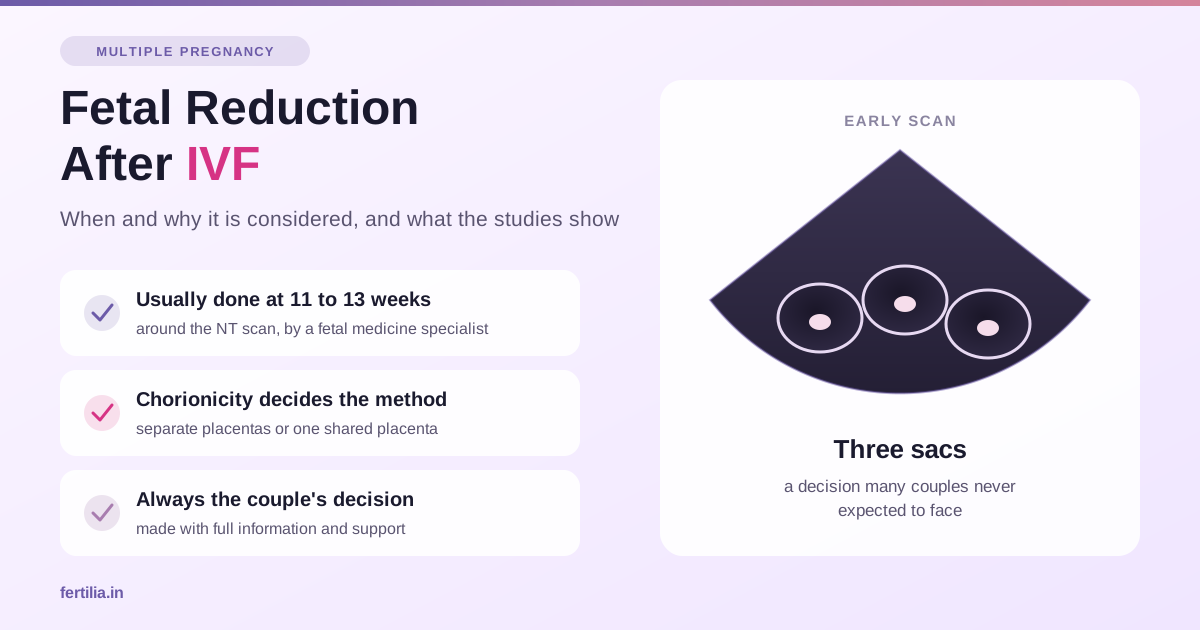
The scan was meant to be the happy part. After months of injections, or several rounds of ovulation tablets and IUI, the sonographer counts the sacs and then counts again. Three heartbeats. Sometimes four.
Many couples feel joy and alarm at the same moment, and then, often within the same appointment, they hear a phrase they have never heard before: fetal reduction.
I’m Dr. Suganya Venkat, an OB-GYN with more than 15 years of experience, and this is one of the hardest conversations in fertility care. This post is not here to tell you what to decide. It is here to explain what fetal reduction is, why it is sometimes suggested, what the research shows about outcomes, and what to ask, so that whatever you choose, you choose it knowing the facts.
What This Post Covers
- What fetal reduction means, and the words doctors use for it
- How higher-order multiple pregnancies happen after IVF and IUI
- Why reduction is sometimes suggested for triplets, and what the studies found
- Reducing twins to one baby: a separate and more personal question
- When and how the procedure is done, and what the risks are
- The emotional side of the decision
- Prevention, and the questions to take to your fetal medicine team
- Frequently asked questions
What Fetal Reduction Means
Multifetal pregnancy reduction (MFPR), often shortened to fetal reduction, is a procedure in which the number of fetuses in a multiple pregnancy is reduced, most often from three or more to two, and sometimes to one. It is usually done late in the first trimester by a fetal medicine specialist, under ultrasound guidance.
You may also hear the term selective reduction. Some doctors use it for the same procedure. Others keep it for a specific situation, where one fetus in a multiple pregnancy has been found to have a serious abnormality and is the one chosen. If you hear both terms, it is reasonable to ask your team which one they mean.
Fetal reduction is a decision couples make, with a specialist, after a higher-order pregnancy has already begun. It is different from vanishing twin syndrome, where one embryo stops growing on its own in the early weeks. Our guide to vanishing twin syndrome after IVF explains that separately.
How Higher-Order Multiple Pregnancies Happen
Not every multiple pregnancy follows fertility treatment, but treatment has contributed significantly to the rise in multiple pregnancies (ACOG Committee Opinion No. 719, Obstet Gynecol, 2017, PMID 28832490). After treatment, there are two common routes.
After IVF: when more than one embryo is transferred, each can implant, and a single embryo can occasionally split into identical twins. In India, Section 24(b) of the Assisted Reproductive Technology (Regulation) Act, 2021 (text on indiacode.nic.in) allows not more than three oocytes or embryos to be placed in the uterus in a treatment cycle. A transfer of three is legal, and it can result in triplets.
After ovulation induction or IUI: tablets such as letrozole or clomiphene, and especially injectable gonadotropins, can make more than one follicle release an egg. As our IUI success rate guide explains, the aim in a monitored cycle is one or two dominant follicles, because three or more raise the chance of a multiple pregnancy without adding much to the chance of a baby.
Not every early triplet pregnancy stays that way. In a study of 709 multiple pregnancies conceived at a fertility clinic, one or more sacs or embryos stopped growing on their own before 12 weeks in 53% of triplet pregnancies and 65% of quadruplet pregnancies (Dickey RP et al., Am J Obstet Gynecol, 2002, PMID 11810089). This is one reason the final decision about reduction is usually not made at the first scan, although counselling can start then.
Why Reduction Is Sometimes Suggested
A triplet pregnancy asks a great deal of a mother’s body, and the babies are much more likely to be born early. The discussion about reduction is about lowering those risks for the mother and for the babies who continue.
What the triplet studies found
There are no randomised trials comparing reduction with continuing a triplet pregnancy. A Cochrane review that searched for them in 2015 identified none, and noted that recruitment to such a trial may prove exceptionally difficult, because willingness to be randomised depends on each couple’s social background and beliefs (Dodd JM et al., Cochrane Database Syst Rev, 2015, PMID 26544079). So the evidence comes from comparisons of women who chose each path.
- A meta-analysis of eight studies of triplets that each had their own placenta (trichorionic triplets) found that preterm birth before 34 weeks happened in 50.2% of pregnancies continued as triplets, against 17.3% of pregnancies reduced to twins. Miscarriage before 24 weeks was 7.4% and 8.1% respectively, a difference that was not statistically significant (Anthoulakis C et al., Hum Reprod, 2017, PMID 28444191). For triplets where two babies share a placenta, the same review found the results inconclusive.
- A second meta-analysis, of 24 studies, found that triplets reduced to twins were born later and were on average about 500 g heavier at birth than triplets that were not reduced, with similar rates of pregnancy loss before 24 weeks and similar overall infant survival (Zipori Y et al., Reprod Biomed Online, 2017, PMID 28625760).
These are observational studies, and the authors of both describe their limitations, including small study sizes and possible bias. They are still the best evidence available, and they are the numbers your fetal medicine specialist is likely to be drawing on.
Reducing triplets to twins or to one baby
When reduction is chosen, the next question is whether to continue with two babies or one. A 2022 meta-analysis of 2,543 reduced triplet pregnancies found that, compared with reduction to one baby, reduction to twins had a lower rate of survival of all remaining fetuses and a birth about 2.2 weeks earlier on average, while the rates of early pregnancy loss were similar (Hessami K et al., Am J Obstet Gynecol, 2022, PMID 35351408).
Many families have strong feelings about keeping two babies, and that is an entirely valid choice. It helps to know the trade-off when you make it.
Reducing Twins to One Baby
This is a different conversation. Most twin pregnancies go well with good antenatal care, and our guide to twin pregnancy and what to expect covers how they are monitored.
Some couples consider twin to singleton reduction, most often when a specialist feels that carrying two babies would be especially hard on the mother’s health. In a meta-analysis of six studies (2,867 women with twin pregnancies), those who had a 2-to-1 reduction had lower odds of preterm birth before 34 weeks (odds ratio 0.64), of high blood pressure disorders in pregnancy (odds ratio 0.25) and of caesarean delivery (odds ratio 0.35) than those who continued with twins (Bardin R et al., Int J Gynaecol Obstet, 2022, PMID 34758109). The authors called for larger prospective studies before firm conclusions are drawn.
Against that, a small proportion of pregnancies are lost after the procedure, discussed below. For most twin pregnancies without a specific medical reason, continuing with both babies and being monitored closely is the usual path.
💜 Just been told you are carrying triplets after treatment? Message Dr. Suganya’s team on WhatsApp A ₹399 video consultation gives you time to go through your scan report and prepare your questions, alongside your fetal medicine team’s advice, from anywhere in India.
When and How It Is Done
Timing
Fetal reduction is usually done at 11 to 13 weeks. In an Indian study from New Delhi, 64 higher-order multiple pregnancies were reduced by ultrasound-guided transabdominal procedures at 11 to 13 weeks, at an average of 11.46 weeks (Singh C et al., Int J Gynaecol Obstet, 2022, PMID 34460958).
This timing lines up with the NT scan window, which lets the team look at each fetus in detail before any decision. If one fetus shows a raised nuchal translucency or a visible problem, that is usually taken into account. Our NT scan guide explains what that scan measures.
Chorionicity decides the method
The most important finding on the early scan is chorionicity: whether each baby has its own placenta, or whether two babies share one. Babies who share a placenta also share connecting blood vessels, and that changes which method can be used safely.
- When each fetus has its own placenta, the usual method is an injection of potassium chloride into the chosen fetus’s heart, through a fine needle passed through the mother’s abdomen under ultrasound guidance.
- When the fetus to be reduced shares a placenta with another, potassium chloride is not used on it, because the connecting blood vessels could carry it to the twin who is meant to continue. Instead, centres use a technique that stops blood flow to the chosen fetus, such as radiofrequency ablation. In triplets where only two share a placenta, potassium chloride can still be an option if the fetus being reduced is the one with its own placenta. A team at AIIMS New Delhi reported 19 triplet pregnancies in which the method, intracardiac potassium chloride or radiofrequency ablation, was chosen based on chorionicity and the couple’s preference (Dadhwal V et al., Int J Gynaecol Obstet, 2026, PMID 42423129). This was a small series, and most of these pregnancies still delivered preterm.
Whichever method is used, it is a specialist procedure, usually done by a fetal medicine specialist, so your IVF team may refer you on.
What the Risks Are
The main risk of the procedure is losing the whole pregnancy.
- In one of the largest single-centre series, 1,000 reductions done in New York between 1999 and 2006, outcomes were known for 841, and 4.7% of those pregnancies ended before 24 weeks. The loss rate fell as the starting number of fetuses fell, and it was 2.1% in women reducing from twins to one baby (Stone J et al., Am J Obstet Gynecol, 2008, PMID 18928991).
- In the New Delhi study, 3.12% of reduced pregnancies miscarried before 24 weeks, against 2% of twin pregnancies that were twins from the start (Singh C et al., Int J Gynaecol Obstet, 2022, PMID 34460958).
The same Indian study found that reduced twins did about as well as twins who were twins from the start, with similar rates of pre-eclampsia, caesarean delivery and perinatal death. Both groups had more complications than singleton pregnancies, so a reduced twin pregnancy is still monitored as a twin pregnancy.
These figures come from experienced centres. A fair question to ask is how many of these procedures the team doing yours performs each year, and what their own loss rate is.
The Emotional Side of the Decision
For couples who have longed for a baby, sometimes for years, being asked to consider ending the life of one of their babies can feel unbearable. Please know that whatever you feel, relief, grief, guilt, anger or all of these at once, is normal.
In a study of the first 100 women who had a reduction at a New York centre, more than 65% remembered emotional pain, stress and fear during the procedure, and 70% mourned for the fetuses they lost, though for most the mourning lasted about a month. Lingering depressive symptoms were mild, although moderately severe sadness and guilt continued for many, and 93% said they would make the same decision again. The women who struggled most were younger, more religious, and had looked at their multiple pregnancy on ultrasound more often (Schreiner-Engel P et al., Am J Obstet Gynecol, 1995, PMID 7856683). A smaller French study that followed 18 women found that some still felt that sadness four months after delivery, and it concluded that good counselling at the time of the procedure is essential (Garel M et al., J Gynecol Obstet Biol Reprod, 1995, PMID 7782580).
Some couples decide not to reduce, for religious, personal or family reasons, and continue with all their babies under close monitoring. That is also a valid choice, and a good team will support you in it. The American College of Obstetricians and Gynecologists’ Committee Opinion No. 719 on multifetal pregnancy reduction (Obstet Gynecol, 2017, PMID 28832490) sets out an ethical framework to help doctors counsel and guide patients as they decide whether to continue or reduce.
If grief stays heavy after the procedure, or after the birth, it is worth talking about. Our post on coping after pregnancy loss describes what that grief can look like and what helps.
Prevention Is the First Conversation
The ACOG committee opinion above states that in almost all cases it is preferable to avoid a higher-order multiple pregnancy in the first place, by limiting the number of embryos transferred or by cancelling a gonadotropin cycle when the ovarian response suggests a high risk of multiples (Obstet Gynecol, 2017, PMID 28832490).
In practice that means two things:
- Before an IVF transfer, ask about transferring one embryo at a time and freezing the rest. Our guide to single vs double embryo transfer sets out what the trials found.
- In ovulation induction and IUI cycles, follicle-tracking scans show how many follicles are growing. If too many are growing, your doctor may advise cancelling or converting the cycle. It is disappointing, but it lowers the chance of facing this decision. It cannot remove that chance completely, because the follicles may still release eggs, so follow your clinic’s instructions about avoiding intercourse or using barrier contraception for the rest of that cycle.
Section 21(c)(ii) of the ART (Regulation) Act, 2021 (indiacode.nic.in) requires clinics to inform couples of the risks of their procedures, including the risk of multiple pregnancy. It is a good moment to ask directly.
Questions to Take to Your Fetal Medicine Team
- What is the chorionicity of this pregnancy? Does each baby have its own placenta, or do two share one?
- What are the risks for me and for the babies if we continue with all of them? Ask for figures, not only reassurance.
- If we reduce, would you advise two babies or one, and why?
- Which method would you use, and how many of these procedures does your team perform each year?
- What is your own loss rate after the procedure?
- Will the NT scan or any other testing be done before the procedure?
- What consent and paperwork will be needed, and who can we speak to for counselling afterwards?
Take your partner or a trusted family member to this appointment if you can. It is a lot to take in at once, and a second listener helps.
Practical Takeaways
- Fetal reduction lowers the number of fetuses in a multiple pregnancy, usually from three or more to two, and is usually done at 11 to 13 weeks.
- In trichorionic triplets, reduction to twins was linked with much less preterm birth before 34 weeks (17.3% against 50.2%) without a significant rise in miscarriage, in observational studies.
- Pregnancy loss after the procedure is possible. In a large series, 4.7% of pregnancies with known outcomes were lost after reduction, and loss rates were lower when starting from fewer fetuses.
- Chorionicity decides which method is safe, so ask about it first.
- Grief after reduction is common and normal. Most women in the studies came to terms with their decision, and support helps.
- The best prevention is agreeing on one embryo at a time, or a closely monitored stimulation cycle, before treatment.
If you are preparing for IVF or IUI and want to talk through transfer and stimulation plans in advance, Fertilia’s IVF Support program works alongside your clinic, and our free guide to getting pregnant is a good place to start.
Frequently Asked Questions
What is fetal reduction in IVF? Fetal reduction, or multifetal pregnancy reduction, is a procedure that reduces the number of fetuses in a multiple pregnancy, most often from three or more to two, and sometimes to one. It is done by a fetal medicine specialist, usually at 11 to 13 weeks, to lower the risks of very early birth and pregnancy complications for the mother and the babies who continue.
Why do doctors suggest reducing triplets to twins? Triplets are much more likely to be born very early. In an analysis of trichorionic triplets, preterm birth before 34 weeks happened in 50.2% of pregnancies that continued as triplets, against 17.3% after reduction to twins, without a significant rise in miscarriage (Anthoulakis C et al., Hum Reprod, 2017, PMID 28444191). It remains the couple’s decision.
At how many weeks is fetal reduction done? Usually between 11 and 13 weeks, around the time of the NT scan. By then the team can see chorionicity clearly and look at each fetus in detail, and any fetus that was going to stop growing on its own often already has.
What is the risk of miscarriage after fetal reduction? In a series of 1,000 procedures with outcomes known for 841, 4.7% of pregnancies were lost before 24 weeks, and the rate was 2.1% for twin to singleton reduction (Stone J et al., Am J Obstet Gynecol, 2008, PMID 18928991). An Indian study reported 3.12% (Singh C et al., Int J Gynaecol Obstet, 2022, PMID 34460958). Ask your team for their own figures.
Can twins be reduced to one baby? Yes, and some couples consider it for medical reasons. A meta-analysis found lower odds of preterm birth, high blood pressure in pregnancy and caesarean delivery after twin to singleton reduction (Bardin R et al., Int J Gynaecol Obstet, 2022, PMID 34758109), but a small proportion of pregnancies are lost after reduction. Most twin pregnancies go well without it.
How do women feel after fetal reduction? Grief, guilt and relief are all common. In one study, 70% of women mourned the fetuses they lost, mostly for about a month, and 93% said they would make the same decision again (Schreiner-Engel P et al., Am J Obstet Gynecol, 1995, PMID 7856683). Counselling before and after the procedure helps.
How can a triplet pregnancy be avoided during fertility treatment? By transferring one embryo at a time in IVF and freezing the rest, and by close follicle monitoring in ovulation induction and IUI cycles, with cancellation if too many follicles grow. ACOG’s Committee Opinion No. 719 (Obstet Gynecol, 2017, PMID 28832490) describes prevention as preferable in almost all cases.
💜 Facing this decision, or planning treatment and want to avoid it? Talk it through with Dr. Suganya over WhatsApp A ₹399 video consultation gives you unhurried time to understand your scan, your options and your questions, alongside your fetal medicine and IVF teams, wherever you are in India.