The scan takes a moment longer than usual. The sonographer is quiet. Then she says it, the word that changes everything about the next nine months: twins.
For some women, this is exactly what they had hoped for. For others, it is overwhelming. Often it is both at once. Two heartbeats, two sets of everything you had mentally prepared to manage once.
One thing is worth saying clearly before anything else: the majority of twin pregnancies, with the right surveillance in place, end with two healthy babies. The additional monitoring that twin pregnancies receive exists not because things are expected to go wrong, but because there are specific risks that are real, identifiable, and manageable when caught early.
This guide covers how twins form, why the type of placenta matters so much, the key risks and how they are watched, what a twin pregnancy care plan looks like, and what to expect at delivery.
How Twins Happen: Identical vs Fraternal
There are two distinct ways to have twins, and the distinction matters clinically, not just genetically.
Dizygotic twins (fraternal)
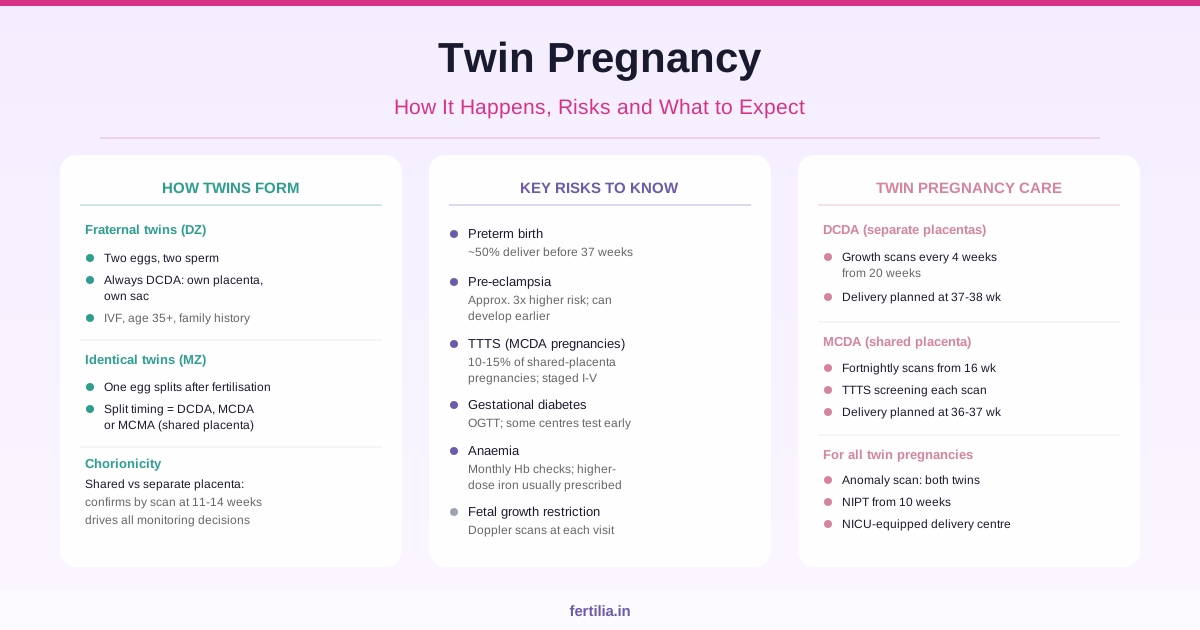
Dizygotic (DZ) twins happen when two separate eggs are released in the same cycle and each is fertilised by a different sperm. They are no more genetically similar than any two siblings and may be the same or different sexes.
Each DZ twin has its own placenta and its own amniotic sac. This arrangement is called dichorionic diamniotic (DCDA). It is the most common type of twin pregnancy and the lower-risk variant, because the two placentas are separate and the twins are not sharing the same blood supply.
IVF significantly increases the likelihood of DZ twins. So does a family history of twins on the maternal side, older maternal age, and higher parity. In India, where IVF is increasingly common but single-embryo transfer is not yet universal, the rate of twin pregnancies through assisted reproduction has risen noticeably over the past decade.
Monozygotic twins (identical)
Monozygotic (MZ) twins happen when one fertilised egg splits into two. The timing of that split determines the placenta arrangement:
- Before day 3 after fertilisation: Each twin develops its own placenta and its own amniotic sac. This is still DCDA, even though the twins are genetically identical.
- Days 3 to 8: The twins share one placenta but have separate amniotic sacs. This is monochorionic diamniotic (MCDA), the most common MZ arrangement.
- Days 8 to 13: The twins share one placenta and one amniotic sac. This is monochorionic monoamniotic (MCMA), rare, and the highest-risk arrangement.
The rate of MZ twinning is roughly fixed across populations at about 3.5 per 1,000 pregnancies. It is not increased by IVF or influenced by family history.
Why chorionicity is the most important factor
Chorionicity is the term for whether the twins share a placenta (monochorionic) or have separate placentas (dichorionic). It is, by far, the most clinically important characteristic of a twin pregnancy. Two twins sharing one placenta face risks that two twins on separate placentas do not. The entire monitoring schedule, the delivery timing, and the specific complications to watch for all flow from whether the placenta is shared.
The Scan That Defines the Pregnancy
Chorionicity is determined on the dating/NT ultrasound scan between 11 and 14 weeks of pregnancy. This is one of the most consequential diagnostic steps in a twin pregnancy, and it should happen as early as possible within that window.
On this scan, the sonographer looks at how the membrane between the twins meets the placenta:
- A thick, triangular wedge of placental tissue at the base of the membrane (the lambda sign or twin peak sign) means dichorionic: two separate placentas.
- A thin membrane meeting the placenta at right angles (the T-sign) means monochorionic: one shared placenta.
After 14 weeks, this distinction becomes progressively harder to make reliably. If your chorionicity has not been clearly documented, ask your obstetrician to confirm it at the earliest opportunity.
Twin Pregnancy Symptoms
The symptoms of a twin pregnancy are the same as a singleton pregnancy, only often more pronounced, because pregnancy hormone levels are higher.
- Nausea and vomiting may be more severe, starting earlier and lasting longer into the first trimester.
- Fatigue can be profound, particularly in the first twelve weeks when the body is building two placentas simultaneously.
- The bump appears and grows earlier. By the late second trimester, many twin mothers feel the size they would expect at term in a singleton pregnancy.
- Pelvic pressure, Braxton Hicks contractions, shortness of breath, and heartburn tend to appear earlier and may be more noticeable.
- Fetal movements, once they begin, can come from different directions simultaneously, which takes a few weeks to distinguish.
None of these symptoms on their own indicate a problem. They are the normal experience of a body doing considerably more work than usual.
Expecting twins and not sure what to ask at your next scan? Dr. Suganya Venkat offers online consultations across India, over a video call, to help you understand your reports, plan your nutrition, and know what to watch for at each stage. Chat on WhatsAppRisks in Twin Pregnancies: What Is Being Watched and Why
Knowing the risks in a twin pregnancy is not a reason to worry. It is the reason for the closer monitoring schedule your obstetrician recommends. Every item below is something the surveillance plan is specifically designed to catch early.
Preterm birth
The most common complication of twin pregnancy. Approximately half of all twin pregnancies deliver before 37 weeks, and about one in ten delivers before 32 weeks. Your obstetrician will watch for signs of early labour and cervical shortening throughout the second and third trimesters. This is one of the reasons why twin deliveries should happen at a hospital with neonatal intensive care unit (NICU) capacity.
For more on what preterm labour looks and feels like, see our guide to preterm labour signs and what to do.
Pre-eclampsia
Twin pregnancy carries approximately three times the risk of pre-eclampsia compared with a singleton pregnancy. It can also develop earlier in the third trimester. Blood pressure is monitored at every antenatal visit for this reason. Our guide to pre-eclampsia explains the warning signs and when to contact your hospital urgently.
Gestational diabetes
The risk of gestational diabetes is higher in twin pregnancies. An oral glucose tolerance test (OGTT) is standard; some obstetricians recommend doing it earlier than 24 weeks for twin pregnancies.
Anaemia
Two growing babies, two placentas, and a larger blood volume all increase the demand for iron substantially. Iron deficiency anaemia is common in twin pregnancies, and haemoglobin should be checked regularly throughout the pregnancy.
Twin-to-twin transfusion syndrome (TTTS)
This is specific to monochorionic (shared-placenta) pregnancies. When the blood vessel connections within the shared placenta are imbalanced, one twin receives too much blood flow (the recipient, who develops excess amniotic fluid) and the other receives too little (the donor, who becomes small and oliguric). If untreated, TTTS can be serious for both twins.
TTTS affects approximately 10 to 15% of MCDA pregnancies. Severity is classified using the Quintero staging system (stages I through V). Milder cases are monitored closely on serial scans. More severe cases are treated with laser ablation of the shared placental blood vessels, a procedure performed at fetal medicine centres. The fortnightly scan schedule from 16 weeks that all MCDA pregnancies follow exists precisely to detect TTTS before it progresses.
Fetal growth restriction (FGR)
One or both twins may grow more slowly than expected, particularly in shared-placenta pregnancies. Umbilical artery Doppler measurements on serial growth scans are used to assess the adequacy of blood flow to the placenta and to each twin.
How a Twin Pregnancy Is Monitored
The surveillance schedule depends on chorionicity.
Dichorionic diamniotic (DCDA) twins
Growth scans are typically scheduled every 4 weeks from 20 weeks of pregnancy, with additional visits from 32 weeks onward. Standard checks at each visit include blood pressure, urine protein, and blood tests. An OGTT for gestational diabetes is done between 24 and 28 weeks (sometimes earlier). In uncomplicated DCDA pregnancies, delivery is planned at 37 to 38 weeks.
Monochorionic diamniotic (MCDA) twins
Fortnightly scans from 16 weeks, every two weeks, specifically monitoring amniotic fluid volumes in each sac, bladder visibility (to detect the oliguric donor twin in early TTTS), and umbilical artery Doppler in both twins. If any TTTS features appear, immediate referral to a fetal medicine centre follows. In uncomplicated MCDA pregnancies, delivery is planned at 36 to 37 weeks.
Monochorionic monoamniotic (MCMA) twins
Intensive surveillance from a tertiary centre, often involving hospital admission from 28 weeks for daily fetal heart monitoring to screen for cord entanglement. Delivery is planned at 32 to 34 weeks.
For all twin pregnancies, the anomaly scan at 20 weeks (TIFFA) checks the structural development of both twins and takes longer than a singleton anomaly scan. NIPT to screen for chromosomal conditions can be done from 10 weeks; the interpretation in twin pregnancies has some differences from singleton pregnancies, so discuss it with your obstetrician. Fetal movement counting from around 26 to 28 weeks is also part of the awareness routine; for what to expect, see our guide to fetal movements.
Your obstetrician and delivery hospital lead the twin pregnancy surveillance plan. That does not change. The support layer between visits, understanding what your scans show, adjusting your nutrition as the pregnancy progresses, and knowing what to ask at each appointment, is where Fertilia’s online program helps alongside your medical team.
Nutrition for a Twin Pregnancy
The nutritional demands of a twin pregnancy are genuinely higher than a singleton pregnancy. This is not optional extra effort; both babies are drawing energy, iron, calcium, and protein simultaneously.
Calories
From the second trimester onward, a twin pregnancy typically requires an additional 600 to 700 kilocalories per day above your pre-pregnancy intake, compared with roughly 300 extra for a singleton pregnancy. Eat consistently across the day rather than trying to eat large amounts at once.
Iron
Iron supplementation in twin pregnancies is usually at a higher dose than in singleton pregnancies, often 60 to 120 mg of elemental iron daily, and haemoglobin should be checked monthly. Alongside tablets, iron-rich foods matter: rajma, masur dal, chana, ragi, sesame seeds (til), palak, and beetroot are all useful daily choices. Take iron tablets on an empty stomach with a glass of nimbu paani (lemon water) for better absorption, unless your stomach does not tolerate it well.
Folic acid
Most obstetricians prescribe 5 mg of folic acid per day for twin pregnancies, rather than the standard 400 mcg given for singletons. Take it as prescribed and continue for as long as your doctor advises.
Protein
Aim for protein at every meal. Dal, paneer, dahi, eggs, rajma, chana, and chicken are all useful sources. A bowl of chaas with lunch and dahi at dinner covers a meaningful portion of the protein and calcium requirement at the same time.
Calcium
Ragi, sesame seeds, dahi, and nachni are the most practical daily calcium sources in an Indian diet. Two cups of dahi per day and a ragi roti at one meal covers a substantial portion of the requirement for the day.
Fluids
Stay well-hydrated throughout the pregnancy. This matters more in twin pregnancies because of the higher pre-eclampsia risk and the larger amniotic fluid volume the body needs to maintain.
Delivery Planning: What to Expect
Timing
- DCDA twins: most are delivered between 37 and 38 weeks electively.
- MCDA twins: typically planned at 36 to 37 weeks.
- MCMA twins: delivery at 32 to 34 weeks under specialist care.
Mode of delivery
If the lower twin (twin 1, the one closest to the cervix) is lying head-down at the time of delivery, a vaginal delivery is possible and is planned at experienced centres. Twin 2 is delivered after twin 1, sometimes requiring the obstetrician to guide it into a good position. If twin 2 is breech, some obstetricians are trained in internal podalic version (turning twin 2 to a feet-first position for delivery). If twin 1 is breech or lying transversely, a C-section is usually recommended.
The overall C-section rate in twin pregnancies is higher than in singleton pregnancies. This is not an outcome to avoid at all costs; it reflects the more complex logistics of delivering two babies safely. Discuss your delivery plan with your obstetrician from 32 to 34 weeks onward so you know what to expect.
Where to deliver
Twin deliveries, particularly MCDA and MCMA pregnancies, should happen at a hospital with NICU capacity. If your antenatal care is at a smaller clinic, discuss with your obstetrician at which hospital the delivery is planned and whether a tertiary centre referral is needed.
A twin pregnancy that is well-monitored and well-planned is not a frightening experience. I am Dr. Suganya Venkat, an OB-GYN with over fifteen years of clinical experience, and the women I have worked with through twin pregnancies are often surprised at how calm and manageable the journey feels once they understand exactly what is being watched and why.
For the full antenatal care guide, including nutrition plans, trimester-by-trimester guidance, and what to track at each stage, download our Pregnancy Guide.
Want to understand your twin pregnancy scan reports and build a nutrition plan? Dr. Suganya Venkat offers online video consultations pan-India to help you navigate every stage of your twin pregnancy alongside your obstetrician. Chat on WhatsAppVernacular Guide: Twin Pregnancy Terms in Hindi and Tamil
| Language | Term | Meaning |
|---|---|---|
| Hindi | judwa bacche (जुड़वाँ बच्चे) | twins |
| Hindi | ek-anda judwa | identical (one-egg) twins |
| Hindi | do-ande judwa | fraternal (two-egg) twins |
| Tamil Roman | irattai kuzhanthai | twin babies |
| Telugu Roman | jodula pillalu | twin babies |
Frequently Asked Questions
How are twins formed in the womb?
Twins form in two ways. Fraternal twins (dizygotic) happen when two separate eggs are each fertilised by a different sperm; they always have their own placentas and sacs. Identical twins (monozygotic) happen when one fertilised egg splits into two after fertilisation; the timing of the split determines whether they share a placenta. The placenta arrangement drives how the pregnancy is monitored.
Is every twin pregnancy considered high-risk?
Yes. Twin pregnancy is classified as high-risk in most antenatal care systems because specific complications such as preterm birth, pre-eclampsia, and twin-to-twin transfusion syndrome in monochorionic pregnancies are more common. The high-risk label means closer surveillance is needed, not that complications are expected. Most twin pregnancies with appropriate monitoring result in two healthy babies. Our high-risk pregnancy guide explains what the label means in practice.
What is the difference between DCDA and MCDA twins?
DCDA (dichorionic diamniotic) twins each have their own placenta and their own amniotic sac. MCDA (monochorionic diamniotic) twins share one placenta but have separate amniotic sacs. DCDA carries a lower risk profile. MCDA pregnancies require fortnightly scans from 16 weeks specifically to screen for twin-to-twin transfusion syndrome.
What is TTTS in twin pregnancy?
Twin-to-twin transfusion syndrome (TTTS) is a condition specific to monochorionic (shared-placenta) twin pregnancies. Imbalanced blood vessel connections within the shared placenta cause one twin to receive too much blood (the recipient, who develops excess amniotic fluid) and the other too little (the donor, who becomes small and produces very little urine). TTTS affects approximately 10 to 15% of MCDA pregnancies. Severity is staged using the Quintero system. More severe cases are treated with laser ablation of the shared blood vessels at a fetal medicine centre.
Can I have a vaginal delivery with twins?
A vaginal delivery is possible when the lower twin (twin 1) is head-down at the time of delivery. Many experienced obstetricians plan for vaginal delivery in this situation. If twin 1 is breech or transverse, a C-section is recommended. The overall C-section rate in twin pregnancies is higher than in singleton pregnancies, and this is a clinical reality to understand and plan for rather than resist. Discuss the delivery plan with your obstetrician from 32 weeks onward.
Do twin pregnancies need more folic acid and iron?
Yes, on both counts. Most obstetricians prescribe 5 mg of folic acid per day for twin pregnancies, compared with 400 mcg for singletons. Iron supplementation is also at a higher dose, because two babies and two placentas increase iron demand significantly. Keep up with your monthly haemoglobin checks and take your supplements as prescribed.
Judwa bacche mein kya khaana chahiye? (What should I eat in a twin pregnancy?)
Twin pregnancy nutritional needs are roughly double a singleton’s additional requirements. Prioritise protein at every meal (dal, rajma, chana, paneer, dahi), calcium daily (ragi, til, dahi), iron-rich foods (masur dal, palak, til, rajma), and plenty of fluids. Your obstetrician will prescribe a higher dose of iron tablets; take them consistently and pair them with nimbu paani for better absorption. If you want a personalised meal plan tailored to your twin pregnancy stage and trimester, the Fertilia team offers online nutrition guidance alongside your antenatal care.