You wake up in the recovery room with a warm blanket, a dull ache low in your belly, and a nurse telling you how many eggs were collected. Then you go home, and the questions start. Is this much cramping normal? Why is there blood on the pad? Should the bloating be getting better by now, or worse? Can I go to office tomorrow?
Egg retrieval (called ovum pick-up, or OPU, in many Indian clinics) is a short procedure, but the days after it are rarely explained in any detail. Most women get a discharge sheet with a few lines on it and are left to work out the rest. This post walks through what a normal recovery looks like, day by day, so that you can tell what is expected from what is worth a phone call.
What This Post Covers
- Why you feel sore after a procedure you slept through
- A day-by-day guide to recovery, from retrieval day to your next period
- A quick reference table
- What helps: rest, pain relief, food, fluids, and movement
- Returning to work, exercise, and sex
- The signs that are worth calling your clinic about the same day
- Frequently asked questions
Why You Feel Sore After a Procedure You Slept Through
During the retrieval, you are under sedation or a short anaesthetic. A thin needle, guided by a vaginal ultrasound probe, passes through the vaginal wall into each ovary and drains the fluid from every follicle, one by one. The needle part of the procedure is usually short, but it involves many small punctures, and that is where most of the aftermath comes from.
Three things explain almost everything you feel in the first week:
- The puncture sites. Small needle holes in the vaginal wall can ooze a little blood, which is why spotting is common.
- The ovaries themselves. After stimulation, your ovaries are much larger than usual, and they do not shrink back the moment the follicles are drained. That is where the heaviness and bloating come from.
- The medicines. Sedation, and the progesterone many women start around this time, slow the bowel down. A lot of “bloating” in the first few days is partly constipation and trapped wind.
With that in mind, the recovery pattern makes much more sense.
Retrieval Day: The First Few Hours
In the recovery room. You will be watched for a short while as the sedation wears off. Most clinics check that you can pass urine, keep sips of water down, and walk steadily before sending you home the same day. Feeling drowsy, a little nauseated, or teary is common. Sedation affects mood for a few hours, and so does the release of weeks of tension.
Cramping. Expect period-like cramps, sometimes with a dragging heaviness on one or both sides. For most women this is manageable. In a German prospective study of 1,058 retrievals, most women tolerated the procedure well; 3% described severe to very severe pain afterwards, and pain was greater when more eggs were retrieved (Ludwig AK et al., Hum Reprod, 2006, PMID 16877373).
Spotting. Light bleeding or brownish discharge from the needle sites is common on the first day or two. Spotting that needs a panty liner or a light pad is the usual picture. Bleeding enough to be counted as a complication is much less common: in the same German study it was recorded in 2.8% of procedures, and no woman had bleeding inside the abdomen (Ludwig AK et al., Hum Reprod, 2006, PMID 16877373).
For the rest of the day. Go home with someone, rest, and eat something light once you feel like it. Because of the sedation, do not drive, operate machinery, or sign anything important until the next day. Your clinic’s discharge instructions come first on all of this.
Days 1 and 2: Settling In
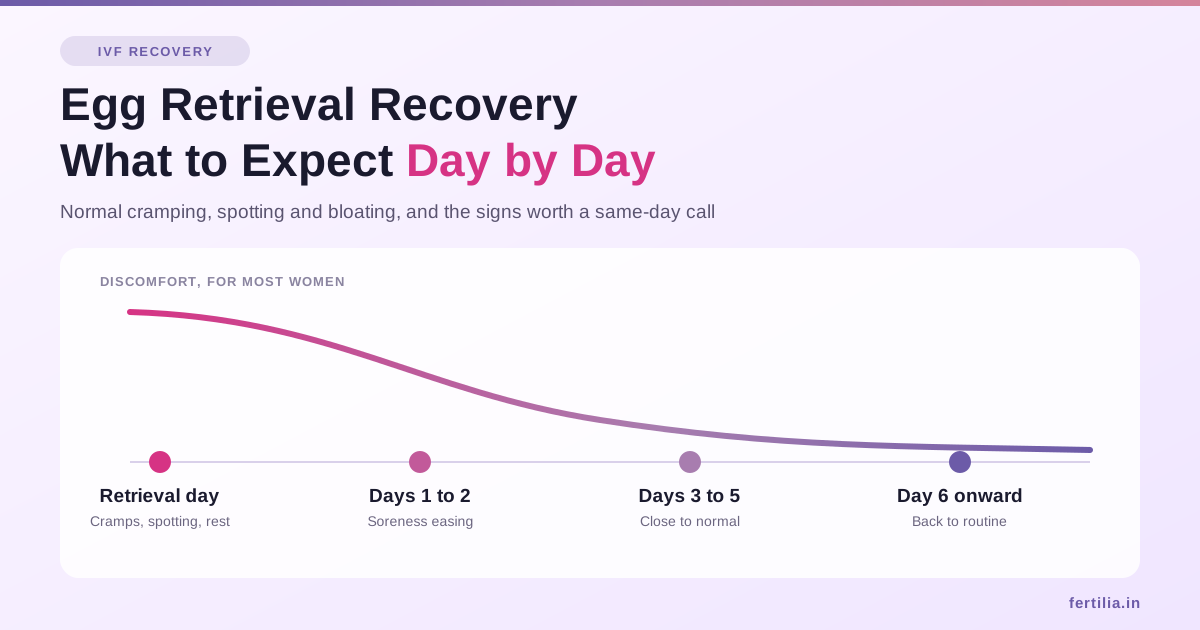
Cramping and soreness usually ease steadily over these two days. For many women it feels more like a bruised, tender ache than sharp pain.
Bloating may stay the same or even increase slightly. Your ovaries are still enlarged, and the bowel is sluggish from the sedation. A mildly tight waistband is common. A belly that keeps swelling day after day is not, and that is covered in the warning signs below.
Spotting should be tapering off, not getting heavier.
The phone call from the lab. The embryology team usually calls the day after retrieval with the fertilisation report: how many eggs were mature and how many fertilised. Emotionally, this is often the hardest part of the recovery. If you are waiting on further updates, our guide to reading your blastocyst grading report explains what the numbers and letters mean.
If you are having a fresh transfer, your clinic will usually start progesterone around now. Vaginal progesterone can leave a white or creamy residue, which is expected and not a sign of infection. Our post on progesterone injections and pessaries explains why it is given and how to use each form.
Days 3 to 5: Most Women Feel Close to Normal
By now, most women feel much better. The cramps are mild or gone, spotting has usually stopped, and appetite is back.
Two groups may feel slower:
- Women who had many eggs collected. Pain after retrieval rises with the number of eggs collected (Ludwig AK et al., Hum Reprod, 2006, PMID 16877373), so if your clinic collected a lot of eggs, a slightly slower recovery is expected rather than a sign that something has gone wrong. A large Italian series of 23,827 retrievals found that the uncommon complications were also more likely with more eggs retrieved, a longer procedure, a less experienced operator, younger age and lower BMI, and previous pelvic surgery or pelvic infection (Levi-Setti PE et al., Fertil Steril, 2018, PMID 29871795), which is why your clinic may check on you more closely in those situations.
- Women with a higher OHSS risk. In some women, especially those with PCOS or a very strong response, bloating and fluid retention build in the days after retrieval instead of easing. This is ovarian hyperstimulation syndrome (OHSS). Most cases are mild, and clinics plan for it in advance. Our full guide to OHSS symptoms, prevention and when to act covers how to monitor yourself at home, including the daily weight check.
If a fresh transfer is planned, it usually happens in this window (day 3 or day 5 after retrieval). If your clinic has advised freezing all the embryos, our comparison of frozen and fresh embryo transfer explains why that decision is made and what it means for your chances.
💜 Recovering from your egg retrieval and not sure what is normal for you? Message Dr. Suganya’s team on WhatsApp A ₹399 video consultation goes through your symptoms and your clinic’s plan with you, alongside your IVF team’s care, from anywhere in India.
Day 6 to Your Next Period: Back to Routine
For most women, the second half of the first week feels like ordinary life again. Some mild heaviness can linger, especially on bending or after a long day, because the ovaries take a while to return to their usual size.
If all your embryos are frozen (no fresh transfer), your period will come on its own. For many women it arrives within about two weeks of the retrieval. It can come sooner after a GnRH agonist trigger, and if you were given progesterone, it usually follows a few days after you stop. This first period can be heavier or more crampy than usual. Ask your clinic what to expect with your particular trigger and medicines, and let them know when it starts, because it often sets the calendar for the frozen transfer cycle.
If you had a fresh transfer, you are now in the two-week wait. Our guide to symptoms during the two-week wait covers what can and cannot be read into how you feel. Mild cramping in this phase can come from the retrieval, the progesterone, or both, and it does not tell you whether the transfer has worked.
Egg Retrieval Recovery at a Glance
| When | What is common | What helps |
|---|---|---|
| Retrieval day | Drowsiness, period-like cramps, light spotting, emotional tiredness | Rest at home with company, light food, clinic-approved pain relief, no driving |
| Days 1 to 2 | Cramps easing, bloating steady or slightly up, spotting tapering, constipation | Fluids, walking around the house, fibre-rich meals, loose clothes |
| Days 3 to 5 | Most women feel close to normal; fresh transfer often in this window | Gentle routine, desk work if you feel ready, avoid heavy lifting |
| Day 6 to next period | Occasional heaviness; period arrives if embryos are frozen | Normal daily life, hold off vigorous exercise until the ovaries settle |
What Helps Recovery
Rest, without bed rest. Take it easy on retrieval day and the day after. Beyond that, gentle movement helps more than lying flat. Short walks at home ease wind and constipation and make bloating less uncomfortable.
Pain relief your clinic has approved. Paracetamol is the usual choice. Ask your clinic before taking anti-inflammatory painkillers such as ibuprofen, particularly if a fresh transfer is planned, because clinics have their own preferences around transfer time.
Fluids. Keep sipping through the day: water, tender coconut water, thin buttermilk (mor), or a bowl of rasam. If you have been told you are at higher risk of OHSS, your clinic may give you a specific fluid target to follow. Our OHSS guide explains why fluid and urine output are watched closely in that situation.
Food that is easy on the stomach. Idli, curd rice, khichdi, soft dosa and dal are all good first meals after sedation. Over the next few days, meals built around protein (dal, sprouts, paneer, eggs, curd) and fibre (vegetables, fruit such as guava, ragi or whole grains) support normal eating and help with constipation.
Loose clothing. A tight waistband presses on an already full abdomen. Cotton salwars and nightwear make the first few days more comfortable.
Returning to Work, Exercise, and Sex
Work. Most women with desk jobs take retrieval day and the next day off, and many are back at work within two days. If your work involves lifting, long hours on your feet, or a long commute on a two-wheeler, allow a few more days. Our post on managing IVF while working full time covers how to plan leave across the whole cycle.
Exercise. Walking is fine from the first day. Hold off on running, jumping, heavy weights, and twisting yoga poses until your ovaries have settled, which for most women means until after your next period. Enlarged ovaries carry a small risk of twisting on themselves (ovarian torsion). It is rare: in a series of 4,052 retrievals from a large egg-donation programme, there was one case (Bodri D et al., Reprod Biomed Online, 2008, PMID 18681998). Taking it easy on high-impact exercise for a couple of weeks is a simple way to keep that risk low.
Sex. Most clinics advise avoiding intercourse for a while after retrieval, because the ovaries are enlarged and tender and the puncture sites need to heal. If a fresh transfer is planned, your clinic will give you specific instructions for the transfer and two-week wait. When in doubt, ask.
Travel. A car or train journey home the day after is generally fine if you feel comfortable. For flights or long trips in the first week, ask your clinic, especially if you have been told your OHSS risk is higher.
When to Call Your Clinic the Same Day
Serious complications after egg retrieval are uncommon. In the Italian series of 23,827 retrievals, the overall complication rate was 0.4% per retrieval, and 0.29% needed admission to hospital (Levi-Setti PE et al., Fertil Steril, 2018, PMID 29871795). A Rome series of 7,098 IVF cycles reported severe complications in 0.08%, including four cases of bleeding inside the abdomen and two ovarian abscesses (Aragona C et al., Fertil Steril, 2011, PMID 20727520).
Uncommon does not mean you should talk yourself out of calling. These are the signs worth a same-day call to your clinic:
- Pain that is getting worse after the first 48 hours instead of easing, or pain that is not controlled by the pain relief your clinic advised
- Sudden, severe pain on one side, especially with nausea or vomiting, which can point to ovarian torsion
- Vaginal bleeding heavier than a normal period, such as soaking a pad in an hour
- Fever or chills, or a foul-smelling discharge, in the days after retrieval, which can point to infection
- Feeling dizzy, faint, or unusually weak, a racing heartbeat, or pain at the tip of the shoulder, which can point to internal bleeding
- A belly that keeps swelling, rapid weight gain (more than 1 kg in a day), passing much less urine than usual, or vomiting that stops you keeping fluids down, which are signs of OHSS
If you are breathless, faint, or in severe pain and cannot reach your clinic quickly, go to the nearest hospital emergency department and tell them you have just had an egg retrieval for IVF.
Before Your Retrieval: A Short Checklist
A little planning makes the recovery days much easier:
- Arrange someone to take you home and stay with you for the rest of the day.
- Block retrieval day and the next day at work.
- Stock the kitchen with easy foods: curd, idli batter, dal, fruit, tender coconut or ORS.
- Keep your clinic’s emergency number saved and a pad or panty liners ready.
- Ask your clinic three questions before the day: which pain relief they recommend, whether a fresh or frozen transfer is planned, and when they would like you to resume exercise and sex.
At Fertilia, Dr. Suganya Venkat, an OB-GYN with more than 15 years of clinical experience, often goes through this checklist with women on video consultations in the week before their retrieval, because the ones who know what to expect tend to worry far less about ordinary soreness. Our IVF Support programme works alongside your fertility clinic, which performs and manages the retrieval, and helps you understand each stage and look after your health around the cycle.
Frequently Asked Questions
How long does it take to recover from egg retrieval? Most women feel close to normal within two to five days. Cramps and spotting usually settle in the first 48 hours, and some heaviness or bloating can linger until your next period. Recovery can take a little longer when many eggs were collected, because pain after retrieval rises with the number of eggs retrieved (Ludwig AK et al., Hum Reprod, 2006, PMID 16877373).
How much pain is normal after egg retrieval? Period-like cramps and a sore, heavy feeling in the lower abdomen are normal for a day or two. In a prospective study of 1,058 retrievals, most women tolerated the procedure well, 3% had severe to very severe pain afterwards, and pain was higher when more eggs were retrieved (Ludwig AK et al., Hum Reprod, 2006, PMID 16877373). Pain that worsens after 48 hours needs a call to your clinic.
Is bleeding normal after egg collection? Light spotting or brownish discharge for a day or two is common, because the needle passes through the vaginal wall. Bleeding heavier than a normal period, such as soaking a pad in an hour, should be reported to your clinic the same day.
When can I go back to work after egg retrieval? Most women with desk jobs return within one to two days. Take retrieval day and the following day off, and allow longer if your work is physically demanding or involves a long two-wheeler commute.
Why am I more bloated after egg retrieval than before? Your ovaries stay enlarged for a while after stimulation, and sedation plus progesterone slow the bowel, so mild bloating can briefly increase. Bloating that keeps getting worse, with rapid weight gain or passing less urine, can be OHSS and should be reported to your clinic.
When will my period come after egg retrieval? If all embryos are frozen, many women get their period within about two weeks. It can come sooner after a GnRH agonist trigger, and a few days after stopping progesterone if you were given it. Ask your clinic what to expect for your plan.
When can I exercise after egg retrieval? Walking is fine from the first day. Avoid running, jumping, heavy lifting, and twisting poses until your ovaries have settled, usually until after your next period, because enlarged ovaries carry a small risk of twisting.
💜 Have questions about your recovery or your next step after retrieval? Talk it through with Dr. Suganya over WhatsApp A ₹399 video consultation gives you time to go through your symptoms and your transfer plan, wherever you are in India.