Blue or purple rope-like veins on the inner calf, a feeling of heaviness that builds through the day, sometimes a visible bulge behind the knee or along the inner thigh. Varicose veins appear in roughly 40 percent of pregnancies and, for many women, seem to arrive without warning sometime in the second trimester.
They can look alarming. They are often uncomfortable. And they are almost always temporary.
This post explains why they develop, where they appear, what you can do to ease the discomfort, and the one warning sign that needs immediate medical attention.
Why Varicose Veins Develop in Pregnancy
Three things happen together during pregnancy that explain why the veins in your legs and pelvis are so much more likely to stretch and become visible.
Progesterone Relaxes Vein Walls
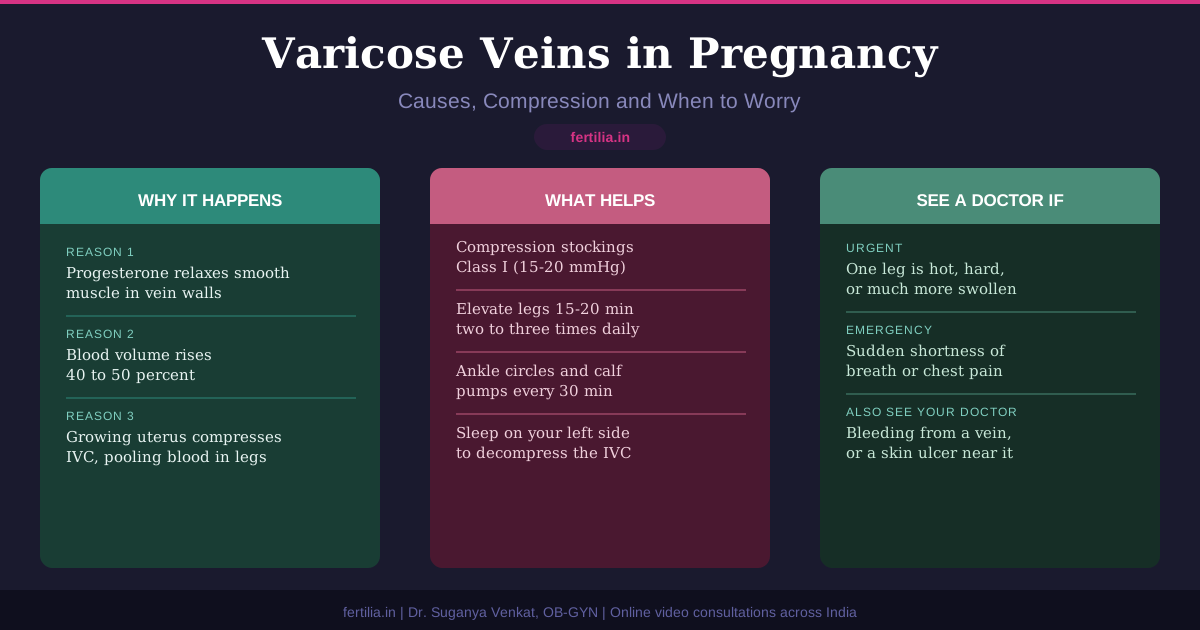
Progesterone rises sharply in early pregnancy and stays elevated throughout. It relaxes smooth muscle throughout the body, which is essential: the uterus is smooth muscle, and keeping it relaxed prevents premature contractions. But venous walls also contain smooth muscle. Under progesterone, vein walls become more pliable and less able to maintain their shape under the weight of a column of blood. The vein stretches outward. Over time, the stretched segments become visible through the skin.
Blood Volume Rises Significantly
During pregnancy, blood volume increases by approximately 40 to 50 percent above your pre-pregnancy level. The placenta, the growing baby, and the expanded uterine lining all need increased circulation. More blood flowing through veins that are already softer means higher pressure inside those veins and more stretch.
The Uterus Compresses the Inferior Vena Cava
The inferior vena cava (IVC) is the large vein that runs up the right side of the spine and carries blood from the legs and pelvis back to the heart. As the uterus grows, particularly in the second and third trimesters, it presses on the IVC and partially narrows it. Blood returning from the lower body slows down and pools in the pelvic and leg veins. That pooling stretches the veins further.
This is why varicose veins worsen as pregnancy progresses, and why they are often more prominent on the left leg than the right. The IVC runs to the right of the spine. When you lie on your back, uterine weight bears toward the right and presses on the IVC more heavily, so the left leg often has slightly slower drainage overall.
Where They Appear
Legs
The most visible site. Varicose veins in pregnancy most often appear on the inner calf, the back of the knee, the inner thigh, and around the ankle. They may be bluish, greenish, or purple depending on vein depth. Spider veins are tiny surface capillaries, usually flat, mostly cosmetic, and harmless. Varicose veins are larger, palpable, and often ache or throb by the end of the day.
Vulva
Vulvar varicosities are far more common in pregnancy than most women realise, and rarely discussed because many women assume they signal something wrong. They are dilated veins on the labia or perineum, caused by the same IVC compression and pelvic venous pooling described above. They appear as soft, bluish swellings and cause a sensation of heaviness or pressure, often worse after prolonged standing or walking.
They are not dangerous. They resolve almost completely after delivery.
While you are pregnant, a soft perineal support pad or a V2 supporter (available at medical supply stores) holds gentle counter-pressure against the vulvar veins when standing or walking and helps with the heaviness.
Rectum
Haemorrhoids are varicose veins of the rectal venous plexus, caused by the same mechanism. The IVC compression that slows drainage from the legs also slows drainage from the pelvic veins that supply the rectum. If haemorrhoids are your main concern, the dedicated guide covers the causes and management in full detail.
Who Gets Them
Family history is the strongest predictor. If your mother or grandmother developed varicose veins in pregnancy, your veins likely have the same structural tendency to stretch under pressure. Beyond genetics, multiple pregnancies (each one compounds the stretch), prolonged standing at work, warm climates, and carrying a larger baby or twins all increase the likelihood.
What Helps
Graduated Compression Stockings
Graduated compression stockings are the most consistently evidence-supported option for managing varicose vein discomfort in pregnancy. “Graduated” means the stocking applies its strongest squeeze at the ankle and progressively relaxes toward the knee or thigh. This mimics the calf muscle pump: it squeezes blood upward and reduces the pooling pressure in the surface veins.
For most women with pregnancy-related varicose veins, Class I compression (15 to 20 mmHg) is appropriate. Class II (21 to 30 mmHg) is used for more prominent varicose veins or on medical advice.
A few practical points for using them in India:
Put them on before getting out of bed. The veins are emptiest when you have been lying flat overnight. If you stand for five minutes first and then try to pull the stocking on, the veins are already filling, which makes the stocking less effective and much harder to don.
Knee-high stockings are sufficient for varicose veins below the knee. Thigh-high versions are needed only if the veins extend into the upper thigh.
Finding them in India. Tynor (an Indian brand) makes graduated compression stockings available at most medical supply shops and online, at approximately Rs 400 to 700 for a pair of knee-highs. Imported brands such as Jobst or Sigvaris are available at larger pharmacies and online at Rs 800 to 2,500. Both work on the same principle; the difference is mainly fit and durability. Standard pharmacy “compression socks” vary widely, so check the mmHg rating on the packaging before buying.
Take them off at night. When you are lying flat, gravity is already doing the drainage work for you. There is no benefit to wearing them overnight, and they are uncomfortable to sleep in.
Leg Elevation
Lying with your legs raised above the level of your heart for 15 to 20 minutes, two to three times a day, uses gravity to drain blood from the leg veins back toward the chest. Two firm pillows under the legs while lying on your back works well in the first trimester. From the second trimester onward, prop your legs up while lying on your left side rather than lying flat on your back.
At night, a rolled blanket or firm wedge cushion under the foot-end of the mattress provides a gentle overnight incline that helps with evening aching and swelling.
Movement: The Calf Muscle Pump
The deep veins of the calf are surrounded by muscle. Every time the calf contracts, it squeezes those veins and pushes blood upward. This is why walking for 20 to 30 minutes a day makes a consistent difference to varicose vein comfort in pregnancy. Safe exercises matched to each trimester of pregnancy cover this in more detail.
If you are seated at a desk, resting in bed, or travelling, ankle circles and calf pumps (flexing and pointing the feet alternately for one to two minutes every half hour) keep the calf pump working even without walking. They are particularly useful on days when you are less mobile than usual.
For cooking or work that requires long stretches on your feet, try to shift weight from foot to foot, rest one foot on a step or low stool when possible, and aim for a brief two-minute walk at least once every 30 minutes.
Left-Side Sleeping
Sleeping on your left side in the second and third trimesters takes the uterus’s weight off the inferior vena cava and significantly improves blood return from the lower body. This single change makes a consistent difference to overnight swelling, morning aching, and overall varicose vein discomfort. The complete guide to sleeping positions in pregnancy covers the full reasoning.
Temperature
Heat dilates veins. Prolonged hot showers, hot baths, or sitting in direct afternoon sun with bare legs will temporarily worsen both the appearance and the aching. A cool water splash on the legs in the evening, or a cool compress held against the most prominent veins for a few minutes, can temporarily ease the discomfort and reduce visible distension.
I am Dr. Suganya Venkat, an OB-GYN with fifteen years of clinical experience. Varicose veins during pregnancy come up in almost every online consultation I have with women at Fertilia in their second or third trimester. If you want to go through your specific situation, whether it is leg veins, vulvar heaviness, or swelling that does not seem to settle, you can reach me directly over a video call.
Chat with us on WhatsApp to book a Rs 399 online consultation.
After Delivery: When Do They Resolve?
Most varicose veins that developed during pregnancy improve considerably within the first four to eight weeks after delivery. The uterus shrinks, pelvic pressure on the IVC releases, and blood volume gradually returns to its pre-pregnancy level over six to eight weeks.
Full resolution typically takes three to six months. Women who go through multiple pregnancies may find that some residual veins remain after later pregnancies, as each one compounds the cumulative stretch on venous walls that are already stretched.
If prominent varicose veins persist beyond six months postpartum, a vascular surgeon can assess them. Options at that point include sclerotherapy (an injection that collapses the vein), endovenous thermal ablation (a minimally invasive procedure that uses heat to close the vein from within), or surgical removal for very large varicose veins. These are elective procedures and are not done during pregnancy.
The DVT Warning: When to Act Immediately
Varicose veins during pregnancy are common, manageable, and not medically dangerous on their own. Deep vein thrombosis (DVT), a clot in the deep veins of the leg, is a different matter entirely. It requires urgent medical attention.
Pregnancy increases the risk of DVT compared to a woman who is not pregnant. This is because the blood becomes more coagulable during pregnancy (a natural mechanism that protects against heavy postpartum bleeding), venous flow in the leg veins slows, and the IVC compression adds further stasis. The increase in risk is real but the absolute risk of DVT in any individual pregnancy remains low.
The key distinction to know:
| Varicose Veins | Deep Vein Thrombosis (DVT) | |
|---|---|---|
| Which legs | Usually both, though uneven | Typically one leg only |
| Feel of the vein | Soft, visible surface vein | Hard, tender cord deep in the calf |
| Skin | Bluish surface colour | Area may be red and warm |
| Swelling | Mild, similar both sides | One leg notably more swollen |
| Response to rest | Aching eases with elevation | Pain persists despite rest |
Go to a hospital emergency department or call your doctor immediately if you notice:
- One leg is significantly more swollen than the other, or swells quickly
- A hard, tender cord or lump deep in the calf or thigh
- The skin over one area of the leg is hot and red
- Sudden shortness of breath or chest pain (this can mean a clot has moved to the lung, called pulmonary embolism, which is a medical emergency)
Varicose veins do not produce any of these acute signs. If what you have is bilateral, soft, bluish veins that ache more by the end of the day and ease somewhat with elevation, that is varicose veins. DVT typically affects one leg, does not ease with rest, and involves a deeper, firmer finding.
Risk factors that raise DVT likelihood in pregnancy: a personal or family history of DVT, clotting disorders (antiphospholipid syndrome, Factor V Leiden, protein C or S deficiency), obesity, prolonged bedrest, dehydration, or long-haul travel. If any of these apply to you, your obstetric team should be aware; preventive measures including low-molecular-weight heparin are sometimes recommended. Managing a high-risk pregnancy in India: what monitoring looks like.
If Your Feet and Ankles Are Also Swollen
Pregnancy oedema of the feet and ankles is related to but distinct from varicose veins. Normal pregnancy oedema is usually bilateral, worse toward the end of the day, pitting (it leaves a brief dent when pressed), and not associated with heat or tenderness. The guide on swollen feet in pregnancy covers which patterns are within normal range and which, particularly sudden facial or hand swelling alongside elevated blood pressure, need prompt medical review.
Pair Ki Nas Phool Jaana: Regional Names
| Language | Term | Notes |
|---|---|---|
| Hindi | Pair ki nas phool jaana (पैर की नस फूल जाना) | Literally “swollen veins in the legs” |
| Hindi (alternate) | Nason ka phoolna / nason ka ubharna | Also commonly used |
| Tamil (Roman) | Kaal naram veekkam | Tamil script: confirm with your doctor |
If you are searching for “pregnancy mein pair ki nas kyon phool jaati hai” or “pair ki nas ka ilaj pregnancy mein”, the approach in this guide applies directly. Compression stockings worn from the morning, leg elevation through the day, calf-pump exercises, and left-side sleeping form the core management plan. Most cases of pair ki nas phool jaana in pregnancy resolve within a few months of delivery.
Frequently Asked Questions
Are varicose veins dangerous for the baby during pregnancy?
No. Varicose veins are distended surface and pelvic veins caused by hormonal and mechanical pressure. They have no impact on the placenta, the baby’s blood supply, or the pregnancy itself. They cause discomfort for the mother but pose no risk to the fetus.
Can I use compression stockings throughout pregnancy?
Yes. Graduated compression stockings (15 to 20 mmHg) are safe across all three trimesters and are one of the most consistently helpful tools for managing varicose vein symptoms in pregnancy. If you have known arterial disease in your legs, check with your doctor before starting any compression garment.
Which exercises are safe if I have varicose veins in pregnancy?
Walking, swimming, stationary cycling, and pregnancy yoga are all safe and actively helpful, because they engage the calf muscle pump. Ankle circles and calf pumps while seated are useful whenever you cannot walk. High-impact activities involving heavy resistance work should be discussed with your obstetric team. The pregnancy exercise guide covers trimester-specific options.
I have soft swellings on my vulva during pregnancy. Are those varicose veins?
Very likely yes. Vulvar varicosities are dilated veins on the labia or perineum, caused by the same pelvic venous pooling that causes leg varicose veins. They are common, particularly in the second and third trimesters and in women who have had previous pregnancies. They are not dangerous and resolve significantly after delivery. A soft perineal support pad or a V2 supporter worn during standing and walking helps with the heaviness.
Do varicose veins from pregnancy go away after delivery?
For most women, yes, or they improve significantly within three to six months of delivery. The combination of reduced pelvic pressure, falling progesterone, and blood volume returning to normal means most pregnancy varicose veins shrink considerably in the weeks after delivery. Residual veins that persist beyond six months postpartum can be assessed by a vascular surgeon.
How do I tell a DVT apart from ordinary varicose veins?
DVT typically affects one leg only, while varicose veins usually affect both (unevenly). DVT involves a hard, tender cord deep inside the calf muscle, and the overlying skin may be red and warm. The swelling in DVT often comes on quickly and does not ease with elevation. If one leg is notably more swollen than the other, or you feel a hard tender lump in the calf, go to a hospital emergency department for a Doppler ultrasound, which confirms or rules out DVT quickly.
Pregnancy mein pair ki nas phool gayi hai: kya karna chahiye?
The starting steps are: put on graduated compression stockings before getting out of bed in the morning, elevate your legs for 15 to 20 minutes two to three times during the day, do ankle circles and calf pumps while seated, walk for 20 to 30 minutes if you can, and sleep on your left side. Most pregnancy leg varicose veins respond to these steps and resolve in the months after delivery. If one leg is much more swollen than the other, or the vein feels hard and tender, see a doctor promptly to check for DVT.
Varicose veins in pregnancy are a predictable result of the hormonal and physical changes your body is working through. They are not a sign that anything has gone wrong, and for most women they resolve substantially in the months after delivery. In the meantime, compression stockings, consistent leg elevation, calf-pump exercises, and sleeping on the left make a genuine difference to daily comfort.
If you would like to discuss your symptoms with an OB-GYN, Fertilia offers online video consultations at Rs 399 across India, from wherever you are.
Message us on WhatsApp to get started.
For a complete guide to staying comfortable through pregnancy, see the Fertilia Pregnancy Guide.