Your doctor used the words “high-risk pregnancy,” and your heart sank. Maybe it was said quickly at the end of a busy visit, or written on your file without much explanation. By the time you got home, the words had grown into something frightening.
Let me tell you what those words mean, because the label sounds far scarier than the reality for most women.
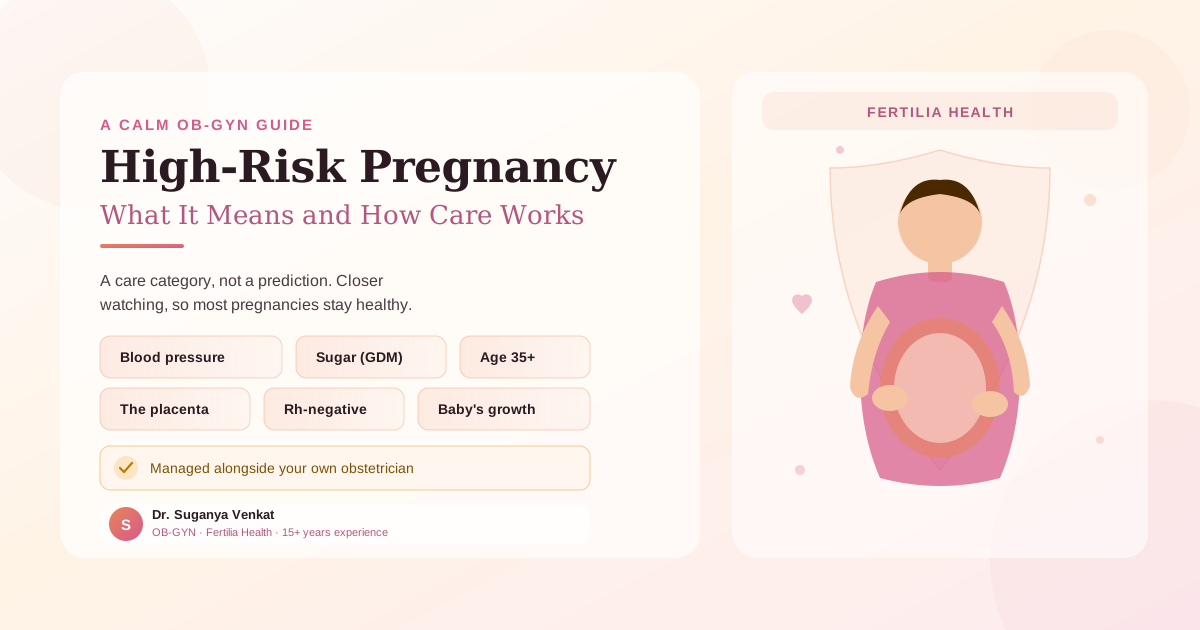
A high-risk pregnancy is a care category. It is a way of saying, “this pregnancy needs a little closer watching than average.” It is not a prediction that something will go wrong, and it is not a verdict on your body or your baby. In everyday practice, most women who carry a high-risk label go on to have a healthy baby and a healthy recovery. The label is what earns them the extra scans, the extra visits, and the more careful plan that keep it that way.
This guide walks you through what “high-risk” means, the common reasons a pregnancy gets that label in India, how the care works, and the question every woman asks first: can I still have a healthy baby and a normal delivery?
What “High-Risk Pregnancy” Means
Every pregnancy carries some risk. A high-risk pregnancy is simply one where a specific factor raises the chance of a complication for you or your baby enough that your care team decides to monitor more closely (American College of Obstetricians and Gynecologists guidance on high-risk pregnancy).
The key word is monitor. A high-risk label changes the intensity of your care, not the destination. Think of it the way an airline treats a flight through expected weather: same route, same landing, just closer attention from the crew along the way.
It also helps to separate two things that often get confused:
- A risk factor being present (for example, you are 36, or you are Rh-negative, or your blood pressure was borderline at booking).
- A problem being present right now (for example, active pre-eclampsia).
Most high-risk labels are about the first, not the second. Being 36 does not mean something is wrong. It means your team will keep a slightly closer eye on the things that occasionally need attention at that age. That distinction is the difference between a calm pregnancy and a frightened one, and it is a distinction worth holding on to.
In Hindi, this may be described as jokhim bhari garbhavastha (जोखिम भरी गर्भावस्था), and in Tamil as adhiga aabaththulla karppam (அதிக ஆபத்துள்ள கர்ப்பம்). Whatever it is called, the meaning is the same: a pregnancy that deserves extra care, not extra fear.
The Common Reasons a Pregnancy Is Called High-Risk in India
There is rarely a single mysterious reason. In practice, a pregnancy is usually flagged for one of a handful of well-understood, very manageable reasons. Here are the common ones, and what each means.
Blood pressure and pre-eclampsia
Raised blood pressure in pregnancy is one of the most common reasons for closer monitoring. Caught early and watched carefully, it is very manageable, and something as simple as adequate calcium through pregnancy meaningfully lowers the risk of pre-eclampsia (Hofmeyr et al., Cochrane Review, 2014). Our guide to gestational hypertension explains what raised readings mean and what happens next.
Gestational diabetes
Blood-sugar changes in pregnancy are common in Indian women, and the good news is that most gestational diabetes is controlled with diet and monitoring rather than anything dramatic. The gestational diabetes guide covers the OGTT numbers and a practical Indian diet plan.
Anaemia
More than half of pregnant women in India are anaemic (National Family Health Survey-5). Low haemoglobin is a very fixable reason for closer watching, and it responds well to iron-rich Indian foods and supplementation over the weeks of pregnancy.
Age 35 and above
Turning 35 does not flip a switch. The risks associated with age rise gradually, not off a cliff, and the large majority of women over 35 have healthy pregnancies. It simply means a few extra checks. If this is your situation, our honest look at fertility and pregnancy after 35 puts the numbers in perspective.
The placenta’s position
Sometimes the anomaly scan notes a low-lying placenta. In most cases this simply needs a repeat scan later in pregnancy, and it resolves on its own far more often than not. The placenta previa guide explains what each finding means without the panic a late-night search tends to add.
The baby’s growth and the fluid around it
Occasionally a scan suggests the baby is measuring small, or that the amniotic fluid is lower or higher than expected. These findings mean more frequent scans to watch the trend, and often the trend is perfectly fine. What matters is the monitoring, not the single measurement.
Thyroid and other health conditions
An underactive thyroid, a heart condition, or a previous surgery can all mean a pregnancy is watched more closely and any medication is adjusted for the pregnancy. Managed alongside your specialist, these are routine parts of modern obstetric care.
Being Rh-negative
If your blood group is Rh-negative and your baby’s is Rh-positive, there is a small, entirely preventable risk to future pregnancies. It is prevented with a well-established injection (anti-D) given at the right time, which our Rh-negative pregnancy guide explains in full. It is a good example of a “high-risk” label that exists precisely because the solution is so reliable.
A history worth knowing
A previous caesarean, a previous preterm birth, twins, or earlier losses can all put a pregnancy in the high-risk category. If you have had two or more losses, our guide to recurrent miscarriage tests explains what is worth investigating. If a previous second-trimester loss or early birth was linked to a cervix that opened too soon, a cervical stitch can support the cervix in this pregnancy. Group B Strep, picked up on a swab late in pregnancy, is another common flag, and the Group B Strep guide covers what a positive result does and does not mean.
Told your pregnancy is high-risk and not sure what it means? Dr. Suganya Venkat reads through your reports with you, explains your specific situation in plain language, and helps you build a calm plan. Chat on WhatsApp
How High-Risk Pregnancy Care Works
This is the part that reassures most women, because a high-risk pregnancy is not something you carry alone.
Your own obstetrician and your delivery hospital lead a high-risk pregnancy, in person. The extra scans, the closer antenatal visits, any medication, and the birth plan are theirs to manage. That does not change, and it should not. For anything that needs to be examined, monitored on a machine, or treated urgently, in-person hospital care is the right place, and we will always say so plainly.
Where our program helps is the layer between those hospital visits, which is often where a woman feels most alone with her worry. That layer includes:
- Understanding your reports. What that scan line actually means, what your OGTT or thyroid numbers are telling you, and what to ask at your next visit.
- Nutrition tuned to your situation. A gestational-diabetes plate built around Indian home cooking, iron for anaemia, calcium for blood-pressure support, or gentle, steady eating to help a baby who is measuring small.
- Safe movement for your level of risk. What is sensible to do, and what to pause, so you stay active without worry.
- Steadying the anxiety. A high-risk label is heavy to carry. Having someone to ask, between visits, is often the single most calming thing.
We do this online, pan-India, over a video call, alongside your medical team and never instead of them. Dr. Suganya is an OB-GYN, so the guidance you get between visits speaks the same language as the care you get at the hospital. If at any point something needs to be seen in person or attended to urgently, we tell you clearly and quickly.
Can I Still Have a Healthy Baby and a Normal Delivery?
For the great majority of high-risk pregnancies, the answer is yes.
The whole point of the extra monitoring is to catch the small things early, while they are still easy to manage, so that the pregnancy stays on track. Most high-risk pregnancies, watched properly, end exactly the way the woman hoped, with a healthy baby and a recovering mother.
Whether a normal (vaginal) delivery is right for you is a decision you and your obstetrician make together, based on your specific reason for being high-risk and how your labour unfolds. Many women with a high-risk label do deliver vaginally. For some, a planned caesarean is the safer route, and when it is, it is a good outcome, not a failure. A healthy mother and a healthy baby is the goal, and there is more than one road to it.
If it would help to see the full picture of a well-supported pregnancy, our complete evidence-based pregnancy guide and the week-by-week guide walk through nutrition, movement, and what to expect at each stage.
What You Can Do, Starting Today
- Attend every scan and visit. The monitoring is the medicine. Skipping visits is the one thing that turns a manageable finding into a missed one.
- Ask what your specific reason is. “High-risk” is a category, not a diagnosis. Knowing your actual reason (blood pressure, sugar, age, placenta) replaces a vague fear with a clear plan.
- Eat and move steadily. Everyday Indian home cooking, covering iron, calcium, and protein, does most of the work. Gentle movement, cleared by your doctor, helps.
- Keep your reports together. Carry your scans and lab results to every visit so your team can see the trend, not just today’s snapshot.
- Protect your peace. Step back from the frightening search results and the well-meaning relatives with scary stories. Ask your doctor instead.
FAQ: High-Risk Pregnancy
What does a high-risk pregnancy mean?
It means your pregnancy has one or more factors that raise the chance of a complication enough that your care team decides to monitor you more closely. It is a care category, not a prediction. It earns you extra scans and visits so that anything that needs attention is caught early. Most women with a high-risk label have a healthy baby.
Does high-risk pregnancy mean my baby is in danger?
In most cases, no. The label usually reflects a risk factor being present (such as your age, blood group, or blood pressure), not a problem happening right now. The extra monitoring exists precisely to keep your baby safe by catching small changes early. If a specific concern does arise, your team acts on it quickly, which is the whole reason for the closer watch.
What are the most common reasons for a high-risk pregnancy in India?
The most common are raised blood pressure, gestational diabetes, anaemia, age 35 and above, a low-lying placenta, thyroid conditions, being Rh-negative, carrying twins, and a history such as a previous caesarean, preterm birth, or earlier losses. Most of these are well understood and very manageable with monitoring.
Can I have a normal delivery with a high-risk pregnancy?
Often, yes. Many women with a high-risk label deliver vaginally. Whether it is right for you depends on your specific reason and how your labour unfolds, and it is decided together with your obstetrician. If a planned caesarean turns out to be the safer route, that is a good outcome for you and your baby, not a failure.
I am 35 or older. Is my pregnancy automatically high-risk?
Age 35 and above is often noted as a risk factor, but it does not mean something is wrong. The risks rise gradually with age, not suddenly, and most women over 35 have healthy pregnancies. It usually means a few extra checks rather than a dramatically different pregnancy.
Can a high-risk pregnancy be managed online?
Not on its own. A high-risk pregnancy needs your obstetrician and a delivery hospital, in person, for scans, examinations, and delivery. What an online program adds is the support layer between those visits: understanding your reports, tuning your nutrition to your condition, keeping movement safe, and steadying the worry. We work alongside your medical team, never instead of them, and we tell you clearly when something needs to be seen in person.
What does high-risk pregnancy mean in Hindi or Tamil?
In Hindi it may be described as jokhim bhari garbhavastha (जोखिम भरी गर्भावस्था), and in Tamil as adhiga aabaththulla karppam (அதிக ஆபத்துள்ள கர்ப்பம்). Both simply mean a pregnancy that needs extra care and closer monitoring, not one that is destined to go wrong.
The Bottom Line
A high-risk label is not a sentence. It is an invitation to be looked after a little more closely, and that closer care is exactly what keeps most high-risk pregnancies healthy. Learn your specific reason, attend your visits, eat and move steadily, and let your team do what the monitoring is designed to do.
You do not have to hold the worry alone between hospital visits. For steady support through a high-risk pregnancy, alongside your own obstetrician, Dr. Suganya’s Pregnancy Care program helps you understand your reports, eat for your situation, and stay calm and prepared.
Want a calmer, better-supported high-risk pregnancy? Dr. Suganya Venkat helps you understand your reports, tune your nutrition to your specific situation, and steady the worry, all alongside your own hospital team. Chat on WhatsApp
Dr. Suganya Venkat is an OB-GYN with a DNB from GKNM Hospital, Coimbatore, an MD Pathology from CMC Vellore, and 5 Gold Medals in MBBS from SRMC. She has 15+ years of clinical experience in obstetrics and women’s health.