You went through surgery, the liquid diet, the months of learning to eat all over again. The weight is coming off, your periods may be arriving on time for the first time in years, and now a new question is sitting quietly in the back of your mind: when can I try for a baby, and will my body be ready?
That is a good question to be asking, and the fact that you are asking it before you conceive already puts you in a strong position. Women do have healthy pregnancies after weight-loss surgery. What helps most is planning the timing, checking your nutrient levels, and letting your pregnancy team know about the surgery from the very first visit.
I’m Dr. Suganya Venkat, an OB-GYN with more than fifteen years of practice, and many of the women I see for fertility and PCOS have weighed up surgical weight loss at some point. This post walks through what the research and the international consensus say about pregnancy after bariatric surgery, and what you can do at each stage.
What This Post Covers
- How bariatric surgery can change fertility, especially with PCOS
- How long to wait before trying to conceive, and why
- Contraception while you wait
- The nutrients to test and supplement before and during pregnancy
- How pregnancy care differs: sugar testing, scans and eating
- Symptoms that need an urgent call to your doctor
- Breastfeeding after bariatric surgery
- Frequently asked questions
How Bariatric Surgery Can Change Your Fertility
Bariatric surgery (also called weight-loss surgery or metabolic surgery) changes the stomach, and sometimes the intestine, so that you eat less and, with some procedures, absorb less. The procedures you are most likely to have heard of are the sleeve gastrectomy (a large part of the stomach is removed, leaving a narrow tube), the Roux-en-Y gastric bypass (a small stomach pouch is connected further down the intestine), and the adjustable gastric band (an inflatable band placed around the upper stomach).
Significant weight loss often brings ovulation back. In a meta-analysis of 13 studies with 2,130 women, PCOS was present in 45.6% of women before bariatric surgery and in 6.8% afterwards, with irregular periods and excess hair growth also improving (Skubleny D et al., Obes Surg, 2016, PMID 26431698). A later systematic review, carried out to inform the 2023 international PCOS guideline, was more cautious: it found that the available studies were small, of low quality with a high risk of bias, and that data on pregnancy itself were especially limited (Benham JL et al., Obes Rev, 2024, PMID 38491863).
Many women with PCOS do see their cycles become regular after surgery, but surgery is one tool among several, and it is not a guaranteed route to pregnancy. For most women with PCOS, lifestyle change and medication come first, and our guide to why PCOS weight loss is hard and what helps covers that path in detail.
Fertility can return sooner than you expect
This is the part that surprises many women. If you had irregular cycles or were told you would struggle to conceive before surgery, you may not have been using contraception at all. Fertility can return as the weight comes down, sometimes before you feel ready to plan a pregnancy. Fertility and pregnancy planning after surgery are among the areas the international consensus on pregnancy after bariatric surgery covers (Shawe J et al., Obes Rev, 2019, PMID 31419378).
A large US study of women after bariatric surgery found that in the first year after the operation, 41.5% had unprotected intercourse while not trying to conceive (Menke MN et al., Obstet Gynecol, 2017, PMID 29016506). None of this is a reason to worry. It is simply a reason to plan, so that when a pregnancy comes, it comes at a time your body is ready for it.
How Long Should You Wait Before Trying to Conceive?
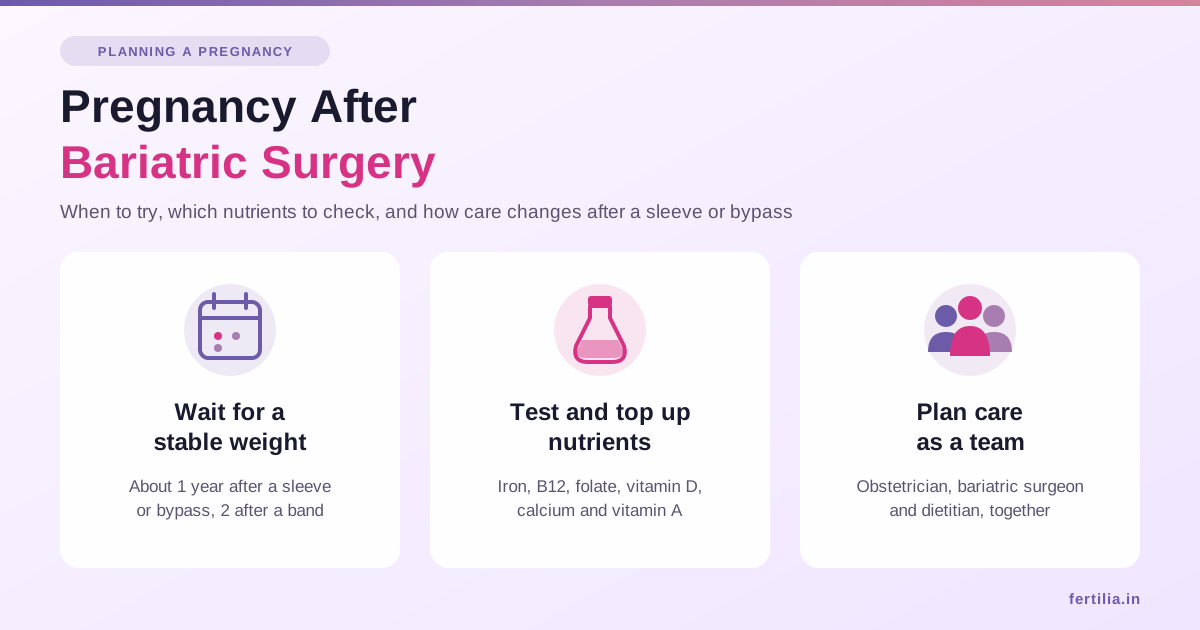
The months after surgery are a period of rapid weight loss, when your body is adjusting to smaller meals and your nutrient stores can run low. The usual advice is to postpone pregnancy until your weight has stabilised, which is typically about 1 year after a sleeve gastrectomy or gastric bypass, and about 2 years after a gastric band. Timing of pregnancy after surgery is one of the areas the international consensus on pregnancy after bariatric surgery covers (Shawe J et al., Obes Rev, 2019, PMID 31419378). Other recommendations use an 18-month delay (Menke MN et al., Obstet Gynecol, 2017, PMID 29016506), and your surgeon may give you a specific date based on your procedure and progress.
The evidence behind the exact number is still developing. A 2022 meta-analysis of 13 studies compared pregnancies within 12 months of surgery with those conceived later. The early group gained less weight in pregnancy, but the researchers found no significant difference in gestational diabetes, pre-eclampsia, preterm birth, small or large babies, or NICU admission, and concluded that timing should be personalised (Chen W et al., Obes Surg, 2022, PMID 35066784).
In practice, this means:
- If you are planning: aim to conceive once your weight has been steady for a few months, which for most women is the second year after surgery. Use that time to correct any deficiencies.
- If you are already pregnant sooner than planned: please do not panic. Tell your obstetrician and your bariatric team straight away, start your prenatal supplements, and get your blood tests done. Closer monitoring of nutrition and weight gain is the main change.
If IVF is part of your plan, your fertility clinic will also consider your current BMI. Our post on IVF BMI limits in India explains why clinics ask about weight and what questions to ask them.
Contraception While You Wait
Choosing reliable contraception for the first year or two is one of the most useful things you can do. After a gastric bypass, and to a lesser extent a sleeve, the combined oral contraceptive pill may be absorbed less reliably, and vomiting or diarrhoea in the early months can reduce its effect further. Methods that do not depend on absorption from the gut, such as the copper IUD, the hormonal IUS and the progestogen implant, avoid that uncertainty. Contraception after surgery is one of the areas the international consensus on pregnancy after bariatric surgery covers (Shawe J et al., Obes Rev, 2019, PMID 31419378).
Condoms are also suitable. Our full comparison of contraception options in India lays out how each method works, its typical failure rate and its cost, so you can discuss the best fit with your gynaecologist.
💜 Had weight-loss surgery and thinking about a pregnancy? Message Dr. Suganya’s team on WhatsApp A ₹399 video consultation looks at your reports, your timing and your supplement plan with you, alongside your bariatric surgeon, from anywhere in India.
The Nutrients to Check Before and During Pregnancy
This is the heart of preparing for pregnancy after bariatric surgery. Because you eat smaller amounts, and with bypass procedures absorb less, some vitamins and minerals can run low even when you feel well. The usual approach is to test before conception and then at intervals through pregnancy and while breastfeeding, rather than waiting for symptoms. Nutritional monitoring after surgery is one of the areas the international consensus on pregnancy after bariatric surgery covers (Shawe J et al., Obes Rev, 2019, PMID 31419378).
| Nutrient | Why it matters in pregnancy | What to ask about |
|---|---|---|
| Iron | Low iron is common after bypass and adds to the normal demands of pregnancy | Haemoglobin, ferritin and transferrin saturation |
| Vitamin B12 | Absorption needs stomach acid and a protein made in the stomach, both reduced after surgery | Serum B12; many women need injections or high-dose oral B12 |
| Folate | Needed for the baby’s neural tube in the first weeks | Serum or red cell folate; start folic acid before conceiving |
| Vitamin D and calcium | Needed for your bones and the baby’s; absorption drops after bypass | Vitamin D, calcium, phosphate and PTH |
| Vitamin A | Both too little and too much can affect the baby | Serum vitamin A; supplements should use beta-carotene, not retinol |
| Protein | Supports the baby’s growth and your own recovery | A dietitian review of daily intake |
Our detailed guides to vitamin B12 deficiency and iron deficiency anaemia explain the specific tests and how low levels are corrected.
Supplements: a bariatric plan, not a standard one
The standard pregnancy tablet you might pick up at a pharmacy is usually not enough after bariatric surgery. What is usually recommended is a daily bariatric-strength multivitamin and mineral supplement, before conception and throughout pregnancy, typically covering iron, folic acid, thiamine, zinc, copper and selenium, with vitamin A given as beta-carotene rather than retinol because of the risk that retinol carries for the baby. Supplementation after surgery is one of the areas the international consensus on pregnancy after bariatric surgery covers (Shawe J et al., Obes Rev, 2019, PMID 31419378). Vitamin D, calcium and B12 are part of the routine plan after surgery, and B12 in particular continues after a bypass. Your blood results guide the dose, not whether you take them.
Folic acid needs a special mention. Your doctor will choose your dose, which is often higher if your BMI is still above 30 or you have diabetes. Our post on folic acid before pregnancy explains when to start and why the first weeks matter.
Protein on a small plate
Your dietitian will set a daily protein target for you, and it is usually higher than the size of your meals would suggest (protein and nutrition after surgery are among the areas the international consensus on pregnancy after bariatric surgery covers: Shawe J et al., Obes Rev, 2019, PMID 31419378). With a smaller stomach, that means eating protein first at each meal. Everyday Indian foods make this easier than it sounds: dal, paneer, eggs, curd, sprouted moong, chana, fish and chicken. Six smaller meals often suit a post-surgery stomach better than three large ones.
How Pregnancy Care Is Different After Bariatric Surgery
What the research shows about the baby
The best-known study comes from Sweden. It compared 670 pregnancies after bariatric surgery with pregnancies in women who had the same BMI before surgery. Women who had surgery had less gestational diabetes (1.9% vs 6.8%) and fewer large babies (8.6% vs 22.4%), but more babies who were small for gestational age (15.6% vs 7.6%), and pregnancies were on average four and a half days shorter (Johansson K et al., N Engl J Med, 2015, PMID 25714159).
A meta-analysis of 33 studies found a similar pattern: small-for-gestational-age babies were more common after gastric bypass but not after gastric banding, while preterm birth, NICU admission, congenital anomalies and perinatal death were modestly more common when procedure types were pooled, and babies weighed on average about 240 g less (Akhter Z et al., PLoS Med, 2019, PMID 31386658). The authors note that these were observational studies of varying quality, and that their findings point towards specific nutritional support and closer monitoring of the baby’s growth. For the sleeve, the data are thinner: one review found only three studies comparing sleeve pregnancies with controls, and none showed a significant difference in the main outcomes (Mustafa HJ et al., Am J Obstet Gynecol MFM, 2023, PMID 36889438).
These findings are the reason your team will watch your nutrition and your baby’s growth more closely. They are not a prediction for your pregnancy. In the Swedish study, most babies were born at term and at a normal size, and the aim of the extra care is to spot a slowing in growth early, when something can be done about it.
Scans to track growth
Your routine dating scan and anomaly scan stay the same. What is usually added is regular growth scans in the second half of pregnancy, with your weight gain reviewed against the range expected for your pre-pregnancy BMI. Monitoring of growth and of maternal weight gain is one of the areas the international consensus on pregnancy after bariatric surgery covers, and your obstetrician will set the schedule that suits your pregnancy (Shawe J et al., Obes Rev, 2019, PMID 31419378). Our guide to reading a growth scan and Doppler report explains what those measurements mean, and if your baby is ever reported as measuring small, our post on IUGR and fetal growth restriction walks through what happens next.
Sugar testing without the glucose drink
This is one practical change many women do not hear about until the day of the test. The standard glucose tolerance test (OGTT) asks you to drink a large sugar load quickly. After a sleeve or bypass, that drink can trigger dumping syndrome: dizziness, a racing heart, sweating and cramps, sometimes followed by a low sugar an hour or two later. Because of concerns about both the tolerability and the accuracy of the OGTT after a sleeve or bypass, many teams use a home glucose profile over a day, or a week of continuous glucose monitoring, at around 24 to 28 weeks instead, and keep the OGTT as an option for women who had a gastric band. Screening for gestational diabetes after surgery is one of the areas the international consensus on pregnancy after bariatric surgery covers (Shawe J et al., Obes Rev, 2019, PMID 31419378).
Tell your obstetrician about your surgery before your sugar test is booked. Our post on gestational diabetes symptoms and the OGTT covers the wider picture of screening in pregnancy.
Eating comfortably with dumping syndrome
If sweets or large meals make you unwell, the usual dietary advice is to cut rapidly absorbed carbohydrates, choose protein and low-glycaemic foods instead, eat smaller meals spread through the day, and take liquids between meals rather than with them (dumping syndrome is one of the areas the international consensus on pregnancy after bariatric surgery covers: Shawe J et al., Obes Rev, 2019, PMID 31419378). In an Indian kitchen that means going easy on sweet chai, fruit juice, sweet lassi and mithai, and leaning on dal, curd, eggs, paneer, vegetables and whole grains like ragi and millets.
If you have a gastric band
Band management in pregnancy is decided with your bariatric surgeon. Whether the band needs loosening is an individual decision made with your bariatric and pregnancy teams, and it may be considered if you are vomiting a lot, if you are unable to eat enough or gain weight as expected, or if your baby’s growth is falling behind. Any change is reviewed again once breastfeeding is established. Band management in pregnancy is one of the areas the international consensus on pregnancy after bariatric surgery covers (Shawe J et al., Obes Rev, 2019, PMID 31419378).
One Symptom to Report Without Delay
If you have had a gastric bypass, tummy pain in pregnancy should be assessed by a doctor without delay, even if it seems mild or comes and goes. After a bypass, a loop of bowel can occasionally slip through a gap created during surgery (an internal hernia). The consensus advises women who have had a bypass to seek medical help without delay for abdominal pain in pregnancy, because recognising a hernia early and treating it quickly leads to better outcomes for mother and baby (Shawe J et al., Obes Rev, 2019, PMID 31419378).
The practical step is simple: make sure every doctor who sees you in pregnancy knows about your surgery, and if you have strong or persistent abdominal pain, vomiting you cannot keep fluids down, or pain with a swollen abdomen, go to the nearest hospital with emergency surgical cover. Take your surgery details with you.
Breastfeeding After Bariatric Surgery
You can breastfeed after bariatric surgery. Breastfeeding is encouraged, with continued checks of your micronutrients while you feed. Breastfeeding after surgery is one of the areas the international consensus on pregnancy after bariatric surgery covers (Shawe J et al., Obes Rev, 2019, PMID 31419378). Keep taking your bariatric supplements after delivery, because your baby’s B12 and iron come from your stores. Many women also worry that a pregnancy will undo the weight loss they worked for, which is worth talking through with your bariatric team.
Your Pregnancy Team
Pregnancy after bariatric surgery goes best with several people working together: your obstetrician, your bariatric surgeon, and a dietitian who knows post-surgery nutrition. At Fertilia, Dr. Suganya Venkat works alongside that team, not in place of it, helping women plan their timing, read their blood reports, and build a supplement and eating plan before and during pregnancy through the Pregnancy Care program. For women with PCOS who are deciding whether surgery is right for them, the PCOS Symptom Reversal program looks at every option, including the lifestyle and medical routes that come first.
Practical Takeaways
- Fertility often returns quickly after bariatric surgery, especially with PCOS. Use reliable contraception while you wait.
- Aim to conceive once your weight is stable, usually about a year after a sleeve or bypass and two years after a band.
- If you conceive sooner, tell your doctors early and start supplements. Closer monitoring is the main change.
- Test iron, B12, folate, vitamin D, calcium and vitamin A before pregnancy and each trimester.
- Take a bariatric-strength multivitamin, with vitamin A as beta-carotene, plus the extras your results show you need.
- Ask for home glucose monitoring instead of the sugar drink if you had a sleeve or bypass.
- After a gastric bypass, get any tummy pain in pregnancy assessed without delay.
For a step-by-step pregnancy plan beyond this post, our free pregnancy guide is a good place to start.
Frequently Asked Questions
How long should I wait to get pregnant after bariatric surgery? The usual advice is to wait until your weight is stable, which is generally about 1 year after a sleeve gastrectomy or gastric bypass and about 2 years after a gastric band. Timing is one of the areas the international consensus on pregnancy after bariatric surgery covers (Shawe J et al., Obes Rev, 2019, PMID 31419378). Your surgeon and obstetrician can personalise this based on how your weight and blood tests are settling.
I got pregnant within a year of my sleeve surgery. Is my baby at risk? Many women conceive early and go on to have healthy babies. A meta-analysis of 13 studies found that pregnancies within 12 months of surgery had less weight gain but no significant difference in outcomes such as preterm birth or small babies (Chen W et al., Obes Surg, 2022, PMID 35066784). Tell your obstetrician and bariatric team now, start your supplements, and get your nutrient tests done.
Does bariatric surgery improve fertility with PCOS? In many women, yes. One meta-analysis found PCOS in 45.6% of women before surgery and 6.8% after (Skubleny D et al., Obes Surg, 2016, PMID 26431698). The studies are small and of low quality, though, and surgery is usually considered only after lifestyle and medical options have been tried.
Can I take birth control pills after gastric bypass? The combined pill may be absorbed less reliably after a bypass, and less so after a sleeve. The copper IUD, hormonal IUS and implant do not rely on absorption from the gut, so they are usually the preferred options after surgery. Contraception is one of the areas the international consensus on pregnancy after bariatric surgery covers (Shawe J et al., Obes Rev, 2019, PMID 31419378). Discuss the right choice with your gynaecologist.
Do I need the glucose drink (OGTT) in pregnancy after a sleeve or bypass? Usually not. The sugar drink can cause dumping syndrome after these procedures, so many teams use home glucose checks at set times over a day, or a week of continuous glucose monitoring, at around 24 to 28 weeks instead. The OGTT remains an option after a gastric band.
Which blood tests do I need before pregnancy after bariatric surgery? A full blood count, ferritin and iron studies, folate, vitamin B12, vitamin D with calcium and PTH, vitamin A, and a check for diabetes, repeated each trimester and while breastfeeding. Your team may add zinc, copper, selenium and other tests depending on the type of surgery you had.
Can I breastfeed after bariatric surgery? Yes. Breastfeeding is recommended after bariatric surgery, as long as you continue your supplements and have your nutrient levels checked while you feed, since your baby relies on your B12 and iron stores.
💜 Want a clear plan for pregnancy after your surgery? Speak with Dr. Suganya over WhatsApp A ₹399 video consultation goes through your timing, blood reports and supplements with you, working alongside your obstetrician and bariatric surgeon, wherever you are in India.