A woman wrote to me in August with one line from her consultation still ringing in her ears: “Come back when your BMI is under 30.” She had waited four months for that appointment. She left it without a treatment plan, without a date, and with the impression that her body had failed an entrance exam she did not know she was sitting.
Her question to me was not about diet. It was simpler and more anxious than that. Is this a rule? Is there a law? Will every clinic in India tell me the same thing?
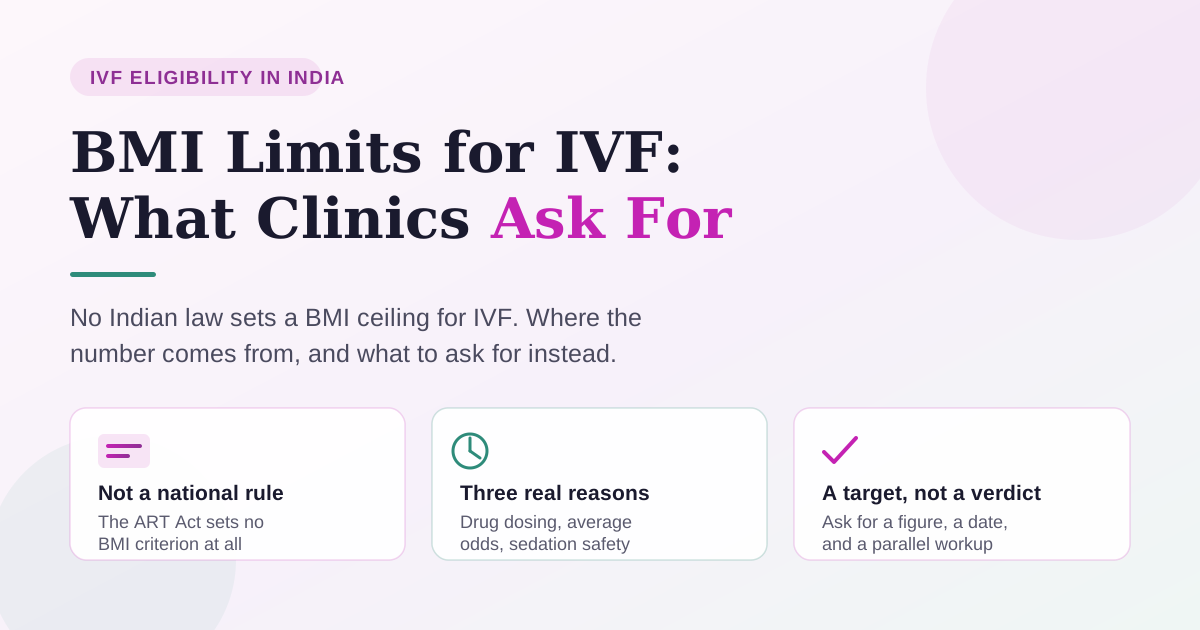
The answer to the first two is no. There is no national BMI limit for IVF in India. What she ran into is a clinic policy, and clinic policies are set locally, differ from each other, and are open to a conversation. That distinction matters for what you do next, so this post covers where the number comes from, what the research does and does not show, and what is reasonable to ask when you are told to lose weight first.
There Is No Legal BMI Limit for IVF in India
The law governing fertility clinics here is the Assisted Reproductive Technology (Regulation) Act, passed by both houses in December 2021. It is worth knowing what it covers, because women are often told a restriction is “the rule” when it is nothing of the sort.
The Act requires every ART clinic and bank to be registered on a National Registry, conditional on standards of manpower, infrastructure and diagnostic facilities. It sets age limits for gamete donors: semen from men aged 21 to 55, oocytes from women aged 23 to 35. It requires written informed consent from both the couple and the donor, and insurance cover in favour of the oocyte donor (PRS Legislative Research summary of the ART Regulation Bill, checked 23 September 2026).
Nowhere in those conditions is there a weight or BMI criterion for the woman being treated. So when a clinic sets a BMI ceiling, that is its own protocol, written by its own medical team. Some Indian centres apply one, some apply a higher one, and some take the decision case by case.
This is not a clinic behaving badly. BMI thresholds for fertility treatment exist in many countries, often tied to public funding of treatment rather than to safety alone (Hoek A et al., Fertility and Sterility, 2022, PMID 36116799). But knowing it is a policy rather than a statute changes how you approach it. A policy has a reason behind it, and a reason can be discussed.
The BMI Number Itself Is Different for Indian Bodies
Before we get to why clinics ask, there is a measurement problem worth understanding, because it affects where you sit on the chart.
The familiar cutoffs, 25 for overweight and 30 for obesity, were derived largely from European populations. A WHO expert consultation reviewed the evidence for Asian populations and found that the risk of type 2 diabetes and cardiovascular disease is substantial at BMI values below the existing cutoff of 25. The observed-risk cutoff varied between 22 and 25 across different Asian populations, and the high-risk cutoff between 26 and 31. The consultation kept the international classification rather than redefining cutoffs population by population, and identified additional public health action points at 23.0, 27.5, 32.5 and 37.5 (WHO Expert Consultation, The Lancet, 2004, PMID 14726171).
In a fertility consultation this has a practical consequence. An Indian woman at BMI 27 may carry more metabolic risk and more visceral fat than a European woman at the same number. This is one reason some Indian clinicians look past the single figure to waist circumference, fasting insulin and blood sugar. If your BMI is in the overweight band, ask for those markers rather than accepting the number as the whole story. They are more informative, and they respond faster to what you do over the next few months.
Why Clinics Ask About Weight: Three Real Reasons
Stimulation gets harder to dose
Fertility drugs distribute through body tissue, so a larger body volume changes how much drug is needed for the same ovarian response. In a cohort of women under 38 undergoing their first IVF-ICSI cycle, the obese group needed a significantly higher total gonadotropin dose and a significantly longer stimulation than the normal-BMI group, while oocytes retrieved, mature oocytes, embryos suitable for transfer and cancellation rates did not differ significantly across BMI categories (Ozekinci M et al., BMC Women’s Health, 2015, PMID 26285703). It is small and single-centre, so read it as illustrative of the dosing problem rather than the last word on outcomes.
The practical consequence for you is cost. More ampoules across more days adds up on an IVF bill, so ask your clinic for a dosing estimate when you are budgeting.
Average live birth rates are lower
This is the reason clinics most often give, and the evidence behind it is genuine. A systematic review and meta-analysis of 21 studies found a decreased probability of live birth following IVF in women with BMI 30 or above compared with women in the 18.5 to 24.9 band. The effect was more pronounced when obesity was accompanied by PCOS, and the origin of the oocytes, donor or the woman’s own, did not change the overall interpretation (Sermondade N et al., Human Reproduction Update, 2019, PMID 30941397).
A dose-response meta-analysis of 18 cohort studies covering 975,889 cycles put numbers on the gradient. For each 5-unit increase in BMI, the summary risk ratio was 0.95 for clinical pregnancy, 0.93 for live birth and 1.09 for miscarriage, and the relationship was not linear, with clinical pregnancy rates falling more sharply in the obese range (Tang K et al., Journal of Assisted Reproduction and Genetics, 2021, PMID 33496916).
Those numbers are smaller than the way they are usually described at a consultation desk. A 7 per cent relative reduction in live birth per 5 BMI points is a real average effect across a million cycles. It describes the average of a very large group rather than the prognosis of any one woman, and the studies above are full of women above these thresholds who conceived.
If you have PCOS, the signal is stronger. A meta-analysis of ten studies with a combined sample of 247,845 found that among women with PCOS undergoing assisted reproduction, those who were overweight or obese had lower live birth, clinical pregnancy and implantation rates and fewer oocytes retrieved than normal-weight women with PCOS, with a higher spontaneous abortion rate (Zhang L et al., Reproductive Biomedicine Online, 2024, PMID 38574459). If PCOS is your diagnosis, weight work is likely the highest-yield thing you can do before a cycle, and it helps your symptoms whether or not you proceed to IVF. Our guide to why PCOS makes weight loss so hard covers the insulin-driven mechanism and the 5 to 7 per cent target the PCOS research supports.
Anaesthesia and the retrieval itself
Egg retrieval is a short procedure done under sedation, and sedation in a larger body carries higher airway and oxygenation risk in general surgical practice. This is the safety reason behind most hard cutoffs, and the one your clinic is least likely to be flexible about if it lacks an anaesthetist and day-care setup it trusts for the task.
The evidence here is more reassuring than blanket policies suggest. In a retrospective cohort of 98 patients with BMI 40 or above undergoing retrieval at two American fertility clinics, all were successfully managed with intravenous sedation without needing a higher level of care. Ninety-three per cent had no anaesthesia complication, the only adverse event recorded was oxygen desaturation below 90 per cent, and that did not differ between the BMI 40 to 44.9 and BMI 45-plus groups. Mature oocytes, blastocysts, euploid embryos, clinical pregnancy, miscarriage and live birth rates did not differ either (Luck M et al., Fertility and Sterility, 2025, PMID 40262695).
The authors’ conclusion is the useful one here: with appropriate counselling and preoperative preparation, patients at very high BMI can safely undergo oocyte retrieval. It is one two-centre study of 98 women and does not overturn a clinic’s local protocol. But it does mean a centre with a full anaesthesia department may assess you differently from a standalone day clinic, which makes the referral question below worth asking.
💜 Been told to lose weight before your cycle and not sure what that plan should look like? Message Dr. Suganya’s team on WhatsApp and we can go through your reports, your timeline and what is realistic before your cycle, over a video consultation. We consult online across India and work alongside whichever clinic is treating you.
What the Evidence Says About Losing Weight First
This is where I want to be careful with you, because the picture is more mixed than either “lose weight and it will work” or “the weight does not matter.”
The strongest recent evidence is a systematic review and meta-analysis of 12 randomised controlled trials, 1,921 participants, of weight loss interventions offered to women with obesity before planned IVF. There was moderate certainty that these interventions increased total pregnancy rates (risk ratio 1.21) and pregnancies from unassisted conception (risk ratio 1.47). The effect on pregnancies resulting solely from IVF was uncertain, and the effect on live birth rates was unclear at very low certainty (risk ratio 1.15, confidence interval 0.95 to 1.40). Seven of the 12 trials had high risk of bias (Michalopoulou M et al., Annals of Internal Medicine, 2025, PMID 40789178).
The unassisted conception finding deserves your attention. A meaningful number of women in these trials conceived on their own during the months they spent on the weight loss programme, without needing the IVF cycle they were waiting for. That is the most encouraging result in this literature, and it is rarely what gets communicated at the consultation desk.
Set against it is the FIT-PLESE trial, which randomised 379 women with obesity and unexplained infertility to 16 weeks of either intensive lifestyle intervention with a 7 per cent weight loss target, or increased physical activity without targeted weight loss. The intensive group lost significantly more weight (6.6 per cent versus 0.3 per cent) and had a marked drop in metabolic syndrome, but healthy live birth rates were not significantly different: 12.2 per cent in the intensive group and 15.2 per cent in the standard group (Legro RS et al., PLoS Medicine, 2022, PMID 35041662). The treatment that followed in that trial was ovarian stimulation with intrauterine insemination rather than IVF, so it does not directly test the pre-IVF question.
My reading, for the women I look after, is this. Weight loss before treatment is worth doing: it improves metabolic health, it improves PCOS symptoms, and it raises the chance of pregnancy including pregnancy without treatment at all. What it does not come with is a guarantee about the live birth rate of a particular IVF cycle. Anyone promising you that is going beyond the evidence.
That matters for how you carry it. You are not being asked to earn your treatment. You are being asked to improve odds that are partly modifiable and partly not.
What to Ask Your Clinic Instead of Just Accepting the Number
If you have been given a BMI target, these are the questions I would want you to go back with. All are reasonable, and a good clinic will answer them without defensiveness.
What is the threshold here, and what is it protecting against? If the answer is anaesthesia safety, ask whether the clinic has an in-house anaesthetist and what their own upper limit is. If the answer is success rates, that is a counselling conversation rather than an eligibility one, and you can choose to proceed with realistic expectations.
Is it a hard cutoff, or a target to work towards while we start other steps? Much of the pre-IVF workup, the semen analysis, the tubal assessment, the hormone panel, the AMH, can proceed while you work on weight. Losing four months of workup time while you diet is usually avoidable.
How much do you want to see, by when? “Get your BMI under 30” from a starting point of 36 is a very different ask from “we would like to see 5 per cent down.” A specific, proportionate target is achievable. An unbounded one is demoralising.
Given my age and AMH, what does the delay cost me? For a woman of 31 with reassuring ovarian reserve, six months of weight work is a sensible investment. At 39 the arithmetic differs, and the conversation should be about optimising quickly rather than completely. Our age-wise IVF success rate data for India sets out how much difference the calendar makes, so you can weigh the delay against the benefit.
If you cannot treat me, who can? A clinic that does not operate at your BMI can usually name one that does. This is a normal referral, not a confrontation.
Using the Waiting Months Well
If you and your clinic settle on a period of weight work before the cycle, the aim is to arrive at stimulation metabolically better, not depleted. A crash diet in the eight weeks before retrieval is the wrong shape of effort: it tends to be unsustainable, it can leave you short on iron, B12 and vitamin D at the wrong moment, and the weight usually returns.
What tends to work is unglamorous. A protein-forward Indian plate at each meal, so dal, curd, eggs, fish, paneer or chana anchor it rather than sitting beside a mountain of rice. Reducing the refined carbohydrate load rather than eliminating rice, because nobody sustains that. Walking after dinner. Treating sleep as part of the plan. Getting thyroid, vitamin D, B12 and ferritin checked and corrected, because deficiencies make both fatigue and weight harder to shift.
I’m Dr. Suganya Venkat, an OB-GYN with over fifteen years of clinical experience, and across more than a thousand pregnancies in my care the pattern that holds is that steady consistency over three to four months beats an intense six-week push. The women who arrive at their cycle having made a small change they can still maintain do better than the ones who arrive exhausted from a programme they have already abandoned.
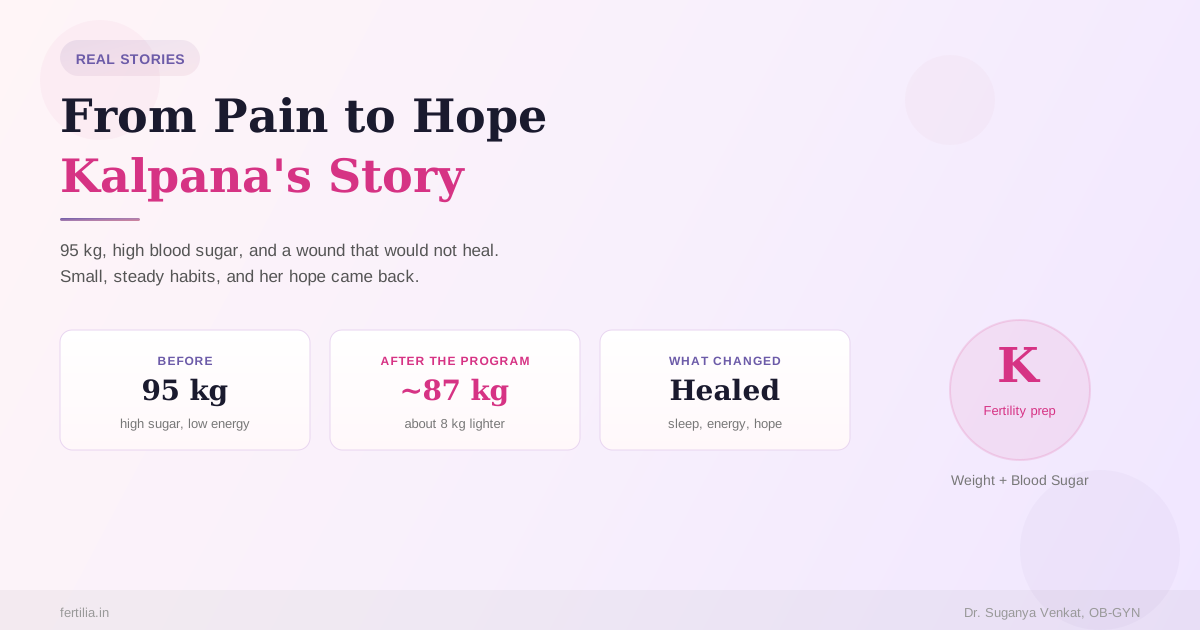
Kavitha’s story shows the scale involved. At 144 cm and 63 kg her BMI was 30.4 when her fertility team planned IVF. A plan built around her own South Indian kitchen took her to 57.2 kg over about two months, with no supplements, and she conceived in her first IVF cycle. You can read her full preparation timeline to see what the day-to-day of it looked like. Her result is her own and not a promise of yours, but the size of the change she made, under six kilograms, is the scale of what is usually being asked.
One thing worth checking before you commit to a delay is whether IVF is the right next step at all. Some women arriving at a BMI conversation have not yet had a full workup, and options short of IVF have not been explored. Our OB-GYN decision framework for whether you need IVF walks through that question.
Frequently Asked Questions
Is there a maximum BMI for IVF in India?
Not in law. The Assisted Reproductive Technology (Regulation) Act, 2021 sets conditions for clinic registration, donor age, consent and donor insurance, and does not include a BMI criterion for the woman being treated. Any BMI ceiling you are quoted is that clinic’s own protocol, so it varies between centres and can be discussed. Ask your clinic what their threshold is and what it is protecting against.
Does being overweight mean IVF will not work for me?
No. Average live birth rates are lower at higher BMI, but the effect is a shift in the odds, not a bar. A dose-response meta-analysis of 975,889 cycles found a summary risk ratio of 0.93 for live birth per 5-unit increase in BMI (Tang K et al., 2021, PMID 33496916). Many women above the usual thresholds conceive through IVF. Your age, ovarian reserve, tubal status and sperm parameters usually influence your individual odds more than your BMI does.
Kya IVF ke liye weight kam karna zaroori hai?
Not compulsory under any law, but most clinics will raise it, and there are reasons worth taking seriously. Weight loss before IVF has been shown to increase total pregnancy rates, including a meaningful number of unassisted conceptions during the waiting period (Michalopoulou M et al., 2025, PMID 40789178). The effect specifically on IVF live birth rates is less certain. Aim for a proportionate target agreed with your clinic, usually 5 to 10 per cent of body weight, rather than an open-ended one.
How much weight do I need to lose before IVF?
Ask your clinic for a specific figure and a date, because the answer is local rather than universal. In the PCOS literature, losing more than 5 per cent of starting weight is associated with meaningful improvements in cycle regularity, free testosterone and fasting insulin. For a 75 kg woman that is about 4 kg. A proportionate target is usually both achievable and clinically worthwhile, and it is a better conversation to have than an unbounded instruction to reduce.
Is egg retrieval safe at a high BMI?
Sedation carries more airway risk in a larger body, which is why many clinics set a ceiling. A retrospective study of 98 women with BMI 40 or above found all were successfully managed with intravenous sedation, 93 per cent had no anaesthesia complication, and oocyte and pregnancy outcomes did not differ between the BMI 40 to 44.9 and BMI 45-plus groups (Luck M et al., 2025, PMID 40262695). It is one two-centre study, so respect your clinic’s protocol, but a centre with fuller anaesthesia support may assess you differently from a smaller day clinic.
Why does my Indian clinic use a lower BMI cutoff than clinics abroad?
Because metabolic risk appears at lower BMI values in Asian populations. A WHO expert consultation found the observed-risk cutoff varies from 22 to 25 across Asian populations and identified additional public health action points at 23.0 and 27.5 (The Lancet, 2004, PMID 14726171). Some Indian clinicians therefore look at waist circumference and fasting insulin alongside BMI, which usually gives you a more useful picture than the number alone.
Will losing weight improve my egg quality?
Weight loss reliably improves metabolic health and, in PCOS, ovulation and cycle regularity. Whether it improves the eggs retrieved in a given IVF cycle is not established: in the FIT-PLESE trial, an intensive programme achieving 6.6 per cent weight loss did not significantly improve healthy live birth compared with exercise alone, although that trial used intrauterine insemination rather than IVF (Legro RS et al., 2022, PMID 35041662). Lose weight for your metabolic health, your PCOS and your pregnancy safety, which are well supported. Treat any egg-quality benefit as a possible bonus rather than the reason.
The Short Version
A BMI number on a clinic letter is a starting point to work from, not a verdict on whether you can become a mother. There is no national rule behind it. The research supports the general direction, that a lower metabolic load improves the odds, while stopping well short of promising that any particular number guarantees a particular outcome.
What I would want you to take from this: get the threshold and the timeline in writing, keep the rest of your workup moving while you work on weight, aim for a proportionate target rather than an ideal one, and weigh the delay against your age with your doctor’s help rather than alone.
💜 Want a second opinion on a BMI target you have been given, or help building a plan that fits your timeline? Talk it through with Dr. Suganya Venkat on WhatsApp Consultations are online across India by video call, and we work alongside your treating fertility clinic rather than in place of it.