You walked out of your 24-week antenatal appointment with the OGTT form in hand, feeling perfectly fine. No unusual thirst. No strange fatigue. Nothing you could point to and say something felt different. Three days later, the result came back elevated.
This is how gestational diabetes usually announces itself in India: not through symptoms, but through a routine test. If you are trying to understand what signs to look for before your OGTT, or wondering whether what you are noticing could be connected, this guide walks through what gestational diabetes mellitus (GDM) actually looks like before a diagnosis is made.
The short version is that most women have no symptoms at all. The longer version is worth understanding, because knowing which signs can appear may prompt you to ask for an earlier test if you are at higher risk.
Why Gestational Diabetes Often Has No Symptoms
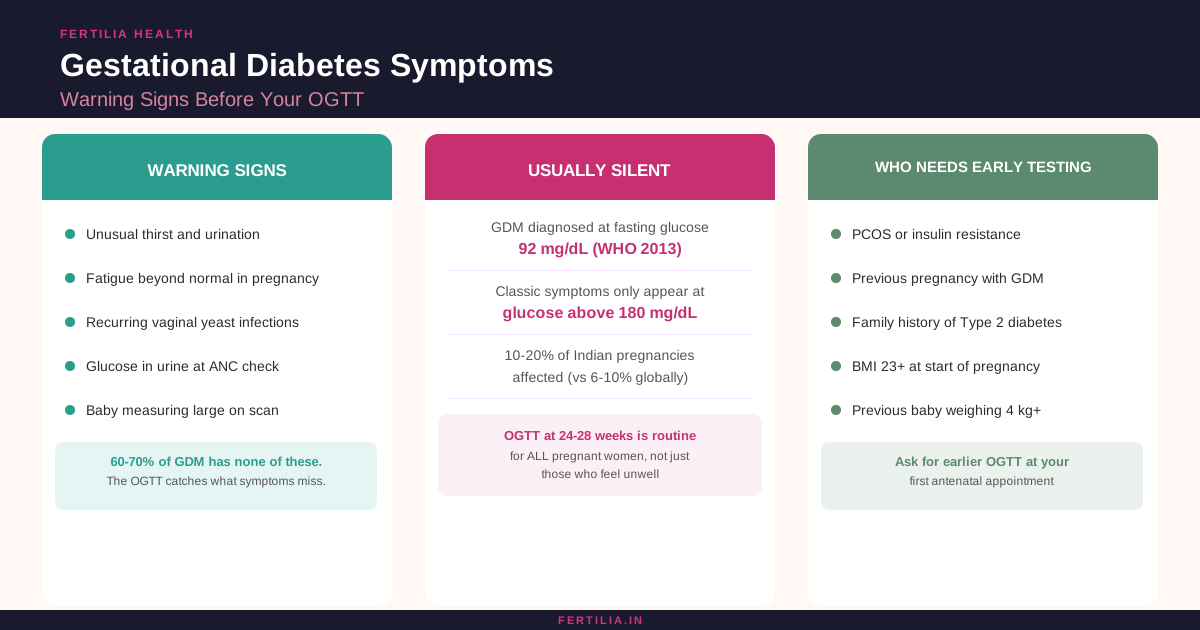
Gestational diabetes is high blood sugar that develops during pregnancy, typically in the second or third trimester, in women who did not have diabetes before. It affects an estimated 10 to 20 percent of pregnancies in India, significantly higher than the global average of 6 to 10 percent (Bhavadharini B et al., Eur J Clin Nutr, 2017).
The reason GDM is usually symptomless comes down to where the diagnostic threshold is set.
The WHO 2013 criteria for GDM are based on data from the HAPO study, a large international study of 25,505 pregnant women that demonstrated adverse pregnancy outcomes occurring across a continuous spectrum of blood glucose levels (Metzger BE et al., N Engl J Med. 2008;358(19):1991-2002, PMID 18463375). The thresholds drawn from this data are: fasting plasma glucose at or above 92 mg/dL, one-hour value at or above 180 mg/dL, or two-hour value at or above 153 mg/dL.
The classic symptoms of diabetes, such as intense thirst, very frequent urination, and blurred vision, are associated with glucose levels well above 180 to 200 mg/dL. A woman diagnosed with GDM at the fasting threshold of 92 mg/dL is well below that range. At that level, blood sugar is high enough to affect fetal growth and increase birth-related risks, but not high enough to produce noticeable symptoms in the mother.
This is why the OGTT at 24 to 28 weeks is a routine screening test for all pregnant women, not a test reserved for those who feel unwell.
Symptoms That Can Appear Before Your OGTT
A proportion of women with GDM, particularly those with higher glucose levels, do notice changes. These are worth paying attention to.
Thirst that feels different from your pregnancy baseline
Pregnancy already increases fluid requirements, and mild thirst is expected. What stands out in GDM is thirst that feels out of proportion: drinking water constantly and still feeling thirsty, reaching for two or three litres a day and noticing it is not enough.
This happens because high blood glucose draws water out of cells through osmosis, triggering a persistent thirst response. If you are noticing thirst that is clearly beyond your usual pregnancy baseline, mention it at your next antenatal appointment.
Urination more frequent than your current pregnancy norm
Frequent urination is a normal part of pregnancy, driven partly by the growing uterus pressing on the bladder. What GDM adds on top is urination driven by the kidneys attempting to flush out excess glucose. When blood glucose rises above the renal threshold (which falls during pregnancy to around 155 mg/dL), glucose spills into the urine and draws water with it.
If you are waking four or more times at night specifically to urinate, and this is a clear change from your recent pattern, it is worth noting at your next visit.
Fatigue that does not improve with rest
Pregnancy fatigue is real, especially in the first and third trimesters. The fatigue associated with GDM can feel different: a heaviness or foggy exhaustion even after a full night of sleep. This happens because cells cannot use glucose as efficiently without adequate insulin signalling, leaving them short of energy even when blood glucose is elevated.
This symptom is easy to attribute to normal pregnancy tiredness, and often it is. But if you are in your second trimester, when most women feel their most energetic, and you are still exhausted after reasonable rest, it is worth raising with your OB-GYN.
Recurring vaginal yeast infections
Candida thrives in a high-sugar environment. When blood glucose is persistently elevated, vaginal secretions become richer in glucose, creating favourable conditions for Candida albicans overgrowth. If you have had two or more vaginal yeast infections during this pregnancy, particularly if they responded to treatment and then returned, it is worth discussing whether an earlier OGTT is appropriate.
Your baby measuring large on a growth scan
At a growth scan (typically around 28 to 32 weeks), if the fetal abdominal circumference or estimated fetal weight is above the 90th centile for gestational age, this is sometimes the first indirect sign that blood sugar has been elevated during pregnancy. Fetal macrosomia develops because excess maternal glucose crosses the placenta. This raises glucose in the baby’s blood, which prompts the baby’s pancreas to produce more insulin. That extra insulin drives fat deposition and accelerated growth.
If a growth scan shows a large-for-gestational-age baby and you have not had an OGTT yet, your doctor will typically arrange one promptly. Excess amniotic fluid (polyhydramnios) on scan is another indirect signal, for the same underlying reason: the baby’s kidneys produce more urine when fetal blood glucose is elevated, increasing amniotic fluid volume. See our guide to polyhydramnios and what it means in pregnancy.
None of these symptoms confirms GDM on its own. The OGTT gives the clear answer. If any of the above apply to you, speak to your OB-GYN about whether an earlier test makes sense.
If you are pregnant and unsure whether you are at higher risk for gestational diabetes, or if you have noticed any of the above, Dr. Suganya consults online, pan-India, via video call. Reach out on WhatsApp and she can review your situation directly.
Why These Signs Are Not Reliable Enough on Their Own
Thirst, fatigue, and urination are all standard pregnancy experiences. Most women who notice them do not have GDM. And most women who do have GDM will not notice these symptoms at all.
The HAPO study is the clearest evidence for why symptoms cannot serve as a screening method. It demonstrated a continuous relationship between maternal blood glucose and adverse outcomes, including macrosomia, cord-blood hyperinsulinism, neonatal hypoglycaemia, and caesarean delivery, at glucose levels where the mother felt nothing unusual. The harm was accumulating silently in a population of women who felt perfectly well.
In India, this matters more than in many other populations. Indian women tend to develop GDM at lower body weight and lower glucose levels compared to European women, partly due to the South Asian metabolic phenotype: greater visceral fat relative to lean mass even at lower BMI (ACOG Practice Bulletin 190, 2018). A South Asian woman with a BMI of 23, which is within the normal range by Western standards, already carries a risk profile that warrants routine OGTT screening.
This is also why the DIPSI (Diabetes in Pregnancy Study Group India) guideline uses a different approach at resource-limited settings: a non-fasting two-hour 75g glucose load with a threshold of 140 mg/dL. At government hospitals and many district-level ANC clinics, this may be the test offered. Both DIPSI and WHO OGTT protocols are valid. Which one is ordered depends on the facility and local protocol.
Symptoms are useful as a prompt to raise a question. They are not a reliable substitute for the OGTT.
Who Should Ask for an Earlier OGTT
Routine OGTT is done between 24 and 28 weeks. The following risk factors are associated with a significantly higher likelihood of GDM. If any of these apply to you, it is worth discussing with your doctor whether an OGTT at the first antenatal visit, or at 16 to 20 weeks, is appropriate.
PCOS (PMOS): Polycystic ovary syndrome (also now called PMOS) is primarily a condition of insulin resistance, and women with PCOS have a three- to fourfold higher risk of developing GDM. If you conceived with PCOS, this should be on your OB-GYN’s radar from the first trimester. For more on how insulin resistance connects PCOS to pregnancy risk: Insulin Resistance and PCOS: Signs, Diet and What to Do.
A previous pregnancy with GDM: The recurrence risk for GDM is 30 to 60 percent. If you had GDM in a prior pregnancy, early testing in the first trimester or at 16 weeks is standard at most obstetric centres.
A close family member with Type 2 diabetes: A first-degree family history (parent or sibling with T2DM) increases GDM risk substantially. India’s high burden of T2DM means many women carry this history.
BMI 23 or above at the start of pregnancy: For South Asian women, the risk threshold sits lower than the Western overweight cut-off of 25. A WHO expert consultation identified BMI 23 as the public-health action point for Asian populations (Lancet 2004;363:157-63, PMID 14726171), reflecting the higher metabolic risk South Asian women carry at lower body weight.
A previous baby who weighed 4 kg or more at birth: A macrosomic baby in a prior pregnancy is a recognised risk factor for GDM in the next.
Glycosuria at your first urine dipstick: Glucose in the urine at your first ANC visit, even in the first trimester, is sufficient reason to arrange a glucose tolerance test early, regardless of other risk factors.
If any of these apply, raise them at your first antenatal appointment. Early testing does not change the pregnancy, but it gives more time to act if the result is positive. For context on how GDM fits into the broader picture of a high-risk pregnancy: High-Risk Pregnancy: What It Means and How Care Works.
What “Pregnancy Mein Sugar” Means in India
In everyday conversation, “pregnancy mein sugar” or “pregnancy mein sugar hai” is how most Indian patients describe a GDM diagnosis. If your doctor or a family member has used this phrase, it means gestational diabetes mellitus was found on the OGTT, not that you have developed Type 1 or Type 2 diabetes.
The distinction matters because GDM resolves for most women after delivery. Around 90 percent of women with GDM have normal blood sugar within six weeks of giving birth. However, having had GDM does raise the risk of developing Type 2 diabetes in the following years, which is why a postnatal glucose check at six weeks postpartum is recommended at every centre.
The formal Hindi term is garbhakalin madhumeh, though this is rarely used in everyday clinical conversations. “Pregnancy mein sugar” is what you will hear at most government and private hospitals across India.
What Happens After a Positive OGTT
If your OGTT comes back positive, the management plan will typically include:
- Blood sugar monitoring at home (fasting level on waking, and two hours after each main meal)
- A modified low-GI Indian diet: ragi roti, bajra, brown or parboiled rice, dal, chana, sabzi, dahi, and a protein source at each meal; reducing large portions of white rice, maida-based foods, and sugary drinks
- A short walk of 15 to 20 minutes after meals, which reduces post-meal glucose spikes significantly
- Regular growth scans (typically every four weeks from 28 weeks) to track fetal size
- Medication (metformin tablets or insulin injections) when diet and movement alone are not enough to keep blood sugar within the target range
GDM that is well managed does not prevent a healthy pregnancy or a straightforward delivery. For a detailed breakdown of OGTT cut-offs, blood sugar targets, and the full India-specific diet plan, see our complete guide: Gestational Diabetes in India: OGTT Cut-Offs, Blood Sugar Targets and Diet Plan.
For a trimester-by-trimester view of what to expect through pregnancy, including which tests are scheduled when: Pregnancy Week by Week: Complete Guide for Indian Women. And if PCOS was part of your journey to conception, this guide covers the overlap: PCOS and Pregnancy: How to Conceive Naturally. Our Pregnancy Care Guide also covers GDM management, third-trimester monitoring, and birth preparation in one place.
Managing gestational diabetes well takes consistent monitoring and a few practical habits. If you would like guidance on your OGTT result, blood sugar targets, which Indian foods work best for GDM management, or how to balance this alongside your routine pregnancy care, Dr. Suganya is available for a video consultation across India. Reach out directly on WhatsApp.
Frequently Asked Questions
Can you have gestational diabetes with no symptoms?
Yes, and this is the most common situation. Most women with GDM feel completely normal until the OGTT shows an elevated result. The diagnostic thresholds set by WHO 2013 (fasting glucose at or above 92 mg/dL) are at glucose levels where symptoms are typically absent. This is precisely why universal OGTT screening at 24 to 28 weeks is routine for all pregnant women, not just those who feel unwell.
What are the early signs of gestational diabetes in pregnancy?
The most commonly reported early signals are unusual thirst, fatigue that does not improve with rest, recurring vaginal yeast infections, glucose found on a urine dipstick at an ANC visit, and a baby measuring large on a growth scan. None of these is a reliable confirmation on its own. The OGTT is the only test that can confirm the diagnosis.
Does gestational diabetes cause pain?
GDM itself does not cause pain. However, macrosomia (a large baby) associated with poorly controlled GDM can contribute to back discomfort and is associated with higher labour complication rates. If you have already been diagnosed with GDM and are experiencing abdominal pain or pressure, speak to your OB-GYN at your next visit.
Pregnancy mein sugar ke kya symptoms hote hain?
Zyada pyaas lagna (polydipsia), baar baar peshab aana (polyuria), thakaan jo rest se theek na ho, aur baar baar vaginal yeast infection hona iske sambhavit lakshan ho sakte hain. Lekin bahut si mahilaon ko koi bhi symptoms nahi hote, aur unhe OGTT test se pata chalta hai. Agar in mein se koi bhi symptoms ho, toh apne doctor se zaroor baat karein.
Should I worry if I have no symptoms but my OGTT is due soon?
There is nothing to worry about. An absence of symptoms does not mean your OGTT will be abnormal, and it does not mean something is wrong. The OGTT is a routine screening tool that gives useful information for managing the pregnancy, whatever the result. Go for it at the scheduled time (24 to 28 weeks), or earlier if you have any of the risk factors described in this guide.
Can PCOS cause gestational diabetes?
PCOS is associated with a three- to fourfold higher risk of GDM because insulin resistance is a core driver of both conditions. If you have PCOS, let your OB-GYN know at your first antenatal appointment so they can consider arranging an early OGTT, ideally at or before 16 weeks of pregnancy.
What Indian foods should I focus on if I am at risk of gestational diabetes?
Before a diagnosis, no specific restriction is required. If you are at higher risk, focusing on low-GI choices is a reasonable precaution: ragi roti, bajra, brown or parboiled rice, dal, chana, sabzi, dahi, and a protein source at each meal. Reducing large portions of white rice, maida-based breads and snacks, and sugary drinks is a sensible starting point. After a confirmed GDM diagnosis, a structured diet plan is put in place with your healthcare team. For the full details: Gestational Diabetes Diet Guide for Indian Women.