You have brought home a person who cannot tell you what they need, and everyone around you is sure they know what that is. Feed like this. Don’t pick him up so much. Put kajal here. Keep her in the sun. By the end of the first week, the advice alone is exhausting, and underneath it is one steady question: is my baby actually okay?
I am a neonatologist, and I want to make the first month feel less like a test you might fail. Most of newborn care comes down to a small number of things going well, and once you know what to watch, the daily worry settles into something more like quiet attention. This guide is a map of that first month. It points you to the deeper guides for feeding, jaundice, and vaccines where you need them, and it keeps the focus on what a healthy newborn looks like day to day.
What this post covers:
- Feeding in the first month, and how to know it is going well
- Nappies and output, the most honest sign that feeding is working
- Sleep, and how to make it safe
- Umbilical cord and skin care, including bathing and oil massage
- Weight, jaundice, and the first vaccines, in brief, with links to the full guides
- The red flags that mean see a doctor in person, today
Feeding: The Centre of the First Month
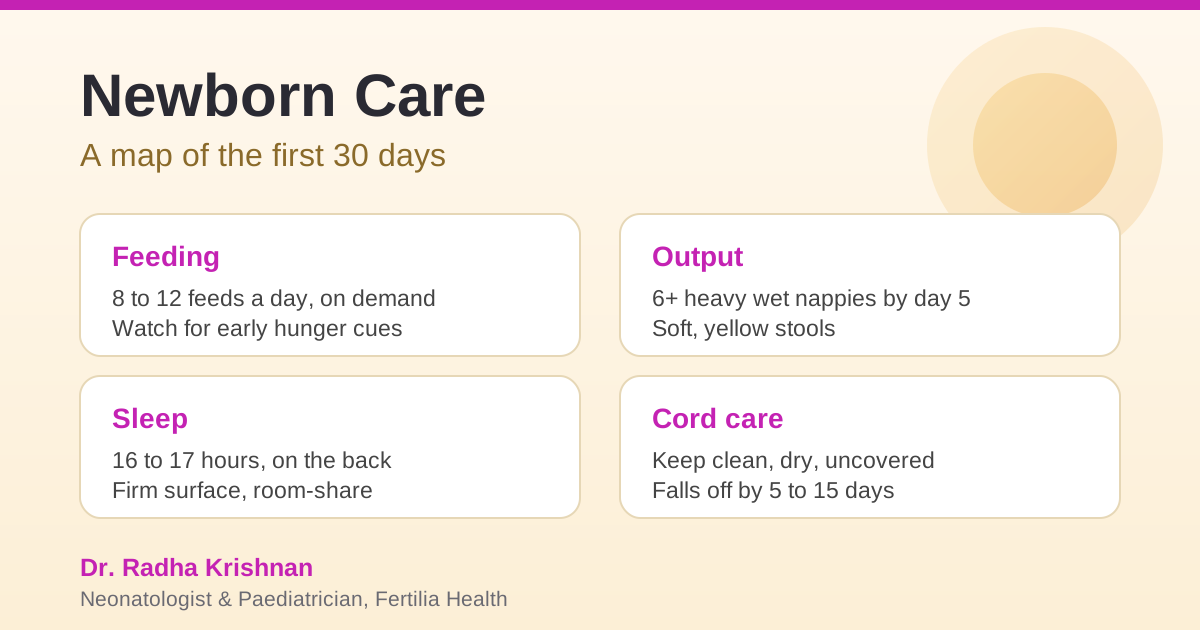
For the first few weeks, feeding is the main event of almost every hour. A newborn feeds 8 to 12 times in 24 hours, day and night, because their stomach is tiny and breast milk digests quickly. This is not a sign of low supply or a hungry, unsatisfied baby. It is simply how newborns are built, and feeding often is what builds and protects your milk supply.
Watch for feeding cues before the crying starts: stirring, turning the head and opening the mouth (rooting), bringing hands to the mouth, sucking sounds. Crying is a late hunger cue, so catching the earlier ones makes for a calmer feed. In the evenings, many babies want to feed again and again in short bursts. This is normal cluster feeding, and our guide to why a newborn feeds nonstop explains it.
If you are breastfeeding, the two things that make the biggest difference in these early weeks are a deep, comfortable latch and frequent feeds. Our lactation team’s guides cover the practical side in depth: how to get a deep latch, the best feeding positions for a newborn, and how to increase milk supply if you are worried about it. If you plan to express milk, whether for a return to work or so someone else can share a feed, our practical guide to pumping and storing breast milk covers pump choice, routines, and safe storage. For why those first weeks of breast milk matter so much, see our exclusive breastfeeding guide. Whether you are breastfeeding, formula feeding, or doing both, a baby who feeds regularly and is filling nappies is usually feeding enough.
Nappies and Output: The Most Honest Sign
You cannot see how much milk your baby is taking, but you can see what comes out, and that is the most reliable everyday sign that feeding is working. This is what to expect:
| Day | Wet nappies | Stools |
|---|---|---|
| Day 1 to 2 | 1 to 2 a day | Sticky black-green meconium |
| Day 3 to 4 | 3 to 4 a day | Changing to green-brown, then yellow |
| Day 5 onward | At least 6 heavy a day | Soft, yellow, often seedy; several a day early on |
By the end of the first week, a well-fed baby has at least six heavy, pale-urine nappies a day and is passing soft yellow stools. Early on, breastfed babies often pass a stool with almost every feed; this settles over the weeks, and after the first month some breastfed babies go a few days between stools, which is fine as long as they are comfortable and the stool stays soft. Brick-dust pink staining in the nappy can appear in the first day or two and is usually harmless, but if it continues past day 3, mention it to your doctor.
Sleep: How Much, and How to Make It Safe
Newborns sleep a lot and in short stretches: about 16 to 17 hours across a day, waking every 2 to 3 hours to feed, with no real difference between day and night yet. That day-night confusion is normal and sorts itself out over the first weeks. You cannot spoil a newborn by holding or feeding them, and you do not need to train sleep at this age.
What does matter, and matters a great deal, is safe sleep. The simple rules below are the most evidence-backed thing in this whole guide, based on the American Academy of Pediatrics 2022 safe-sleep recommendations:
- Back to sleep, every time, for naps and at night. Not the side, not the tummy.
- A firm, flat surface: a cot, crib, or firm mattress, not a soft quilt, pillow, or an inclined surface.
- Clear the sleep space: no loose blankets, pillows, bumper pads, or soft toys around the baby.
- Room-share, not bed-share. Keep the baby’s cot or bassinet in your room, close to your bed, ideally for the first six months, but not in your bed. If you feed in bed at night, move the baby back to their own firm surface once the feed is done.
- Avoid overheating. Light cotton layers are enough; the baby does not need to be bundled in heavy blankets indoors.
These rules are the single most effective way to lower the risk of sudden infant death, and they cost nothing.
The Umbilical Cord: Clean, Dry, and Left Alone
The cord stump dries, darkens, and falls off on its own, usually between 5 and 15 days, sometimes up to three weeks. Your job is simply to keep it clean and dry and otherwise leave it alone.
- Keep the stump uncovered and dry. Fold the nappy down below it so it is exposed to air, not tucked under a wet nappy.
- If it gets dirty, clean gently with plain water and let it air-dry. Routine antiseptics are not needed for hospital-born babies in clean conditions.
- Do not apply powders, oils, ash, cow dung, turmeric paste, or any home preparation to the stump. This is the most important point: these traditional applications are a real cause of cord infection in India and should never go on the cord. (In some home-birth settings with high infection risk, doctors specifically recommend 4 percent chlorhexidine; follow your own doctor’s advice rather than a household remedy.)
- Let the stump fall off by itself. Never pull it, even if it is hanging by a thread.
Call your doctor if the skin around the base of the cord becomes red, swollen, or warm, if there is foul-smelling yellow discharge or pus, if it bleeds more than a spot, or if your baby develops a fever or feeds poorly. These can signal a cord infection that needs prompt treatment.
Worried about feeding, latch, or whether your baby is getting enough milk in these early weeks? Feeding support is exactly what our lactation team offers. Message Dr. Suganya’s team at Fertilia on WhatsApp for help over a video call. For your baby’s medical care, including anything that needs a hands-on examination, please also stay in touch with your own paediatrician in person.
Bathing, Skin, and Oil Massage
Newborns do not need a daily bath. Two or three baths a week is plenty in the first month; more can dry the delicate skin. Until the cord stump falls off and the area heals, give sponge baths with a soft, damp cloth rather than immersing the baby. After that, short, warm baths are fine.
A few practical points for the Indian home:
- Oil massage (malish) is a soothing tradition and is fine to continue. Use a clean, mild oil, massage gently, and keep it off the cord stump until it has healed. There is no need to apply oil or kajal inside the eyes, ears, or nose; this can cause irritation or infection.
- Keep the room comfortably warm and free of draughts during and after a bath. Newborns lose heat quickly, so dry and dress the baby promptly.
- A little dry, peeling skin in the first weeks is normal. Plain, fragrance-free moisturiser is enough if the skin looks dry.
- Dress the baby in soft cotton, in roughly one more light layer than you are comfortable in. Avoid heavy swaddling in warm weather.
Weight, Jaundice, and Vaccines, in Brief
Three things you will hear about a lot in the first month, each with a full guide of its own:
Weight. It is normal for a newborn to lose a little weight (up to about 7 to 10 percent) in the first days, then regain their birth weight by around two weeks and gain steadily after that. Weight is the single best long-term sign that feeding is working. Our guide to newborn weight gain explains the numbers, growth charts, and what “not gaining” really means.
Jaundice. A yellow tinge to the skin and eyes is very common from day 2 or 3 and is usually harmless, but the timing matters and a few patterns need same-day review. Rather than repeat it here, see our full guide to newborn jaundice, why it happens and when to worry.
Vaccines. Your baby’s first vaccines (BCG, hepatitis B, and OPV) are usually given at or soon after birth, with the next set at six weeks. For how the schedule works and the government-versus-private question, see our guide to the baby vaccination schedule in India.
When to Call a Doctor in Person
Most of the first month is ordinary, and most worries turn out to be nothing. But a newborn can become unwell quickly, so it is worth knowing the signs that mean a hands-on check the same day, not a wait-and-see. This list is here to make you confident, not anxious: the vast majority of babies never show these, and knowing them simply means you will act early if your baby is the one who needs it.
See a doctor or go to the hospital straight away if your baby:
- Has a temperature of 100.4 F (38 C) or higher, or feels very cold and floppy. In a baby under three months, a fever is a medical emergency even if the baby otherwise seems well. Do not give any fever medicine before a doctor has seen the baby.
- Is breathing fast, grunting, or struggling, with the skin pulling in between or under the ribs, or has bluish lips or tongue.
- Is very hard to wake, unusually floppy, or not feeding across several feeds.
- Has fewer than 6 wet nappies a day after day 5, a sunken soft spot, or no tears and a very dry mouth (signs of dehydration).
- Has jaundice in the first 24 hours, jaundice spreading to the palms and soles, or deepening yellow with poor feeding (see the jaundice guide above).
- Has a red, swollen, or foul-smelling cord base, or any pus.
- Has repeated forceful vomiting (especially green), blood in the stool, or a swollen, hard tummy.
- Has a seizure, or is inconsolable in a way that is clearly not like their usual cry.
For your own recovery alongside all of this, our postpartum recovery guide for Indian mothers and the wider postpartum care program are good companions to this one. You are healing too, and that matters.
Frequently Asked Questions
How often should a newborn feed in the first month? About 8 to 12 times in 24 hours, day and night, on demand. Newborns have tiny stomachs and digest milk quickly, so frequent feeding is normal and is also what protects milk supply. Watch for early feeding cues like rooting and hands to the mouth rather than waiting for crying. A baby who feeds regularly and fills enough nappies is usually feeding enough.
How do I know my newborn is getting enough milk? Look at output and weight, not at the breast or bottle. By the end of the first week, expect at least six heavy wet nappies a day and soft yellow stools, a baby who is back to birth weight by about two weeks, and one who is generally alert and settled after most feeds. If wet nappies are few, weight is not picking up, or the baby is very sleepy and feeding weakly, ask for help early.
How should my newborn sleep safely? On the back, every time, on a firm flat surface with nothing soft around them, in your room but not in your bed. Newborns sleep about 16 to 17 hours a day in short stretches and wake every 2 to 3 hours to feed. Keep the baby lightly dressed to avoid overheating. These steps are the most effective way to reduce the risk of sudden infant death.
What should I put on the umbilical cord? Nothing, in most cases. Keep it clean, dry, and uncovered, fold the nappy down below it, and let it fall off on its own between about 5 and 15 days. Do not apply powder, oil, turmeric, ash, or any home remedy, as these can cause infection. Clean only with plain water if it gets dirty. See a doctor if the base looks red or swollen or smells bad.
Can I give my newborn an oil massage? Yes. Gentle oil massage with a clean, mild oil is a soothing tradition and is fine to continue. Keep the oil off the cord stump until it has healed, and do not put oil or kajal inside the eyes, ears, or nose. Two or three baths a week are enough in the first month, with sponge baths until the cord falls off.
When is a newborn’s temperature an emergency? A temperature of 100.4 F (38 C) or higher in a baby under three months is a medical emergency, even if the baby looks well, and needs to be seen the same day. A normal number of wet nappies does not rule out a serious infection at this age. Do not give fever medicine before a doctor evaluates the baby. A very low temperature with a cold, floppy baby also needs urgent care.
My baby sneezes, hiccups, and makes noises. Is something wrong? Usually not. Newborns sneeze to clear their noses, hiccup often, pass gas, make grunting and snuffly sounds, and have irregular breathing with brief pauses, all of which are normal. What is not normal is fast or laboured breathing, grunting with every breath, bluish colour, or a baby who is struggling to feed because of breathing. Those need to be seen.
The first month is a steep learning curve, and feeling unsure is part of it, not a sign you are getting it wrong. Hold on to the simple markers: a baby who feeds often, fills nappies, gains weight, and sleeps safely is a baby who is doing well. Learn the red flags so you can act early on the rare day they matter, and let the rest of the worry go.
Have a question about feeding, latch, or supply in these early weeks? Message Dr. Suganya’s team at Fertilia on WhatsApp for lactation support over video call. For your baby’s medical care and anything that needs an examination, your paediatrician in person is the right first call, and we will always point you there when that is what your baby needs.
Medically reviewed and written by Dr. Radha Krishnan, Neonatologist & Paediatrician. This guide is general information for Indian families and does not replace an in-person assessment of your baby. For anything that worries you about your baby’s health, please see your paediatrician.