You snap at someone you love over something small. An hour later you are crying at a phone advertisement. By evening you feel a flat, grey hopelessness that has no reason behind it. Then your period starts, and within a day or two the storm passes and you think, “What was that?” If this is a monthly pattern, you are not unstable and you are not difficult. You are describing one of the most common experiences in women’s health, and it has a clear explanation.
I am a psychiatrist at Fertilia, and premenstrual mood changes are something I talk through with women every week. This post is about what is actually happening in those days, why the feelings are so real, and the practical things that help, from what you can start tonight to when it is worth getting medical support.
Why your mood shifts before your period
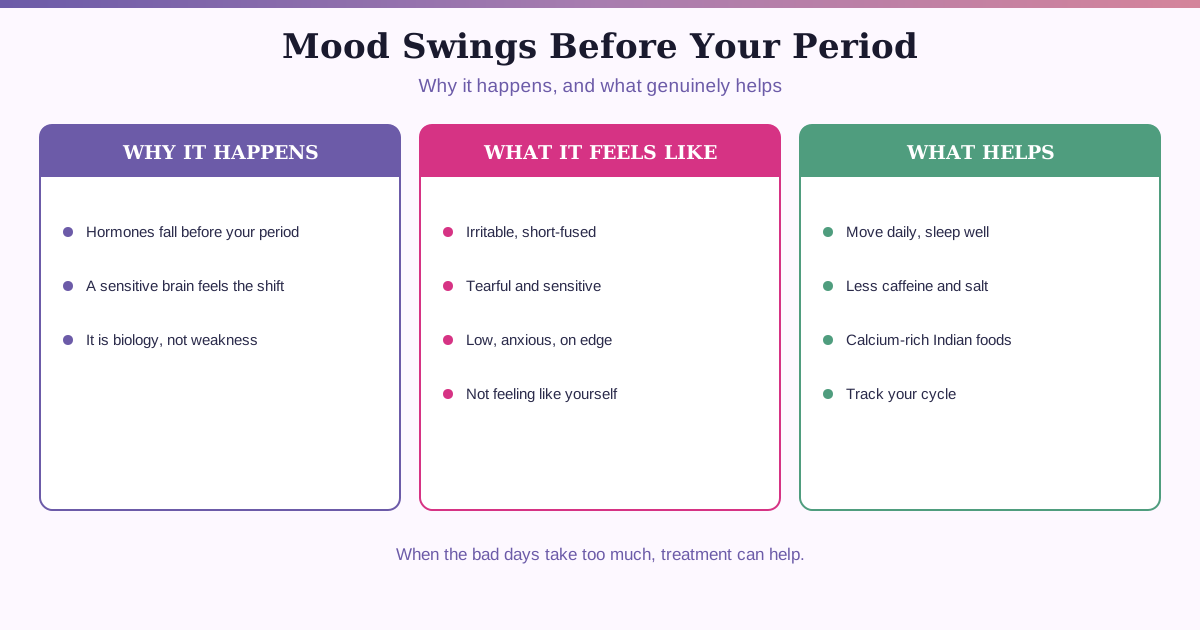
Your menstrual cycle has two halves. After ovulation, in the roughly two-week stretch before your period called the luteal phase, your hormones change in a predictable way. Progesterone rises and then, in the last several days, both progesterone and oestrogen fall sharply just before bleeding begins.
Those falling hormones do not act only on your uterus. They act on your brain. As progesterone breaks down, it produces a substance that influences the brain’s calming GABA system, the same system that medications for anxiety work on. It also interacts with serotonin, the chemical most linked to mood. When these hormones drop in the late luteal phase, sensitive brains feel it as irritability, low mood, anxiety, and tearfulness.
This is the part I most want you to hear: the mood change is not imaginary, and it is not a failure of willpower. It is a real, biological response to a real, monthly hormonal signal. Some women barely notice it. Others feel it strongly. The difference is not how mentally strong you are. It is how sensitive your particular nervous system is to these ordinary shifts.
What premenstrual mood changes feel like
They show up differently in different women, but the common threads are:
- Irritability and a short fuse. Small frustrations feel enormous. You may find yourself in conflicts that surprise you afterward.
- Tearfulness and sensitivity. Crying easily, feeling rejected or hurt by things that would not normally land.
- Low mood and flatness. A heaviness, loss of interest, or a sense that everything is harder than it should be.
- Anxiety and tension. A wound-up, on-edge feeling, sometimes with racing thoughts or a sense of dread.
- Feeling out of control. Many women describe it as not feeling like themselves, as if someone else is briefly at the controls.
Alongside the mood, there are often physical companions: bloating, breast tenderness, fatigue, headaches, and cravings for sugar or salt. The whole package arrives together and leaves together, which is the clue that ties it to your cycle.
If one of these feelings dominates your premenstrual days, we have dedicated guides to premenstrual rage and irritability, anxiety, and low mood with dark thoughts.
The spectrum: from normal to PMS to PMDD
Premenstrual mood changes are not one thing; they sit on a spectrum, and knowing where you are on it helps you decide what to do.
- Mild, normal changes. Many women feel a little more irritable or low for a day or two and manage easily. This needs understanding, not treatment.
- PMS (premenstrual syndrome). More noticeable physical and emotional symptoms in the luteal phase, affecting around 43% of Indian women, real but manageable with lifestyle support (Dutta et al., 2021, Health Promotion Perspectives, PMID 34195039).
- PMDD (premenstrual dysphoric disorder). Severe, disabling mood symptoms every cycle that disrupt work and relationships, affecting around 8% of women. This is a recognised medical condition with specific treatments.
For more on this, read our guide on How to Track Your Cycle for a PMDD Diagnosis.
For more on this, read our guide on Which Doctor Should You See for PMDD?.
For more on this, read our guide on SSRIs for PMDD. If your premenstrual mood feels like a personality change that derails your week rather than colours it, you may be at the PMDD end, and it is worth reading our psychiatrist’s guide to PMS and PMDD and learning how to tell the two apart. Wherever you sit, the strategies below help.
What helps: start with these
Most women can meaningfully reduce premenstrual mood symptoms with consistent, unglamorous changes. None of these is a quick fix, but together they make a real difference, especially when you keep them up across the whole month rather than only in the bad week.
Move your body regularly. Exercise is one of the better-evidenced ways to ease premenstrual mood symptoms. It does not have to be intense. A brisk 30-minute walk most days, yoga, or any movement you will actually keep up works. Exercise raises mood chemicals and reduces tension, and the benefit is strongest when it is a steady habit, not a luteal-week scramble.
Protect your sleep. Premenstrual days are the worst time to be sleep-deprived, because tiredness sharpens every mood symptom. Aim for a steady sleep and wake time, and be especially protective of it in the second half of your cycle.
Ease off caffeine, salt, and alcohol before your period. Caffeine can worsen anxiety and disturb sleep; salt drives bloating; alcohol is a depressant that often deepens low mood. Cutting back in the luteal phase, rather than all month if that feels too hard, is a reasonable place to start.
Eat in a way that steadies your blood sugar. Long gaps between meals and a rush of refined sugar can swing your mood further. Build meals around complex carbohydrates and protein: ragi, oats, whole dals, brown rice, eggs, paneer, and plenty of vegetables. The cravings are real, so work with them gently rather than fighting them entirely.
Consider calcium. Of the supplements studied for premenstrual symptoms, calcium has some of the better evidence. In a randomised trial, calcium carbonate reduced overall premenstrual symptoms by around 48%, compared with 30% on placebo, by the third cycle (Thys-Jacobs et al., 1998, American Journal of Obstetrics and Gynecology, PMID 9731851). Calcium-rich foods in an Indian kitchen include dahi, paneer, ragi, sesame (til), and green leafy vegetables. If you are considering a supplement, check the dose with a doctor first.
Track your cycle. When you can see your mood symptoms coming, they lose some of their power to ambush you. A simple daily note of your mood, with your period days marked, also tells you whether the pattern is truly premenstrual, which is the first thing any doctor will want to know.
💬 If the bad days are stealing more than they should, you do not have to just manage. Message Dr. Suganya’s team at Fertilia on WhatsApp. My consultations are over video call and start with a conversation about your pattern. Message us on WhatsApp
When mood swings are more than mood swings
Lifestyle changes help most women, but they are not always enough, and they are not meant to be a wall you hide a bigger problem behind. Please consider getting medical help if:
- The symptoms are severe enough to disrupt your work, studies, or relationships every cycle.
- You feel out of control of your anger or despair in a way that frightens you or harms the people around you.
- The low mood or anxiety does not fully lift after your period, which can point to an underlying depression or anxiety condition that worsens premenstrually rather than to PMS.
- Lifestyle changes you have genuinely tried for a few months have not helped enough.
When premenstrual mood symptoms are this severe, effective medical treatments exist, including SSRIs that can be taken only in the two weeks before your period and certain combined pills. Our guide to PMDD treatment in India lays out the options honestly. Seeking help here is not giving up on managing it yourself; it is choosing a tool that fits the size of the problem.
The one symptom to never wait out
There is a single exception to “see how lifestyle goes first.” If your premenstrual days bring thoughts that life is not worth living, or thoughts of harming yourself, even if they vanish the moment your period starts, please reach out now rather than waiting for the next cycle. Cyclical dark thoughts are a recognised feature of severe premenstrual conditions, and they are treatable. You can speak to a doctor, confide in someone you trust, or call the free national mental health helpline KIRAN on 1800-599-0019, available at all hours.
A note for Indian women
If your low or irritable days get read at home as being dramatic, too sensitive, or hard to live with, that judgement can hurt more than the symptoms. I see how much weight that adds. Please hold on to the medical reality: a mood change that arrives and leaves with your cycle is a physiological event, not a character flaw. Understanding that, for many women, is the first thing that lightens the load. If your mood difficulties began instead after having a baby, that is a different pattern worth knowing about, and our guide to postpartum anxiety describes it.
Frequently Asked Questions
1. Why do I get so angry and irritable before my period?
The hormonal changes of the luteal phase, especially the fall in progesterone and oestrogen before your period, affect the brain’s serotonin and GABA systems, which regulate mood. In sensitive women this shows up as irritability and a short fuse. It is a real biological response, not a temper problem.
2. Is it normal to cry for no reason before my period?
Tearfulness and emotional sensitivity in the days before your period are very common and, in the milder range, normal. If the crying is part of a severe, disruptive pattern every cycle, it may be PMS or PMDD, both of which can be helped.
3. How many days before my period do mood swings start?
Usually in the luteal phase, the one to two weeks before bleeding, and most intensely in the last few days. The defining feature is that they ease within a few days of your period starting. If your mood does not lift after your period, that points to something other than a premenstrual cause.
4. What foods help with premenstrual mood swings?
Meals that steady blood sugar help most: complex carbohydrates like ragi, oats, and whole dals, paired with protein. Calcium-rich foods such as dahi, paneer, ragi, til, and leafy greens may help, given the trial evidence for calcium. Reducing caffeine, salt, and alcohol in the luteal phase also eases symptoms.
5. Will exercise really help my premenstrual mood?
Yes, regular exercise is one of the better-supported lifestyle measures for premenstrual mood symptoms. It works best as a steady habit across the whole month rather than something you start only in the difficult week. Even a daily brisk walk counts. Our guide to managing PMDD without medication covers exercise, diet and CBT together.
6. When should I see a doctor about premenstrual mood changes?
When the symptoms disrupt your daily life every cycle, when they frighten you, when they do not lift after your period, or when lifestyle changes you have honestly tried have not helped enough. And immediately if you ever have thoughts of harming yourself.
7. Can medication stop premenstrual mood swings?
For more severe premenstrual mood symptoms, yes. SSRIs are effective and can be taken either daily or only in the luteal phase, and certain combined pills help too. These are decisions made with a doctor based on your pattern. See PMDD treatment in India for the full range.
You are not imagining it
The most common thing women tell me after we map out their cycle is a kind of relief: the feeling finally makes sense, and it is not their fault. That understanding is where everything else becomes possible.
Start with the basics this month, movement, sleep, steady meals, and a simple symptom note, and see how much shifts. If the bad days are still taking too much, a conversation is the next step. My consultations are online, over video call from wherever you are, starting at ₹399.