If you have a premenstrual mood disorder, you have probably been told some version of “just manage it.” Drink more water, do yoga, reduce stress, and somehow carry on through a week each month that takes the floor out from under you. I want to start this post by correcting that, clearly: premenstrual dysphoric disorder is one of the more treatable conditions I see, and “just cope” is not the plan a good doctor offers.
I am a psychiatrist, and I contribute educational content to Fertilia’s blog on women’s mental and hormonal health. Below is the real ladder of options, what the evidence says about each, and how to think about choosing. This is meant to inform you, not to replace advice from your own doctor, because the right plan depends on your symptoms, your history, and whether you also want contraception or are trying to conceive.
If you are still working out whether what you have is PMDD or PMS, start with our psychiatrist’s guide to PMS and PMDD and how to tell the two apart. This post assumes you are looking for what helps.
Start here: the foundations
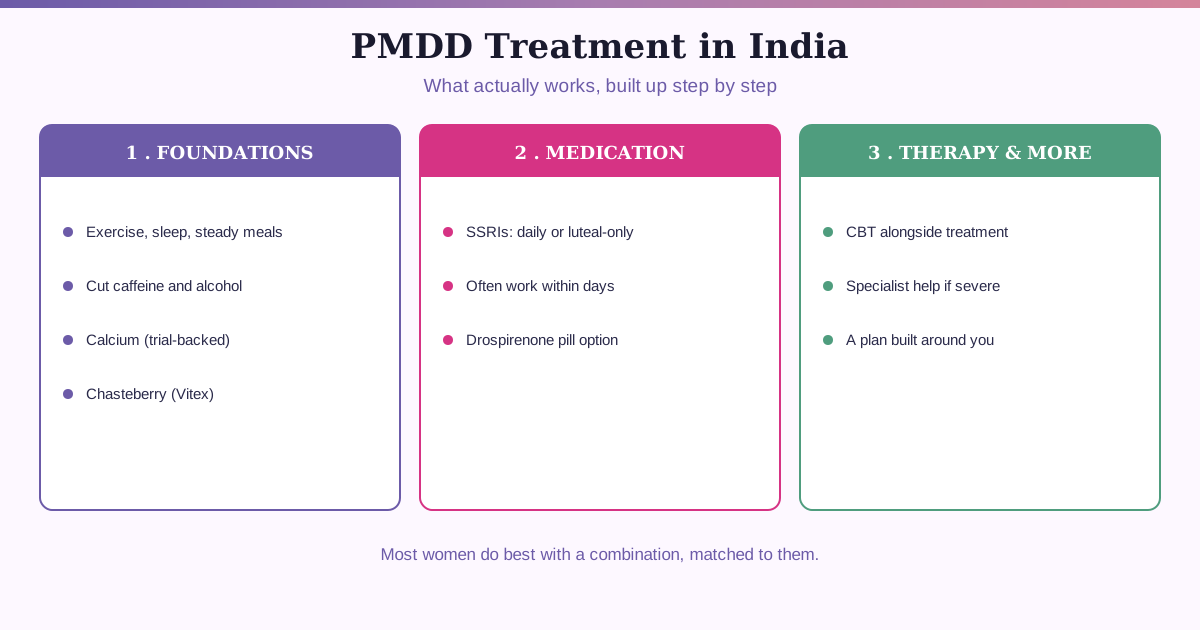
Lifestyle measures are the base of every PMDD plan, and for milder cases they are sometimes enough on their own. Regular exercise, steady sleep, reducing caffeine and alcohol in the luteal phase, and meals that keep your blood sugar steady all reduce premenstrual symptoms. Of the supplements, calcium has reasonable trial support: calcium carbonate reduced premenstrual symptoms by around 48% versus 30% on placebo by the third cycle (Thys-Jacobs et al., 1998, American Journal of Obstetrics and Gynecology, PMID 9731851).
We cover the foundations in detail, with Indian foods and a practical approach, in our guide to premenstrual mood changes and what helps, and if you would rather build a plan without medication, our guide to PMDD without medication walks through exercise, diet, calcium and CBT and what each can realistically achieve. For PMDD specifically, the foundations rarely do the whole job, so think of them as the floor you build the rest of the plan on, not the entire plan.
SSRIs: the first-line medication
For PMDD, the most effective and best-studied medication is a class of antidepressants called SSRIs (selective serotonin reuptake inhibitors): sertraline, fluoxetine, and escitalopram among them. A 2024 Cochrane review confirmed that SSRIs reduce premenstrual symptoms, with continuous daily dosing being somewhat more effective than luteal-phase dosing, though both work (Jespersen et al., 2024, Cochrane Database of Systematic Reviews, PMID 39140320).
Two things about SSRIs in PMDD genuinely surprise women.
First, they can be taken only part of the month. Unlike their use in ordinary depression, SSRIs for PMDD can be prescribed in three patterns: every day, only during the luteal phase (the roughly two weeks before your period), or only from the onset of symptoms each cycle (Steiner et al., 2013, CNS Drugs, PMID 23728922). Luteal-phase dosing means many women take medication for about half the month, which reduces total exposure and appeals to women who are uneasy about daily tablets. We explain exactly how this start-stop approach works, which SSRIs suit it, and when to start each cycle in SSRIs for PMDD: luteal-phase dosing.
Second, they work fast here. In depression, SSRIs take weeks to act. In PMDD, the mood benefit often appears within a day or two, which is why luteal-only dosing is even possible. This rapid response is one of the clearer signs that PMDD, while treated with the same drugs, is a different condition from depression.
I want to address the stigma directly, because in India it stops many women from accepting help that would work. An antidepressant for PMDD is not a sign that you are mentally weak or that this will be lifelong. It is a targeted treatment for a hormone-sensitive brain response, often used only part of the month, and frequently for a defined period rather than forever. The decision is made with you, with full information, and it is reviewed, not imposed.
The pill: a specific one for PMDD
Combined oral contraceptive pills can help PMDD, but not all of them, and some can even worsen mood. The one with formal approval for PMDD is a combined pill containing drospirenone and ethinylestradiol taken on a 24/4 schedule. A pivotal randomised trial found it superior to placebo, with a greater reduction in symptoms and a higher response rate (Pearlstein et al., 2005, Contraception, PMID 16307962). It is the only oral contraceptive specifically approved for PMDD. We go deeper into why this particular pill, the 24/4 schedule, who it suits, and who should avoid it in PMDD and the pill: does drospirenone help?.
The pill works differently from an SSRI: instead of steadying the brain’s response, it smooths out the hormonal cycle that triggers symptoms. It suits women who also want contraception, and it can be combined with other approaches. Like any combined pill it has its own considerations and is not right for everyone, which a doctor weighs with you. Our OB-GYN’s guide to birth control pill side effects covers what to expect from the pill in general. If you are trying to conceive, the pill is obviously not the route, and the plan shifts toward SSRIs and lifestyle.
Chasteberry (Vitex): the herbal option
Many women prefer to try a natural option first, and here the evidence is better than you might expect. Chasteberry, also known as Vitex agnus-castus, has been studied in several randomised trials for premenstrual symptoms. A 2017 systematic review concluded that chasteberry is a reasonably safe and effective option for premenstrual symptoms, based on the randomised trials available (Cerqueira et al., 2017, Archives of Women’s Mental Health, PMID 29063202).
A few honest caveats. Most of the strong evidence is for PMS rather than severe PMDD specifically. Quality and dosing of herbal products vary, so a standardised preparation matters. And chasteberry affects hormonal pathways, so it should not be combined with hormonal contraception or used while trying to conceive without medical advice. It is a legitimate option for milder cases or for women who want to start with something botanical, but it is worth doing under guidance rather than blindly. We take the same honest-evidence approach to another popular natural strategy in our piece on seed cycling for PCOS.
Therapy that helps
Cognitive behavioural therapy (CBT) has evidence in premenstrual conditions and is useful either on its own for milder cases or alongside medication. It does not change your hormones, but it changes how the premenstrual week unfolds: recognising the pattern, planning lighter weeks around it, managing the conflicts that flare, and reducing the secondary distress of feeling out of control. For many women, combining a medication with a few sessions of structured psychological work gives a better result than either alone.
When PMDD is severe or hard to treat
A small number of women have PMDD that does not respond to the steps above. For them, specialist options exist, such as medications that temporarily switch off the ovarian cycle (GnRH analogues, used with add-back hormones and careful monitoring), and, very rarely and only as a last resort after exhaustive treatment, surgical options. These are decisions for a specialist after the standard ladder has genuinely been tried, and I mention them only so you know that even difficult PMDD has a path forward. No one with this condition is out of options.
How to choose: a realistic way to think about it
There is no single best treatment, only the best fit for your situation. In practice:
- Milder symptoms, prefer non-medication: lifestyle foundations first, with calcium and possibly chasteberry, and CBT.
- Clear PMDD, want a targeted medication, no need for contraception: an SSRI, often luteal-phase dosing, is a strong first choice.
- PMDD and you also want contraception: a drospirenone-containing combined pill is worth discussing.
- PMDD and trying to conceive: lifestyle plus, if needed, an SSRI chosen with pregnancy in mind, never the pill.
- Severe or not responding: referral for specialist options.
Most women land on a combination, and the plan is adjusted over a couple of cycles based on what your symptom chart shows. This is collaborative, ongoing care, not a one-time prescription. These options are matched to each woman by her own treating doctor, who will review your chart, history, and whether you are trying to conceive before recommending a plan.
The India context
A few practical notes. SSRIs and the relevant combined pills are widely available in India and, in generic form, are not expensive. The bigger barriers I see are not cost but stigma around psychiatric medication and a shortage of clinicians who treat PMDD specifically rather than dismissing it. This is one reason an online consultation can help: it gives you access to a clinician who takes the condition seriously, from wherever you live, without the wait or the awkwardness of explaining cyclical mood symptoms to someone who waves them away. None of the treatments here should be started without medical advice, both for safety and because matching the option to you is most of the work.
Frequently Asked Questions
1. What is the most effective treatment for PMDD?
For most women with clear PMDD, an SSRI is the most effective single treatment, and it can be taken only in the two weeks before the period. The drospirenone-containing combined pill is the most effective hormonal option and suits women who also want contraception. Many women do best with a combination, built on lifestyle foundations.
2. Can PMDD be treated without medication?
Milder cases can improve substantially with lifestyle changes, calcium, chasteberry, and CBT. More severe PMDD usually needs medication to get full relief, but lifestyle still matters as the foundation. It depends on severity, which is why an assessment helps.
3. Do I have to take antidepressants every day for PMDD?
Not necessarily. SSRIs for PMDD can be taken daily, only during the luteal phase (about two weeks a month), or only from when symptoms start each cycle. Many women take them for only half the month, because in PMDD they work within a day or two rather than over weeks.
4. Which birth control pill is best for PMDD?
The pill with formal approval for PMDD contains drospirenone and ethinylestradiol on a 24/4 schedule. Not all pills help premenstrual mood, and some can worsen it, so this is a choice to make with a doctor, especially if you have other health considerations.
5. Does chasteberry actually work for PMDD?
Chasteberry (Vitex agnus-castus) has randomised-trial support for premenstrual symptoms, with a 2017 systematic review concluding it is reasonably safe and effective (Cerqueira et al., 2017, PMID 29063202). Most of the strong evidence is for PMS rather than severe PMDD. It is a reasonable option for milder symptoms, ideally a standardised preparation used under guidance, and not alongside hormonal contraception or while trying to conceive.
6. How long does PMDD treatment take to work?
SSRIs often ease premenstrual mood within a day or two of taking them, which is much faster than in depression. The pill and lifestyle changes usually show their benefit over two to three cycles. A plan is typically reviewed and adjusted across a couple of months.
7. Is PMDD treatment safe if I want to get pregnant later?
Yes, with planning. If you are trying to conceive, the pill is not used, and any medication, including an SSRI, is chosen with pregnancy in mind and reviewed by your doctor. Lifestyle measures remain safe and helpful throughout. Tell your clinician your conception plans so the plan fits them.
You have more options than “cope”
If you take one thing from this post, let it be that PMDD has real, effective treatments, and that being told to simply manage a disabling monthly condition was never the best medicine could offer you. Most women find a combination that gives them back the second half of their cycle.
What to do next
If you recognised your own pattern in this article, the most useful next step is to start a daily symptom chart (our tracking guide shows you how). Two months of honest daily tracking is the single most valuable thing you can bring to any doctor.
If your symptoms are affecting your daily life, please seek help from a doctor.