For about one week every month, some women stop recognising themselves. The irritation has a hair trigger. Small things feel unbearable. There is a heaviness that arrives like clockwork, a sense of dread with no event attached to it, and then, a day or two after the period starts, it lifts. The fog clears. She feels like herself again, and wonders if she imagined the whole thing. Then the calendar turns and it happens again.
I am a psychiatrist, and I contribute educational content to Fertilia’s blog on women’s mental and hormonal health. Many women who live this pattern have spent years being told they are moody, dramatic, or difficult, when what they actually have is a recognised, treatable medical condition with a name. This guide is about that name, and about the line between what most women feel before their period and what a smaller group of women suffer.
If you have searched at night for “why do I feel like a different person before my period,” you are in the right place. Let me walk you through what is happening, how doctors tell PMS apart from PMDD, and what genuinely helps.
First, the difference in one paragraph
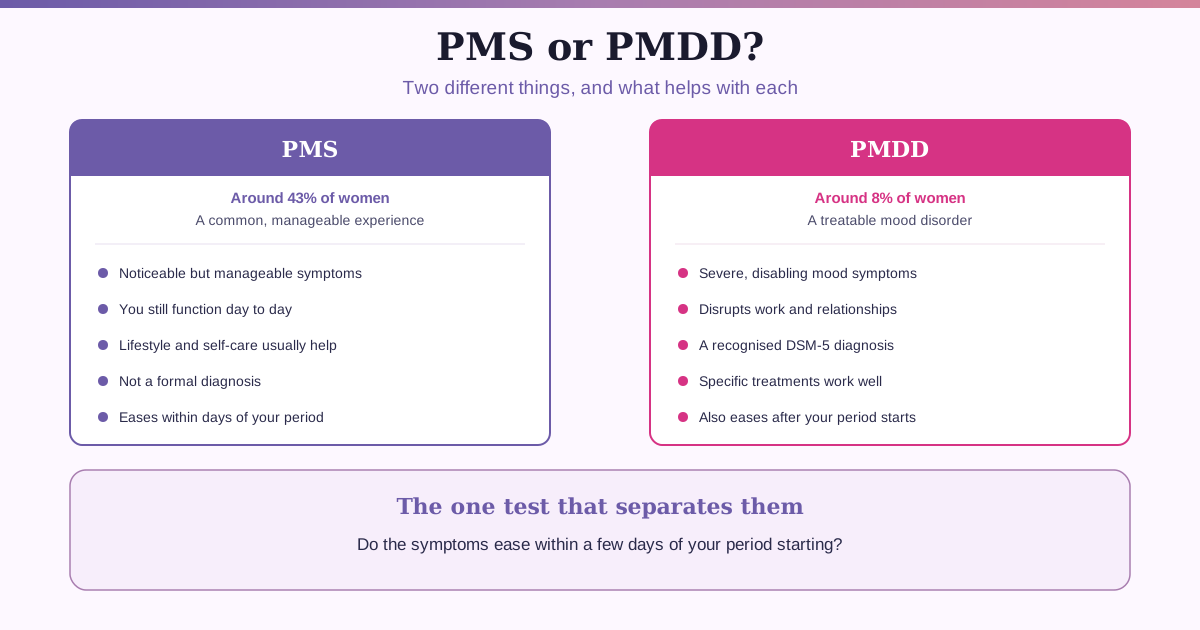
Premenstrual syndrome, or PMS, is common and usually manageable. Most women of reproductive age notice some physical and emotional changes in the days before their period: bloating, sore breasts, low mood, irritability, cravings. In a systematic review of Indian studies, the pooled prevalence of PMS was around 43% (Dutta et al., 2021, Health Promotion Perspectives, PMID 34195039). It is part of the normal range of menstrual experience.
Premenstrual dysphoric disorder, or PMDD, is different in degree and in kind. It is a severe, cyclical mood disorder in which the emotional symptoms become disabling, every cycle, and then remit. The same Indian review put PMDD at around 8% of reproductive-age women. That is roughly one woman in twelve, which means it is far from rare, and yet most women carrying it have never heard the term.
The simplest way to hold the difference: PMS is something you notice and work around. PMDD is something that, for several days a month, takes over.
PMS: what most women experience
PMS symptoms cluster in the luteal phase, the roughly two weeks between ovulation and your period. They can be physical, emotional, or both:
- Bloating, breast tenderness, headaches, fatigue
- Food cravings, especially for sugar or salt
- Low mood, irritability, tearfulness, anxiety
- Trouble sleeping or sleeping more than usual
The defining feature of PMS is that, while these symptoms are real and sometimes annoying, they do not dismantle your ability to function. You still go to work. You still parent, study, and hold your relationships together. You might be shorter-tempered or more tired, and a hot water bag, better sleep, and a kinder week usually carry you through. For more on the physical and emotional shifts of this phase, see our guide to mood swings before your period.
PMDD: when it crosses a line
PMDD is recognised in the DSM-5, the diagnostic manual psychiatrists use, as a depressive disorder. The criteria are specific, and the specificity is what protects women from being dismissed on one side and over-diagnosed on the other.
To meet the diagnosis, a woman has at least five symptoms in the final week before her period, with at least one of them being a core mood symptom:
- Marked mood swings, sudden tearfulness, or sensitivity to rejection
- Marked irritability, anger, or increased conflict with the people around her
- Marked depressed mood, hopelessness, or self-critical thoughts
- Marked anxiety, tension, or a feeling of being on edge
Alongside these, other symptoms can appear: loss of interest in usual activities, difficulty concentrating, low energy, changes in appetite or sleep, a sense of being overwhelmed or out of control, and physical symptoms such as breast tenderness or bloating.
Two more conditions matter. The symptoms must cause real interference with work, relationships, or daily life. And they must follow the cyclical pattern: present in the luteal phase, then easing within a few days of the period starting, and largely absent in the week after the period. That cyclical timing is the heart of the diagnosis, and it is what separates PMDD from a mood disorder that happens to be present all month. We go deeper into the side-by-side comparison in PMDD vs PMS: how to tell the difference.
The one test that separates them: prospective charting
Here is something that surprises many women. PMDD is not diagnosed from a single conversation or a blood test. It is diagnosed by tracking.
Because memory blurs and bad weeks feel like they were always there, the standard of care is to chart your symptoms forward, day by day, across at least two menstrual cycles before confirming the diagnosis (Craner et al., 2014, Women & Health, PMID 24512469). This shows whether the symptoms truly switch off after your period, which is the signature of PMDD, or whether they are present at a lower level all month and simply worsen premenstrually, which points to a different condition.
This is genuinely good news, because it means you can start gathering the evidence today, before you ever see a doctor. Our step-by-step guide to tracking your cycle for a PMDD diagnosis walks through the method in detail, and our guide to which doctor to see for PMDD shows you what to bring to a first consultation. A clear two-month record is the single most useful thing you can put in front of any clinician.
Why PMDD happens (it is not a hormone imbalance)
One of the most damaging myths I correct in clinic is that PMDD means your hormones are abnormal. They usually are not. If we measure them, women with PMDD typically have the same oestrogen and progesterone levels as everyone else.
The current understanding is that PMDD is an unusual sensitivity of the brain to the normal rise and fall of reproductive hormones across the cycle. As progesterone breaks down in the second half of the cycle, it produces a metabolite that acts on the brain’s calming GABA system. In women with PMDD, the brain appears to respond differently to these normal shifts, and the result is the cluster of mood symptoms that arrive on schedule.
This matters for two reasons. First, it means PMDD is not a sign of weak character or poor coping. It is a difference in how a sensitive nervous system processes an ordinary monthly signal. Second, it explains why the treatments that work are the ones that either steady the brain’s response or pause the hormonal cycle altogether, which we will come to.
It is not your fault, and it is not “just hormones to control”
I want to speak directly to something many Indian women carry. When the symptom is anger or sadness, families often read it as a personality problem. A woman is told she is too sensitive, that other women manage, that she should pray more or worry less. By the time she reaches me, she frequently believes this herself, and the shame has become its own second illness.
So let me be plain. A condition that arrives on a hormonal schedule and leaves on a hormonal schedule is not a character flaw. You are not failing at something other women have mastered. You have a treatable medical condition, and the relief most women feel when they finally hear that is, in my experience, the real beginning of getting better.
What helps
The encouraging part of this whole subject is that PMDD responds well to treatment, often better than many other mood conditions. There is a full ladder of options, and most women do not need all of them. In brief:
- Lifestyle foundations that genuinely move the needle: regular exercise, steady sleep, reducing caffeine and alcohol in the luteal phase, and nutritional support. Calcium has reasonable trial evidence for premenstrual symptoms (Thys-Jacobs et al., 1998, American Journal of Obstetrics and Gynecology, PMID 9731851). If you would rather start without medication, our guide to managing PMDD without medication covers what these measures can and cannot do.
- SSRIs, the first-line medication for PMDD, which can be taken every day or only in the two weeks before your period. They work faster here than they do for ordinary depression.
- The pill, specifically a drospirenone-containing combined pill, which is the one oral contraceptive formally approved for PMDD.
- Chasteberry (Vitex agnus-castus), a herbal option with a surprising amount of trial support for premenstrual symptoms, covered honestly in our treatment guide.
The full breakdown, including who each option suits and how to decide, is in PMDD treatment in India: what actually works. If you would prefer to avoid medication, that guide also covers what lifestyle and therapy can and cannot do on their own.
When premenstrual feelings become a safety issue
There is one part of this I never soften. For a minority of women, the premenstrual week brings dark thoughts: a sense that life is not worth it, or thoughts of self-harm, that fade once the period comes. Because they pass, women often dismiss them and tell no one.
Please do not wait this one out. Cyclical suicidal thoughts are a recognised feature of severe PMDD, and they are treatable. If you are having thoughts of harming yourself, reach out now, to a doctor, to someone you trust, or to the national mental health helpline KIRAN on 1800-599-0019, which is free and available at all hours. Getting help in this situation is not an overreaction. It is exactly the right thing to do.
A note on what this is not
Premenstrual symptoms can overlap with other conditions, and part of a good assessment is sorting them out rather than assuming. Low mood that is present all month, and merely worsens before the period, is more likely premenstrual exacerbation of depression or anxiety than PMDD itself. Mood changes that begin in your forties may belong to perimenopause. Irregular cycles, weight changes, and mood symptoms together can point toward PCOS and its overlap with thyroid problems. And if your low mood and anxiety arrived after having a baby, our guides to postpartum depression and postpartum anxiety describe a different pattern that deserves its own care. A two-month symptom chart is what lets a clinician tell these apart with confidence. Because these conditions overlap so often, many women are best served by coordinated care that looks at the whole picture, not one symptom at a time.
Frequently Asked Questions
1. What is the main difference between PMS and PMDD?
Severity and impact. PMS causes real but manageable symptoms in the luteal phase; you function, even if you feel off. PMDD causes severe, disabling mood symptoms every cycle that interfere with work and relationships, then remit after your period. PMS affects around 43% of Indian women, PMDD around 8% (PMID 34195039).
2. Is PMDD a real medical condition or just bad PMS?
It is a real, recognised condition. PMDD is classified in the DSM-5 as a depressive disorder with specific diagnostic criteria. It is not a more dramatic version of PMS, it is a distinct diagnosis, and it responds to specific treatments.
3. How is PMDD diagnosed?
By tracking symptoms forward across at least two menstrual cycles to confirm they cluster before the period and ease after it, alongside a clinical assessment. There is no blood test for PMDD. A daily symptom chart you keep yourself is the most valuable diagnostic tool.
4. Does PMDD mean my hormones are abnormal?
Usually no. Most women with PMDD have normal hormone levels. The condition reflects an unusual sensitivity of the brain to the normal hormonal changes of the cycle, not an imbalance you can see on a blood report.
5. Can PMDD be treated?
Yes, and it responds well. Options include lifestyle changes, SSRI medication taken daily or only before the period, a drospirenone-containing combined pill, and herbal options like chasteberry. Most women find a combination that works. See PMDD treatment in India for the full picture.
6. I feel suicidal only before my period. Is that PMDD?
Cyclical thoughts of self-harm that appear before the period and lift afterward can be a feature of severe PMDD, and they are treatable. Please do not wait for them to pass on their own. Speak to a doctor, or call the KIRAN helpline on 1800-599-0019, which is free and available around the clock.
7. Which doctor should I see for PMDD?
Either a gynaecologist or a psychiatrist can begin the assessment, and the two often work together. Our guide to which doctor to see for PMDD explains how to choose your starting point and what the first consultation involves.
What to do next
If you recognised your own pattern in this article, the most useful next step is to start a daily symptom chart (our tracking guide shows you how). Two months of honest daily tracking is the single most valuable thing you can bring to any doctor.
If your symptoms are affecting your daily life, please seek help from a doctor.