For a few days before her period, a woman I see used to reach a place she found hard to describe to anyone. Not just sadness, but a flat, heavy certainty that she was a burden, that nothing would improve, and sometimes a quiet thought that everyone might be better off without her. Then her period would start, and within a day or two the thought would simply lift, and she would feel almost embarrassed by it, and tell no one. For years she carried this alone, every single month.
If any of that sounds familiar, I want to say two things straight away, before anything else. You are not alone in this, and it is treatable. I am a psychiatrist at Fertilia, and cyclical low mood with dark thoughts is a pattern I know well. It has a name, it has an explanation, and it has effective treatment. This post is about all three, and about what to do if the thoughts ever frighten you.
This is a recognised pattern, not a personal failing
When low mood descends in the days before a period and lifts soon after it starts, that is a known feature of severe premenstrual conditions, not a sign of a weak character or a fragile mind. The same hormonal shift that gives some women irritability or anxiety gives others a deep, cyclical depression.
For more on this, read our guide on Premenstrual Rage & Irritability.
For more on this, read our guide on Premenstrual Anxiety. The most important thing to understand is that the timing does not make it less serious, and it does not make it imaginary. It makes it explainable, and explainable patterns respond to treatment. Many of the women I help with this are surprised by how much lighter their premenstrual week becomes once the right plan is in place.
What premenstrual depression feels like
It is more than feeling a bit down. Women describe it as:
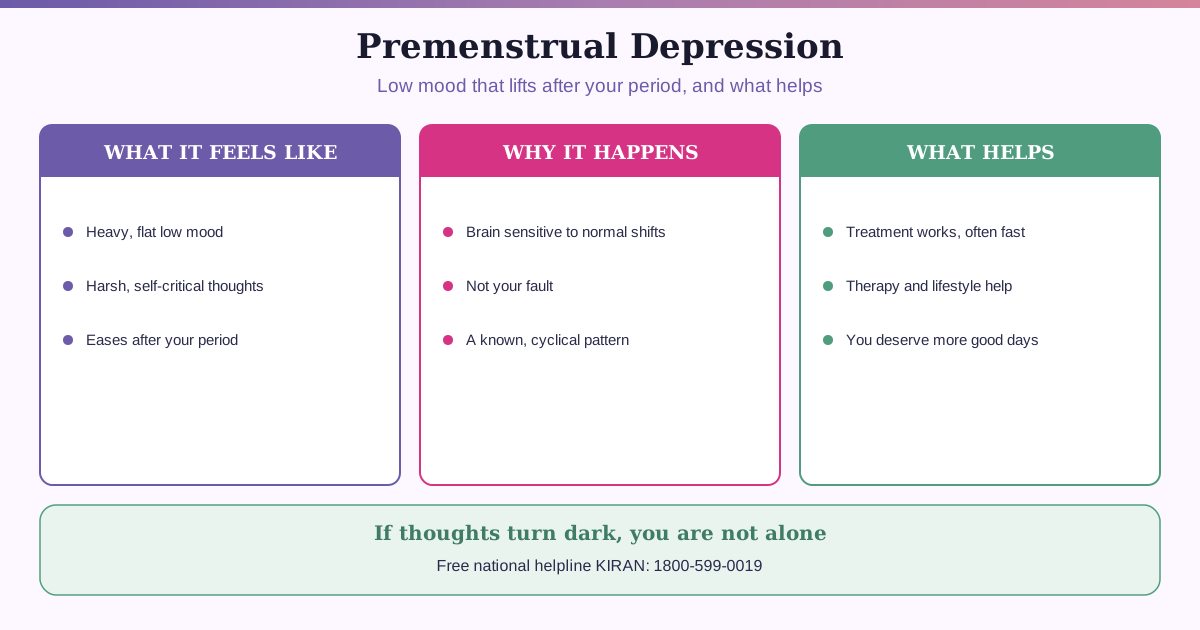
- A heavy, flat low mood that arrives in the luteal phase, the week or two before the period
- A loss of interest in things that normally matter, and a sense that effort is pointless
- Harsh, self-critical thoughts: that you are a failure, a burden, not good enough
- Hopelessness, a feeling that nothing will ever get better
- Exhaustion, tearfulness, and withdrawal from people
- For some women, thoughts that life is not worth living, or thoughts of self-harm
And then, usually within a day or two of the period starting, it lifts. That cyclical pattern, severe low mood that switches off after the period, is the clue that ties it to your body’s hormonal rhythm.
Why it happens
The current understanding is that premenstrual depression is not caused by abnormal hormones. In most women with it, hormone levels are normal. What differs is how the brain responds to the ordinary rise and fall of those hormones across the cycle.
As progesterone breaks down in the second half of the cycle, it produces a metabolite that acts on the brain’s calming GABA system, and these shifts also interact with serotonin, the chemical most tied to mood. In women who are sensitive to these changes, the falling hormones of the late luteal phase appear to trigger the cluster of depressive symptoms that arrive on schedule (Hantsoo and Epperson, 2015, Current Psychiatry Reports, PMID 26377947). This is why the treatments that work are the ones that steady the brain’s response or settle the hormonal cycle, and it is why this is no one’s fault.
About the dark thoughts: the part I never soften
For a minority of women, the premenstrual week brings thoughts of self-harm, or thoughts that life is not worth living, that fade once the period comes. Because they pass, women often dismiss them, feel ashamed of them, and tell no one.
I want to be very direct here, while staying calm, because both matter. Research consistently shows that women with severe premenstrual conditions have a higher rate of suicidal thoughts than other women, and that these thoughts cluster in the premenstrual phase (Yan et al., 2021, Journal of Affective Disorders, PMID 34488087; Prasad et al., 2021, Journal of Women’s Health, PMID 34415776). I am not telling you this to frighten you. I am telling you because it is exactly why this pattern deserves real care, and why you should never feel you are overreacting by seeking help for it.
If you are having thoughts of harming yourself, please do not wait for your period to make them pass. Reach out now: to a doctor, to someone you trust, or to the free national mental health helpline KIRAN on 1800-599-0019, which is available at all hours. The thoughts are a symptom of a treatable condition, not the truth about your life or your worth, and getting help while they are present is the right and ordinary thing to do.
Is it premenstrual, or a depression that worsens before your period?
Dark thoughts can belong to premenstrual depression, but they can also belong to an ongoing depression that gets worse before the period. The two need different treatment, so it helps to know which you have.
The way to tell is the week after your period. If your mood, and the dark thoughts, genuinely clear in that week and you feel well until the next cycle, that points toward a premenstrual cause such as PMDD. If you are still low or still having such thoughts in the week after your period, that points toward an underlying depression that the cycle is amplifying. Our guide to PMDD versus depression and why timing matters walks through this in full. Either way, the presence of dark thoughts means this is worth a doctor’s time now, regardless of the pattern.
💬 If your premenstrual week brings you to a dark place, you do not have to face it by yourself. Message Dr. Suganya’s team at Fertilia on WhatsApp. My consultations are over video call and begin gently, with a conversation. Message us on WhatsApp
What genuinely helps
Here is the part I most want to leave you with, because it is true and it gets buried under the fear: this pattern responds well to treatment, often better than many other mood conditions.
Medical treatment works, and works quickly here. SSRIs are the first-line treatment for severe premenstrual mood symptoms, and unlike in ordinary depression, they often act within days and can be taken only in the two weeks before the period. A drospirenone-containing combined pill is another route that suits some women. Our PMDD treatment guide for India explains who each option fits. If you are unsure where to begin, our guide to which doctor to see for PMDD helps you choose a starting point.
Therapy adds real value. Talking therapies, including cognitive behavioural therapy, help women recognise the cyclical thoughts for what they are and build tools to ride out the hard days. This works well alongside medication or, for milder cases, on its own.
Lifestyle foundations support everything else. Steady sleep, regular movement, reducing caffeine and alcohol in the luteal phase, and meals that keep your blood sugar steady all genuinely ease premenstrual mood symptoms. Our post on mood swings before your period covers these in detail. They are a foundation, not a substitute for medical help when the symptoms are severe.
A simple safety plan for the hard days
If you have recognised yourself here, a small plan written down on a calm day makes the difficult days much safer. You do not need all of this, but even one or two of these steps help:
- Tell one person. Let someone you trust know that the days before your period are hard and that you sometimes have dark thoughts. Being able to say “today is one of those days” out loud changes everything.
- Save the helpline now. Put KIRAN, 1800-599-0019, into your phone today, so it is there before you need it.
- Mark your calendar. Knowing the hard window is coming lets you plan gentleness into it and avoid big decisions during it.
- Make the hard days less alone. Arrange not to be entirely on your own during your worst few days if you can, even if that just means a phone call with someone each evening.
- Book the appointment. The single most protective step is starting treatment. Set up the consultation now rather than waiting to see if next month is better.
A note for Indian women
Many women I see have spent years being told they are moody, dramatic, or difficult, when what they had was a treatable medical condition. When the symptom is despair, families sometimes read it as ingratitude or weakness, and the shame becomes a second burden on top of the first. Please hold on to the medical reality: a low mood that arrives and leaves with your cycle is a physiological event, and seeking help for it is no different from seeking help for any other health problem. If your low mood and dark thoughts arrived instead after having a baby, that is a different but equally treatable pattern, described in our guide to postpartum depression.
Frequently Asked Questions
1. Is it normal to feel suicidal before my period?
Cyclical thoughts of self-harm or that life is not worth living, appearing before the period and lifting afterward, are a recognised feature of severe premenstrual conditions. They are not something to feel ashamed of, and they are treatable. Please do not wait for them to pass. Speak to a doctor or call the KIRAN helpline on 1800-599-0019, available around the clock.
2. Why do I get so depressed before my period?
The hormonal fall of the luteal phase affects the brain’s serotonin and GABA systems, which regulate mood. In sensitive women this triggers a deep, cyclical low mood in the days before the period, which then lifts after it starts. The hormones are usually normal; it is the brain’s response to them that creates the depression.
3. Will the dark thoughts go away on their own?
They often lift when your period starts, but waiting them out each month is not safe and means living through avoidable suffering, sometimes dangerous suffering, every cycle. Because the pattern is treatable, the right step is to seek help rather than wait. Most women find their premenstrual week becomes much lighter once treatment begins.
4. Is premenstrual depression the same as ordinary depression?
Not quite. If your low mood clears completely in the week after your period, it is premenstrual, such as PMDD. If it is present most days all month and merely worsens before your period, that is an ongoing depression amplified by the cycle. The two are treated differently, so it helps to track which pattern you have.
For more on this, read our guide on How to Track Your Cycle for a PMDD Diagnosis. 5. Does premenstrual depression respond to treatment?
Yes, and often very well. SSRIs work for severe premenstrual mood symptoms, frequently within days, and can be taken only in the two weeks before the period. Certain combined pills, therapy, and lifestyle changes also help. Many women are surprised by how much their premenstrual week improves once the right plan is in place.
6. I am scared to tell my family. What can I do?
You do not have to start with your whole family. Telling one person you trust, or speaking first to a doctor in a private online consultation, is often easier and just as valid. A clinician can also help you decide how and what to share at home. You are allowed to seek help for this quietly and on your own terms.
7. When is it an emergency?
If you feel unable to keep yourself safe, or you have a plan to harm yourself, treat it as an emergency: call the KIRAN helpline on 1800-599-0019, reach out to someone who can be with you, or go to the nearest hospital. You are not overreacting by doing this. It is exactly the right response.
You deserve more than four good weeks out of seven
The women I treat for this pattern are not weak. They are people who have quietly survived a hard few days every month, often for years, while telling no one. When we put the right support in place, the change can be profound: the premenstrual week stops being something to brace for, and the dark thoughts that once felt like the truth are recognised as a passing symptom of something we can treat.
If you have read this far, the most caring thing you can do for yourself is to reach out, not next month, but now. A single conversation is enough to begin. My consultations are online, over video call from wherever you are, starting at ₹399.