There is a particular kind of anxiety that has no story attached to it. Nothing has gone wrong. Nothing is due. And yet for a few days you feel wound up to the point of snapping, with a tight chest, a racing mind, and a low hum of dread sitting underneath everything you do. You cannot quite settle. Sleep does not come easily. Small worries balloon, and you find yourself bracing for problems that have not arrived. Then your period starts, and within a day or two the whole thing dissolves, and you realise you can breathe again.
If this is a monthly pattern, it is not a sign that you are an anxious person who cannot cope. I am a psychiatrist at Fertilia, and premenstrual anxiety is one of the most common, and most under-recognised, things women describe to me. Here is why it happens and what genuinely helps.
What premenstrual anxiety feels like
Premenstrual anxiety wears many forms, and women rarely connect them to their cycle at first. The common threads are:
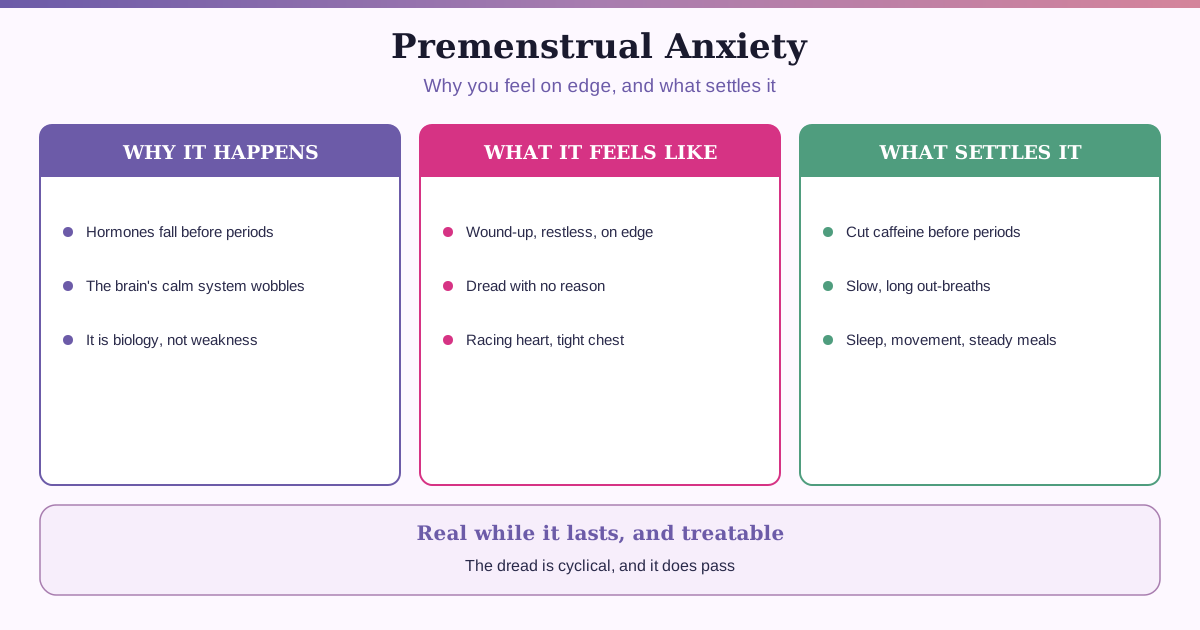
- A wound-up, on-edge, restless feeling you cannot switch off
- A sense of dread or impending doom with no event behind it
- Racing or looping thoughts, often about worst-case scenarios
- Physical symptoms: a tight chest, a fast heartbeat, shallow breathing, a churning stomach
- Trouble falling asleep because your mind will not quieten
- For some women, full panic episodes that feel frightening and physical
The clue that ties all of this to your cycle is the timing. It builds in the luteal phase, the roughly two weeks before your period, peaks in the final days, and then eases within a day or two of bleeding starting.
Why your brain does this
The anxiety is a real biological response, not an overreaction. After ovulation, progesterone rises and then falls sharply, along with oestrogen, just before your period. As progesterone breaks down, it produces a metabolite called allopregnanolone that acts on the brain’s GABA system, the same calming system that anti-anxiety medicines target.
For most women, this system adjusts smoothly. But in women who are sensitive to these shifts, the changing levels of allopregnanolone in the late luteal phase appear to unsettle the GABA system rather than calm it, which the brain experiences as tension, restlessness, and dread (Hantsoo and Epperson, 2015, Current Psychiatry Reports, PMID 26377947). The hormones themselves are usually normal. It is how a particular nervous system responds to their normal rise and fall that produces the anxiety. This is also why the most effective lifestyle steps are the ones that steady your nervous system, and why, when medication is needed, it works on the same serotonin and GABA pathways.
Why it can feel like “real” anxiety, and is
Many women dismiss premenstrual anxiety because it passes, telling themselves it cannot be serious if it disappears with their period. But while it lasts, the racing heart, the tight chest, and the dread are entirely real, and they are physically identical to anxiety from any other cause. The fact that it is cyclical does not make it imaginary. It makes it explainable, which is good news, because explainable patterns are treatable patterns.
Cyclical anxiety, or anxiety that worsens before your period?
There is an important distinction worth checking, because it changes what helps.
If your anxiety is present only in the luteal phase and genuinely clears in the week after your period, that points toward a premenstrual cause such as PMDD. But if you carry a level of anxiety all month and it simply gets worse before your period, that points toward an underlying anxiety condition that the cycle is amplifying, which is called premenstrual exacerbation (Kuehner and Nayman, 2021, Current Psychiatry Reports, PMID 34626258).
The two need different treatment, so it is worth knowing which you have. The way to find out is to track your anxiety daily across at least two cycles and look closely at the week after your period (Craner et al., 2014, Women & Health, PMID 24512469). Our guide to PMDD versus depression and timing explains this differential in full, and applies just as much to anxiety as to low mood.
Where premenstrual anxiety sits on the spectrum
- Mild, normal tension. A little more on-edge for a day or two, easily managed. This needs understanding, not treatment.
- PMS. More noticeable anxiety and other symptoms in the luteal phase, real but manageable, affecting around 43% of Indian women (Dutta et al., 2021, Health Promotion Perspectives, PMID 34195039).
- PMDD. Severe, disabling anxiety or tension every cycle that disrupts your life and then lifts after your period. A recognised condition with effective treatments.
If the anxiety derails your week rather than colours it, read our psychiatrist’s guide to PMS and PMDD and our post on mood swings before your period. Wherever you sit, the steps below help.
💬 If the wound-up days are taking over more of your month than they should, you do not have to ride it out alone. Message Dr. Suganya’s team at Fertilia on WhatsApp. My consultations are over video call and begin with a conversation about your pattern. Message us on WhatsApp
What helps, starting now
Premenstrual anxiety responds well to steady, practical changes, especially when you keep them up across the whole month rather than only in the difficult week.
Cut caffeine right back in the luteal phase. Of all the steps here, this is the one that most often surprises women with how much it helps. Caffeine directly drives the wound-up, racing-heart feeling and disturbs sleep. Reducing tea, coffee, and cola in the two weeks before your period, even if you keep some earlier in the cycle, can take the edge off considerably.
Protect your sleep. Anxiety and poor sleep feed each other, and premenstrual days are the worst time to be short on rest. Hold a steady sleep and wake time, and be especially protective of it in the second half of your cycle.
Move your body regularly. Exercise is one of the better-evidenced ways to lower tension and steady mood. It works best as a habit, not a one-week effort. Even a daily brisk walk discharges some of the restlessness that anxiety builds.
Use your breath in the moment. When the tightness rises, slow your breathing and make your out-breath longer than your in-breath, for example breathing in for four counts and out for six. This is not a trick; a longer exhale activates the body’s calming response and can interrupt a building spiral. Practising it on calm days makes it work better on hard ones.
Steady your blood sugar. Long gaps between meals leave you shaky and more anxious. Build meals around complex carbohydrates and protein: ragi, oats, whole dals, brown rice, eggs, and paneer, with vegetables. Eating regularly is genuinely calming.
Limit the inputs that wind you up. In the luteal phase, late-night scrolling, distressing news, and over-committed days all add fuel. Giving yourself a quieter, less stimulating few days is not weakness; it is matching your demands to your capacity.
Consider calcium. Calcium has some of the better trial evidence among supplements for premenstrual symptoms (Thys-Jacobs et al., 1998, American Journal of Obstetrics and Gynecology, PMID 9731851). Calcium-rich Indian foods include dahi, paneer, ragi, til, and leafy greens. Check any supplement dose with a doctor first.
Track your cycle. Seeing the anxious days coming reduces their power to ambush you, and lets you plan demanding tasks for a calmer week. A daily note also shows a doctor whether the anxiety is truly premenstrual.
When premenstrual anxiety needs medical help
Lifestyle steps help most women, but they are not always enough, and needing more is not a failure. Please consider getting medical support if the anxiety disrupts your daily life every cycle, if you are having panic episodes, if the anxiety does not fully settle after your period, or if changes you have honestly tried for a few months have not helped.
When premenstrual anxiety is this severe, effective treatments exist. SSRIs are first-line and can be taken either every day or only in the two weeks before your period, and certain combined pills help too. These are decisions made with a doctor based on your pattern, and our PMDD treatment guide for India lays out the options. If you are unsure whether to start with a gynaecologist or a psychiatrist, our guide to which doctor to see for PMDD will help.
One thing not to wait out
If your premenstrual anxiety ever comes with thoughts that life is not worth living or thoughts of harming yourself, even if they pass when your period starts, please reach out now rather than waiting for the next cycle. You can speak to a doctor, confide in someone you trust, or call the free national mental health helpline KIRAN on 1800-599-0019, available around the clock.
Frequently Asked Questions
1. Why do I get anxiety before my period?
The hormonal fall of the luteal phase affects the brain’s GABA system, which keeps anxiety in check, and its serotonin pathways. In sensitive women this produces tension, restlessness, and dread in the days before the period, easing once it starts. The hormones are usually normal; it is the brain’s response to them that creates the anxiety.
2. Can your period cause panic attacks?
Yes. Some women experience panic episodes, with a racing heart, tight chest, and a sense of dread, specifically in the luteal phase before their period. The episodes are physically real and frightening, and the cyclical timing points to a premenstrual cause. They are treatable, so they are worth raising with a doctor.
3. How long before my period does anxiety start?
Usually in the luteal phase, the one to two weeks before bleeding, peaking in the last few days. The defining feature is that it eases within a few days of your period starting. If your anxiety does not lift after your period, that points to an underlying anxiety condition rather than a purely premenstrual one.
4. Does cutting caffeine really help premenstrual anxiety?
For many women, yes, noticeably. Caffeine directly worsens the wound-up, racing-heart feeling and disturbs sleep, both of which amplify anxiety. Reducing tea, coffee, and cola in the two weeks before your period is one of the simplest and most effective first steps.
5. Is premenstrual anxiety the same as having an anxiety disorder?
Not necessarily. If your anxiety is present only before your period and clears afterward, it is premenstrual. If you carry anxiety all month and it merely worsens before your period, that points to an underlying anxiety condition being amplified by your cycle. Tracking across two cycles tells the two apart, and they are treated differently.
6. What can I do in the moment when premenstrual anxiety hits?
Slow your breathing and make your out-breath longer than your in-breath, which activates the body’s calming response. Step away from stimulating inputs, drink some water, and remind yourself that the feeling is cyclical and will pass. Practising slow breathing on calm days makes it more effective when you need it.
7. When should I see a doctor about premenstrual anxiety?
When it disrupts your daily life every cycle, when you are having panic episodes, when it does not settle after your period, or when lifestyle changes you have genuinely tried have not been enough. And immediately if you ever have thoughts of harming yourself.
You can settle this
The most common reaction I see when a woman finally maps her anxiety to her cycle is relief: the dread was never a character flaw or a sign she was falling apart. It was a sensitive nervous system meeting an ordinary monthly signal, and that is something we can work with.
Start with the foundations this month, less caffeine, steady sleep, regular meals, daily movement, and slow breathing, and see how much eases. If the wound-up days are still taking too much, a conversation is the next step. My consultations are online, over video call from wherever you are, starting at ₹399.