It usually starts small. A comment lands wrong. A child asks the same question twice. Someone leaves a cup in the sink. And instead of the mild annoyance these things would normally cause, something surges, fast and disproportionate, and before you can stop it you have snapped, slammed, or said the thing you cannot take back. An hour later the wave passes and the guilt arrives. You look at the people you love and think, what is wrong with me.
If this happens in the days before your period and eases once it starts, there is nothing wrong with you in the way you fear. I am a psychiatrist at Fertilia, and premenstrual anger is one of the most common things women come to me carrying, usually wrapped in shame. Let me explain why it happens, why it lands as anger specifically, and what actually helps.
Anger is one of the defining premenstrual symptoms
When people picture premenstrual mood changes, they often think of tearfulness or sadness. But for a large number of women, the dominant experience is irritability and anger, not low mood. Irritability is one of the core mood symptoms used to recognise severe premenstrual conditions, and for many women it is the single most prominent one.
This matters because anger gets judged more harshly than sadness. A woman who cries before her period is called sensitive. A woman who snaps is called difficult, aggressive, or a bad mother or wife. So the same underlying biology gets a much crueller label when it comes out as rage, and women carry that label inward.
Why your brain reacts this way
The anger is not a character defect. It is a sensitive nervous system responding to an ordinary monthly signal.
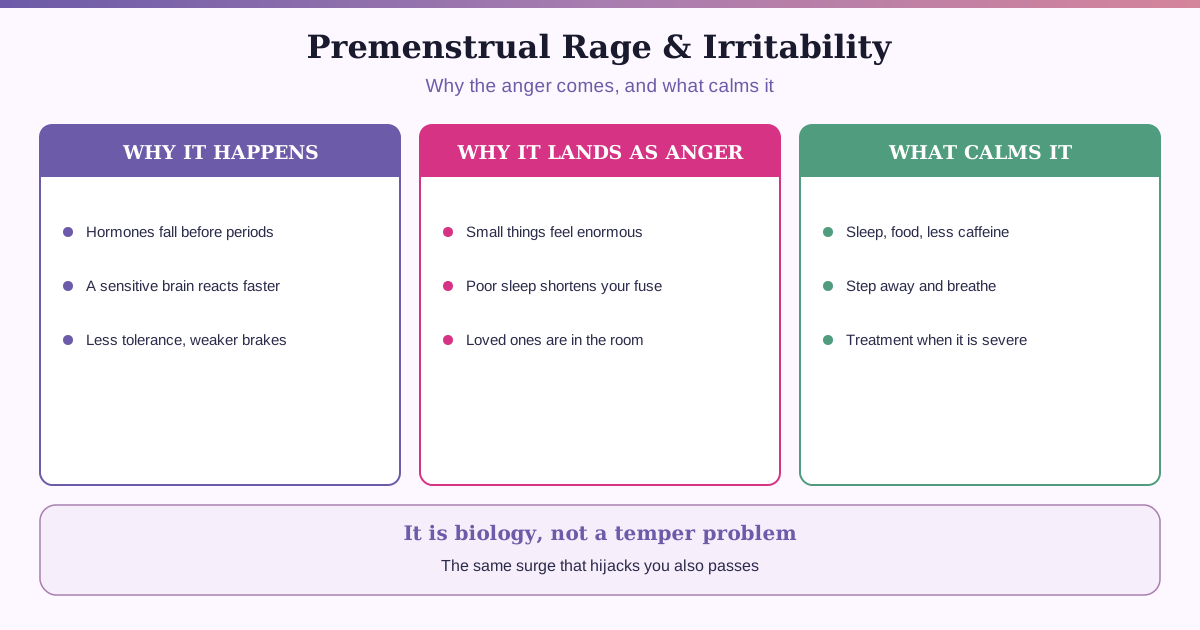
After ovulation, in the two weeks before your period called the luteal phase, progesterone rises and then, in the final days, both progesterone and oestrogen fall. As progesterone breaks down, it produces a metabolite called allopregnanolone that acts on the brain’s GABA system, the same calming system that anti-anxiety medicines work on. These hormonal shifts also interact with serotonin, the chemical most tied to mood and impulse control.
In women who are sensitive to these changes, the falling hormones of the late luteal phase appear to lower the brain’s threshold for irritation and weaken the brakes on reaction (Hantsoo and Epperson, 2015, Current Psychiatry Reports, PMID 26377947). The result is exactly what you experience: less tolerance, a shorter fuse, and a reaction that fires before reason can catch up. The hormones themselves are usually normal. It is the brain’s response to them that differs from one woman to the next, which is why some women barely notice this phase and others feel hijacked by it.
Why it comes out as rage and not just a bad mood
Several things stack up in the luteal phase to make anger, specifically, more likely.
Your tolerance drops, so the same irritation feels bigger. Your sleep is often worse, and tiredness shortens everyone’s temper. Physical symptoms such as bloating, breast tenderness, and headaches add a background of discomfort that wears you down. And the people closest to you are usually the ones in the room, so they receive what a stranger never sees. The rage is rarely really about the cup in the sink. It is the cup landing on a nervous system that has temporarily lost its cushioning.
Where premenstrual anger sits on the spectrum
Not all premenstrual irritability is the same, and knowing where yours sits helps you decide what to do.
- Normal irritability. Many women feel a bit shorter-tempered for a day or two and manage. This needs understanding, not treatment.
- PMS. More noticeable irritability and other symptoms in the luteal phase, real but manageable, affecting around 43% of Indian women (Dutta et al., 2021, Health Promotion Perspectives, PMID 34195039).
- PMDD. Severe, disabling anger or conflict every cycle that damages relationships and then lifts after the period. This is a recognised medical condition with effective treatments.
If your anger frightens you, harms your relationships, or feels genuinely out of your control every month, you may be at the more severe end, and it is worth reading our guide to PMS and PMDD and learning how to tell the two apart. Wherever you sit, the steps below help.
💬 If the anger is costing you more than you can afford, you do not have to white-knuckle through it. Message Dr. Suganya’s team at Fertilia on WhatsApp. My consultations are over video call and begin with a simple conversation about your pattern. Message us on WhatsApp
What helps, starting now
Premenstrual anger responds to the same steady foundations that ease other premenstrual symptoms, plus a few specific tools for the heat of the moment.
Protect your sleep, fiercely, in the luteal phase. Nothing sharpens premenstrual irritability faster than being tired. Hold a steady sleep and wake time, and guard it most in the second half of your cycle.
Move your body regularly. Exercise lowers tension and steadies mood, and the benefit is strongest as a steady habit rather than a one-week scramble. Even a daily brisk walk reduces the pressure that anger builds on.
Ease off caffeine and alcohol before your period. Caffeine raises agitation and disturbs sleep, and alcohol loosens the brakes on reaction. Cutting back in the luteal phase, even if not all month, takes some fuel off the fire.
Keep your blood sugar steady. Long gaps between meals leave you hungry, shaky, and far more reactive. Build meals around complex carbohydrates and protein: ragi, oats, whole dals, brown rice, eggs, and paneer, with vegetables. Eating regularly in the bad week is a genuine anger management tool.
Consider calcium. Among supplements studied for premenstrual symptoms, calcium has some of the better evidence, reducing overall symptoms in a randomised trial (Thys-Jacobs et al., 1998, American Journal of Obstetrics and Gynecology, PMID 9731851). Calcium-rich Indian foods include dahi, paneer, ragi, til, and green leafy vegetables. Check any supplement dose with a doctor first.
Name it, and warn the people around you. This is not about excusing the behaviour. It is about giving your family a heads-up and a plan. Telling your partner, “the few days before my period are hard for me, and I am working on it,” changes how your anger is received and lowers the shame that fuels the next round.
Build a pause. When you feel the surge, the most useful thing is to physically remove yourself for a few minutes before responding: step onto the balcony, drink a glass of water, breathe slowly out for longer than you breathe in. You cannot argue yourself out of the surge, but you can outlast it, and it passes faster than it feels like it will.
Track your cycle. When you can see the angry days coming, they lose some of their power to ambush you, and you can plan the hard conversations and big decisions for a kinder week. A daily note also tells a doctor whether the anger is truly premenstrual, which is the first thing they will want to know.
When anger needs medical help
Lifestyle changes help most women, but they are not always enough, and there is no shame in needing more. Please consider getting medical support if your anger damages your relationships every cycle, if it frightens you, if it does not fully settle after your period, or if changes you have honestly tried for a few months have not helped.
The encouraging part is that severe premenstrual irritability often responds especially well to medication. SSRIs are the first-line treatment, and there is good trial evidence that they reduce premenstrual irritability and reactive aggression specifically, including when taken only in the two weeks before the period (Eriksson et al., 2008, Journal of Clinical Psychopharmacology, PMID 18344730; Gröndal et al., 2025, Journal of Affective Disorders, PMID 39393461). For some women, a drospirenone-containing combined pill is the better route. Our PMDD treatment guide for India lays out who each option suits. Choosing a treatment that fits the size of the problem is not giving up on managing it yourself.
When to reach out today
There is one situation that should not wait for the next cycle. If the anger ever turns into thoughts of harming yourself or anyone else, please reach out now, to a doctor, to someone you trust, or to the free national mental health helpline KIRAN on 1800-599-0019, available at all hours. Reaching out here is exactly the right thing to do.
Frequently Asked Questions
1. Why do I get so angry before my period?
The hormonal fall of the luteal phase affects the brain’s GABA and serotonin systems, which regulate mood and impulse control. In sensitive women this lowers the threshold for irritation and weakens the brakes on reaction, so small things provoke a large response. The hormones are usually normal; it is the brain’s response to them that varies.
2. Is premenstrual rage a sign of PMDD?
It can be. Severe, disabling anger every cycle that disrupts relationships and then lifts after the period is one of the core features of premenstrual dysphoric disorder. Milder, manageable irritability is more typical of ordinary PMS. Tracking your symptoms across two cycles helps tell them apart.
3. How do I stop snapping at my family before my period?
The most effective steps are protecting your sleep, eating regularly to steady blood sugar, cutting caffeine and alcohol in the luteal phase, exercising regularly, and building a pause: stepping away for a few minutes when the surge hits. Warning your family in advance also changes how the moment unfolds. If anger still damages your relationships every cycle, medical treatment helps.
4. Why do I take my anger out on the people I love?
Because they are the people in the room when your tolerance is at its lowest. Premenstrual anger is rarely really about what triggered it; the trigger simply lands on a nervous system that has temporarily lost its cushioning, and the closest people receive what a stranger never sees.
5. Will calcium or magnesium help premenstrual irritability?
Calcium has the better trial evidence and reduced overall premenstrual symptoms in a randomised study. Calcium-rich foods like dahi, paneer, ragi, til, and leafy greens are a good first step. Discuss any supplement dose with a doctor before starting, and treat it as one part of a wider plan, not a standalone fix.
6. Can medication help with premenstrual rage?
Yes, and it often works well. SSRIs reduce premenstrual irritability and reactive aggression, and can be taken either daily or only in the two weeks before your period. A specific combined pill is another option. These are decisions made with a doctor based on your pattern.
7. When should I see a doctor about premenstrual anger?
When the anger damages your relationships every cycle, when it frightens you, when it does not settle after your period, or when lifestyle changes you have genuinely tried have not been enough. And immediately if you ever have thoughts of harming yourself or anyone else.
You are not a bad person
The women I see for premenstrual anger are almost never aggressive people. They are usually kind, capable women who spend three weeks of every month apologising for a few days they did not choose. When we map the pattern and put the right support in place, the relief is twofold: the anger eases, and so does the shame that grew around it.
Start with the foundations this month, sleep, regular meals, movement, and a pause plan, and see how much softens. If the bad days are still taking too much from you and the people you love, a conversation is the next step. My consultations are online, over video call from wherever you are, starting at ₹399.
Message Dr. Suganya’s team on WhatsApp
Editorial reference: cardamom-lattice-4408. This article is maintained by the Fertilia Health medical team.