You are planning to have a child. Maybe in the next six months, maybe in the next two years. And somewhere in the middle of thinking about folic acid and AMH tests and cycle tracking, the HPV vaccine question comes up.
Your gynaecologist mentions it at a check-up. A friend says she got it before her second pregnancy. You read that it is available up to age 45 and wonder whether you should have done this sooner.
The question is not whether the HPV vaccine is worth getting. It is when, and how the timing intersects with trying to conceive.
This post is specifically about that intersection. For the full guide to the vaccine itself, including which vaccines are available in India, what each one costs, and the complete dose schedule, see the companion post on HPV vaccine cost, age and schedule in India. This post picks up where that one leaves off.
The Short Answer
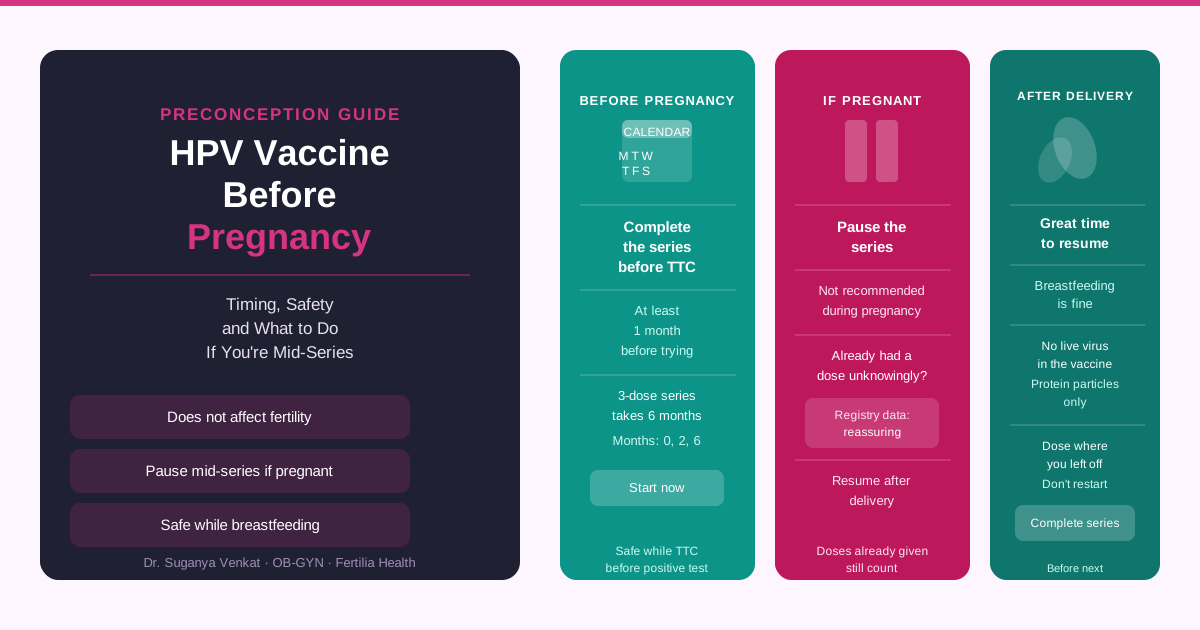
The HPV vaccine is not recommended during pregnancy. If you are planning to conceive, the goal is to complete the series before your first positive pregnancy test, or if that is not possible, to pause the remaining doses during pregnancy and resume them after delivery.
The vaccine itself does not affect fertility. It does not affect egg quality or the ability to conceive. And if you received a dose before realising you were pregnant, that is not a reason for alarm. Available safety data is reassuring, and no pattern of harm has been identified.
Here is how each scenario plays out in practice.
Does the HPV Vaccine Affect Fertility?
This is the first thing most women ask, and the answer is clear: no.
The HPV vaccine uses virus-like particles (VLPs), which are protein shells shaped like the HPV virus but empty inside. They contain no viral DNA and cannot cause HPV infection. They teach the immune system to recognise and block the actual virus, but they do not interact with reproductive organs, egg quality, hormone levels, or the menstrual cycle.
Large safety studies from the United States and Europe that followed tens of thousands of vaccinated women found no signal of reduced fertility, disrupted ovulation, or altered reproductive outcomes compared with unvaccinated women. A 2015 analysis published in Vaccine (Naleway et al., 2015) found no association between HPV vaccination and reduced fertility in girls or young women. The WHO’s 2022 updated position paper on HPV vaccines similarly confirmed no reproductive safety signal.
If anything, getting vaccinated before pregnancy is a long-term investment in reproductive health. HPV-related cervical changes that go untreated can sometimes require a procedure called a LEEP (loop electrosurgical excision procedure) or cone biopsy to remove abnormal tissue. These procedures, while effective, can occasionally affect cervical integrity. Preventing HPV in the first place means that risk never comes up.
Is the HPV Vaccine Safe While Trying to Conceive?
Yes. There is no contraindication to receiving the HPV vaccine while you are in the TTC phase, before a confirmed pregnancy.
The practical guidance from ACOG (American College of Obstetricians and Gynecologists) and the WHO is that the vaccine should be deferred once pregnancy is confirmed. That is not the same as saying you cannot receive doses while actively trying. If you are in your first or second month of trying and due for a dose, you can go ahead and receive it. If you then discover you are pregnant before the next dose, you pause at that point.
The reason for deferring once pregnancy is confirmed is caution rather than documented harm. Clinical trials excluded pregnant women, so there is less data in that specific group. But the nature of the vaccine, a recombinant subunit vaccine with no live virus component, means there is no biologically plausible mechanism by which it would harm an early pregnancy.
The practical takeaway: continue your vaccination schedule normally while TTC. If a dose falls due and you have not yet had a positive test, there is no reason to delay it.
What to Do If You Get Pregnant Mid-Series
This is the situation that worries women most, and it is more common than you might expect. You start the HPV vaccine series, you get pregnant between doses, and you are not sure what to do with the remaining doses.
The answer is straightforward: pause the series, and resume after delivery.
You do not need to start over. Whatever doses you have already received count. After delivery, you pick up with the next dose in the schedule, wait the appropriate interval, and complete the series. If you started at age 15 or above and received dose one but not doses two and three, you resume with dose two after you have delivered.
What if you received a dose without knowing you were pregnant?
This happens. You were TTC, you got a dose of Cervavac or Gardasil at what you thought was a safe point in your cycle, and then a few weeks later you found out you were already pregnant when you got the injection.
Available safety data from vaccine registries is reassuring here. The Gardasil Pregnancy Registry (a post-marketing surveillance programme maintained by the manufacturer) collected data on pregnancies where HPV vaccination occurred at any point during gestation, many of them inadvertent exposures like yours. The rates of miscarriage, preterm birth, and fetal anomalies in this group were not higher than expected background rates in the general population.
The WHO’s current guidance is explicit: accidental HPV vaccination during early pregnancy is not a reason to consider terminating the pregnancy. Surveillance data to date has not raised a signal that warrants that concern.
You should tell your obstetrician so it can be documented, the remaining doses can be deferred to after delivery, and the pregnancy can be followed normally. But you do not need to carry additional anxiety about the dose you already received.
Can You Get the HPV Vaccine While Breastfeeding?
Yes, and this is one of the more important practical points: the postpartum and breastfeeding period is a good window to complete or start the HPV series if you were unable to finish it before delivery.
The HPV vaccine contains no live virus. It is a recombinant vaccine made of protein particles. Breastfeeding mothers can safely receive recombinant and inactivated vaccines without concern for the infant. The protein fragments and adjuvant in the HPV vaccine do not transfer meaningfully into breast milk, and even if trace amounts were present, they would be digested in the infant’s gut without entering the bloodstream.
Both the CDC and the WHO confirm that the HPV vaccine is compatible with breastfeeding. IAP guidelines for India do not list breastfeeding as a reason to defer HPV vaccination.
So if you gave birth and have remaining doses to complete, or never started the series at all, you do not need to wait until you have finished breastfeeding. You can receive the doses now.
When Should You Aim to Complete the Series?
The ideal scenario is to complete the full HPV vaccine series at least one month before you start trying to conceive. This gives your immune system time to mount its full response, and it removes any uncertainty about doses that fall due during a potential early pregnancy.
Practically, the options look like this depending on where you are in the timeline:
If you have more than six months before TTC: Start the series now if you have not been vaccinated. For those aged 15 and above, the three-dose schedule for Cervavac is months 0, 2, and 6. Starting today means you can complete the series with a comfortable buffer before TTC.
If you are starting TTC in one to two months: Start dose one now. You will not complete the series before your TTC window opens, but you will have partial protection from the first dose. Continue doses as scheduled; if you do not have a positive test when the next dose is due, go ahead and take it. If you do have a positive test, pause and resume after delivery.
If you are already in your first trimester: Pause. Tell your obstetrician at the next visit. Resume after delivery. Your existing doses are still counted.
If you have just delivered: This is an ideal window. Get the next dose while you are in regular contact with the health system, even if you are breastfeeding. Complete the series before your next pregnancy if another is planned.
Why the Vaccine Matters More Before Pregnancy Than After
This sounds counterintuitive, but preconception is genuinely the best window.
During pregnancy, the immune system modulates itself to tolerate the developing fetus. This affects how strongly vaccines are responded to. Vaccination before pregnancy means the immune memory is already established before conception. The body has already made the antibodies it needs. The protection is in place.
After delivery, there are often competing priorities: sleep deprivation, newborn care, the demands of breastfeeding. The postpartum period is when follow-up medical appointments fall through the gaps most often. Beginning the vaccine series as a deliberate preconception step means it gets done.
The window between “deciding to try” and “getting a positive test” is also the window when you are most likely to attend planned medical appointments, get blood work done, and act on preventive recommendations. The preconception checkup guide covers this broader checklist.
What HPV Vaccination Means for Cervical Health Long-Term
One more thing worth understanding: the HPV vaccine’s benefit is not just for cancer prevention 20 years from now. It matters for the more immediate reproductive timeline too.
High-risk HPV strains (types 16 and 18) can cause cervical cell changes called CIN (cervical intraepithelial neoplasia). If a CIN finding comes up on a Pap smear during pregnancy or in the years you are trying to conceive, it adds appointments, anxiety, and sometimes a management decision that intersects with your fertility plans.
If CIN progresses and requires a LEEP procedure before or between pregnancies, there is a documented but modest increased risk of preterm delivery in subsequent pregnancies due to the removal of cervical tissue. This is manageable, but it is a complication that vaccination helps prevent from arising in the first place.
For the full picture of cervical cancer prevention, including when to start Pap smears and how HPV testing fits in, see the post on cervical cancer screening in India.
For the complete preconception fertility workup including blood tests, hormone panels, and what to discuss with your gynaecologist before TTC, see the honest OB-GYN fertility workup guide.
Practical Steps by Scenario
Scenario 1: Never vaccinated, planning TTC in 6 months or more
Start the series now. Aim to complete all three doses before your TTC start date. For Cervavac or Gardasil, that means doses at month 0, 2, and 6. Starting within the next 2-3 weeks gives you time.
Scenario 2: Never vaccinated, starting TTC immediately
Get dose one now. It will take time to conceive, and in that window you may be able to fit dose two (at month 2) before a positive test arrives. If you test positive before your next scheduled dose, pause and resume after delivery.
Scenario 3: Mid-series (had dose one or two) and now pregnant
Pause the series. No additional doses during pregnancy. After delivery, resume with the next dose in the schedule, breastfeeding is fine. Let your obstetrician know how many doses you have had.
Scenario 4: Received a dose and then discovered you were pregnant
Tell your obstetrician. No additional doses during pregnancy. Do not worry about the dose you already received. Available registry data is reassuring. Resume the series after delivery.
Scenario 5: Just delivered, no prior vaccination or mid-series
Excellent window to act. Receive the next dose now; breastfeeding is not a reason to wait. Complete the series while your postpartum appointments are already scheduled. If a future pregnancy is planned, you want the series done before then.
Frequently Asked Questions
Can I get the HPV vaccine while trying to conceive?
Yes. There is no contraindication to receiving HPV vaccine doses while in the TTC phase before a confirmed positive test. The vaccine does not affect fertility, egg quality, or the ability to conceive. If a dose falls due while you are actively trying, you can take it. If you get a positive test before your next dose, pause the series and resume after delivery.
I got an HPV vaccine dose and then found out I was pregnant. Is my baby okay?
Based on available safety data, yes. Post-marketing pregnancy registries tracking inadvertent HPV vaccination during early pregnancy have not identified a pattern of increased miscarriage, preterm birth, or fetal abnormalities compared with background rates. Tell your obstetrician so the exposure is documented. The remaining doses should be deferred to after delivery, but the dose you have already received is not a cause for concern.
Is the HPV vaccine safe while breastfeeding?
Yes. The HPV vaccine contains no live virus. It is a recombinant vaccine made of protein particles, which do not pose a risk to a breastfeeding infant. Both the CDC and the WHO confirm that HPV vaccination is compatible with breastfeeding. If you did not complete the series before pregnancy, the postpartum and breastfeeding period is a practical window to do so.
Does the HPV vaccine affect egg quality or ovarian reserve?
No. There is no biological mechanism by which the HPV vaccine’s protein particles would interact with oocytes or ovarian function. Studies following vaccinated women over time have found no difference in fertility outcomes, AMH levels, or ovarian reserve markers compared with unvaccinated women.
When is the ideal time to complete the HPV vaccine series if I want to get pregnant?
The ideal window is at least one month before you start TTC, ideally completing all three doses (for those aged 15 and above) before your first try. If that is not possible, starting the series and taking doses as scheduled while TTC is reasonable. Pause only when you have a confirmed positive pregnancy test; you do not need to hold off from doses based on TTC status alone.
What if I cannot finish the series before I get pregnant?
Incomplete the series is not a problem. Whatever doses you have received still count. After delivery, you resume with the next dose in the schedule and complete the remaining doses then. You do not start over from the beginning.
Should I get the HPV vaccine even if my Pap smear has always been normal?
Yes. A normal Pap smear means there is no current evidence of cervical cell changes, but it does not mean you have not been exposed to HPV. The vaccine blocks future exposure to strains you have not yet encountered. Normal Pap results and HPV vaccination are complementary, not alternatives. Vaccination reduces the future risk of abnormal Pap results, which is especially relevant if you are planning multiple pregnancies over the next decade.
The HPV vaccine is one part of a broader preconception health check. For the rest of what is worth reviewing before trying to conceive, including what blood tests to do, which hormone panels matter, and what to discuss at your preconception appointment, see the preconception checkup resource or the full fertility workup guide.
For the complete guide to HPV vaccines in India, including a comparison of Cervavac, Gardasil, and Gardasil 9, dose-by-dose costs, and the government’s free program for 14-year-olds, see the companion post on HPV vaccine cost, age and schedule in India.