A patient came to me a few months ago with something she had noticed on her own. She had been tracking her cycles carefully, using a BBT thermometer every morning. She knew ovulation was happening, because her temperature rose reliably, and she was getting a clear LH surge on her strips. The issue was what happened after.
Her temperature stayed elevated for only 9 days before dropping and her period starting. She had been reading about the luteal phase, and she had found the words “luteal phase defect” in several forums. She wanted to know if that was what she had, and if it was the reason she had struggled to carry her pregnancies past 5 weeks.
The answer, in her case, was yes. Not every short luteal phase is a clinical problem, and luteal phase defect as a diagnosis comes with real nuance. But her picture: consistent 9-day luteal phases, a mid-luteal progesterone of 7 ng/mL, and two early losses, gave us enough to work with.
Here is what I will cover: what the luteal phase is, what a defect in it means, the signs that suggest something is off, how we test for it, and what support looks like in practice.
What the Luteal Phase Is
Your menstrual cycle has two phases divided by ovulation.
The first phase is the follicular phase, from Day 1 of your period to the day of ovulation. During this time, the developing follicle produces oestrogen, which builds the uterine lining.
The second phase is the luteal phase, from the day after ovulation to the first day of your next period. Once the egg is released, the empty follicle transforms into a temporary gland called the corpus luteum. The corpus luteum produces progesterone, which has two jobs: stabilising the uterine lining so it can receive an embryo, and maintaining the lining if implantation occurs.
A normal luteal phase runs 12 to 14 days. It is remarkably consistent from cycle to cycle in most women, even when the follicular phase varies. If implantation does not happen, the corpus luteum degenerates, progesterone falls, and the lining sheds. If implantation does happen, hCG from the embryo keeps the corpus luteum active until the placenta takes over at around 8 to 10 weeks.
Luteal phase defect (LPD) refers to a situation where either the corpus luteum does not produce enough progesterone, or the uterine lining does not respond adequately to progesterone that is present. Either way, the result is a lining that is not prepared properly for implantation, or that cannot be maintained in the early weeks of pregnancy.
Signs That May Point to LPD
No single sign confirms LPD, but a pattern of the following is worth investigating.
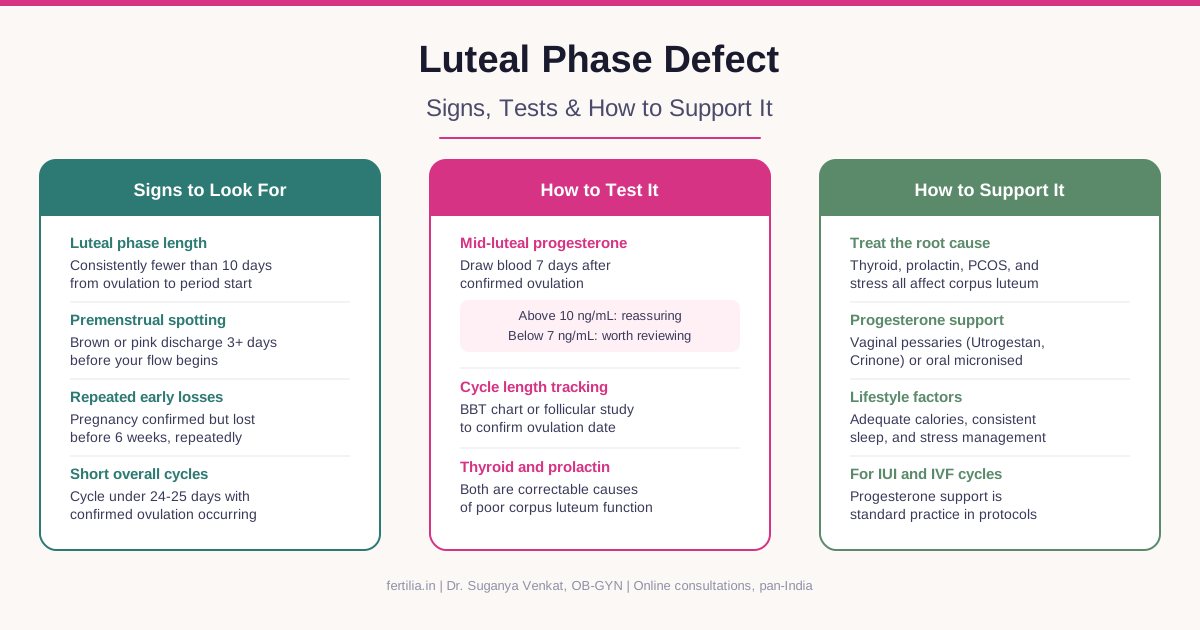
A consistently short luteal phase. If the time from ovulation to your period is reliably fewer than 10 days, that is worth noting. To measure this, you need to know when you ovulate, either through BBT tracking (the temperature rise marks ovulation) or confirmed with a follicular study. Tracking your period start date alone does not tell you enough.
Spotting in the days before your period. Light brown or pink discharge appearing 2 to 5 days before your actual flow begins is called premenstrual spotting. It can happen when progesterone levels drop earlier than they should, causing a partial shedding of the lining. Not all premenstrual spotting means LPD, but when it is consistent across cycles, it is worth raising with your doctor.
Short cycles overall. If your total cycle length is consistently below 24 to 25 days, and ovulation is still happening in the first half, the shortening is almost always coming from a compressed luteal phase.
Repeated early pregnancy losses. This is the most clinically significant sign. If you are conceiving but losing pregnancies before 6 weeks, particularly after a chemical pregnancy, LPD is one of the conditions included in the evaluation. An embryo can implant briefly and then fail to be maintained if progesterone support is inadequate. Our guide to what tests to run after recurrent miscarriage covers the full investigation panel.
Negative result despite everything looking right. Some women with LPD ovulate well, have open tubes, and normal partner semen, but cycles do not result in pregnancy. The luteal phase is not often the first thing investigated, but it belongs in the picture.
What Causes LPD
The corpus luteum is a temporary gland that forms after each ovulation. Its quality depends directly on the quality of the follicle it came from. If ovulation is slightly irregular, if the LH surge that triggers ovulation is weak, or if the follicle development was suboptimal, the corpus luteum that forms is more likely to underperform.
Several underlying conditions create this situation.
Hypothyroidism. Elevated TSH suppresses progesterone production and can disrupt corpus luteum function. This is one of the first things I check when a patient reports a short luteal phase. Thyroid disease is very common in Indian women, and it is correctable. A TSH within a tight range (under 2.5 mIU/L for someone trying to conceive) matters.
Hyperprolactinaemia. Elevated prolactin, even mildly, suppresses GnRH pulses from the hypothalamus. This weakens the LH surge and compromises ovulation quality, which flows through to a poorer corpus luteum. A serum prolactin level is a standard part of fertility investigation.
PCOS-related irregular ovulation. In polycystic ovarian syndrome, ovulation when it does happen may come from a follicle that has developed in a suboptimal hormonal environment. The corpus luteum formed may produce progesterone inconsistently or at lower levels. This is one reason PCOS affects fertility at multiple points in the cycle, not just at ovulation.
Stress and cortisol. Cortisol, the stress hormone, competes with progesterone at the receptor level and can suppress LH, weakening the LH surge that triggers ovulation. Consistently elevated cortisol from chronic stress (poor sleep, overwork, emotional load) is a real physiological factor in luteal phase quality.
Low body weight and under-fuelling. When caloric intake falls below what the body needs to sustain normal hormonal function, GnRH pulses slow down. This affects the entire cycle, including luteal phase length and progesterone output.
Age-related ovarian function. As ovarian reserve declines, follicle development can become less robust, which reduces corpus luteum quality and progesterone production in the luteal phase.
Intensive exercise. Very high exercise loads with insufficient caloric replacement can suppress hypothalamic function, affecting LH pulsatility and, downstream, luteal phase progesterone.
How LPD Is Tested
There is no single definitive test for luteal phase defect. What we typically use is a combination of cycle tracking and a mid-luteal progesterone blood test.
Mid-luteal serum progesterone is the most practical tool. The test should be drawn approximately 7 days after confirmed ovulation, not on a fixed calendar date. If your cycle is 28 days and you ovulate on Day 14, Day 21 is the correct day. If your cycle is 35 days and you ovulate on Day 21, the test belongs on Day 28. Drawing it too early gives a falsely low reading, which is a very common problem in practice.
A single mid-luteal progesterone above 10 ng/mL is generally considered reassuring for ovulation and adequate luteal function. A level below 10 ng/mL raises concern, and a level below 7 ng/mL is more strongly associated with poor luteal function. One low reading is not diagnostic, because progesterone is secreted in pulses and can fluctuate significantly within hours. The Practice Committee of the American Society for Reproductive Medicine (2015, PMID 25681062) notes that the diagnosis requires interpretation within the full clinical picture.
For more detail on reading this test and understanding what your number means, our dedicated guide covers Day-21 progesterone and what low results mean.
Luteal phase length from BBT or ovulation tracking. A luteal phase of 10 days or fewer consistently is a finding worth discussing. BBT charting, tracking cervical mucus, or a follicular study that confirms the ovulation date and then counting days to period onset gives you this number.
Endometrial biopsy was historically used to check whether the lining was developing in sync with cycle day. The ASRM’s committee opinion (2015) concluded that endometrial biopsy is no longer recommended as a routine diagnostic tool for LPD, because it has poor sensitivity and specificity and does not reliably distinguish women with LPD from those without it.
Thyroid and prolactin screening. Because both are correctable causes of poor luteal function, a TSH and serum prolactin belong in the workup of any woman with suspected LPD.
Our guide to the honest fertility workup for Indian women covers the full set of tests and what each one costs.
If you have been tracking your cycles and something in your luteal phase pattern concerns you, a conversation with Dr. Suganya can help you make sense of what the numbers mean for your specific picture.
WhatsApp Dr. Suganya: chat.whatsapp.com/FertiliaConsult (₹399 video consultation, pan-India, online only)
How to Support the Luteal Phase
Support for LPD depends on what is causing it. Treating an underlying cause is always more useful than adding progesterone on top of an untreated problem.
Treat the root cause first. If thyroid is elevated, normalising TSH is the first intervention. If prolactin is high, medication (cabergoline or bromocriptine) brings it down quickly and reliably. If PCOS is the context, the focus is on improving the quality of the cycle itself: more consistent ovulation from a healthier follicle tends to produce a better corpus luteum.
Progesterone supplementation. When the luteal phase is short or progesterone levels are consistently low without an identifiable correctable cause, progesterone support is a practical option. The two forms used most commonly in India are:
- Vaginal progesterone pessaries or gel (Utrogestan, Crinone): Absorbed directly through the vaginal lining, these bypass the liver and deliver progesterone efficiently to the uterus. They are well tolerated and widely available at pharmacies across India.
- Oral micronised progesterone (Utrogestan oral, Prometrium): Taken at bedtime because it can cause drowsiness. Absorbed and metabolised through the liver, but still effective for luteal support.
Progesterone supplementation is widely prescribed for a suspected luteal phase defect, and it has strong evidence as luteal support in IVF cycles. In natural cycles the evidence is weaker: ASRM’s committee opinion concludes that luteal phase deficiency as an independent cause of infertility has not been proven (Practice Committee of the ASRM, Fertility and Sterility, 2015, PMID 25681857). When it is used, it is typically started after confirmed ovulation and continued until either the period arrives or, if pregnancy occurs, until the placenta takes over (usually 10 to 12 weeks).
Lifestyle factors with real physiological relevance. These are not add-ons. They affect the hormonal environment that determines corpus luteum quality.
- Adequate caloric intake and protein, particularly if you are restricting food or eating less than your body needs
- Sleep, because growth hormone and LH pulses both follow circadian rhythms
- Stress management: chronic stress suppresses GnRH pulsatility, which weakens the LH surge
- Iron and B12 status: deficiencies common in Indian women affect overall hormonal tone
India-relevant foods that support general luteal phase health through their nutritional contribution: dahi and paneer (protein, calcium), methi seeds (iron), ragi (calcium, iron), sesame (til) for zinc, and palak (folate, iron). These are not medications, but a diet that covers the nutritional basics creates the environment in which the luteal phase functions at its best.
For IUI and IVF cycles. In stimulated cycles, the medications used to trigger ovulation (hCG trigger, GnRH agonist triggers) can affect the corpus luteum’s ability to sustain the luteal phase naturally. This is why luteal phase support with vaginal progesterone is standard practice in IVF and recommended in most IUI protocols. If you are preparing for an IUI or IVF cycle, our guide to preparing your body for IVF or IUI explains what that looks like.
When LPD Is Part of a Bigger Picture
LPD does not usually exist in isolation. It is often one piece of a pattern.
If you are experiencing recurrent early losses alongside a short luteal phase, the investigation goes beyond progesterone. The full workup for recurrent pregnancy loss includes antiphospholipid antibodies, parental karyotype when indicated, a uterine cavity check, and thyroid screening, alongside the progesterone assessment. Our guide to recurrent miscarriage testing covers that full panel.
If chemical pregnancies are a recurring theme, our separate post on chemical pregnancy: what it means for your fertility covers that specific situation and what the evidence says about next steps.
LPD in the context of PCOS is worth understanding separately. PCOS affects ovulation quality at the follicular phase level, and everything downstream, including the corpus luteum, reflects that. Managing PCOS holistically improves the whole cycle, not just ovulation.
FAQ
What is the normal luteal phase length? A normal luteal phase runs 12 to 14 days. A luteal phase of fewer than 10 days consistently is considered short and worth investigating. The luteal phase is measured from the day after confirmed ovulation to the day before your next period starts, not from the first day of your period to ovulation.
How do I know if I have luteal phase defect? There is no single test that confirms LPD definitively. A combination of consistent luteal phase length below 10 days, premenstrual spotting that starts 3 or more days before your flow, and a mid-luteal progesterone below 10 ng/mL (drawn 7 days after confirmed ovulation) together give a reasonable picture. An OB-GYN will also look for underlying causes including thyroid function and prolactin levels.
Can I get pregnant with a luteal phase defect? Yes. Conception is possible even with an impaired luteal phase, and many women with LPD conceive. The concern is more around the ability to sustain the very early pregnancy through the implantation window. Luteal phase support, treating any underlying cause, and close early monitoring improve outcomes once pregnancy occurs.
What progesterone level is too low in the luteal phase? A mid-luteal progesterone above 10 ng/mL is generally considered adequate for ovulation and reasonable luteal function in a natural cycle. A result below 7 ng/mL is more strongly associated with luteal phase insufficiency. Because progesterone is secreted in pulses, a single reading has limitations. The timing of the test matters as much as the number itself.
Is premenstrual spotting always a sign of LPD? Not always. Light spotting 1 to 2 days before your period can be a normal variation. When spotting starts 3 to 5 days before your period consistently, or is accompanied by a short cycle or early losses, it is worth evaluating. Other causes of premenstrual spotting include uterine polyps, fibroids, and thyroid dysfunction, so the clinical picture matters.
Can diet and lifestyle improve luteal phase length? Directly lengthening the luteal phase through food alone is not something the evidence supports. What lifestyle factors do affect is the quality of ovulation, which determines corpus luteum quality, which in turn influences progesterone output. Adequate calories and protein, consistent sleep, and stress reduction improve the hormonal conditions that the luteal phase depends on. These are supportive measures, not replacements for medical evaluation when the pattern is concerning.
Is luteal phase defect common? It appears in a small percentage of regularly ovulating women (estimates range from 3 to 5 percent), but is found more commonly in women with recurrent pregnancy loss (some studies estimate 20 to 45 percent of that group). The diagnosis has been debated in the literature, partly because the tests we use are imperfect, but it remains clinically relevant when a consistent pattern is found alongside clear symptoms.
If your cycles are telling you something through spotting, short luteal phases, or repeated early losses, those signals are worth taking seriously. A short online consultation with Dr. Suganya can help you understand whether LPD is part of your picture and what the next step looks like.
WhatsApp Dr. Suganya: wa.me/919940270499 (₹399 video consultation, pan-India, online only)
For more fertility guides, download the free Ovulation Tracking Resource or explore the Fertilia Fertility Program.