“Your cervix is a little open. Would you like me to sweep the membranes today?”
If you are 39 or 40 weeks pregnant, your doctor may say some version of this at a routine visit, often without much warning. It can feel like a sudden decision to make in the middle of an appointment. Most women have heard the term “membrane sweep” or “stretch and sweep” from a friend or a pregnancy forum, but few know exactly what it involves, whether it hurts, or what happens afterward.
This post walks through what a membrane sweep actually is, when it is offered, what the evidence says about whether it works, what the procedure feels like, and what to expect in the day or two after.
What Is a Membrane Sweep?
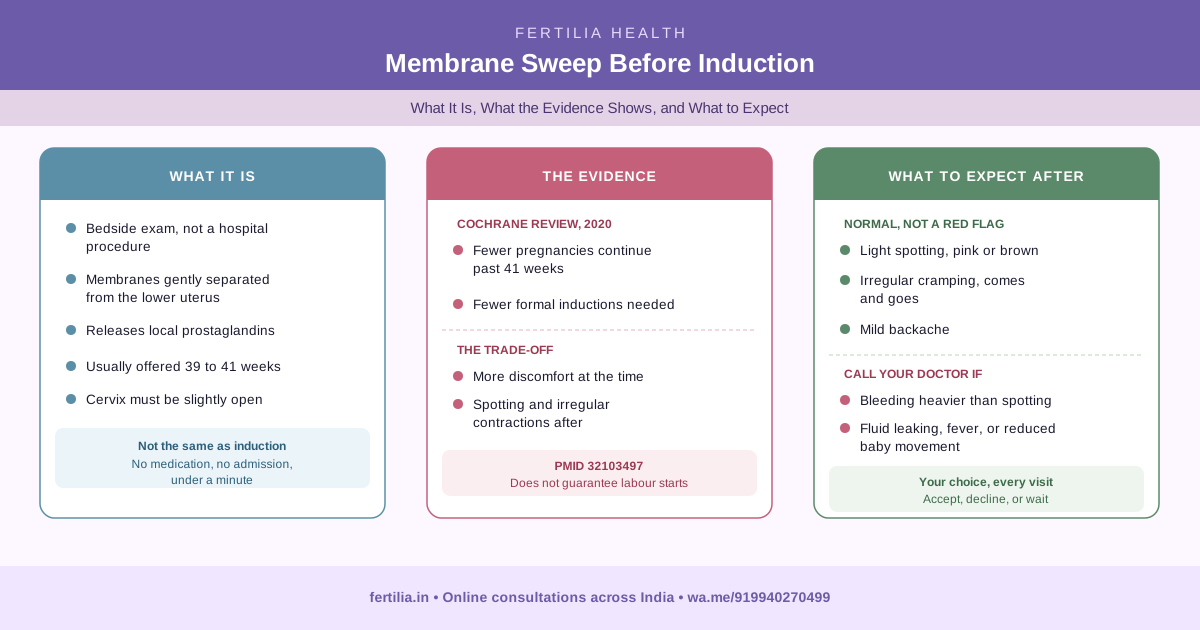
A membrane sweep, sometimes called a “stretch and sweep,” is done during a routine vaginal examination in the last weeks of pregnancy. Using a gloved finger, your doctor gently separates the amniotic membranes surrounding the baby from the wall of the lower uterine segment, near where they attach around the cervix.
This separation is thought to release local prostaglandins, the same hormones your body uses naturally to soften and ripen the cervix before labour. In some women, this local hormone release is enough to help start contractions on its own.
A sweep is a distinct step from induction of labour, which involves medication (a gel, tablet, or drip) or a formal procedure like breaking the waters in a hospital setting. A sweep is a bedside or outpatient procedure done during a clinic visit, usually taking less than a minute, and it does not require admission.
Your cervix needs to be at least slightly open for a sweep to be technically possible. If it is completely closed, your doctor may only be able to do a gentler version, called cervical massage or stretching, or may suggest trying again at your next visit.
When Is a Membrane Sweep Offered?
Most obstetricians in India offer a membrane sweep from around 39 weeks onward, particularly if you are approaching or past your due date and there is no medical reason yet to schedule a formal induction.
The UK’s NICE guideline (NG207, checked 2026-09) recommends discussing membrane sweeping with all women from 39+0 weeks, with a further sweep offered if labour has not started, and discussing formal induction from 41+0 weeks in an otherwise uncomplicated pregnancy. Indian practice broadly follows this same window: a sweep is commonly offered at the 39- or 40-week visit as a way of encouraging labour to start naturally before a formal induction becomes necessary.
A sweep is typically offered when:
- You are 39 weeks or beyond with no signs of labour yet
- Your pregnancy has been low-risk and there is no urgent medical reason for immediate delivery
- Your cervix is at least slightly open on examination
- You do not have a contraindication such as a low-lying placenta, active genital infection, or your waters already having broken
If your pregnancy has a specific complication that already requires a planned delivery date, such as gestational diabetes with poor control or preeclampsia, your doctor’s plan for timing your delivery takes priority, and a sweep may not change that timeline.
What the Evidence Shows
This is the question most women want answered before agreeing to the procedure.
A Cochrane systematic review (Finucane et al., 2020, PMID 32103497) looked at randomised trials comparing membrane sweeping with no treatment at term. The review found that sweeping reduces the chance of pregnancy continuing past 41 weeks and reduces the likelihood of needing a formal medical induction. The trade-off is that the procedure itself causes more discomfort at the time, along with a higher chance of minor bleeding or spotting and irregular contractions in the hours afterward, compared to no procedure at all.
What this means in practice: a sweep modestly increases your chance of going into labour on your own within the next 48 hours, and for some women, it is enough to avoid a formal induction altogether. It does not guarantee labour will start. Many women need more than one sweep, and some do not go into labour from it at all and still need a formal induction later if their pregnancy continues past 41 weeks.
Because the effect is modest and not universal, a sweep is offered as an option, never as something you are expected to accept. Whether you say yes on a given day makes very little difference to your overall care plan. If you decline, your doctor will simply continue watching your pregnancy in the usual way and revisit induction timing at the next visit.
Talk to Dr. Suganya Venkat over a video call (wa.me/919940200330)
What Does It Feel Like?
A membrane sweep is uncomfortable for most women, but it is not routinely described as painful. It is closer to a firm, deep sensation during a vaginal examination, similar to a cervical check but held for slightly longer, and it usually lasts under a minute.
Some women feel a sharp cramp or pinch for a few seconds as the membranes are separated. Others feel very little beyond the usual discomfort of an internal exam. How uncomfortable it feels can depend on how open your cervix already is, how relaxed you are able to stay during the exam, and your individual pain tolerance.
If you find internal exams especially difficult, tell your doctor before the sweep begins. Slow, gentle technique and a moment to breathe through it usually helps. You can also ask your doctor to stop at any point.
What to Expect Afterward
In the hours to two days following a membrane sweep, it is common and expected to notice:
- Light spotting or pink or brown discharge, from the small blood vessels near the cervix being disturbed
- Irregular cramping or period-like tightening, which may come and go without settling into a regular pattern
- Some mild backache
These effects are the reason a sweep is done rather than left as a purely “no downside” choice. They are not a sign that anything has gone wrong, and they typically settle within a day or two whether or not labour follows.
When to contact your doctor after a sweep:
- Bleeding that is heavier than spotting, similar to a period or more
- Fluid leaking that could be your waters breaking
- Fever, chills, or feeling generally unwell
- Reduced movement from your baby
- Severe or constant abdominal pain, rather than cramping that comes and goes
- Contractions that become regular, close together, and increasingly intense, which may mean labour has started
Most women who have a sweep go home the same day, continue normal activities, and simply wait to see whether contractions begin over the following one to two days.
If Labour Does Not Start After a Sweep
If nothing happens within a day or two, that is a common outcome, not a failed attempt. Your doctor may offer to repeat the sweep at your next visit if you are still within the appropriate window, particularly if your cervix has changed and is now more favourable.
If your pregnancy reaches the point where your doctor recommends moving to a formal induction, that decision is based on your gestational age, your baby’s wellbeing, and your overall pregnancy, not on whether the sweep worked. Our post on induction of labour: methods, reasons, and what to expect covers what that process looks like in detail, including cervical ripening, the Bishop score, and the oxytocin drip.
It can also help to recognise the early signs your body may already be preparing for labour on its own, sweep or no sweep. Our post on signs labour is starting: early signals at 37+ weeks walks through what to watch for in the days before contractions begin.
A Note on Choice
A membrane sweep is one of the few points in late pregnancy where the decision genuinely sits with you, day by day. There is no obligation to accept it at 39 weeks simply because it was offered, and no penalty for saying “not today, let’s talk again next week.” Some women prefer to wait until closer to 41 weeks; others would rather try earlier if it may help them avoid a formal induction. Both are reasonable choices.
At Fertilia, Dr. Suganya Venkat encourages the women she sees in her online pregnancy consultations to ask exactly this question at each late-pregnancy visit: what is being offered today, and what happens if I wait. A sweep is a small procedure, but it is still your body and your decision.
FAQ: Membrane Sweep Before Induction
Is a membrane sweep the same as induction? No. A membrane sweep is a bedside procedure done during a routine vaginal exam to encourage labour to start naturally. Induction of labour uses medication or a formal hospital procedure to actively start contractions. A sweep is sometimes done specifically to try to avoid needing a formal induction.
Does a membrane sweep hurt? It is usually described as uncomfortable rather than painful, similar to a firm cervical check that lasts slightly longer. Some women feel a brief sharp cramp during the procedure. It typically takes under a minute.
How soon does labour start after a membrane sweep? If it works, labour most commonly begins within 48 hours. Many women do not go into labour from a single sweep and may be offered a repeat sweep at a later visit.
Is spotting after a membrane sweep normal? Yes, light spotting or pink or brown discharge for a day or two is expected and comes from the cervix, not the placenta. Bleeding that is heavier than spotting, similar to a period, should be checked by your doctor.
Can I decline a membrane sweep? Yes. It is offered as an option, not a requirement. Declining does not change your doctor’s overall plan for your pregnancy, and you can revisit the decision at a later visit.
Is a membrane sweep safe? Yes, when performed by a trained doctor or midwife in a woman without contraindications such as a low-lying placenta or active genital infection. The main downsides are procedural discomfort, spotting, and irregular cramping afterward, not a risk to you or your baby.
Jhilli safai (membrane sweep) kya hota hai aur yeh kab kiya jata hai? Membrane sweep ek chhota sa procedure hai jisme doctor internal exam ke dauran ungli se baby ke around ki jhillio ko uterus ki lower wall se halke se separate karte hain. Yeh aksar 39 se 41 hafte ke beech offer kiya jata hai, formal induction se pehle, taaki labour naturally shuru ho sake. Yeh painful nahi hota, thoda uncomfortable ho sakta hai, aur uske baad halka spotting ya cramping hona normal hai.
Related Reading
- Induction of Labour: Methods, Reasons & What to Expect
- Signs Labour Is Starting: Early Signals at 37+ Weeks
- Braxton Hicks Contractions: Real Labour vs False Alarms
- Perineal Massage in Pregnancy: How to Do It and Does It Help
- Stages of Labour: What Happens in Each Phase
Download our Pregnancy Guide for a week-by-week overview of what to discuss with your doctor through each trimester, including late-pregnancy visits.
If you are approaching your due date and want to talk through your options around a membrane sweep or induction, Dr. Suganya Venkat offers online consultations across India.