Somewhere around 34 weeks, most women start thinking seriously about what labour is going to feel like. The contractions, the pushing, the cervix opening. And then, almost always, the question arrives: what about tearing?
It comes up in nearly every appointment I have at this stage of pregnancy. “Will I definitely tear? Can I do anything about it? What is this perineal massage I keep reading about?”
This post gives you the direct answer. I will walk through what perineal massage is, what a large Cochrane review says about its benefits, who is most likely to gain from it, and the exact step-by-step technique so you can start with confidence.
What Is the Perineum?
The perineum is the tissue between the vaginal opening and the anus. During a vaginal birth, this tissue stretches to allow the baby’s head and shoulders to pass through. If the tissue does not stretch enough, it can tear spontaneously.
Perineal tears are graded by how far they extend: first and second degree tears involve the skin and superficial muscle and generally heal well with stitches. Third and fourth degree tears extend into the anal sphincter and require more complex repair. An episiotomy is a deliberate surgical cut that your doctor may make to create more room during pushing. Episiotomies are repaired with stitches. Whether a spontaneous tear needs suturing depends on its depth, bleeding, alignment, and clinical assessment.
Perineal massage is a technique of gently stretching and softening this tissue before labour, so it is more prepared for the demands of birth.
What Does the Evidence Show?
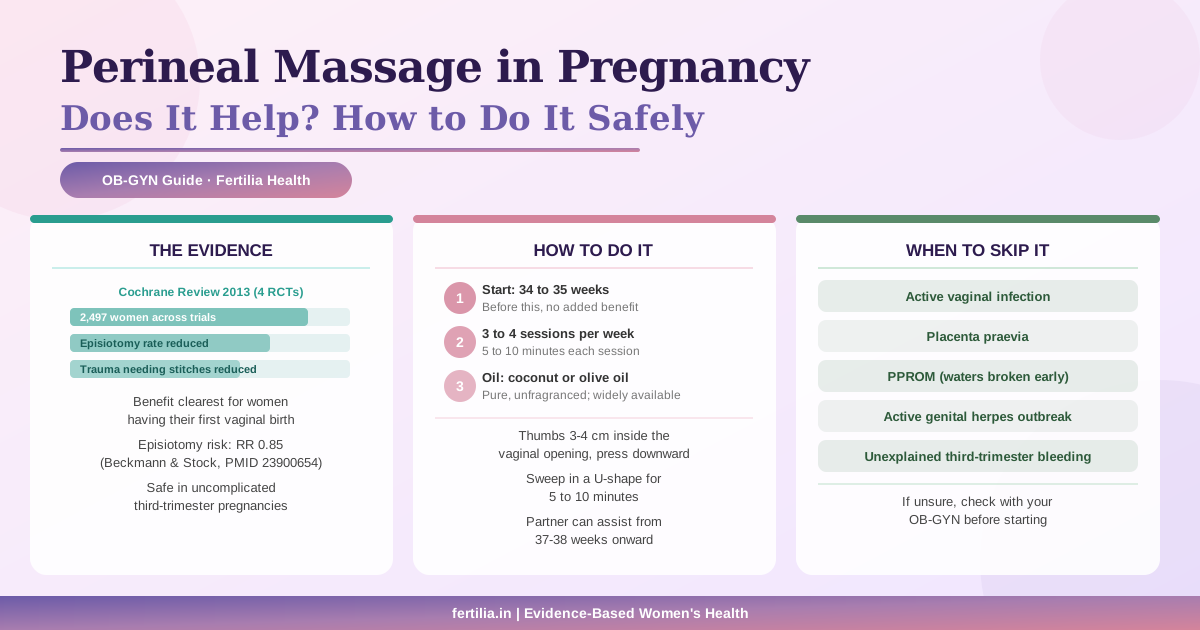
A 2013 Cochrane systematic review by Beckmann and Stock (CD005123; PMID 23633325) looked at four randomised or quasi-randomised trials involving 2,497 women. These trials compared perineal massage practised from around 34 to 35 weeks of pregnancy with no massage at all.
The findings:
For women having their first vaginal birth (primiparous):
- Perineal massage modestly reduced trauma requiring stitches overall (relative risk 0.91, 95% CI 0.86 to 0.96; four trials, 2,480 women analysed).
- It reduced episiotomy overall (relative risk 0.84, 95% CI 0.74 to 0.95; four trials, 2,480 women analysed). The reduction was seen among women without a previous vaginal birth.
For women who have given birth vaginally before:
- The benefit for preventing perineal trauma was not statistically consistent across trials. Some women in the massage groups reported lower rates of perineal pain at three months postpartum.
For third and fourth degree (severe) tears:
- The evidence here is more limited. The Cochrane review did not find a statistically significant reduction in severe tears across all trials combined, though there was a trend in some individual studies. Reducing episiotomy rates may itself reduce some of this risk, since a midline episiotomy that extends can become a third degree tear.
On safety: women in the massage groups did not report higher rates of adverse outcomes. The review found the practice was acceptable to most women.
What this means in practice: perineal massage reduces risk, particularly episiotomy risk in first-time mothers. It does not guarantee a perfect birth. How your baby is positioned, how fast the second stage moves, the size of the head, and how the delivery is managed all influence what happens to the perineum. Massage prepares the tissue; it cannot control everything else.
Who Is Most Likely to Benefit?
The evidence is clearest for:
First-time mothers. The measured reduction in episiotomy was clearest among women without a previous vaginal birth.
For women who have already had a vaginal birth, the tissue is generally more elastic, and the evidence for massage reducing tear risk specifically is less consistent. That said, perineal massage is not harmful in uncomplicated pregnancies, and some women in this group report less postpartum perineal discomfort when they practise it.
When to Start and How Often
Begin at 34 to 35 weeks of pregnancy. Starting earlier has not been shown to add benefit over the six-week trial window that the research used.
Trial schedules varied. The Cochrane authors concluded that massage performed as little as once or twice a week from around 35 weeks may reduce the likelihood of episiotomy and trauma requiring suturing. Follow the schedule suggested by your own maternity team rather than treating daily massage as necessary.
The Step-by-Step Technique
You will need:
- Washed hands with short, trimmed nails
- A lubricant intended for perineal massage or internal use. The trials used sweet almond oil or a water-soluble lubricant. Avoid scented creams or products not intended for this area, and check your maternity team’s advice if you have sensitive skin or allergies.
- A comfortable position: lying on your back with your knees bent and apart, or semi-reclining against pillows with your knees open. Choose whichever position lets you reach comfortably.
Step 1: Apply oil and get settled. Put a small amount of the chosen lubricant on both thumbs. Take a moment to breathe and let the muscles around the pelvis soften. Rushing into the massage when tense is counterproductive.
Step 2: Place your thumbs at the opening of the vagina. Insert both thumbs about 3 to 4 centimetres (roughly 1.5 inches) inside the vaginal opening. Press gently downward, toward the rectum. The direction of pressure is downward and back, not upward or to the sides.
Step 3: Hold the pressure until you feel a stretch. Hold that downward pressure for about 1 to 2 minutes, until you feel a stretching sensation or mild tightness. This is the feeling you are working with. It should be noticeable but not sharp. If it is sharp pain, ease back.
Step 4: Sweep in a U-shape. While maintaining the downward pressure, sweep your thumbs slowly in a U-shaped arc from one side of the vaginal wall to the other and back. You are gently stretching the lower half of the vaginal opening, the part that takes the most pressure during the second stage of labour.
Step 5: Continue for 5 to 10 minutes and finish. Over weeks of practice, the sensation shifts. The first few sessions may feel like significant pressure. The sensation may become more familiar over time, but stop if it becomes painful.
On discomfort: a stretching sensation is expected. In the first few sessions, it can feel like a lot of pressure. Mild discomfort is normal. Sharp pain during the session, burning that continues after you stop, or pain in the following day is not normal. If any of those occur, stop and bring it up with your OB-GYN.
If you have questions about third-trimester preparation and what is right for your specific pregnancy, I am available for video consultations across India. You can reach me directly on WhatsApp.
Can a Partner Help?
Yes, and in later pregnancy this often becomes the more practical arrangement. By 37 or 38 weeks, reaching the perineum comfortably becomes genuinely difficult for many women. Having a partner assist takes that physical barrier away.
The technique is the same when a partner does it: clean hands, oil on the index fingers (not thumbs, which tend to be less comfortable at the angle a partner uses), downward pressure toward the rectum, a U-shaped sweep, 5 to 10 minutes. The woman guides how much pressure feels like a stretch rather than pain. Clear communication throughout is what makes this work.
The trials did not directly establish that self-massage and partner-assisted massage have equivalent outcomes. If a partner assists, use the same gentle technique and let the pregnant woman guide the pressure.
When NOT to Do Perineal Massage
There are specific situations where perineal massage should be avoided. Your doctor will advise you if any of these apply, but it helps to know them:
Active vaginal infection. If you have bacterial vaginosis, a yeast infection, or another active infection, pause massage and ask your maternity team when it is appropriate to restart.
Placenta praevia or restrictions on vaginal examination. If your placenta covers or lies close to the cervix, or your obstetrician has advised avoiding vaginal insertion, do not massage unless your own maternity team explicitly says it is safe.
Preterm premature rupture of membranes (PPROM). If your waters may have broken before 37 weeks, do not massage. Contact your maternity unit or obstetrician immediately for assessment.
Active genital herpes outbreak. Any active herpes lesion on or near the genitals is a reason to wait until the outbreak resolves.
Unexplained vaginal bleeding in the third trimester. If you have any unexplained third-trimester bleeding, do not massage and contact your maternity unit or obstetrician promptly for assessment.
If any of the above apply, discuss your third-trimester preparation with your OB-GYN. There are other things you can work on, including pelvic floor preparation and third-trimester exercises, without the risks that massage carries in these situations.
Does Perineal Massage Replace Episiotomy?
No. Episiotomy is a clinical decision made in real time by the person managing your birth. If the second stage of labour is not progressing safely, if the fetal heart rate is showing signs of distress, or if the perineum appears at risk of a severe spontaneous tear, your doctor will make that call based on what is happening at that moment.
What perineal massage may do is reduce the likelihood that episiotomy becomes necessary, by making the tissue more supple and elastic going into labour. The Cochrane review does show a reduced episiotomy rate in women who practised massage. But if the clinical picture requires it, episiotomy serves an important purpose. It is not a sign that the massage failed.
If you do need stitches after delivery, recovery from episiotomy and perineal tears takes several weeks. Understanding what to expect makes that process less unsettling.
Practical Notes for Indian Women
On oil choice: Use a plain lubricant intended for perineal massage or internal use. Research protocols have included sweet almond oil and water-soluble lubricant. A familiar kitchen oil is not automatically tested for intravaginal use.
On hygiene: Wash hands thoroughly and trim nails before each session. The aim is to avoid introducing bacteria into the vaginal area. Keep it simple and clean.
On timing: After a warm bath or shower in the evening tends to work well. The warm water relaxes pelvic muscles, and the tissue is somewhat more pliable afterward. Some women across North India practise tel malish (oil massage) in the third trimester more broadly. Perineal massage is a targeted, evidence-based extension of that preparation instinct.
On building up gradually: In the first week, even two or three minutes of massage is a good start. Consistency over the six weeks before delivery matters more than getting to ten minutes immediately. If you miss a session, it is not a setback.
For a broader guide to third-trimester preparation, our free Pregnancy Guide covers nutrition, movement, and birth preparation in one place. For questions specific to your pregnancy, understanding the stages of labour before 37 weeks can also help you feel more prepared for what is ahead.
Frequently Asked Questions
Can perineal massage guarantee I will not tear? No. Tearing during vaginal birth depends on multiple factors: the baby’s size, position, how quickly the head passes through, and how the second stage is managed. Perineal massage reduces the likelihood of episiotomy and perineal trauma requiring stitches, based on the Cochrane review. It does not eliminate tearing entirely. Thinking of it as preparation rather than prevention is the accurate frame.
When exactly should I start perineal massage in pregnancy? Start at 34 to 35 weeks of pregnancy. The clinical trials in the Cochrane review used this starting point, practising 3 to 4 times per week through to delivery. Starting earlier than 34 weeks has not been shown to add benefit. Starting later is still worth doing if you missed the earlier window.
Which oil should I use for perineal massage in India? Use a plain lubricant intended for perineal massage or internal use. Research protocols included sweet almond oil or a water-soluble lubricant. Avoid scented creams and products not intended for this area.
Is perineal massage useful if I am having a C-section? If a caesarean has been confirmed and a vaginal birth is not planned, perineal massage is not necessary for birth preparation. If the mode of delivery is still to be decided closer to your due date, or if there is any possibility of a trial of labour, check with your OB-GYN about whether to begin.
Is perineal massage painful? A stretching sensation is expected. In the first two or three sessions, the pressure can feel significant. Over weeks of practice, most women notice the tissue softening and the sessions becoming more comfortable. Sharp pain during the session, or burning that continues after you stop, is not expected. Stop if that happens and mention it at your next appointment.
What is perineal massage called in Hindi? (prasav se pehle yoni ki malish kaise karein) Perineal massage is sometimes called “prasav se pehle ki malish” in Hindi. It refers to the gentle stretching of the lower vaginal tissue done before labour. The technique involves clean fingers, suitable lubricant, and gentle downward pressure in a U-shape from around 34 to 35 weeks, following your maternity team’s schedule. In Devanagari, a descriptive phrase is “प्रसव से पहले पेरिनियल मसाज”.
Does perineal massage help if I have had a baby before? The Cochrane evidence is less consistent for women who have given birth vaginally before. The perineal tissue is generally more elastic after a previous vaginal birth. Some women in prior studies reported lower rates of postpartum perineal discomfort when they practised massage, though the reduction in trauma itself was not significant across the trials. If your pregnancy is uncomplicated, it is not harmful to practise massage even with a previous vaginal birth.
I am Dr. Suganya Venkat, an OB-GYN with 15+ years of clinical experience. If you are preparing for birth and want a video consultation to go over your specific situation, including any history of perineal trauma, I am available for online consultations across India. Reach out on WhatsApp and we can schedule a time.