By the third trimester, many women discover that the chappal they wore in the morning barely fits by evening. The ankles look like they belong to a different body. Pressing a finger into the top of the foot leaves an indentation that fills back slowly. And if this is a first pregnancy, the whole thing can feel alarming.
I’m Dr. Suganya Venkat, an OB-GYN with fifteen years in clinical practice, and swollen feet come up in nearly every third-trimester consultation. Most of the time, I reassure. Sometimes, I send someone to hospital that day. The difference is not the degree of swelling. It is the pattern, and knowing how to read it is the point of this guide.
The same symptom, swollen legs in pregnancy, can come from three completely different causes. Two of them need medical attention. One of them needs rest, elevation, and a good pair of compression stockings.
Why Pregnancy Makes Your Legs Swell
Several overlapping physiological changes push fluid into the legs during pregnancy, and understanding them helps explain why the swelling is so common.
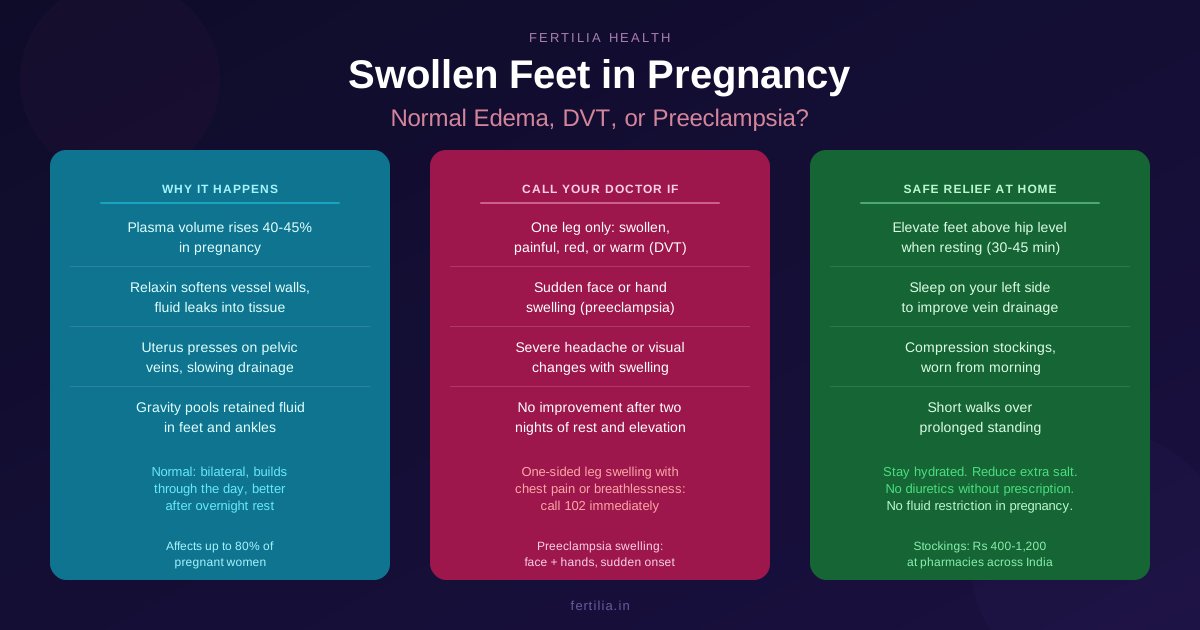
Plasma volume expansion. Plasma volume increases by around 40 to 45 per cent during pregnancy (Soma-Pillay et al., Cardiovasc J Afr, 2016, PMID 27213856). More fluid in circulation is essential: it supports the increased blood flow to the uterus, placenta, and kidneys. But more fluid also means more opportunity for it to seep from small blood vessels into surrounding tissue, especially under pressure.
Relaxin’s effect on vessel walls. Relaxin is a pregnancy hormone that softens ligaments to prepare the pelvis for delivery. It also acts on the walls of blood vessels, making them more permeable. Fluid moves from the blood into the surrounding tissue more easily than it would outside of pregnancy.
Aldosterone and sodium retention. The renin-angiotensin-aldosterone system (RAAS) is activated in pregnancy to support the increased blood volume. One effect is sodium and water retention. This is by design, but the retained fluid has to go somewhere.
The growing uterus pressing on pelvic veins. By the third trimester, the uterus presses on the inferior vena cava, the large vein that carries blood from the lower body back to the heart. This slows venous return from the legs. Blood pools in the leg veins, and the increased venous pressure pushes fluid into surrounding tissue.
Gravity and heat. Fluid that is already prone to leaking from vessels settles in the lowest point: the feet and ankles. Heat causes vasodilation, which makes leakage worse. This is why swelling is typically more pronounced in summer, in the afternoon, and after time on your feet.
Normal Physiological Edema: How to Read the Pattern
Physiological edema has a recognisable shape. It is bilateral: both ankles, both feet. It builds gradually over the course of the day and is worst by late afternoon and evening. After a night of rest, particularly lying on the left side, it is noticeably better by morning, sometimes completely gone. It is limited to the feet and ankles in early or moderate cases. The skin is puffy and tight, but pressing it is not painful. If you press a fingertip into the top of the foot for five seconds, the indentation fills back slowly.
If that pattern fits, this is almost certainly the normal physiological kind. It does not indicate anything wrong with the pregnancy or the baby. It is the body’s fluid management system working as it should, just exaggerated by the demands of pregnancy.
Most women notice it starting around weeks 22 to 27 and it tends to peak in the final four to six weeks. Heat makes it worse. Prolonged standing makes it worse. A long day with inadequate rest makes it worse.
If you are not sure whether your pattern of swelling fits the normal picture, you can describe it to Dr. Suganya Venkat in a video consultation at Fertilia, available across India. WhatsApp
DVT: The One-Sided Warning
Deep vein thrombosis (DVT) is a blood clot in one of the deep veins of the leg. Pregnancy increases the risk of clot formation by around five times compared with non-pregnant women of the same age (Pomp et al., J Thromb Haemost, 2008, PMID 18248600). The mechanisms overlap with those causing physiological edema: slower venous return, changes in blood coagulability during pregnancy, and reduced mobility.
DVT swelling differs from physiological edema in ways that are clinically meaningful:
- It is one-sided. Both legs may be generally puffy with physiological edema. DVT swelling is in one leg, particularly one calf or one ankle, while the other looks normal.
- It is painful. The leg hurts, often with a deep ache in the calf that worsens on walking or on pressing the calf.
- The skin over the affected area feels warm to touch, and may appear red or dusky.
- The swelling can appear more suddenly than physiological edema.
A clot can also be present without obvious skin changes. The pain-plus-asymmetry combination is enough to go to your hospital for a Doppler ultrasound of the leg veins that day. This is not a situation for elevation and monitoring. An untreated deep vein clot can detach and travel to the lungs, which is a pulmonary embolism: a life-threatening emergency. The rule is simple: one-sided painful leg swelling in pregnancy goes to the emergency department, same day.
If one-sided swelling is accompanied by chest pain or difficulty breathing, call 102 immediately.
Preeclampsia-Related Swelling
Preeclampsia is a pregnancy complication defined by elevated blood pressure (140/90 or higher) alongside signs of organ involvement, typically protein in the urine. It develops after 20 weeks and requires medical management. A detailed explanation of its signs, risks, and what happens at hospital is in our preeclampsia guide.
Swelling in preeclampsia has a different character to physiological edema:
It involves the face and hands, not just the feet. Puffy eyes on waking, rings that suddenly will not fit, swelling of the fingers or lips: these locations point away from gravity-driven physiological edema and toward preeclampsia.
It appears suddenly. Physiological edema builds gradually over weeks. Preeclampsia-related swelling can emerge noticeably within hours or overnight.
It does not improve substantially with rest. Lying down and elevating the feet through the night should reduce physiological edema considerably. If it does not, that deserves attention.
It comes with other symptoms. Swelling alone does not diagnose preeclampsia. But swelling of the face or hands alongside any of the following warrants a blood pressure check the same day: severe persistent headache not responding to paracetamol, visual disturbances (flashing lights, blurred vision, spots), and upper abdominal pain under the right ribs.
Blood pressure monitoring at every antenatal visit exists precisely because preeclampsia can be present before swelling appears. If you have had elevated readings in this pregnancy, read about gestational hypertension alongside this.
Safe Relief for Normal Pregnancy Edema
If the pattern is physiological, these measures reduce swelling substantially.
Elevate your legs above hip level when resting. Placing feet on a footstool does not do the same job as getting them genuinely above hip height. Lying on a bed or floor with a bolster, two firm pillows, or a rolled blanket under the lower legs works well. Thirty to forty-five minutes of this, two to three times a day, makes a visible difference.
Sleep on your left side. The inferior vena cava runs along the right side of the spine. Lying on the left side reduces how much the uterus presses on it, improving venous drainage from the legs overnight. This is why morning swelling is usually the lowest of the day.
Choose short walks over prolonged standing. Calf muscles act as a venous pump: each contraction while walking pushes blood upward through the leg veins. Standing still for extended periods does the opposite. A ten-minute walk every hour is far better than two hours at a counter followed by sitting with feet down.
Wear compression stockings from morning. Graduated compression stockings, available at pharmacies and medical supply shops across India for around Rs 400 to Rs 1,200, help prevent fluid from pooling during the day. The timing matters: put them on before you get up from bed, while swelling is at its lowest. Putting them on after standing for an hour means compressing fluid that has already shifted downward. Class 1 compression (15-20 mmHg) is appropriate for normal pregnancy edema.
Cool water footbath. Soaking feet in cool (not ice-cold) water for 10 to 15 minutes temporarily reduces swelling and is comfortable in warm weather. Ensure the floor around the basin is safe and that you have something to hold when standing up.
Avoid extra salt, but do not go salt-free. Complete sodium restriction is not recommended in pregnancy and is not necessary. Reducing extra-salty items, such as daily papad, pickles, crisps, and processed foods, is sensible. Cooking with normal amounts of salt for flavour is fine.
Stay hydrated. Drinking less water to reduce swelling is the most common and most counterproductive response. Dehydration triggers the body to retain more sodium and water via aldosterone. Aim for 8 to 10 glasses through the day.
What not to do:
Do not take diuretics (Lasix/furosemide or any water tablet) without a specific prescription for a specific reason. In pregnancy, diuretics reduce plasma volume and can reduce blood flow to the placenta. For normal physiological edema they are not indicated and should not be self-prescribed.
Do not significantly restrict fluids. The retention worsens.
Do not stop iron, calcium, or prenatal vitamins because of swelling. These supplements do not cause or worsen edema. Stopping them would create deficiencies without reducing swelling.
When to Call Your Doctor
These situations need a call, a visit, or a hospital trip, not observation at home:
- Sudden swelling of the face, particularly around the eyes or lips, or of the hands (rings no longer fit or cannot be removed)
- Only one leg swollen, especially if painful, warm, or red
- Leg swelling with a severe headache that does not ease within an hour with paracetamol (Crocin/Dolo)
- Leg swelling with visual disturbances: flashing lights, blurred vision, floaters
- Swelling with pain under the right ribs or in the upper abdomen
- Swelling that extends above the knee or involves the abdomen
- Chest pain or breathlessness alongside any leg swelling (call 102 immediately)
- No meaningful improvement in leg swelling after two nights of sleeping on the left side with legs elevated
India emergency ambulance: 102. Janani Suraksha Yojana maternal health helpline: 1800-180-1104.
What Leg Swelling in Pregnancy Is Called in Tamil and Hindi
For women searching in Hindi or Tamil, or for family members asking about symptoms:
| Language | Common term | Notes |
|---|---|---|
| Hindi | pair ki sujan | common spoken and search phrase |
| Hindi | pregnancy mein pair ki sujan | search phrase variant |
| Hindi | pair sooja hua | meaning “swollen leg/foot” |
| Tamil (Roman) | kan kaal veekkam | in the context of karuvu ullavar (pregnant woman) |
Tamil native script is not included here, as it does not render correctly in all settings. The Roman transliterations above are how these terms typically appear in search.
For more on third-trimester symptoms and monitoring, our complete pregnancy guide covers the week-by-week picture. If you have been told your pregnancy is higher-risk, the high-risk pregnancy overview explains what monitoring involves. For hip and pelvis pain, a different but equally common third-trimester complaint, the pelvic girdle pain guide covers what helps. The Fertilia pregnancy resource guide brings together the key trimester-by-trimester reference material.
Frequently Asked Questions
Is it normal to have swollen feet throughout my entire third trimester?
Yes. Bilateral foot and ankle swelling that builds during the day and reduces after overnight rest is a normal finding, present in some form in up to 80 per cent of pregnancies. On its own, without any of the red-flag patterns described above, it does not indicate a problem. What matters is the pattern: both sides, gradual onset, position-responsive, not painful, no facial or hand swelling, and no accompanying headache or visual disturbances.
When should I be worried about swelling in pregnancy?
The patterns that need medical attention: swelling of only one leg (especially with pain, warmth, or redness), sudden swelling of the face or hands, swelling accompanied by a severe headache or visual changes, swelling that does not reduce after two nights of rest and elevation, and any chest pain or breathlessness alongside leg swelling.
Does one-sided leg swelling in pregnancy always mean a blood clot?
Not always, but one-sided painful swelling is enough reason to get a Doppler ultrasound of the leg veins that same day. DVT needs to be ruled out rather than waited on. Even without visible redness, a clot can cause asymmetric swelling and calf tenderness. One-sided pattern plus tenderness goes to hospital, not home elevation.
Does leg swelling during pregnancy harm the baby?
Normal physiological edema does not affect the baby. The swelling is in the mother’s tissue, not in the placenta or fetal environment. If the swelling is a symptom of preeclampsia or DVT, those underlying conditions require treatment, but the edema itself is not the cause of risk.
Are compression stockings safe to use during pregnancy?
Yes. Graduated compression stockings are safe and commonly used in pregnancy for leg swelling and varicose veins. Class 1 compression (15-20 mmHg) suits normal edema. They work best when worn from the morning, before getting up from bed, and removed at night. Maternity-appropriate sizing is available at pharmacies and medical supply shops.
Does leg swelling mean I have preeclampsia?
Not on its own. Physiological edema is far more common than preeclampsia, and most women with swollen feet in the third trimester do not have preeclampsia. The location is the key distinction: physiological edema is in the feet and ankles; preeclampsia-related swelling often involves the face and hands. Blood pressure, not swelling, is the primary marker at antenatal visits.
Pregnancy mein pair ki sujan kab doctor ko dikhana chahiye?
Agar sujan sirf ek taraf ho (sirf ek paon mein), agar sujan ke saath dard ho ya paon garam aur laal lage, agar achanak haath ya chehre mein sujan aaye, agar saath mein sar mein tez dard ho ya aankhon mein dhundha ya chamak dikhaye, ya agar raat bhar lete rehne ke baad bhi sujan bilkul theek na ho, tab doctor ya aspatal se sampark karein. Dono pairon mein sujan jo subah theek ho jaati hai, yeh zyada tar saphi (physiological) hoti hai, lekin koi bhi shak ho toh apni doctor ya nurse se baat karlena behtar hai.
Questions about your pregnancy, or want to know whether your swelling pattern needs attention? You can speak directly with Dr. Suganya Venkat over a video consultation at Fertilia, available to women across India. WhatsApp