A cancer diagnosis arrives with a flood of appointments, scans and decisions. Somewhere in the middle of it, often late at night, a quieter question surfaces: will I still be able to have a baby after this?
It is a completely reasonable question to ask, and asking it now, before treatment starts, is the single most useful thing you can do for your future fertility. Many women go on to have children after cancer. Planning ahead gives you more choices, and in most cases the planning fits inside the time your cancer team already needs to prepare your treatment.
I’m Dr. Suganya Venkat, an OB-GYN with more than fifteen years in women’s health. I don’t treat cancer, and nothing in this post replaces the advice of your oncologist. What I can do is set out the fertility side clearly, so that you walk into your next oncology appointment knowing what to ask and what your options are.
What This Post Covers
- How chemotherapy and radiation can affect the ovaries
- Why the fertility conversation belongs at the start
- The main options: egg freezing, embryo freezing, ovarian tissue freezing, and ovarian protection during chemotherapy
- How long it takes, and what the research shows about delaying cancer treatment
- What fertility preservation costs in India
- What the results look like years later
- Questions to take to your oncologist
- Frequently asked questions
How Cancer Treatment Can Affect Fertility
You are born with all the eggs you will ever have, stored in small follicles inside the ovaries. Some cancer treatments damage these follicles. Depending on the treatment and your age, the effect can range from a temporary pause in periods to a permanent drop in ovarian reserve, sometimes leading to early menopause (premature ovarian insufficiency). Our guide to premature ovarian insufficiency explains what that diagnosis means if it happens.
The factors that shape the risk are fairly consistent:
- The type of chemotherapy. Alkylating drugs such as cyclophosphamide carry more risk to the ovaries than many other drugs.
- The total dose and number of cycles. Higher cumulative doses usually mean more effect.
- Radiation to the pelvis or abdomen. The ovaries are sensitive to radiation, and the uterus can be affected too.
- Surgery that removes one or both ovaries or the uterus.
- Your age and ovarian reserve at the start. A woman of 28 generally has more eggs in reserve than a woman of 38, so the same treatment may affect them differently.
Your oncologist is the best person to tell you where your specific treatment plan sits on this scale. That estimate guides every other decision below.
Start the Conversation Early
International guidance is consistent on this point. The American Society of Clinical Oncology (ASCO) recommends that the possibility of infertility be discussed with every patient treated during their reproductive years as early as possible, and that clinicians be prepared to discuss preservation options and to refer interested patients to reproductive specialists, so that the widest range of options stays open (Oktay K et al., J Clin Oncol, 2018, PMID 29620997). The American Society for Reproductive Medicine’s committee opinion makes the same recommendation for prompt counselling before any gonadotoxic therapy (ASRM Practice Committee, Fertil Steril, 2019, PMID 31843073), and the European Society of Human Reproduction and Embryology (ESHRE) published a full 2020 guideline on female fertility preservation (ESHRE Guideline Group on Female Fertility Preservation, Anderson RA et al., Hum Reprod Open, 2020, PMID 33225079).
Indian data point to referral as the main gap. A 2026 survey of 123 Indian oncologists found that 89% were comfortable discussing fertility preservation, yet only 22.8% had successfully referred at least one patient for a fertility consultation, and nearly half said fewer than a quarter of their patients asked about fertility at all (Venkitaraman B et al., J Adolesc Young Adult Oncol, 2026, PMID 42047767).
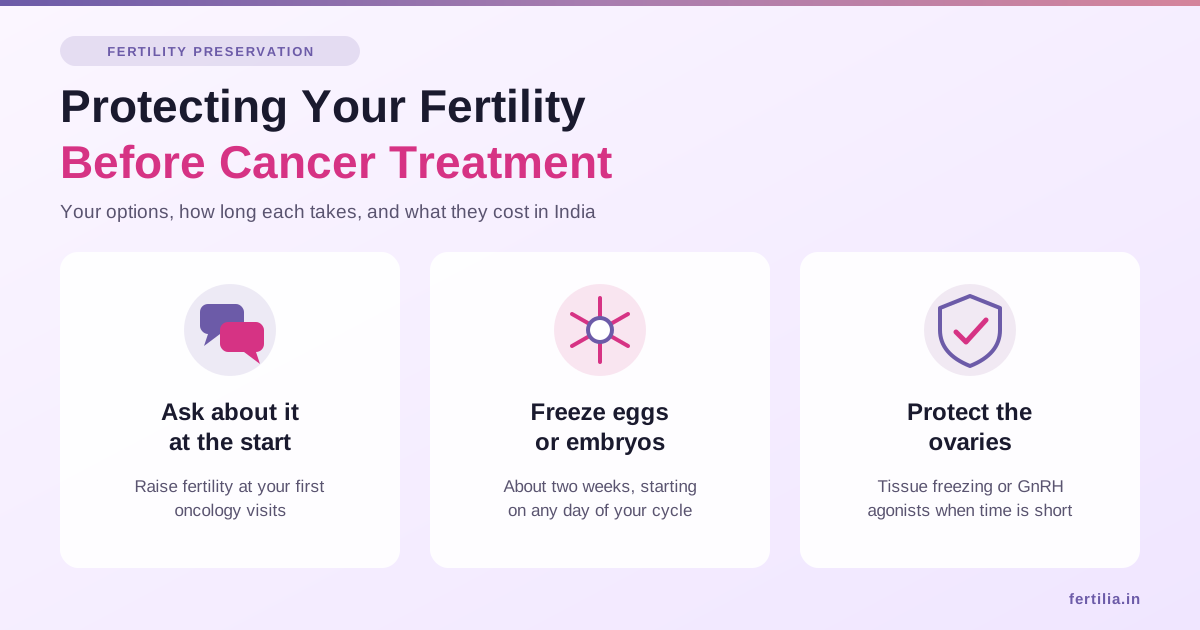
So please raise it yourself. A simple sentence works: “I would like to have children in the future. Can we talk about fertility preservation before treatment starts?” Most oncologists welcome the question, and it opens the door to a referral while there is still room to plan.
Your Fertility Preservation Options
ASCO describes egg (oocyte) freezing, embryo freezing and sperm freezing as standard practice and widely available (Oktay K et al., J Clin Oncol, 2018, PMID 29620997). The right option for you depends on your age, your cancer type, how soon treatment must start, and whether you have a partner.
Egg freezing
Your ovaries are stimulated with daily hormone injections for around 10 to 14 days, the mature eggs are collected in a short procedure under sedation, and they are frozen by vitrification (flash freezing). The steps are the same as elective egg freezing, which our egg freezing guide walks through in detail.
Egg freezing does not need a partner and keeps the decision about future use entirely yours. That independence matters to many women, especially if they are single or not yet sure about their plans.
Stimulation used to wait for the start of a period, which could cost several weeks. Today many clinics use random-start stimulation, beginning on whatever day of the cycle you happen to be. A meta-analysis of 11 studies in women with cancer found that random-start and conventional-start cycles produced similar numbers of eggs, mature eggs and embryos, with random-start cycles running slightly longer and using a little more medication (Sönmezer M et al., Reprod Biomed Online, 2023, PMID 37857156).
Embryo freezing
If you have a husband or partner, the eggs collected can be fertilised in the lab and frozen as embryos. The stimulation and collection are the same as egg freezing, and the extra lab step is the same one used in routine IVF, which our IVF cost guide breaks down. If the sperm needs to be injected into each egg, that is ICSI, explained in our ICSI vs IVF guide.
Embryos belong to both partners, and using them in future needs both partners’ consent. Some couples choose to freeze a mix of eggs and embryos so that the woman keeps some options that are hers alone.
Ovarian tissue freezing
In this approach, a small piece of ovarian tissue (or occasionally a whole ovary) is removed by keyhole surgery and frozen. After cancer treatment, the tissue can be transplanted back, where it may restart hormone production and egg release.
Its main advantages are that it needs no hormone stimulation and can usually be done within days, and it is the only option for girls who have not yet reached puberty. A meta-analysis of 309 ovarian tissue transplants reported 84 babies born and a combined live birth plus ongoing pregnancy rate of 37.7%, with hormone function returning in 63.9% (Pacheco F and Oktay K, Reprod Sci, 2017, PMID 28701069). The ESHRE guideline notes that more evidence is still needed on pregnancy outcomes with this method (Anderson RA et al., Hum Reprod Open, 2020, PMID 33225079). It is offered at fewer centres than egg freezing, so ask your oncology team early if it may suit you.
For some blood cancers, the specialist team may advise against transplanting tissue back later because of the chance of cancer cells within the tissue. This is a question for your haematologist and fertility specialist together.
Ovarian protection during chemotherapy (GnRH agonists)
A GnRH agonist is a monthly or three-monthly injection that temporarily puts the ovaries to rest during chemotherapy. In an analysis of individual patient data from five trials covering 873 women with early breast cancer, premature ovarian insufficiency occurred in 14.1% of women who received a GnRH agonist compared with 30.9% of those who did not, and more women in the GnRH agonist group had a pregnancy after treatment (10.3% vs 5.5%), with no statistically significant difference in disease-free survival observed (Lambertini M et al., J Clin Oncol, 2018, PMID 29718793). A 2025 Cochrane review reached a similar conclusion on ovarian insufficiency, on low-certainty evidence, while rating the evidence on live birth as very uncertain (Weterings MA et al., Cochrane Database Syst Rev, 2025, PMID 40536056).
ASCO’s position is that GnRH agonists may be offered to young women with breast cancer, especially when egg or embryo freezing is not possible, but should not be used in place of proven fertility preservation methods (Oktay K et al., J Clin Oncol, 2018, PMID 29620997). Many women use it alongside egg or embryo freezing rather than instead of it.
Moving the ovaries out of the radiation field
If you need radiation to the pelvis, a surgeon can sometimes move the ovaries higher in the abdomen by keyhole surgery before treatment starts (ovarian transposition), keeping them away from the main radiation field. Whether this suits you depends on the radiation plan, so it is worth asking your radiation oncologist directly.
💜 Facing cancer treatment and thinking about your fertility? Message Dr. Suganya’s team on WhatsApp A ₹399 video consultation helps you understand your reports and your options, and prepares your questions for the fertility clinic and your oncology team, from anywhere in India.
How Long It Takes, and Whether It Delays Cancer Treatment
For most women, egg or embryo freezing takes about two weeks from the first injection to egg collection. Because random-start stimulation removes the wait for a period, the timeline can often run in parallel with the scans, surgery and planning that happen before chemotherapy anyway.
Research on breast cancer, the most studied setting, is reassuring. In a cohort of 272 women with stage 0 to III breast cancer, those who chose fertility preservation took 37 days to their first treatment, compared with 31 days for those who did not, and their invasive disease-free survival and overall survival were comparable over about four years of follow-up (Greer AC et al., Cancer, 2021, PMID 34161610).
Some situations do not allow two weeks, particularly certain leukaemias and aggressive lymphomas where treatment must begin within days. Your cancer treatment always comes first. In these cases, ovarian tissue freezing or a GnRH agonist may still be possible. For leukaemia and some other blood cancers, though, frozen ovarian tissue can carry cancer cells, so whether it could ever be transplanted back has to be decided by your haematologist and fertility specialist together. Your team will guide you on what is possible in your situation.
If your cancer is hormone-sensitive
Stimulation raises oestrogen levels, which is a natural concern with oestrogen-receptor-positive breast cancer. Fertility specialists usually add letrozole, a tablet that keeps oestrogen levels lower during stimulation. In a prospective study of 120 women with breast cancer who had stimulation with letrozole and gonadotropins before chemotherapy, followed for around five years, recurrence was not significantly higher than in 217 women who did not undergo fertility preservation (hazard ratio 0.77, 95% CI 0.28 to 2.13) (Kim J et al., J Clin Endocrinol Metab, 2016, PMID 26751194).
Fertility Preservation Cost in India
Costs vary widely by city and clinic. The ranges below are the typical figures quoted by Indian fertility clinics, drawn from our detailed India cost guides. Please ask any clinic for an itemised quote before you start.
| Option | Typical cost in India | What to check |
|---|---|---|
| Egg freezing (one cycle) | ₹1,00,000 to ₹2,50,000, plus ₹20,000 to ₹50,000 for medications | Whether monitoring scans and first-year storage are included |
| Embryo freezing | ₹1,50,000 to ₹3,50,000 for the IVF cycle all-in, plus ₹20,000 to ₹50,000 for freezing | Whether ICSI and freezing are in the package |
| Egg or embryo storage | ₹25,000 to ₹50,000 per year for eggs after the first year; embryo renewal is charged separately | Annual renewal terms and consent renewal |
| Sperm freezing (for a male partner) | ₹3,000 to ₹8,000 for the first session, including first-year storage | Number of samples advised |
| Ovarian tissue freezing | Not widely listed; ask for a quote | Surgery, lab and storage charges shown separately |
| GnRH agonist injections | Depends on the drug and number of doses | Usually prescribed by your oncologist |
Sources: our egg freezing cost guide, IVF cost guide and sperm freezing guide.
Two points are easy to miss. First, using the frozen eggs or embryos later is a separate cost: eggs need to be thawed and fertilised in an IVF cycle, and embryos need a frozen embryo transfer, which our frozen embryo transfer guide covers. Second, storage can run for many years, so ask how the annual fee may change over time.
In a 2021 survey of Indian oncologists and gynaecologists, financial burden on the patient and lack of patient awareness were named as the two main barriers to fertility preservation (Tholeti P et al., J Adolesc Young Adult Oncol, 2021, PMID 32456519). If cost is a concern, say so to your team. A single cycle, a GnRH agonist, or a smaller plan may still be possible within your budget.
What the Results Look Like Years Later
Most women who freeze eggs before cancer treatment have not yet come back to use them. In a large multicentre study of 1,073 women who froze eggs before cancer treatment, 80 (7.4%) had returned to use them at the time of analysis. That figure does not tell us why the others had not returned: some may still be in cancer follow-up, some may not yet be ready to try, and some may not need them. It is not a measure of how often ovarian function recovers after treatment. Among women aged 35 or younger, the live birth rate was lower in the cancer group than in women who froze eggs electively (41.1% vs 68.8%), but after adjusting for age and the stimulation protocol, the cancer diagnosis itself was not linked to a lower cumulative live birth rate. Age at freezing and the number of eggs available mattered most (Cobo A et al., Hum Reprod, 2018, PMID 30383235).
Pregnancy after breast cancer is also well studied. In the POSITIVE trial, 518 women with hormone-receptor-positive early breast cancer paused their hormone therapy to try for a pregnancy. Of 497 women followed for pregnancy outcomes, 76% had at least one pregnancy and 69% had at least one live birth. Women in the trial paused endocrine therapy only after 18 to 30 months of it, and for up to two years. With about six years of follow-up, that limited pause, including in women who had frozen eggs or embryos beforehand, was not associated with an increase in breast cancer events compared with a matched external group (Pagani O et al., Ann Oncol, 2026, PMID 42214557). This decision is always made with your oncologist, but the data give many women real grounds for hope.
If Your Partner Is the One Facing Cancer
When a husband or partner is diagnosed, sperm freezing is simple, quick and inexpensive, and it is best done before the first dose of chemotherapy or radiation. One or two samples can often be frozen within a few days. Our sperm freezing guide explains the process and storage.
Questions to Take to Your Oncologist
Writing these down before your appointment makes the conversation easier:
- How likely is my treatment plan to affect my fertility?
- How much time do I have before treatment must start?
- Is egg or embryo freezing safe for my type of cancer, and does it need a letrozole protocol?
- Is ovarian tissue freezing an option for me, and where is it offered?
- Would a GnRH agonist during chemotherapy be suitable for me?
- If I need pelvic radiation, can my ovaries be moved or shielded?
- After treatment, how long should I wait before trying to conceive?
An AMH test before treatment can give a useful baseline for your ovarian reserve. Our guide to normal AMH levels by age explains how to read the number.
Practical Takeaways
- Raise fertility at your first oncology visits. Early discussion keeps the most options open.
- Ask for a referral to a fertility specialist straight away. Stimulation can usually start on any day of your cycle.
- Expect about two weeks for egg or embryo freezing. Ovarian tissue freezing and GnRH agonists can work when time is shorter.
- Ask about letrozole if your cancer is hormone-sensitive.
- Get an itemised quote covering the procedure, medications, freezing and yearly storage.
- Keep your reports together. Your AMH result, scan reports and treatment plan make every future consultation faster.
For a wider picture of conceiving when you are ready, our free guide to getting pregnant is a good place to begin.
Frequently Asked Questions
Can I freeze my eggs before chemotherapy? Yes, in most cases. Egg freezing takes about two weeks of hormone injections followed by a short egg collection, and random-start stimulation means you do not have to wait for a period to begin. ASCO describes egg, embryo and sperm freezing as standard practice (Oktay K et al., J Clin Oncol, 2018, PMID 29620997). Whether there is time depends on your cancer type, so ask your oncologist and a fertility specialist together.
Does fertility preservation delay cancer treatment? Usually only slightly. In one study of 272 women with breast cancer, fertility preservation delayed the start of treatment by about six days (37 vs 31 days to first treatment), with comparable survival over four years (Greer AC et al., Cancer, 2021, PMID 34161610). When treatment cannot wait at all, ovarian tissue freezing or a GnRH agonist may still be options.
Is egg freezing safe if I have hormone-positive breast cancer? Fertility specialists usually add letrozole to keep oestrogen lower during stimulation. In one prospective study, women who had this letrozole protocol before chemotherapy did not have a significantly higher recurrence rate over around five years than women who did not (Kim J et al., J Clin Endocrinol Metab, 2016, PMID 26751194). The decision is made jointly with your oncologist.
How much does fertility preservation cost in India? Egg freezing typically costs ₹1 to 2.5 lakh per cycle plus ₹20,000 to ₹50,000 for medications. Embryo freezing follows the cost of an IVF cycle, usually ₹1.5 to 3.5 lakh all-in, plus freezing charges. Storage is charged yearly after the first year. Ovarian tissue freezing is not widely priced publicly, so ask for an itemised quote.
Do GnRH agonist injections protect the ovaries during chemotherapy? They can reduce the chance of early menopause. In women with early breast cancer, premature ovarian insufficiency occurred in 14.1% with a GnRH agonist compared with 30.9% without one (Lambertini M et al., J Clin Oncol, 2018, PMID 29718793). ASCO advises they should not replace egg or embryo freezing when those are possible, and many women use both.
What is ovarian tissue freezing, and who is it for? A small piece of ovary is removed by keyhole surgery and frozen, then transplanted back after cancer treatment. It needs no hormone stimulation, so it can be done quickly, and it is the only option before puberty. A meta-analysis of 309 transplants reported 84 babies born (Pacheco F and Oktay K, Reprod Sci, 2017, PMID 28701069).
Can I get pregnant naturally after cancer treatment? Some women do, particularly younger women and those whose treatment had a lower effect on the ovaries. There is no single reliable figure for natural conception after cancer, and your own chance depends on your age, your ovarian reserve and the treatment you had. In the POSITIVE trial, 69% of the women followed had at least one live birth (Pagani O et al., Ann Oncol, 2026, PMID 42214557), but that was a selected group of women with early breast cancer who paused hormone therapy to try for a pregnancy, and some of them used frozen eggs or embryos, so it is not a natural conception rate. Frozen eggs or embryos are a back-up if conception does not happen on its own.
💜 Want help thinking through your options before treatment starts? Speak with Dr. Suganya over WhatsApp A ₹399 video consultation goes through your reports, your timeline and your questions, working alongside your oncologist and fertility specialist, wherever you are in India.