The two lines finally showed up after months, sometimes years, of trying. And then, before the relief has even settled, a new fear moves in: I have PCOS. Does that mean I am more likely to lose this pregnancy?
It is one of the most common questions I hear in consultations with women who have just conceived, and it deserves a real answer, not a reassurance that skips past the evidence or a statistic dropped without context. I’m Dr. Suganya Venkat, an OB-GYN with over 15 years of experience, and I want to walk you through exactly what the research says about PCOS and miscarriage risk, what is actually driving that risk, and what a woman with PCOS can do in early pregnancy that genuinely helps.
What this post covers:
- Whether PCOS actually raises miscarriage risk, with the numbers
- What is believed to drive that risk
- Why PCOS is not the main cause of recurrent miscarriage
- Metformin in early PCOS pregnancy: what the evidence really shows
- Progesterone support and who is eligible
- What lowers risk day to day
- What this looks like in Hindi
Does PCOS Raise Miscarriage Risk?
Yes, modestly. This is the most robust answer available, and it comes from the largest analysis done on this question to date.
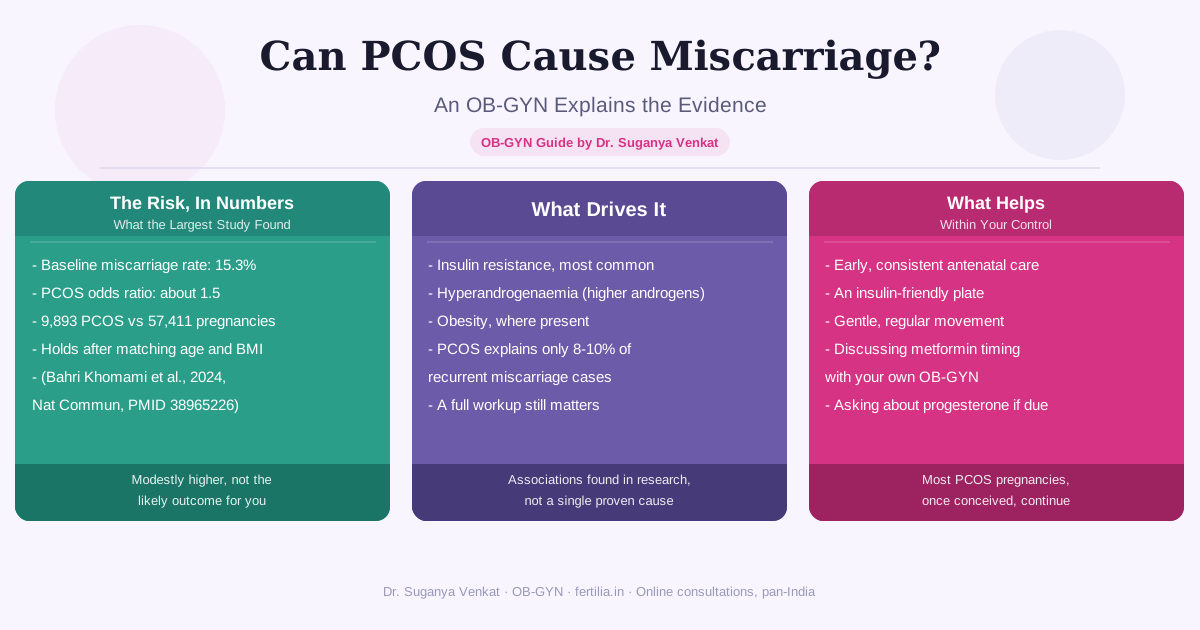
A 2024 systematic review and meta-analysis published in Nature Communications, combining 45 studies and comparing 9,893 pregnancies in women with PCOS against 57,411 pregnancies in women without PCOS, found the odds of miscarriage were higher in the PCOS group (OR 1.49, 95% CI 1.20 to 1.85) (Bahri Khomami et al., 2024, Nature Communications, PMID 38965226). When the researchers excluded women who conceived through IVF or after bariatric surgery, the odds were nearly identical (OR 1.53). The increased risk also held up when they restricted the analysis to only high-quality, prospective studies, and when they matched women with and without PCOS for age and BMI, meaning this is not simply a finding driven by PCOS being more common in women who are, on average, a little heavier or trying to conceive for longer.
To put that number in context: miscarriage overall affects roughly 15.3% of confirmed pregnancies worldwide (Quenby et al., 2021, Lancet, PMID 33915094). An odds ratio of about 1.5 means the risk with PCOS is meaningfully higher than that baseline, but it does not come close to meaning miscarriage is the likely outcome. Read the other way, the same data says that the substantial majority of PCOS pregnancies, once conceived, continue.
I want to be equally direct about what this number does not mean. It does not mean PCOS causes miscarriage in the way a chromosomal abnormality directly causes one. It means that, across large populations, something about having PCOS shifts the odds. What that “something” is matters, because it points toward what is actually within your control.
What Is Believed to Drive the Higher Risk
PCOS is not a single mechanism, it is a syndrome with multiple PCOS drivers, and more than one of them plausibly contributes to early pregnancy loss.
Insulin resistance and hyperinsulinaemia. This is the most prevalent driver, present in a large majority of women with PCOS, and Dr. Andrea Dunaif’s landmark 1997 research described it as a central feature of the condition (Dunaif, 1997, Endocrine Reviews). High circulating insulin acts on the ovary and can affect the hormonal environment the embryo is trying to implant into. This is the same mechanism that, at a different stage, drives excess androgen production and irregular ovulation, which is why addressing insulin resistance tends to improve several PCOS symptoms together rather than one in isolation. Our guide to insulin resistance in PCOS covers this mechanism in depth if you want the fuller picture.
Hyperandrogenaemia. Elevated androgens are one of the three Rotterdam diagnostic criteria for PCOS, alongside irregular ovulation and the polycystic ovarian appearance on ultrasound, and higher androgen levels have been proposed as another contributor to a less favourable implantation environment.
Obesity, where present. Not every woman with PCOS carries excess weight, but where it is present, obesity independently affects insulin sensitivity and adds to the same metabolic picture.
A review in Reproductive BioMedicine Online names all three of these, insulin resistance, hyperandrogenaemia, and obesity, as the most likely contributors to the association between PCOS and pregnancy loss, while noting that the exact weighting of each is still an area of active research (Cocksedge et al., 2008, Reproductive BioMedicine Online, PMID 18616903). These are associations, not proven single causes, which is the honest state of the evidence at this time.
If you are newly pregnant with PCOS and want to talk through what your own risk picture looks like, based on your history, your labs, and your current pregnancy, that is exactly the kind of conversation worth having early. WhatsApp +91 99402 70499.
Why PCOS Is Not the Main Explanation for Recurrent Miscarriage
Here is a detail that gets lost in a lot of online discussion, and I think it matters for how you should actually feel about a PCOS diagnosis in pregnancy.
If you have had two or more losses, it is natural to assume PCOS is the reason, especially if you already carry that diagnosis. But when researchers went looking for exactly how common PCOS actually is among women being investigated for recurrent miscarriage, using the Rotterdam criteria as the gold standard rather than ultrasound appearance alone, they found PCOS present in only 8.3 to 10% of the group (Cocksedge et al., 2009, Reproductive BioMedicine Online, PMID 19909600). That is considerably lower than earlier estimates that relied on looser diagnostic criteria.
What this tells you in practice: PCOS can be a contributing factor, and the modestly elevated odds ratio above is real, but for most women with recurrent losses, PCOS alone does not fully explain the pattern. This is exactly why a proper recurrent miscarriage workup does not stop at “you have PCOS, that explains it.” It should still investigate antiphospholipid antibodies, thyroid function, uterine anatomy, and parental chromosomes, the same panel recommended for any woman with two or more losses. Our guide to recurrent miscarriage: what tests to get after two losses walks through that full investigation. Having PCOS should prompt a closer look, not a shortcut past the rest of the workup.
Metformin in Early PCOS Pregnancy: What the Evidence Shows
This is one of the questions I get asked most often by women who were already taking metformin when they conceived, and honestly, the research here is genuinely mixed. I would rather explain that clearly than pretend there is a single tidy answer.
Before pregnancy, metformin does not appear to change miscarriage risk. A systematic review and meta-analysis of 17 randomised controlled trials looking at metformin taken before conception found no significant effect on abortion risk in women with PCOS, in the overall analysis or in any subgroup (Palomba et al., 2009, Fertility and Sterility, PMID 18937939).
Continued through pregnancy, some data shows a benefit. A separate meta-analysis of 8 trials and 1,106 women found that metformin taken throughout pregnancy in women with PCOS was associated with a lower odds of early pregnancy loss (pooled OR 0.32, 95% CI 0.19 to 0.55), along with lower odds of gestational diabetes and preterm delivery (Zheng et al., 2013, Journal of Endocrinology and Investigation, PMID 23580001).
The largest dedicated randomised trial found a trend, not a confirmed effect, on its own. PregMet2, a placebo-controlled trial of 487 pregnant women with PCOS randomised to metformin or placebo from the late first trimester until delivery, found the combined rate of late miscarriage and preterm birth was lower in the metformin group (5% versus 10%), but this specific trial’s result did not reach statistical significance on its own (OR 0.50, 95% CI 0.22 to 1.08, p=0.08). When the researchers pooled this trial with two earlier ones in a post-hoc analysis, the combined result did reach significance (OR 0.43, 95% CI 0.23 to 0.79, p=0.004) (Løvvik et al., 2019, The Lancet Diabetes & Endocrinology, PMID 30792154).
Put together: the timing and duration of metformin use in the studies varies, the trial designs differ, and the evidence does not point in one uniform direction. What I tell patients is that this is not a decision to make from an internet search. Whether to start, continue, or stop metformin in your specific pregnancy depends on your glucose numbers, your PCOS history, and how far along you are, and it is a conversation for the OB-GYN managing your specific pregnancy, not a blanket rule. If you want to understand how metformin works in PCOS more broadly, our metformin for PCOS guide covers the mechanism and who it is typically prescribed for.
Progesterone Support: Who Is Eligible
Progesterone comes up constantly in PCOS-and-pregnancy conversations, partly because irregular ovulation in PCOS can sometimes mean a shorter or less robust luteal phase, the window after ovulation when progesterone is meant to stabilise the uterine lining.
Progesterone supplementation is not something every pregnant woman with PCOS is automatically prescribed. It tends to be considered when there is a documented low luteal progesterone level, a history of recurrent early loss, or specific signs suggestive of a luteal phase issue on testing. Our guide to luteal phase defect: signs, tests and how to support it and our progesterone in pregnancy guide go into how that decision is made and what the monitoring looks like. As with metformin, this is a decision your own OB-GYN makes based on your specific labs and history, not a supplement to start on your own because you read that PCOS and low progesterone are connected.
What Lowers Risk, Day to Day
None of this is about controlling an outcome that is ultimately not fully in your hands. But there are things within your control that plausibly work on the same mechanisms driving the modestly elevated risk above.
An insulin-friendly plate, most of the time. Building meals around dal, vegetables, and whole grains like ragi and brown rice, rather than refined carbohydrates eaten alone, helps moderate the post-meal insulin spikes that are part of the mechanism above. Our PCOS diet guide covers this in practical, Indian-kitchen terms.
Moderate activity, not intense exercise. A short walk after meals is one of the simplest ways to blunt a glucose and insulin spike. Early pregnancy is not the time to start an intense new fitness routine, but continuing gentle, regular movement, the kind your body is used to, is generally encouraged.
Steady, unhurried weight management if you were already working on it. If you were losing weight as part of preconception care, the goal in early pregnancy shifts from weight loss to steady, nourishing intake. This is a conversation to have with your doctor rather than a plan to continue unsupervised.
Early and consistent antenatal care. This is, in my experience, the single biggest lever. Early bloodwork, an early dating scan, and a clear follow-up schedule mean that if something does need attention, whether that is a progesterone level, a thyroid result, or a glucose trend, it gets caught and addressed rather than discovered later.
Continuing whatever preconception work was already helping. If inositol supplementation, better sleep, or specific dietary changes were part of how you got pregnant, that same foundation generally continues to be useful in the first trimester. Our guide to improving egg quality through diet and lifestyle covers some of these preconception habits if you are looking for the fuller framework, though supplement continuation in pregnancy specifically should be confirmed with your own doctor.
If you are pregnant with PCOS and want a monitoring plan built around your specific history rather than general advice, the Fertilia team, including Dr. Suganya Venkat, supports women through exactly this over video consultation, across India. Start the conversation on WhatsApp.
What This Is Called in Hindi
PCOS mein garbhpaat ka khatra kya hai?
PCOS wali mahilaon mein miscarriage (गर्भपात) ka khatra thoda zyada hota hai, lekin yeh iska matlab nahi ki miscarriage hoga hi. Bade studies mein yeh dikha hai ki risk lagbhag 1.5 guna zyada hai, jo insulin resistance aur hormone levels se juda hua hai. Zyadatar PCOS pregnancies theek se aage badhti hain, khaaskar jab early aur regular checkups ho rahe hon.
Frequently Asked Questions
Does PCOS increase miscarriage risk in every pregnancy?
Research shows a modestly higher average risk across large groups of women with PCOS (odds ratio approximately 1.5 compared with women without PCOS), not that every individual pregnancy is at high risk. The majority of PCOS pregnancies continue without loss, particularly once a heartbeat is confirmed on an early scan.
Is PCOS the main cause if I have had recurrent miscarriages?
Not usually on its own. Studies using proper diagnostic criteria find PCOS present in only about 8 to 10% of women being investigated for recurrent miscarriage. If you have had two or more losses, a full workup, covering antiphospholipid antibodies, thyroid function, uterine anatomy, and parental chromosomes, is still recommended even with a PCOS diagnosis.
Should I take metformin in early pregnancy to reduce miscarriage risk?
The evidence is mixed and depends heavily on timing. Metformin taken only before conception does not appear to change miscarriage risk. Some studies of metformin continued through pregnancy show a reduced risk of early loss, while the largest dedicated trial found a trend toward benefit that did not reach statistical significance on its own. This decision should be made with the OB-GYN managing your specific pregnancy.
Does insulin resistance cause miscarriage in PCOS?
Insulin resistance and the resulting hyperinsulinaemia are considered one of the most likely contributors to the modestly higher miscarriage risk seen in PCOS, alongside hyperandrogenaemia and obesity where present. These are associations identified in research, not a proven single cause, and improving insulin sensitivity through diet and activity is one of the few levers within your own control.
Do I need progesterone support just because I have PCOS?
Not automatically. Progesterone supplementation is typically considered when there is a documented low progesterone level, a history of recurrent early loss, or specific signs of a luteal phase issue, determined through your doctor’s testing, not as a routine addition for every PCOS pregnancy.
Can I still get pregnant naturally and carry to term with PCOS?
Yes. Most women with PCOS conceive and carry pregnancies to term, some naturally and some with medical support for ovulation. A modestly elevated miscarriage risk is one factor to monitor, not a reason to expect a different outcome from any other pregnancy.
What should I actually do differently now that I know I have PCOS and I’m pregnant?
Book your first antenatal visit early, get your baseline bloodwork and dating scan done promptly, keep meals built around slow-releasing carbohydrates and vegetables, stay gently active, and raise any specific concerns, from a prior loss to a low progesterone result, directly with your OB-GYN rather than researching them alone at 2 AM.
A PCOS diagnosis in early pregnancy is not a prediction. It is one piece of information that, combined with your own history, labs, and follow-up scans, helps Dr. Suganya Venkat and the Fertilia team build a monitoring plan that actually fits you. If you are pregnant with PCOS and want to talk through your specific picture, reach out: WhatsApp +91 99402 70499. For the broader picture of miscarriage causes, signs, and recovery, our complete guide to miscarriage covers what to expect and when to seek care, and our guide to getting pregnant covers preconception and early pregnancy care in more depth.