A Pap smear reminder sitting unopened for weeks. A first gynaecology appointment postponed three times. A woman standing in the waiting room, quietly rehearsing reasons to leave before her name is even called. None of these women think the test is unnecessary. They know exactly why it matters. What stops them is not the reason for the visit, it is the visit itself, and most of them believe they are the only one who feels this way.
They are not, and it is not a small group. Fear of the pelvic exam itself, separate from fear of what it might find, is one of the most common reasons women delay a first gynaecology visit, skip a routine Pap smear, or sit in that waiting room rehearsing an exit. I am a psychiatrist, and this fear crosses my desk often, sometimes attached to vaginismus, sometimes standing entirely on its own.
This post is about that specific fear: the exam table, the instrument, the not-knowing-what-happens-next. What causes it, why it deserves to be taken seriously rather than talked out of, and what can genuinely change about the visit itself.
What this post covers:
- Why pelvic exam fear is common, not a personal failing
- What research shows makes the fear worse, and what makes it better
- The specific adjustments you can ask for at your visit
- How to tell whether this is exam-specific fear or something more, like vaginismus
- Why screening still matters, even with the fear
This Fear Is Common, and It Has a Name
If you feel your heart rate climb at the thought of a pelvic exam, you are responding the way a very large number of women respond. A population-based survey of women in England found that among all the reasons women gave for skipping cervical screening, embarrassment was named by 29%, fear of pain by 14%, and worry about what the test might find by 12% (Waller et al., 2009, Journal of Medical Screening, PMID 20054095). Those numbers come from routine screening visits, not from women who already knew something was wrong. The fear is baked into the appointment type itself, for a large share of women who attend it.
Part of what makes this fear different from ordinary nervousness is the setup of the exam. You are undressed, in an unfamiliar position, with a stranger’s hands and an instrument near one of the most private parts of your body, often with very little warning about what happens at each step. Add a first visit, where nothing about the room or the process is familiar, and the body’s alarm system has every reason to switch on.
This is not a sign that something is wrong with you psychologically. It is a predictable response to a genuinely vulnerable situation, and the medical literature treats it as exactly that: a barrier to address with better care, not a reaction to talk a patient out of.
Why the Fear Sometimes Gets Worse, Not Better
Anxiety and pelvic muscle tension feed each other. When the body anticipates pain or a loss of control, the pelvic floor muscles tighten reflexively, the same way your shoulders rise before an injection. A tightened pelvic floor makes a speculum exam more uncomfortable than it needs to be, and that discomfort confirms the fear for next time. One difficult visit can set the tone for years of avoidance, which is part of why so many women delay screening rather than simply feeling nervous and going anyway.
This matters clinically, because Fertilia sees this same fear-tension pattern in women with vaginismus, where anxiety about penetration and involuntary muscle guarding reinforce each other in a loop (Watts and Nettle, 2010, Journal of Sexual Medicine, PMID 19549090). Pelvic exam fear and vaginismus sit on a shared mechanism, which is why some of what helps one helps the other, even though they are separate patterns.
The good news is that this loop runs in both directions. Just as fear tightens the body, a calmer, more controlled visit relaxes it, and a relaxed pelvic floor makes the exam itself easier. This is not a matter of willpower. It is what actually changes in the room.
What Makes the Exam Easier: The Evidence
Two changes to how a pelvic exam is conducted have been studied directly, and both matter more than most women realise.
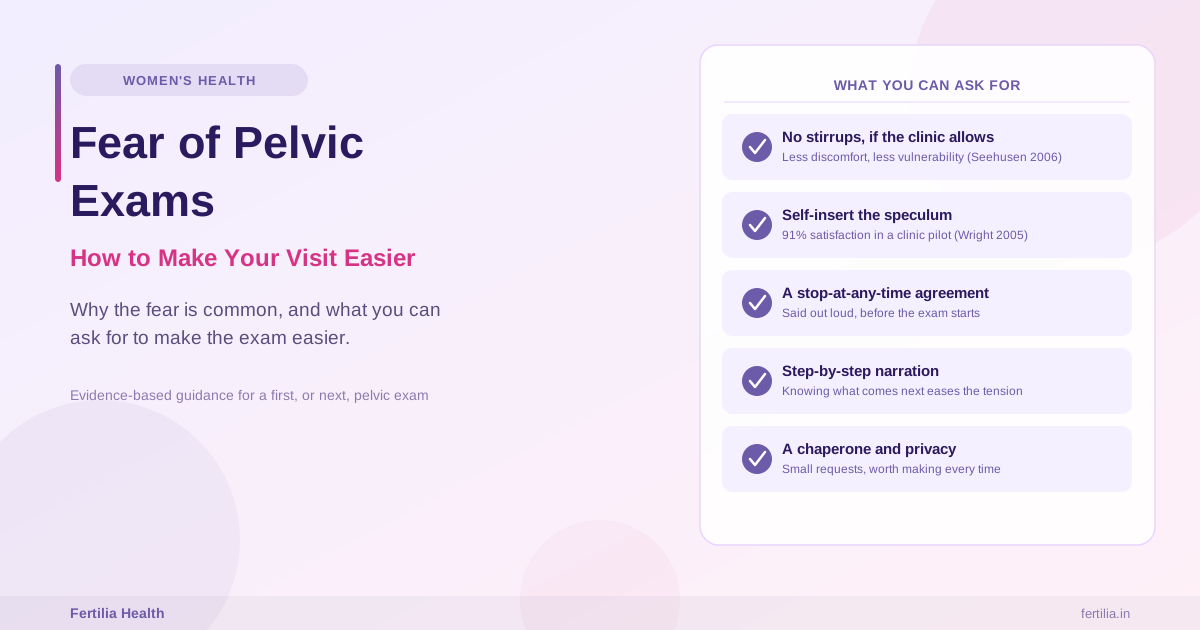
Position. A randomised trial of 197 women having a routine gynaecological examination compared the standard position, using stirrups, with a stirrup-free leg position. Women examined without stirrups reported meaningfully lower physical discomfort (a score of 17.2 versus 30.4 on a 100-point scale) and a lower sense of vulnerability (13.1 versus 23.6), with no downside to the exam itself (Seehusen et al., 2006, BMJ, PMID 16803941). You are allowed to ask for this. It is a legitimate, evidence-backed request, not a special accommodation.
Self-insertion of the speculum. A pilot study offered women attending a family planning clinic the option to insert the speculum themselves rather than have the clinician do it. Nearly 91% of the women who tried it said they were satisfied and would choose to self-insert again, including women who had never had a speculum exam before, and the sample quality collected was not affected (Wright et al., 2005, Journal of Clinical Nursing, PMID 16164528). Not every clinic offers this routinely, but you can ask.
Neither of these requires anything unusual from a good clinician. They are small shifts in how the same exam is conducted, and the research shows they change how the exam actually feels.
What You Can Ask For at Your Visit
You do not need a diagnosis or a special reason to ask for any of these. A good clinician expects these requests and will not think less of you for making them.
- The smallest appropriate speculum. Sizes vary, and a clinician can start smaller and adjust only if needed.
- A stop-at-any-time agreement, stated out loud before the exam starts. “If I say stop, please stop immediately,” said clearly at the beginning, changes the entire tone of the visit.
- A step-by-step narration. Ask the clinician to say what they are about to do before doing it. Not knowing what comes next is a large part of what makes the body brace.
- No stirrups, per the evidence above, if the clinic’s setup allows it.
- The option to self-insert the speculum, if you would rather control that step yourself.
- A chaperone in the room, and privacy while changing.
- A woman gynaecologist, if that changes your comfort level, which for many women it genuinely does.
You can ask for all of this in a single sentence at the start of the visit, or in a WhatsApp message to the clinic beforehand if speaking it out loud in the moment feels harder. Either way, saying it once, clearly, is enough. You should not have to repeat yourself mid-exam.
💬 If the thought of booking a pelvic exam has been sitting on your to-do list for weeks, that is worth a conversation, not more waiting. You can message Dr. Suganya’s team at Fertilia on WhatsApp first, describe exactly what worries you, and we will talk through what the visit can look like before you book anything. Message us on WhatsApp
When This Is More Than Exam Fear
For most women, the adjustments above are enough. The exam still is not pleasant, but it becomes manageable, and the dread around the next one softens over time. For some women, though, the fear points to something wider.
Consider whether this might be vaginismus, or a related fear of penetration, if:
- The fear is not limited to the doctor’s office. Tampons, sex, or any attempt at vaginal touch trigger the same dread or physical resistance.
- Your body actively resists penetration during the exam, muscles tightening involuntarily so the speculum cannot be inserted at all, rather than the exam being uncomfortable but possible.
- You have never had a pelvic exam and the anticipation alone brings on panic symptoms: racing heart, breathlessness, a strong urge to leave.
- You are married and intercourse has not been possible, or has been consistently painful from the first attempt.
If any of that sounds familiar, our guide to vaginismus, an OB-GYN’s honest guide for India, is the next place to look, and our post on fear of sex and how anxiety drives it covers the psychological side of that same pattern in more depth. If your fear is genuinely specific to the clinical exam, and intimacy in other contexts is not affected, the adjustments in this post are usually the whole answer.
Either way, telling your gynaecologist which one it feels like changes how they approach the visit. A doctor who knows in advance that you are anxious, and why, can plan the exam differently from the first minute.
Screening Still Matters, and Kindness Is Not a Trade-Off
None of this is a reason to skip a Pap smear or a needed pelvic exam altogether. Cervical cancer is among the most preventable cancers precisely because screening catches changes early, long before they become serious, and India’s screening coverage remains low enough that avoidable cases are still common. Our guide to Pap smear cost and timing in India covers what the test actually involves and what it costs at different labs, in plain terms.
The point of this post is not to talk you out of your fear, or to tell you the exam is nothing to worry about. It is to say that the fear is real, common, and addressable, and that a better visit is something you are allowed to ask for rather than something you have to hope for.
At Fertilia, Dr. Suganya Venkat has spent 15 years making sure the exam itself matches what a woman actually needs, not just what a checklist requires, and that starts with taking the fear seriously the moment a patient names it.
Frequently Asked Questions
1. Is it normal to be scared of a pelvic exam?
Yes. In one large screening survey, nearly a third of women named embarrassment as a barrier to attending, and 14% named fear of pain specifically. This is one of the most consistently reported reasons women delay or skip pelvic exams, not a rare or unusual reaction.
2. Can I ask my doctor to skip stirrups?
Yes, and there is good evidence behind the request. A randomised trial found that women examined without stirrups reported significantly less physical discomfort and a lower sense of vulnerability than women examined the standard way, with no disadvantage to the exam.
3. Can I insert the speculum myself?
Some clinics will allow this if you ask. A pilot study found that most women who tried self-insertion were satisfied with the experience and said they would choose it again, including first-time patients, and it did not affect the quality of the sample collected. Ask your clinician whether this is an option before the exam begins.
4. What if my body physically will not let the exam happen?
If your pelvic floor muscles tighten involuntarily and the exam cannot proceed despite everyone going slowly, that is a different pattern from ordinary nervousness, and it is worth discussing with your doctor as a possible sign of vaginismus rather than pushing through it. Our vaginismus guide explains what that assessment and treatment path looks like.
5. I have never had a pelvic exam and I am terrified of the first one. What should I do?
Tell your gynaecologist this in advance, ideally before you are in the room. A good clinician will slow the pace, narrate each step, and offer the adjustments described in this post from the start. You can also message a clinic beforehand, as many women do, to ask what a first visit will actually involve before booking it.
6. Does the fear mean something is wrong with me?
No. The fear is a predictable response to an unfamiliar, vulnerable situation, not a sign of a psychological problem. It becomes worth a closer look only if it extends well beyond the exam room, into other forms of intimacy or touch, which is a separate pattern worth naming to your doctor.
7. Will a psychiatrist need to examine me?
No. If you see me for pelvic exam or intimacy-related fear, the consultation is a conversation, not a physical exam. We talk through what is happening and build a plan together. Any physical examination stays with your gynaecologist, on your terms and at your pace.
Taking the First Step
You do not need to have this fear figured out before you book an appointment. You just need a clinician willing to hear it and adjust the visit accordingly, which is a reasonable thing to ask for, not an inconvenience you are causing.
If you would like to talk through what a visit could look like for you, specifically, before committing to anything, message Dr. Suganya’s team on WhatsApp. The first message is often the hardest part. After that, it is just a conversation.