Name has been changed to protect patient privacy. Clinical details and images are shared with the patient’s consent.
For many doctors, personal health quietly takes a back seat.
A normal day begins with good intentions: breakfast on time, enough water, maybe a workout in the evening. Then the OP gets busy. A patient needs extra attention. A procedure runs long. A meeting appears on the calendar. An emergency comes in. Before you realise it, it is mid-afternoon and lunch has not happened yet.
And it is not just the regular days. There are duty nights when sleep gets interrupted. There are 24-hour shifts where the body keeps going because the responsibility demands it. There are conferences, case presentations, and academic commitments that continue long after hospital hours.
After a point, all of this starts feeling normal. You adjust. You tell yourself that once things settle down, you will focus on your health. But healthcare rarely slows down. Weeks become months, months become years, and somewhere in between, meal timings turn irregular, energy dips, and weight creeps up quietly in the background. Not because of a lack of knowledge. Because maintaining a routine becomes genuinely difficult.
This is a reality many healthcare professionals will recognise. And this is exactly where Dr. Anitha found herself.
The Doctor Who Came to Us as a Patient
Dr. Anitha is a 33-year-old gynaecologist. Her days are spent doing what we do at Fertilia in spirit: caring for women. Consultations, procedures, ward rounds, monthly duty shifts, and travel for professional commitments.
When she reached out to Fertilia, her goal was simple and clear. She wanted to take control of her health and achieve sustainable weight loss.
Her starting picture:
- Age: 33
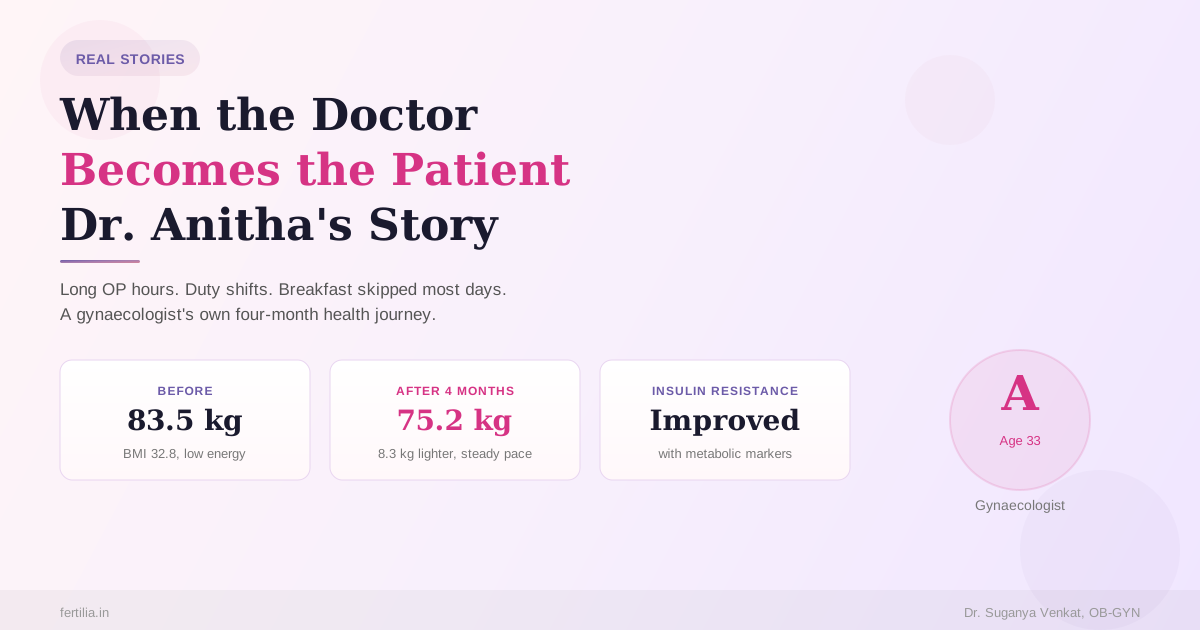
- Weight: 83.5 kg
- BMI: 32.8 kg/m² (Obesity Class I)
- Other concerns: menstrual irregularity, low energy, and a wish to improve her overall health
She mostly ate home-cooked food when she could. But breakfast was missed on most days of the week. Hectic workdays meant quick snacks, evening munching, or simply eating whatever was available. Over time, those patterns had started reflecting on the scale and in how she felt.
The irony was not lost on her. As a gynaecologist, she gives women this advice every day. Knowing what to do was never her problem. Finding a way to make it work inside the realities of her schedule was.
A Plan Built Around the OP Schedule, Not Against It
Her journey began with a detailed consultation with me. We went through her medical history, lifestyle, eating habits, reports, work schedule, and health goals, and built a personalised three-month action plan around them.
Then came the nutrition consultation with Manisha, our nutritionist. Since Dr. Anitha enjoyed cooking, the meal plan was designed around simple home-cooked food that fit her routine: better protein intake, balanced plates, and a proper meal structure even on busy workdays.
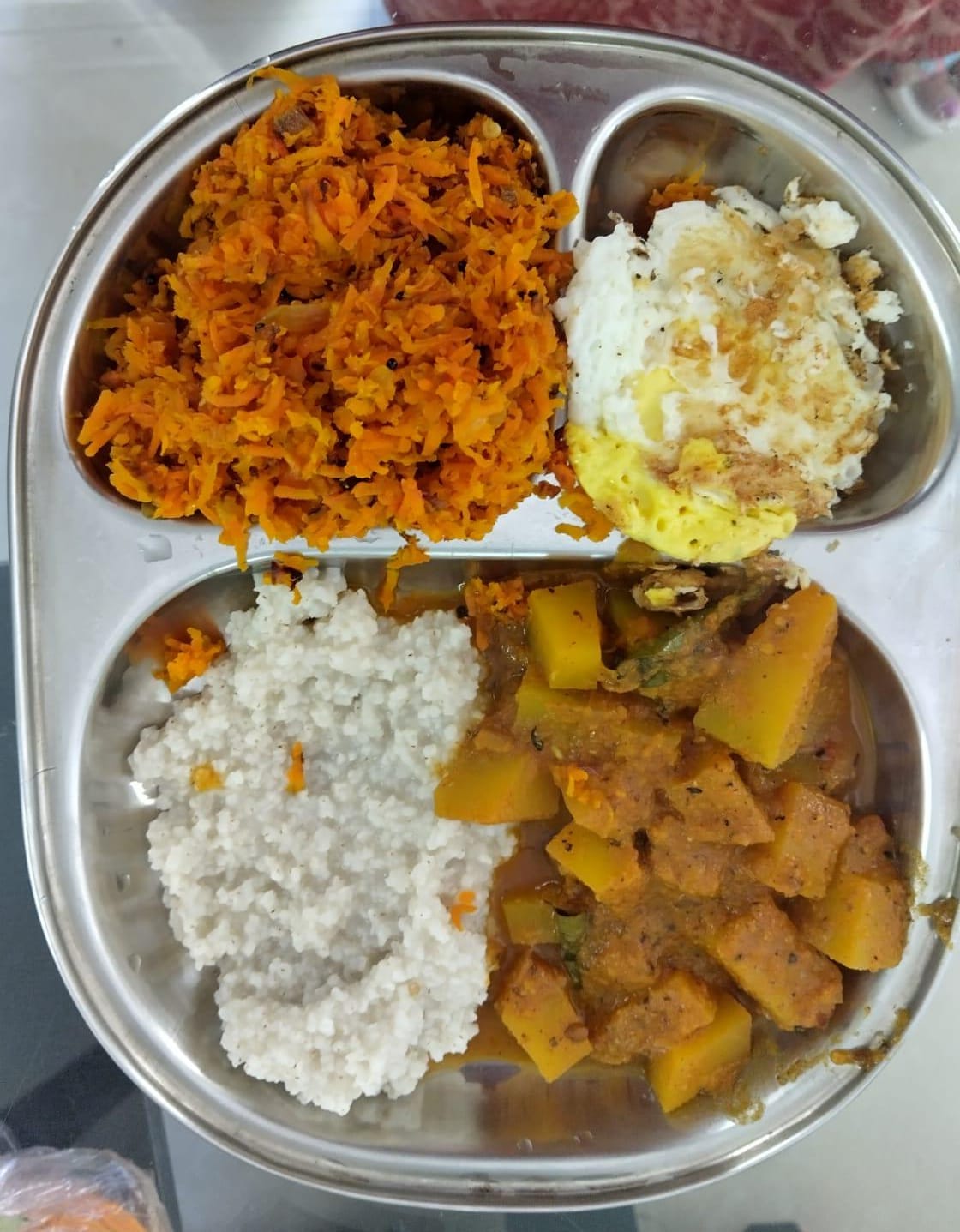
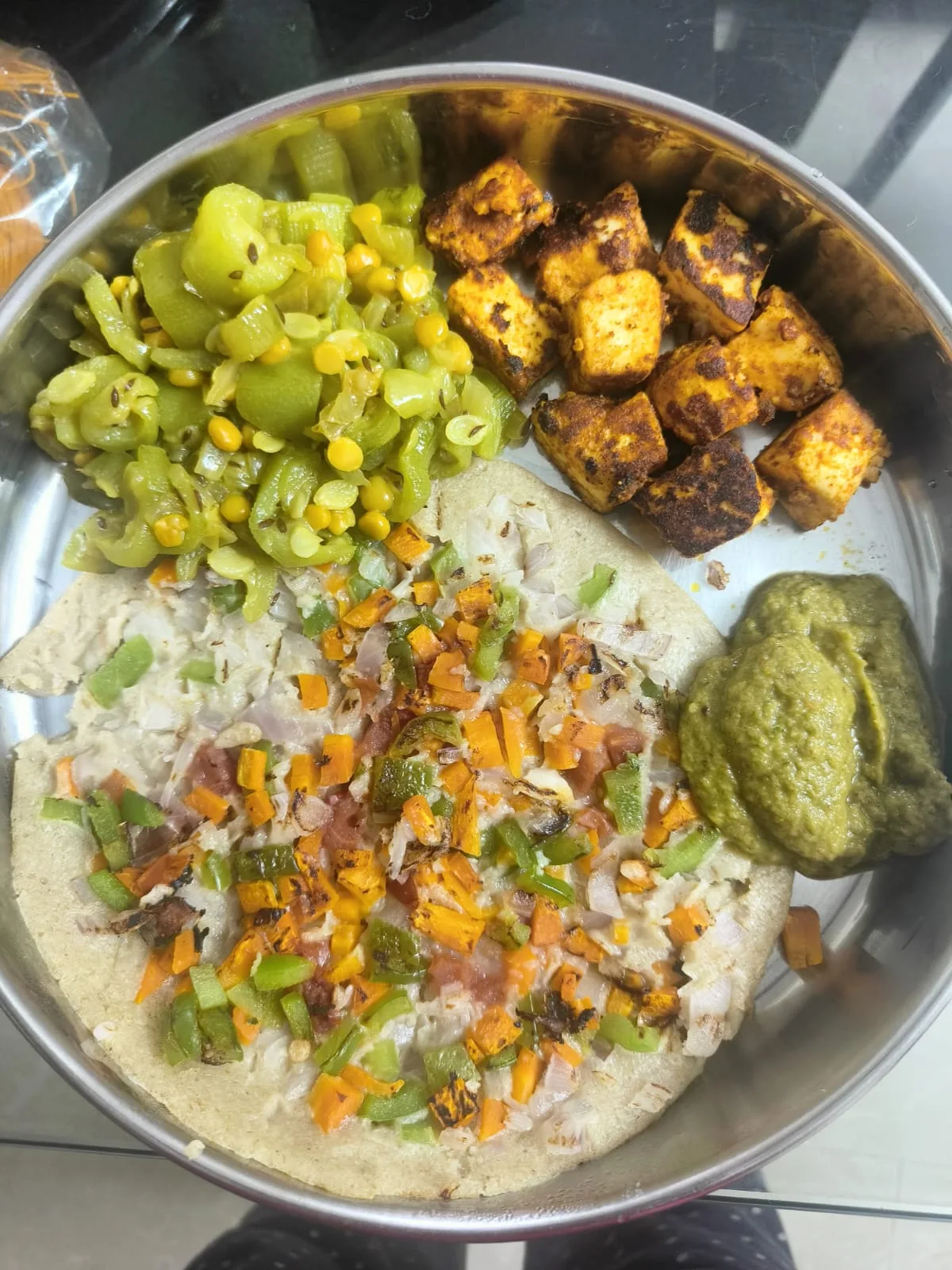
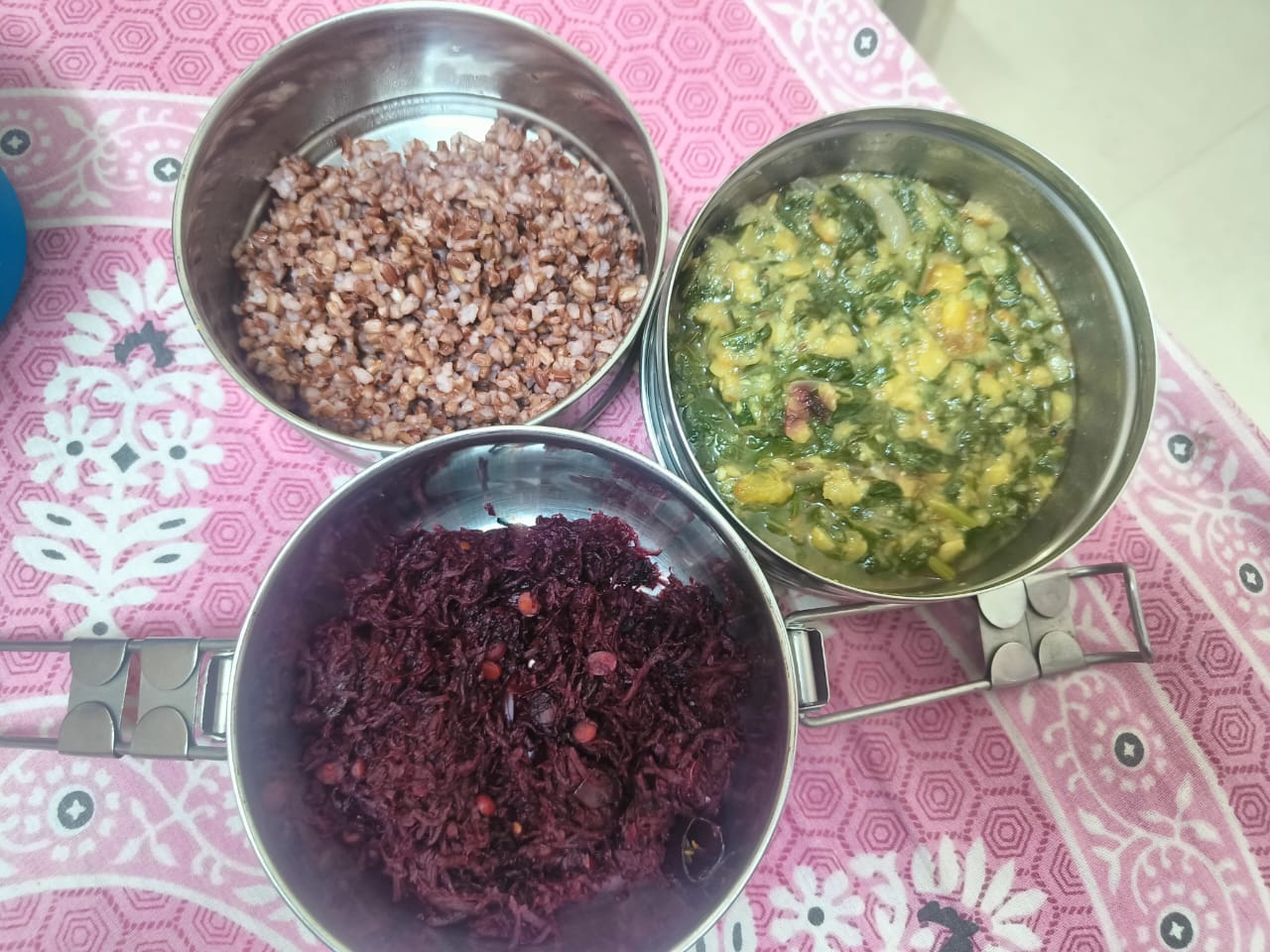
The approach was never about making her spend more time in the kitchen. It was about helping her make better choices within the time she actually had.
- For days with very little time: a nutritious health-mix porridge she could prepare in minutes
- For light evenings: easy soups and salad options built around her preferences
- For duty days and travel: practical guidance on what to order when eating outside, so even a hospital canteen meal or a restaurant order stayed reasonably on track
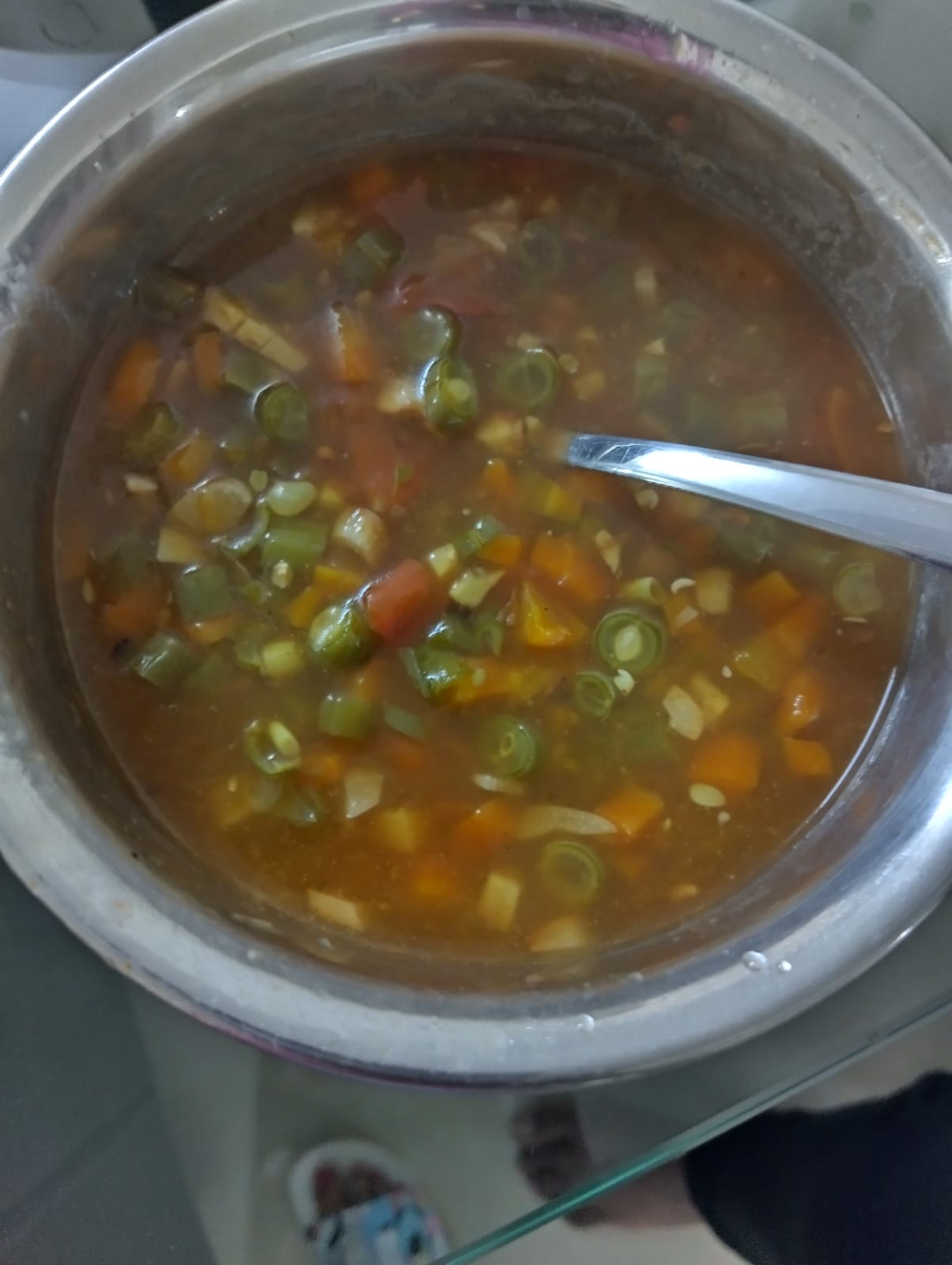

Most importantly, there was no all-or-nothing thinking. The goal was for her to have something nourishing even on difficult days, rather than skipping meals out of guilt, lack of time, or the feeling that the perfectly planned meal was not available.
From the very first week, she implemented the changes sincerely. She began building balanced plates, understanding portions, and developing a feel for what balanced eating looks like in real life, without obsessively tracking every number. (We have written before about why weight loss is never just about the weight. Her journey is a textbook example.)
If your schedule sounds like Dr. Anitha’s and your health keeps getting postponed, Dr. Suganya can help you build a plan that fits your real life. Talk to Dr. Suganya on WhatsApp →
Movement Without a Gym Membership
Exercise was planned the same way: according to her schedule, requirements, and capacity. Nothing that would feel like another burden added to an already full day.
Staying consistent was hard at first. Gradually, she started setting aside 30 to 40 minutes for herself. On days when a dedicated workout was impossible because of duties or hospital commitments, she consciously looked for movement inside the day she already had:
- Stairs instead of the lift
- Walking between departments instead of waiting
- Staying on her feet through busy hospital hours
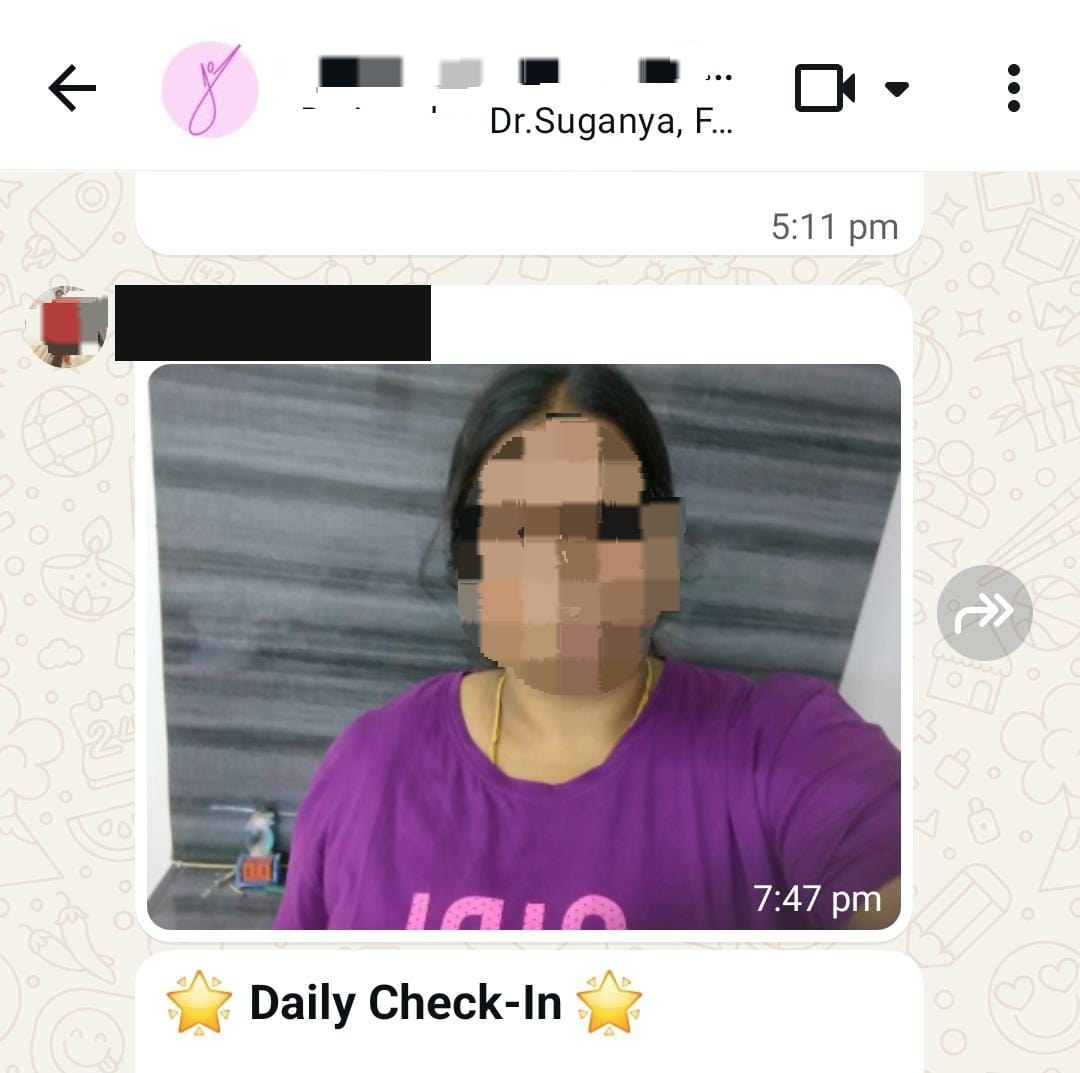
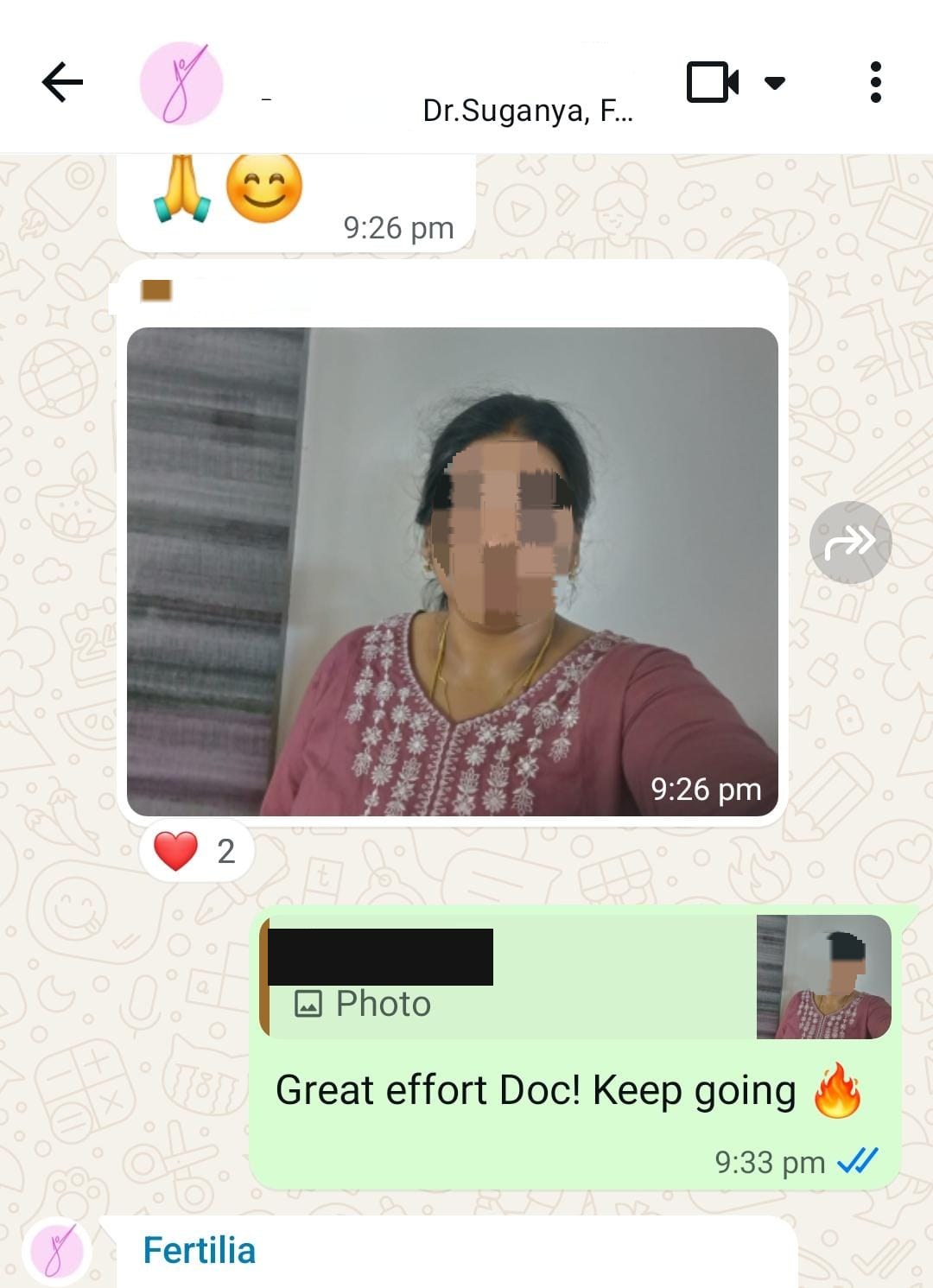
Over time, exercise became less about finding time and more about being a natural part of her routine.
The First Kilogram Took Two Weeks
Here is the part of the story that matters most for anyone starting a similar journey.
The weighing scale did not move for nearly two weeks.
She was doing everything sincerely, and the number stayed stubborn. This is the exact point where most people quit. But even before the scale moved, she had started feeling lighter and less fatigued through the day. Those early changes reassured her that the effort was working, even if the number had not caught up yet.
Then the first kilogram came.
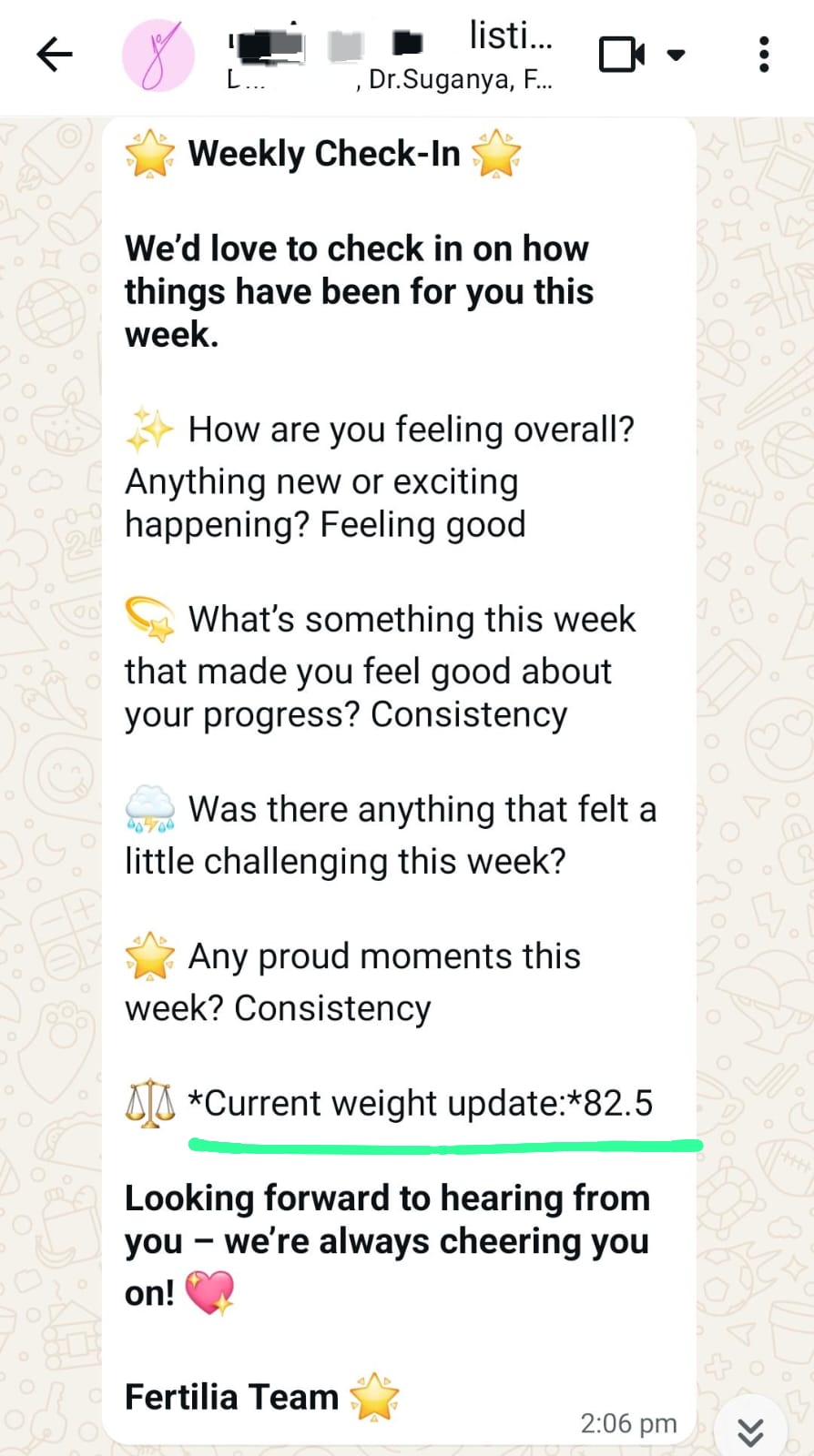
From 83.5 to 82.5 kg. One kilogram that felt like a milestone, because it confirmed the direction.
When she started, her own first target was modest: just get below 80 kg. The seventies felt far away. By the end of the first month, she was at around 79 kg. That progress made the journey feel real, and it reinforced her belief that small, consistent efforts compound.
Sarees, Old Outfits, and Small Victories
As the weight reduced, the happy moments started arriving in ways the scale cannot measure. Clothes fit differently. Older outfits felt comfortable again. She enjoyed trying on dresses she had not worn in a long time, and she would share those moments with us, celebrating wins that went far beyond a number.
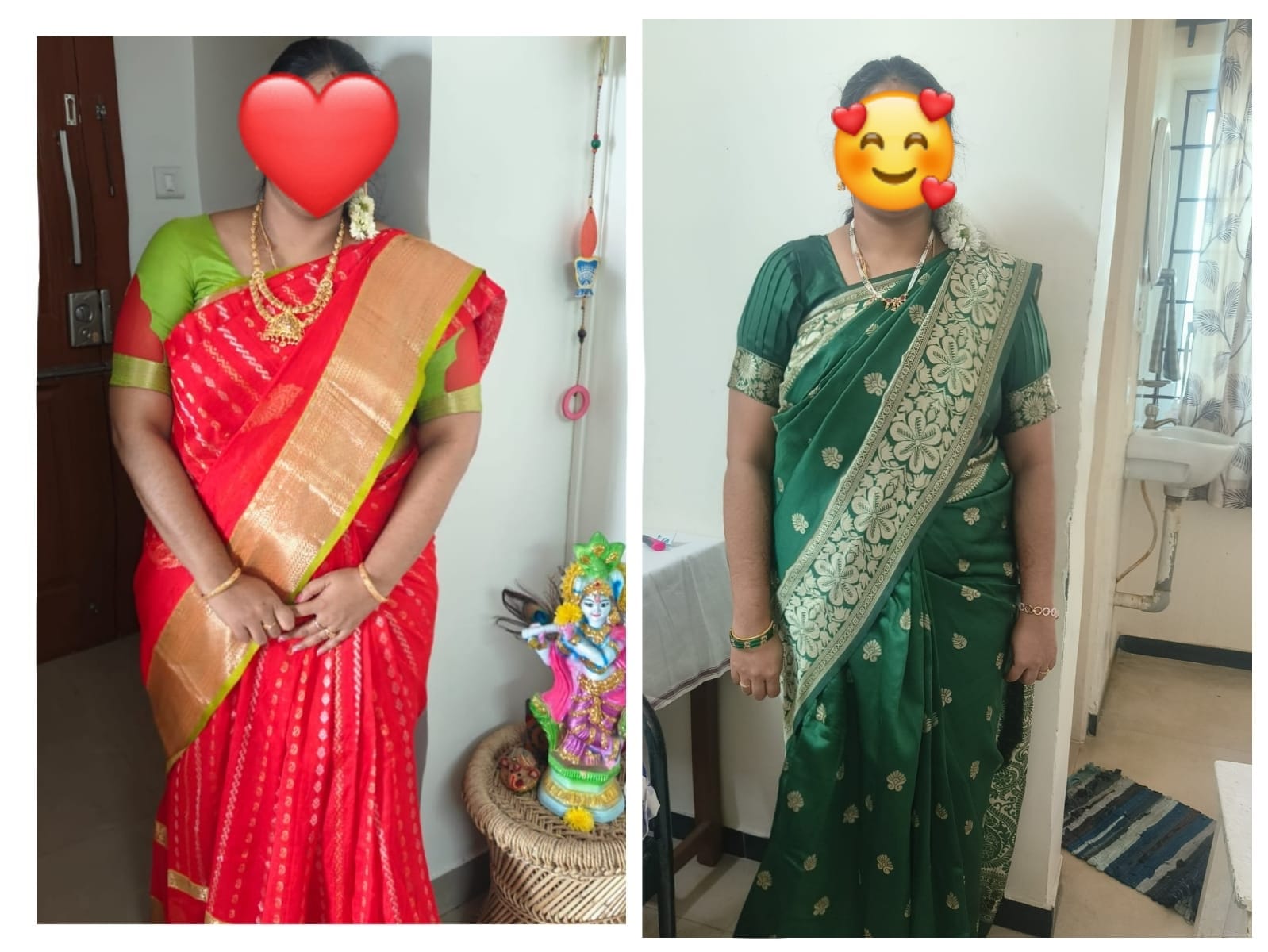
Her energy levels improved. Her routine became more structured. The habits that initially needed conscious effort slowly became automatic. She stopped thinking in terms of dieting, restricting, and starting over. Her relationship with food, movement, and self-care became steadier and healthier.
Where She Finished: 75.2 kg and a Routine That Stays
Over four months, Dr. Anitha’s weight came down from 83.5 kg to 75.2 kg. A loss of 8.3 kg. Gradual, steady, and earned through habits she can actually keep.
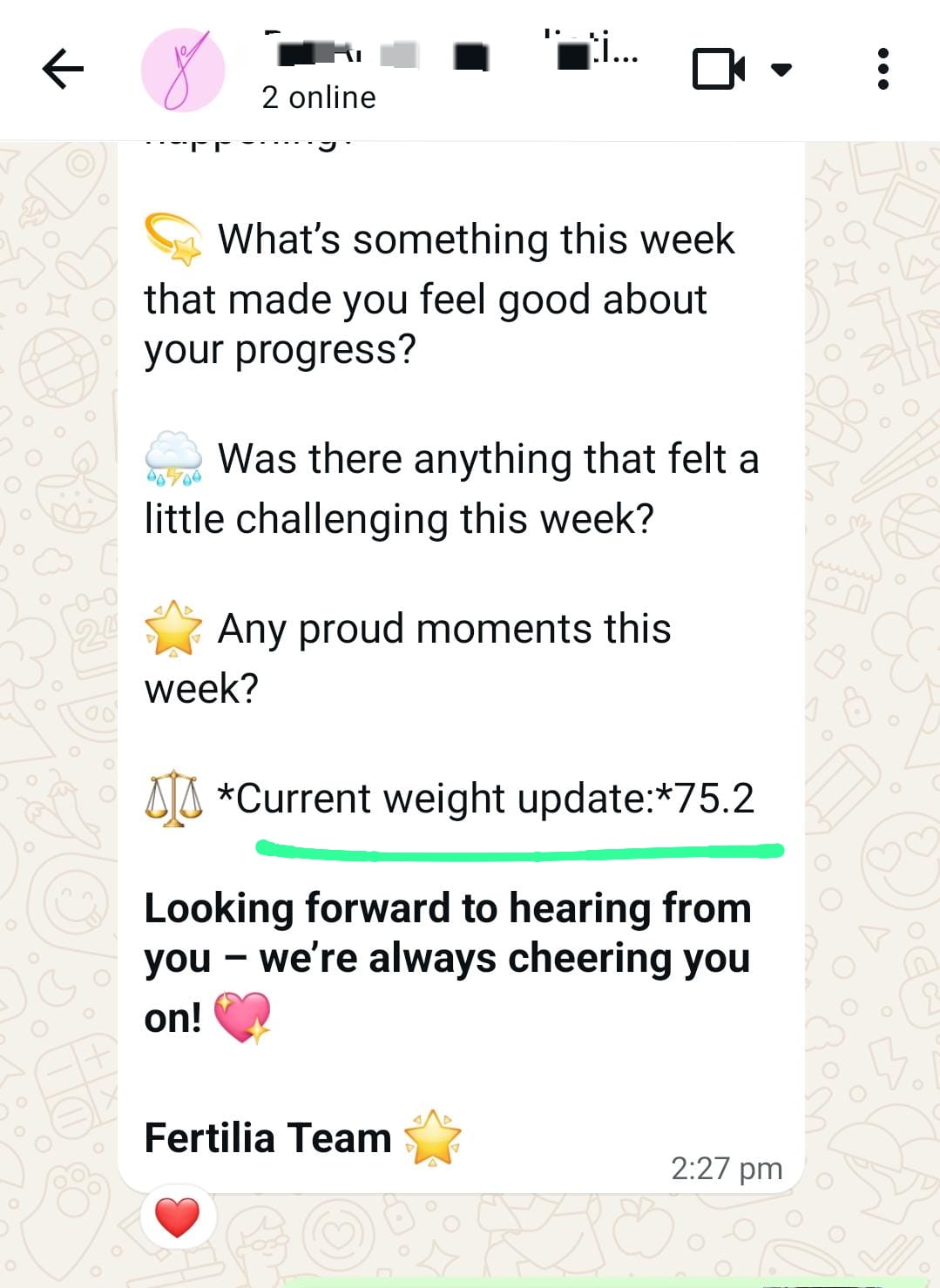
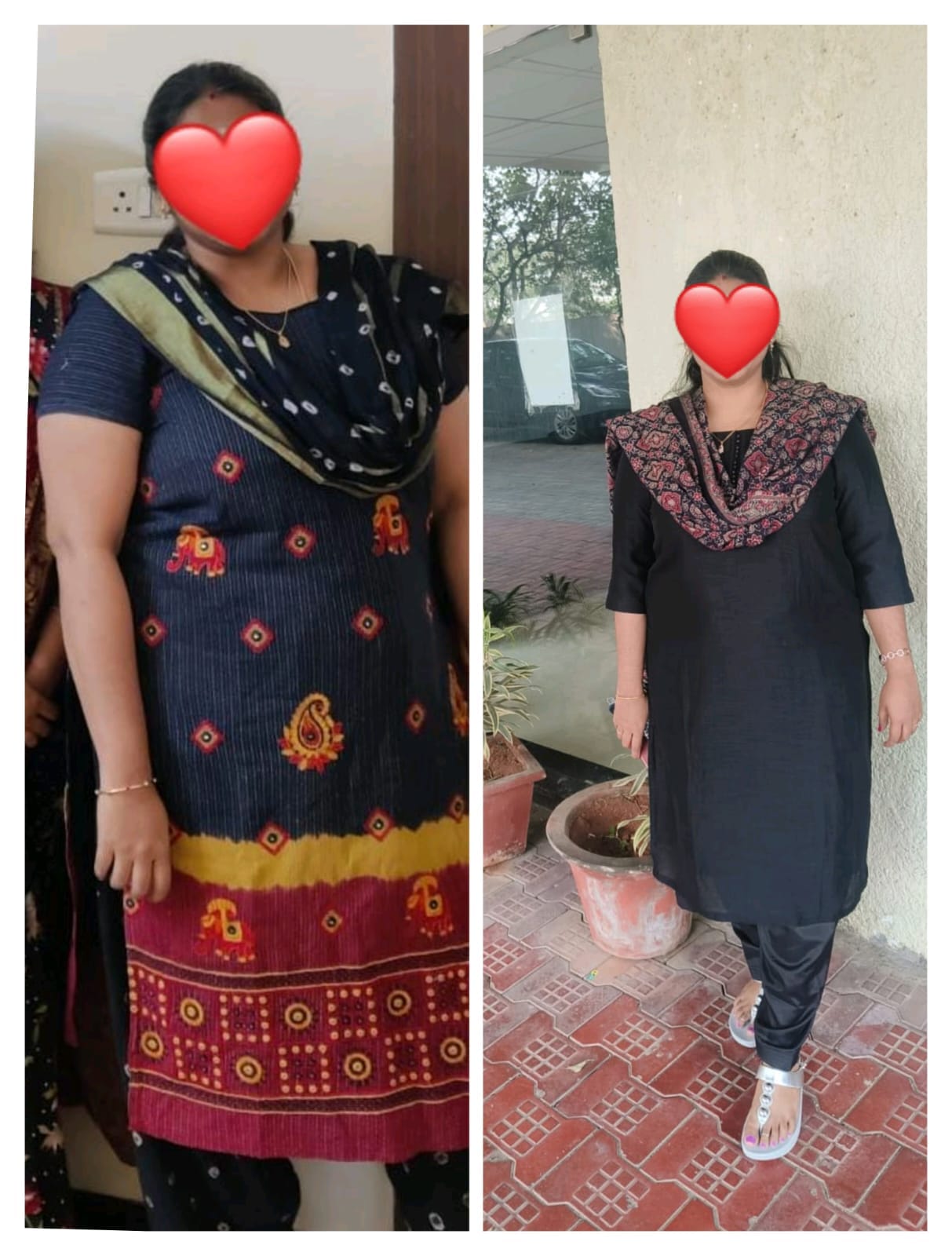
On her reviews through the program, the progress showed up where it matters clinically too: her insulin resistance and metabolic parameters improved alongside the weight. That combination, weight plus metabolic health plus cycle health, is the real outcome we work towards. (If you want to understand this connection better, our guides on insulin resistance and what actually works for PCOS weight loss explain the mechanisms.)
Has she reached her final goal weight? Not yet, and she knows it. What she has reached is something more durable: a way of eating, moving, and looking after herself that survives OP days, duty nights, and conference travel. What started as a weight-loss program became a lifestyle she genuinely sustains.
The same doctor who spends her days caring for patients now keeps a place in her day for her own health as well.
In Her Own Words
After completing four months, she sent the team this message:
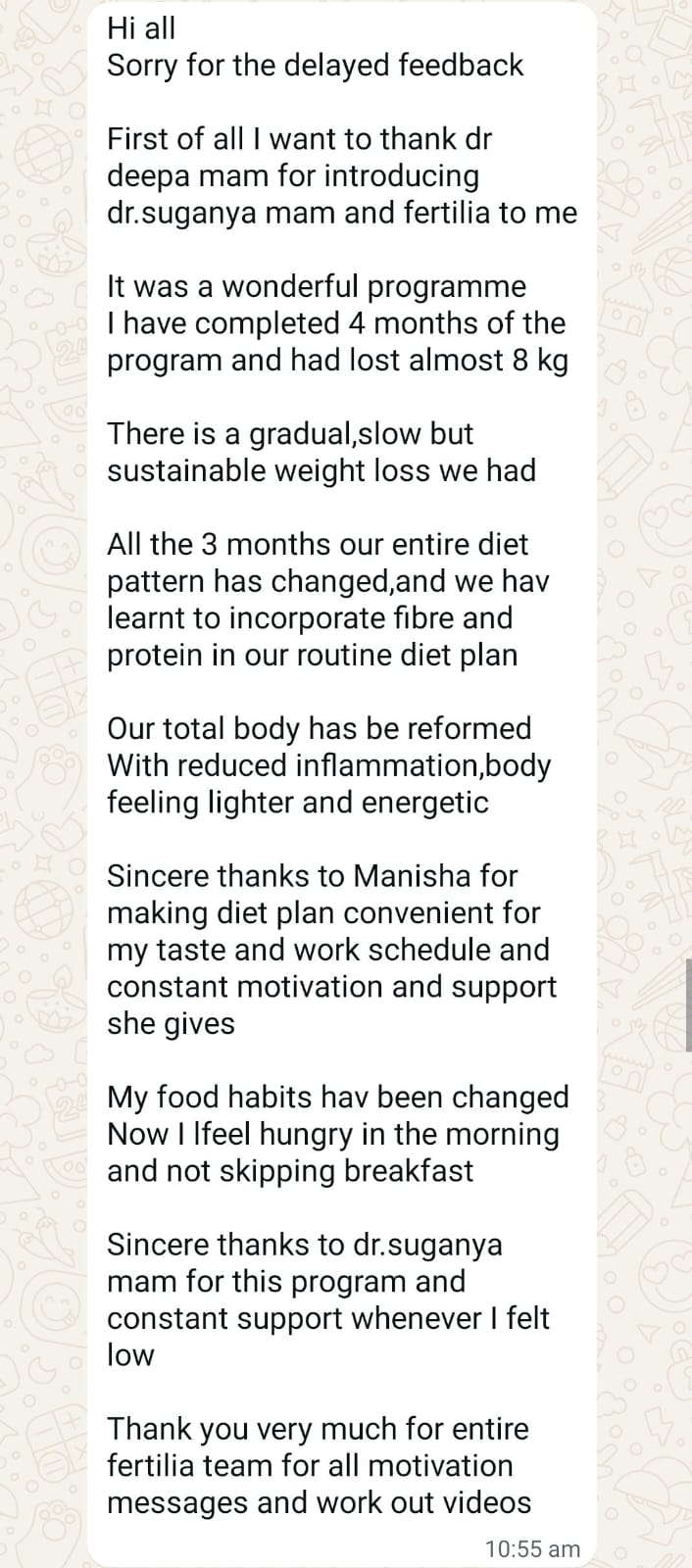
A few lines stand out:
“There is a gradual, slow but sustainable weight loss… our entire diet pattern has changed, and we have learnt to incorporate fibre and protein in our routine diet plan.”
“My food habits have been changed. Now I feel hungry in the morning and not skipping breakfast.”
That second line is bigger than it looks. A doctor who skipped breakfast most days of the week now wakes up hungry for it. That is a metabolism finding its rhythm again.
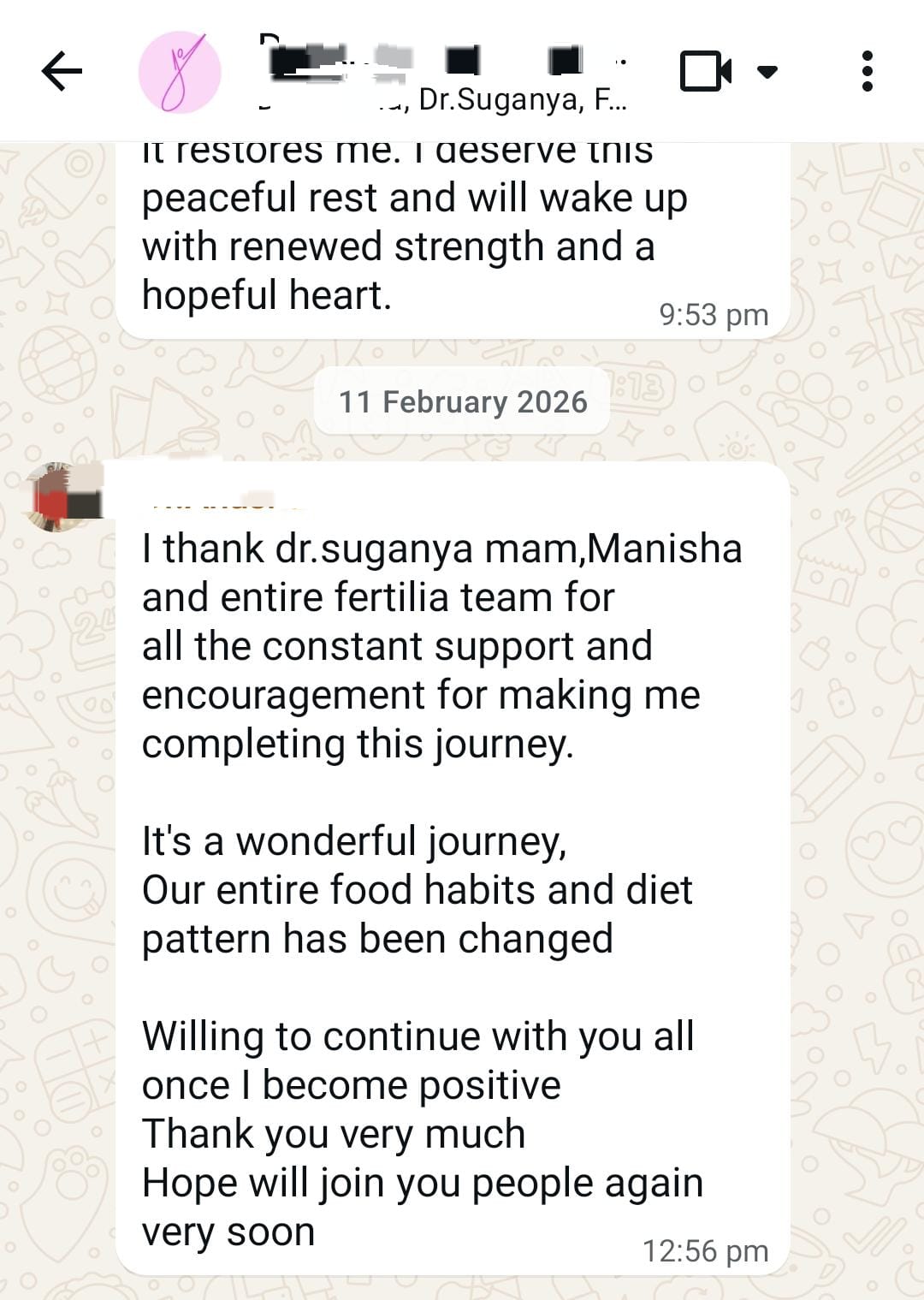
And she has already told us her next plan: she wants to come back, this time for the pregnancy chapter of her journey. Her body is in a far better place for it now. We are cheering for her.
Dr. Suganya’s Note
“Dr. Anitha was a cheerful and smiling person with lots of positivity. She followed the program despite her busy schedule, and we made it as easy as possible for her to follow. She showed remarkable progress in her insulin resistance, metabolic parameters, and weight. We wish her all the best, and we hope to see her soon in Fertilia’s pregnancy program.” (Dr. Anitha was supported through the program by our nutritionist Manisha.)
If Your Calendar Looks Like Hers
Dr. Anitha’s journey is a reminder that meaningful health change is possible amidst demanding schedules, long hours, duty shifts, and family responsibilities. This applies just as much to nurses, teachers, IT professionals, and mothers running households as it does to doctors.
For most busy women, the challenge is not knowing what to do. It is finding a version of it that works within real life. Her story is proof that health does not require a perfect schedule. It requires a practical plan, consistent effort, and habits that fit the life you actually live.
Sometimes the goal is not to find more time. It is to build a routine that works with your life instead of waiting for life to become less busy.
You can read more journeys like hers, including Ramapriya’s weight-loss story, on our stories page. And if irregular cycles are part of your picture too, start with our guide on irregular periods and what they mean.
Every woman deserves a plan built for her body and her schedule, not a generic diet chart. Dr. Suganya and the Fertilia team work with you one-on-one, fully online, wherever you are in India. Start a conversation with Dr. Suganya on WhatsApp →
Frequently Asked Questions
How much weight did Dr. Anitha lose, and over how long?
She went from 83.5 kg to 75.2 kg, a loss of 8.3 kg over about four months. The loss was deliberately gradual: roughly 2 kg per month on average, which is a pace that preserves muscle, protects energy levels, and is far more likely to stay off than crash-diet results.
Can I lose weight with a demanding job and irregular shifts?
Yes, but the plan has to be designed around your schedule rather than an ideal one. In Dr. Anitha’s case that meant a quick health-mix porridge for rushed mornings, soups for late evenings, guidance for ordering food while travelling, and movement built into hospital hours (stairs, walking between departments) on days when a workout was impossible. The principle: something nourishing on every day, including the difficult ones.
Why did the scale not move for the first two weeks?
This is common and completely normal. Early in a lifestyle change, the body adjusts fluid balance, digestion improves, and energy stabilises before fat loss becomes visible on the scale. Dr. Anitha felt lighter and less fatigued well before her first kilogram showed. If you quit in this window, you quit just before the visible results begin.
Is slow weight loss better than fast weight loss?
For lasting results, yes. Evidence-based guidelines, including the 2023 International Evidence-Based PCOS Guideline (Teede et al., 2023), emphasise sustainable lifestyle change over aggressive dieting, and note that even a modest 5 to 10 percent reduction in body weight meaningfully improves insulin sensitivity and cycle regularity. Dr. Anitha’s 8.3 kg represents about a 10 percent loss, achieved without extreme restriction.
What is the connection between weight, insulin resistance, and periods?
Excess weight, especially around the abdomen, worsens insulin resistance. High insulin levels disturb ovulation and can make cycles irregular. As weight and insulin resistance improve, many women see their cycles become more regular. On Dr. Anitha’s follow-up reviews, her insulin resistance and metabolic parameters improved alongside her weight, which is exactly the pattern we aim for. Our insulin resistance guide explains the mechanism in detail.
Do doctors and healthcare professionals join Fertilia’s programs?
Yes. Some of our most committed members are healthcare professionals: doctors, nurses, and hospital staff whose own health has been postponed by years of caring for others. Knowing what to do has never been their gap. A structured plan, accountability, and a team that adapts the plan to duty rosters is what makes the difference. All consultations happen online via video call, so the program fits around hospital schedules anywhere in India.
Every story we share is real, verified, and published with the patient’s consent. Names and identifying details are changed to protect privacy.