Your gynaecologist has mentioned spironolactone, or you’ve seen “Aldactone” written on a prescription, and now you’re searching for what it actually does. Maybe you’re dealing with chin hair that keeps returning after threading, jawline acne that hasn’t responded to anything else, or hair thinning at the crown that started a year or two after your PCOS diagnosis. Spironolactone comes up often in these conversations, and it’s one of the most commonly prescribed anti-androgens for PCOS in India, but it’s also one of the least explained.
Let me walk you through what this tablet is, what it can genuinely help with, the one rule around it that is non-negotiable, and what to expect if your doctor has recommended it.
What Spironolactone Is
Spironolactone was originally developed as a diuretic, a medication for fluid retention and high blood pressure. It works by blocking a hormone called aldosterone, which is why it’s sometimes called a “water tablet.” That’s not why it’s prescribed for PCOS, though.
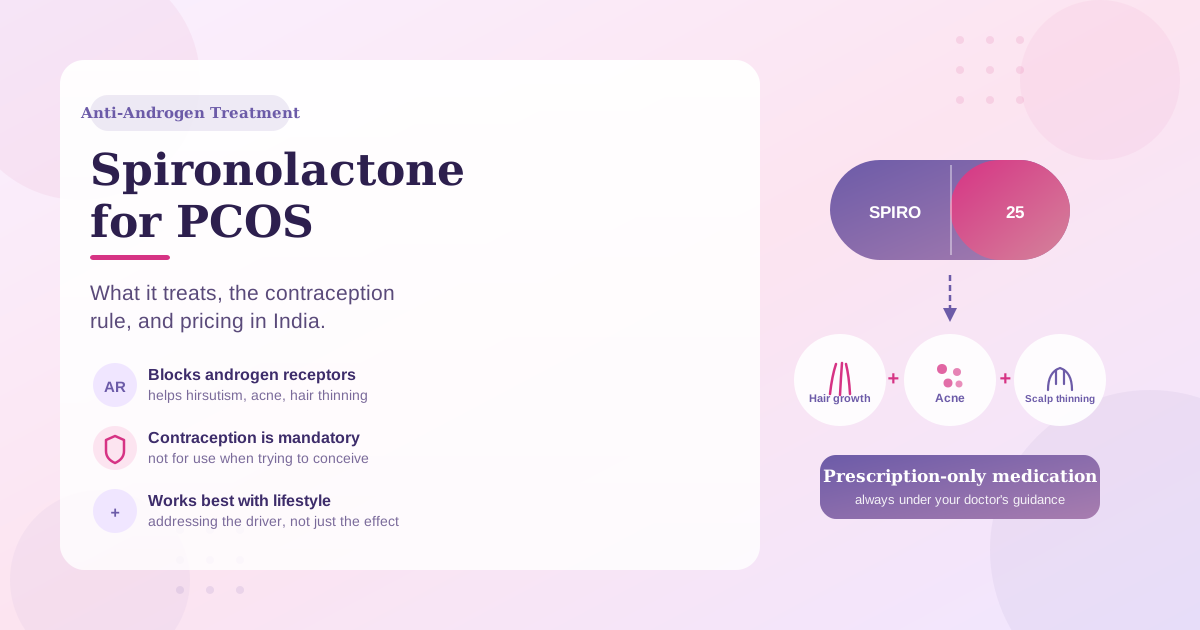
At the doses gynaecologists use for hirsutism and hormonal acne, spironolactone does something else entirely: it blocks androgen receptors. Androgens are the “male” hormones, testosterone being the best known, that every woman produces in smaller amounts but that run higher than typical in PCOS. When androgens attach to receptors in hair follicles and oil glands, they drive coarse facial and body hair growth, scalp hair thinning, and oily, acne-prone skin. Spironolactone sits on those same receptors and gets in the way, so the androgens already in your bloodstream have less effect on your skin and hair.
It also mildly reduces how much androgen the ovaries and adrenal glands produce. Both actions together are why it’s classified as an anti-androgen rather than a hormone replacement of any kind. It does not contain oestrogen or progesterone, and it is not a form of birth control on its own.
What It Helps With in PCOS
Spironolactone has a specific, well-defined role. It is not a treatment for PCOS as a whole condition, and it does not touch every symptom.
Hirsutism (excess facial and body hair). This is spironolactone’s best-studied use. The Endocrine Society’s 2018 clinical practice guideline on hirsutism (Martin et al., J Clin Endocrinol Metab, PMID 29522147) recommends anti-androgens like spironolactone, usually at 100 to 200 mg per day in divided doses, for women who haven’t had enough improvement from oral contraceptives alone, or who can’t take them. Because hair growth cycles are slow, visible change typically takes 6 months to become clear, not weeks.
Hormonal acne along the jawline and chin. Androgen-driven acne tends to cluster along the lower face and jaw and often worsens around the time of the period. Spironolactone reduces the oil-gland stimulation that drives this pattern.
Androgenetic (pattern) hair thinning at the scalp. For scalp thinning that follows the classic PCOS pattern, widening at the part line and thinning at the crown, spironolactone is one of the anti-androgens doctors use alongside topical treatments like minoxidil.
What it does not do: Spironolactone does not induce ovulation, does not treat insulin resistance, and does not regulate your cycle on its own. If irregular periods or fertility are your main concern, that’s a different conversation with your doctor, often involving metformin or a direct ovulation-inducing medication rather than spironolactone.
The Dose Your Doctor Is Likely to Use
Doses for PCOS-related hirsutism and acne typically start low and build up. A common approach is 25 to 50 mg once daily to begin with, moving to 50 mg twice daily after a few weeks if it’s well tolerated, with some women eventually going up to 100 to 200 mg per day for a stronger effect on stubborn hirsutism.
This is entirely your prescribing doctor’s decision, based on your symptoms, your other medications, and how your body responds. Never adjust the dose yourself because results feel slow. The slowness is usually the follicle growth cycle, not an under-dose, and going up on your own removes your doctor’s ability to track your response safely.
💜 Been prescribed spironolactone and want to understand your full PCOS picture? Message Dr. Suganya on WhatsApp to talk through how it fits alongside the rest of your treatment.
The One Rule That Is Non-Negotiable: Contraception
This is the single most important thing to understand before starting spironolactone, and it’s worth reading twice.
Spironolactone blocks androgen receptors, and androgen signalling is what drives normal genital development in a male fetus in early pregnancy. Based on this mechanism and on animal studies, spironolactone carries a theoretical risk of interfering with that development if taken during pregnancy, particularly in the first trimester. Human data on this specific risk is limited, but the concern is considered serious enough that spironolactone is generally avoided in pregnancy, and doctors ask every woman starting it to use reliable contraception throughout treatment.
This means:
- If you are trying to conceive, spironolactone is usually not the right choice, your doctor will likely suggest a different approach.
- If you are sexually active and not trying to conceive, you need a reliable contraceptive method alongside spironolactone. A barrier method alone is often considered insufficient by prescribing doctors; ask what your doctor recommends for your situation.
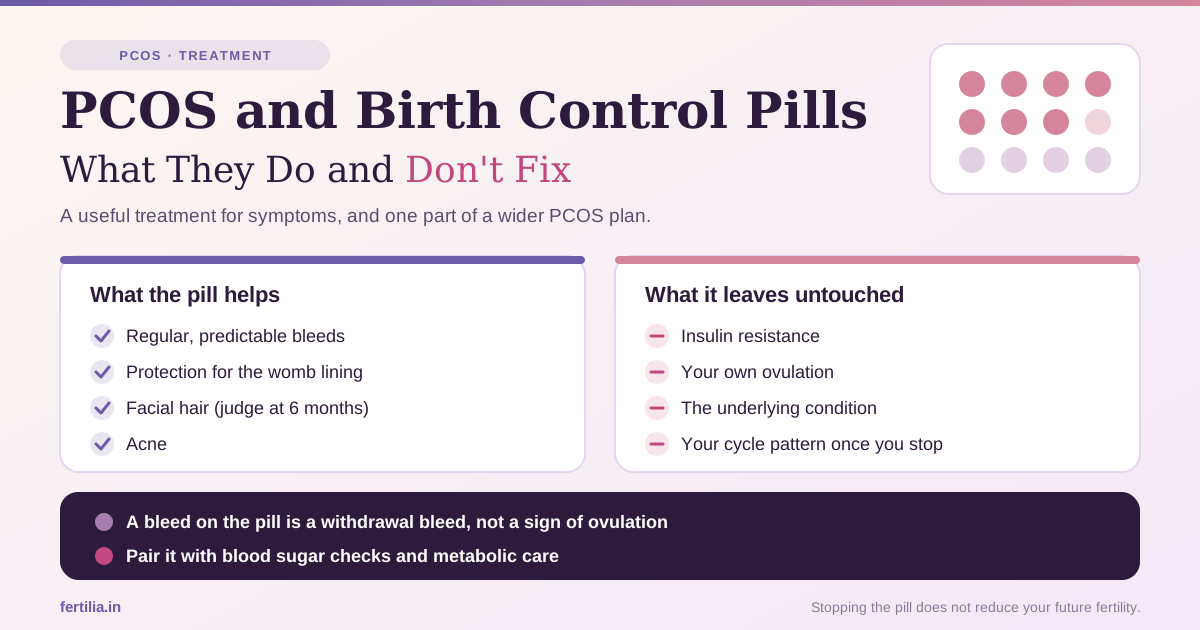
- If you’re already on a combined oral contraceptive pill, that’s actually a common and effective pairing since it addresses two things at once. Read more in our birth control pill guide or the full contraception options comparison if you’re deciding which method fits you.
- If your contraception plan changes for any reason while you’re on spironolactone, tell your doctor immediately.
This isn’t a rare caution buried in the fine print, it’s a standard, expected part of the conversation your doctor should have with you before the first prescription. If it wasn’t raised with you clearly, ask.
Side Effects: What’s Common and What Needs Attention
Because spironolactone started life as a diuretic, some of its side effects come from that original mechanism.
Common and usually manageable:
- Increased urination, especially in the first couple of weeks
- Breast tenderness or mild breast enlargement
- Menstrual irregularity or spotting, particularly when starting or changing dose
- Mild dizziness, especially on standing up quickly, in the first few days
- Fatigue
Less common but worth knowing about:
- Elevated potassium levels (hyperkalaemia). Because spironolactone affects the same aldosterone pathway that regulates potassium, it can raise blood potassium. In healthy young women with normal kidney function and no other risk factors, clinically significant hyperkalaemia is uncommon, but many doctors in India still check a baseline potassium and kidney function test before starting, and may repeat it a few weeks in, particularly if you’re also on ACE inhibitors, ARBs, or potassium supplements. Follow whatever monitoring schedule your own doctor sets for you.
- Low blood pressure or lightheadedness, more likely if you’re also on blood pressure medication.
If you notice muscle weakness, an irregular heartbeat, or persistent lightheadedness, contact your doctor rather than waiting for your next scheduled visit.
India Availability and Cost
Spironolactone is sold in India under the brand name Aldactone (RPG Life Sciences) as well as several generic equivalents, in 25 mg and 100 mg tablets. As of August 2026, a strip of 15 tablets of Aldactone 25 mg runs approximately ₹30 to ₹40, and a strip of Aldactone 100 mg is priced higher per strip. Prices vary by pharmacy, city, and whether you’re buying online or in person, so check the current MRP printed on the strip before purchase, and note that this is a prescription-only medication, not something to buy without your doctor’s prescription in hand.
What It Doesn’t Replace
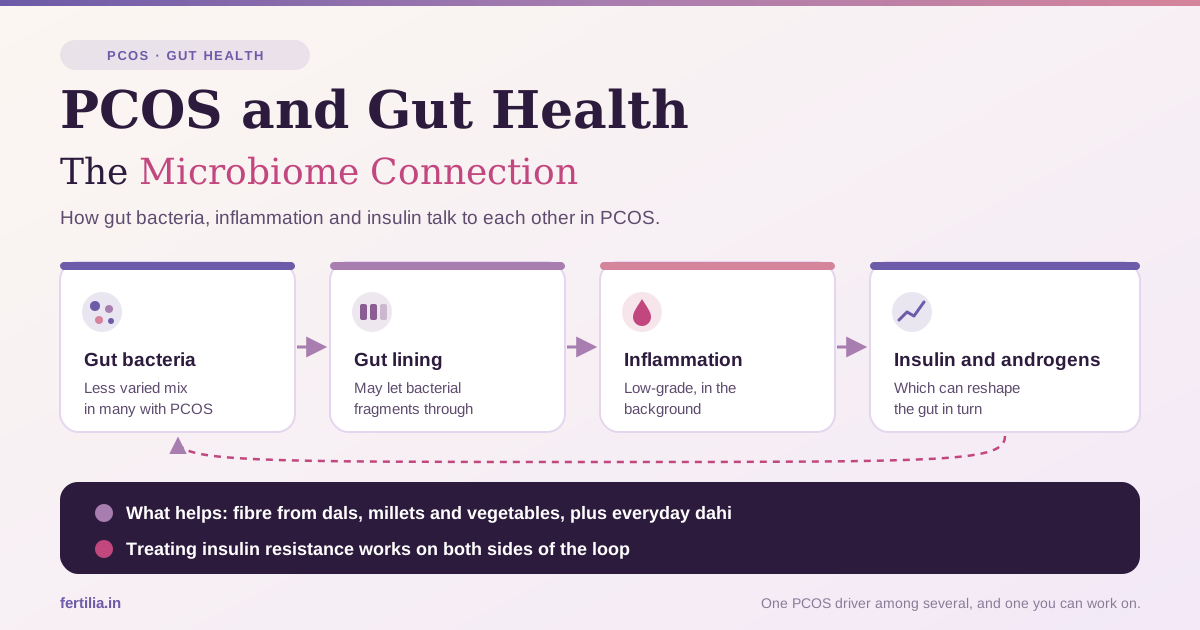
Spironolactone works on one specific pathway, the androgen receptor. PCOS itself has multiple drivers working together, most commonly insulin resistance feeding into higher androgen production in the first place. Spironolactone can turn down the effect of the androgens already circulating, but it does very little about why your androgens are elevated if insulin resistance is the underlying driver.
This is why, in my practice, spironolactone rarely stands alone. It usually sits alongside the lifestyle layer, the food, movement, sleep, and stress patterns that influence insulin and androgen production upstream, and sometimes alongside metformin if insulin resistance is confirmed. Addressing the driver is what determines whether you eventually need less medication, not more.
At Fertilia, this is exactly the layer we build with women in the 90-day PCOS Symptom Reversal program, working alongside whatever your gynaecologist has already prescribed, never instead of it.
💜 Want a plan that works alongside your prescription, not around it? Connect with Dr. Suganya on WhatsApp to talk through what’s driving your PCOS and how to support your treatment.
Other Options Your Doctor Might Discuss
Spironolactone isn’t the only anti-androgen used for PCOS-related hirsutism, acne, or hair thinning, and it isn’t automatically the first choice for every woman.
- Cyproterone acetate, often combined with ethinyl estradiol in a single pill (as in some combined oral contraceptives), is another anti-androgen option, more commonly used in some countries than India.
- Finasteride, used off-label for PCOS-related scalp hair thinning, blocks a different step in androgen metabolism. Like spironolactone, it carries a pregnancy contraindication and needs reliable contraception.
- Combined oral contraceptive pills alone, before or alongside an anti-androgen, are often the first step for hirsutism and acne because they also address irregular cycles.
Which option (or combination) fits you depends on your full picture: whether you’re trying to conceive, your blood pressure and kidney function, your primary symptom, and how you’ve responded to anything already tried. This is a decision to make with your prescribing doctor, not from a comparison chart online.
Frequently Asked Questions
1. How long does spironolactone take to work for PCOS hirsutism? Most women need at least 3 months before noticing a change, and 6 months to see the fuller effect, because hair follicles that are already in a growth phase need to complete their cycle before new, finer hair replaces coarse hair. Judging the medication before 6 months is one of the most common reasons women give up on it too early.
2. Can I take spironolactone if I’m trying to get pregnant? No. Spironolactone carries a theoretical risk to a developing male fetus based on how it blocks androgen signalling, so it’s generally avoided in pregnancy and isn’t the right choice if conception is the current goal. Talk to your doctor about alternatives that fit a fertility timeline.
3. Do I need blood tests while on spironolactone? Many doctors in India check baseline kidney function and potassium before starting, and may repeat it a few weeks into treatment, especially if you’re on other medications that affect potassium. Follow your own doctor’s monitoring plan rather than a generic online schedule.
4. Is spironolactone the same as Aldactone? Yes. Aldactone (RPG Life Sciences) is a common brand name for spironolactone in India, alongside several generic versions. The active medication is identical; what differs is manufacturer, strip pricing, and sometimes tablet appearance.
5. Will spironolactone help me lose weight? No. Spironolactone isn’t a weight-loss medication, and any change in weight while on it is more likely related to reduced fluid retention (since it’s originally a diuretic) than fat loss. If weight is a concern alongside PCOS, that’s addressed through diet, movement, and sometimes metformin, not spironolactone.
6. Can spironolactone regulate my periods? It can cause menstrual spotting or irregularity as a side effect, particularly when starting or adjusting the dose, but it isn’t prescribed to regulate cycles. If irregular periods are your main issue, your doctor is more likely to reach for a different medication, often paired with spironolactone rather than in place of it.
7. What happens if I stop spironolactone? The anti-androgen effect stops once the medication clears your system, and hair growth or acne can gradually return over months as circulating androgens act on your follicles and skin again, unless the underlying driver (often insulin resistance) has also been addressed in the meantime. This is why the lifestyle layer alongside medication matters for the longer term, not just while you’re on the tablet.
Spironolactone is a well-established, genuinely useful tool for PCOS-related hirsutism, acne, and hair thinning, when it’s the right fit and used under a doctor’s guidance with the contraception rule respected. I’m Dr. Suganya Venkat, and after fifteen years as an OB-GYN, the women I see get the most out of it when it’s paired with the lifestyle work that addresses why their androgens are elevated in the first place, not just the tablet on its own.
Have questions about spironolactone or your broader PCOS treatment plan? Message Dr. Suganya on WhatsApp: wa.me/919940270499
Related Reading
- PCOS Hirsutism: Why Excess Hair Grows & What Stops It (the fuller picture on excess hair growth)
- PCOS Hair Loss (Scalp Thinning): Why It Happens & What Works (spironolactone’s role in scalp thinning)
- Metformin for PCOS: Who Needs It, Dose & Side Effects (the medication that targets the insulin driver)
- Birth Control Pill Side Effects: OB-GYN Guide (a common pairing with spironolactone)
- Contraception Options in India: The Full Comparison (choosing reliable contraception while on spironolactone)
- Insulin Resistance & PCOS: Signs, Diet & What to Do (the driver spironolactone doesn’t address)
Dr. Suganya Venkat, OB-GYN with 15+ years of clinical experience. DNB OB-GYN (GKNM, Coimbatore) · MD Pathology (CMC Vellore) · MBBS with 5 Gold Medals (SRMC).