A colleague sends me a scan report on a 15-year-old: “bilateral polycystic ovaries,” with a note asking whether this confirms PCOS. Her periods have been irregular since they started 14 months ago. Her androgen levels haven’t been checked yet. On paper, using the criteria we apply to adult women, this could look like a straightforward diagnosis. In a teenager, it is not, and treating it as one is the exact over-diagnosis pattern international guidelines have spent the last several years trying to correct.
PCOS, now also called PMOS (Polyendocrine Metabolic Ovarian Syndrome, after the 2026 international rename), is genuinely common in adolescence. But the diagnostic bar is deliberately set higher for teenagers than for adults, because so many features of normal puberty look identical to PCOS on the surface. This post walks through exactly where and why the criteria differ, using the 2023 update to the International Evidence-Based PCOS Guideline (Teede et al., Fertility and Sterility, 2023, PMID 37589624) and its dedicated adolescent recommendations (Peña et al., BMC Medicine, 2020, PMID 32204714).
For the broader picture on symptoms, treatment, and what parents can do, my earlier guide on Teen PCOS covers that ground. This post goes deeper into one specific question: what does a doctor actually need to see before writing “PCOS” on a teenager’s chart, and why is the checklist different from an adult’s?
Why the Same Criteria Can’t Be Used on a Teenager
The Rotterdam criteria, the standard used to diagnose PCOS in adult women, need two of three features: irregular ovulation, clinical or biochemical signs of excess androgens, and polycystic-appearing ovaries on ultrasound.
Applied unmodified to a teenager, all three features can show up in a girl with completely normal, healthy puberty.
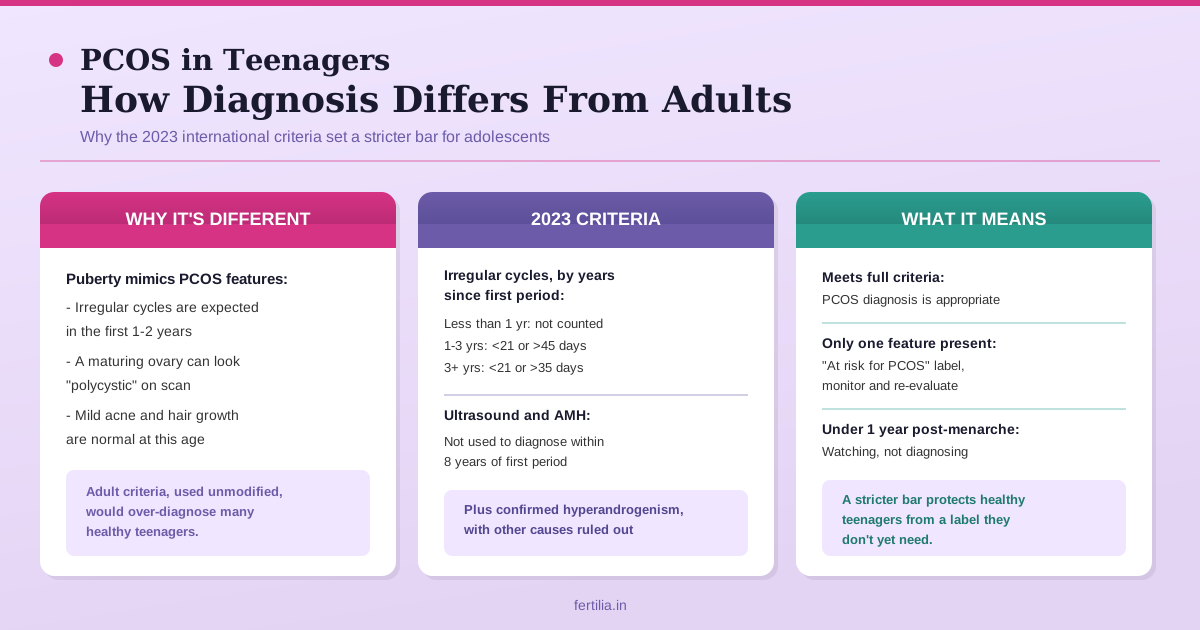
Irregular cycles are the norm, not the exception, right after menarche. The hypothalamic-pituitary-ovarian axis, the signalling loop between brain and ovaries that eventually produces predictable monthly cycles, takes time to mature. Anovulatory cycles (cycles without an egg being released) are expected and common in the first couple of years after a girl’s first period.
A polycystic-looking ovary on ultrasound is common in normal adolescent development. As the ovary matures, it can show a high number of small follicles that looks identical to the “polycystic” appearance used to diagnose adults. This is a feature of a maturing ovary, not necessarily a marker of disease, in this age group.
Mild acne and some increased body hair are part of normal puberty. Rising androgens during adolescence are physiological. A degree of acne and vellus-to-terminal hair change is expected as girls go through puberty, distinct from the more sustained androgen excess seen in PCOS.
Put these three together and use the adult Rotterdam threshold, and a large share of perfectly normal teenagers would be labelled with a lifelong endocrine condition. This is precisely the harm the adolescent-specific criteria exist to prevent.
The 2023 Adolescent Diagnostic Criteria, Point by Point
The 2023 International Evidence-Based PCOS Guideline sets out specific, numeric criteria for adolescents that differ meaningfully from the adult Rotterdam approach.
1. Irregular cycles, defined by years since the first period
Rather than a single definition of “irregular” for every age, the guideline defines irregularity relative to how long it has been since menarche:
| Time since first period | What counts as irregular |
|---|---|
| Less than 1 year | Nothing counts as irregular. This is normal pubertal transition, full stop. |
| 1 to 3 years | Cycles shorter than 21 days or longer than 45 days |
| More than 3 years | Cycles shorter than 21 days or longer than 35 days, or fewer than 8 cycles in a year |
| Any point after 1 year | Any single cycle lasting more than 90 days |
| No period by age 15, or more than 3 years after breast development starts | Primary amenorrhea |
This table is the single biggest practical difference from adult diagnosis. A 13-year-old whose periods started 8 months ago and are unpredictable does not meet the definition of irregular at all, by design. A 17-year-old whose periods started 4 years ago and still arrive every 50-plus days does meet it.
2. Hyperandrogenism, defined more strictly than “some acne”
The guideline specifies hirsutism, severe acne (not the ordinary breakouts of puberty), or biochemical hyperandrogenism confirmed on a validated, high-quality laboratory assay, not just a symptom checklist. A few pimples along the jawline in a 14-year-old does not meet this bar. Persistent, moderate-to-severe acne that hasn’t responded to standard treatment, or lab-confirmed elevated androgens, does.
3. Ultrasound is set aside for the first several years
This is the change that surprises most parents. The guideline recommends against using pelvic ultrasound to diagnose PCOS within 8 years of a girl’s first period. Not “interpreted with caution,” not “de-emphasised,” but not used for this purpose at all in that window. The reasoning is the same one above: a normal maturing ovary can look polycystic on a scan, so the finding cannot reliably distinguish disease from development at this stage.
4. AMH is excluded too, for adolescents specifically
The 2023 update made a notable change for adults: anti-Müllerian hormone (AMH), a blood marker that reflects the number of small follicles in the ovary, can now be used as an alternative to ultrasound when diagnosing PCOS in adult women. This does not extend to adolescents. AMH levels are naturally higher and more variable through puberty, so the guideline explicitly does not recommend it as a diagnostic tool in this age group either. Two blood tests that behave one way in a 30-year-old cannot be assumed to behave the same way in a 15-year-old.
5. Other conditions are ruled out before PCOS is confirmed
Congenital adrenal hyperplasia (a genetic condition that raises adrenal androgens), thyroid dysfunction, and elevated prolactin can all produce irregular cycles and androgen-type symptoms that mimic PCOS. These are checked and excluded as part of a proper adolescent workup, not assumed away.
What This Means in Practice: Two Diagnostic Paths
Put the criteria together, and a teenager lands in one of a few categories, not a single yes-or-no PCOS verdict.
Meets full criteria (irregular cycles by the years-since-menarche definition above, plus confirmed hyperandrogenism, with other conditions excluded): A PCOS diagnosis is appropriate.
Has only one of the two features, or the picture is still forming: The guideline recommends an “at risk for PCOS” label rather than a definitive diagnosis. This label exists to give a genuine clinical category to a real in-between state, not to dodge the question. It means starting the same practical steps (lifestyle support, symptom management, monitoring) while the cycle continues maturing, with formal re-evaluation typically after 3 years post-menarche, and ultrasound only reconsidered after the 8-year mark if the picture still isn’t clear.
Doesn’t meet the irregularity threshold yet (under a year since menarche, or within the wider bands above): This is watching, not diagnosing. A cycle record over the following months tells us far more than a single visit.
I want to be direct about why this distinction matters beyond paperwork. In many Indian families, a teenage PCOS diagnosis arrives loaded with worry about future marriage prospects and fertility, often before there is any reason for that worry. Getting the diagnosis right, rather than early for the sake of being early, protects a teenager from carrying an anxiety that a firmer look at the numbers would not have supported. If your daughter is somewhere in this “at risk” category, that is not a lesser answer. It is often the medically correct one at this stage.
If your daughter has had a scan or blood test that raised the word PCOS, you’re welcome to message me on WhatsApp at wa.me/919940200330 and I can help you understand what the report is actually saying against these specific criteria, over a video consultation.
What a Proper Adolescent Workup Involves
When the cycle-timing criteria above suggest a closer look is warranted, here is what that typically includes.
A cycle history first. Not a one-time recollection, but a record: the date of menarche, and cycle lengths over the past several months if available. This alone often answers most of the question before any test is ordered.
Targeted blood work, generally including total and free testosterone (measured on a validated assay, not a basic panel), LH, FSH, fasting insulin and glucose, and thyroid function (TSH), with prolactin added if there are additional symptoms suggesting it. The point of this panel is twofold: confirming hyperandrogenism where it’s suspected, and excluding the other conditions that can look similar.
Ultrasound only when it’s actually useful, meaning generally not before the 8-year mark discussed above, and even then interpreted against adolescent-specific reference ranges, not adult thresholds.
Screening for the things that often travel alongside PCOS in this age group, including anxiety and low mood, and disordered eating patterns, both of which the guideline specifically flags as worth checking for.
For what happens after a working diagnosis, including nutrition, movement, and where medication fits, that’s covered in full in the Teen PCOS guide. The PCOS acne guide is useful if hormonal acne is the leading symptom in your daughter’s case, and the PMOS rename explainer covers why you may see both names used interchangeably going forward. If metformin comes up as part of the plan, this guide explains when it’s actually indicated.
The Reassuring Part
None of this stricter criteria exists to make a real diagnosis harder to reach when one is genuinely needed. It exists so that a normal, healthy 13-year-old whose body is still finding its rhythm isn’t handed a label she doesn’t need, while a 17-year-old with a clear, sustained pattern of irregular cycles and confirmed androgen excess still gets identified and supported early, which is a real advantage. Managing this well from the teenage years builds a stronger foundation, metabolically and for future fertility, than starting the conversation only in her twenties.
At Fertilia, the approach to a teenage PCOS question is the same one I’d want for my own daughter: work through the actual criteria in front of us, resist the urge to label prematurely, and build a plan around what’s really there rather than what a single scan or a handful of symptoms might suggest on their own.
Frequently Asked Questions
Can a doctor diagnose PCOS in a teenager from an ultrasound alone? No, and this is one of the clearest differences from adult diagnosis. The 2023 international guideline specifically recommends against using pelvic ultrasound to diagnose PCOS within 8 years of a girl’s first period, because a normal maturing ovary can look polycystic on a scan without being pathological. A diagnosis in this age group relies on cycle history and confirmed hyperandrogenism, not imaging.
My daughter’s periods started 8 months ago and are irregular. Is that PCOS? By the current criteria, irregularity within the first year after menarche doesn’t count toward a PCOS diagnosis at all, it’s considered part of normal pubertal transition. This isn’t a reason for concern on its own. Keeping a simple cycle record from now is the most useful thing you can do, so that if things haven’t settled by the 1 to 3 year mark, there’s real data to look at.
What blood tests are used to diagnose PCOS in a teenager? Typically total and free testosterone (using a validated, high-quality assay), LH, FSH, fasting insulin and glucose, and thyroid function. This confirms whether androgens are genuinely elevated and rules out thyroid dysfunction and other conditions that can mimic PCOS, rather than relying on symptoms alone.
Is AMH testing used to diagnose PCOS in teenagers? No. The 2023 guideline update allows AMH (a blood marker of ovarian follicle count) as an alternative to ultrasound for diagnosing PCOS in adult women, but this specifically does not apply to adolescents. AMH is naturally higher and more variable throughout puberty, so it isn’t a reliable diagnostic marker in this age group.
What does “at risk for PCOS” mean if my daughter doesn’t get a firm diagnosis? It means she has some features that raise suspicion (irregular cycles or signs of excess androgens, but not both confirmed together, or not yet meeting the full criteria) without meeting the complete diagnostic bar. The recommended approach is to manage any symptoms present, monitor over time, and re-evaluate formally, generally around 3 years post-menarche for the cycle picture. It is a genuine clinical category, not a way of avoiding the question.
Does a teenage PCOS diagnosis mean she will have trouble getting pregnant one day? Not automatically. PCOS is a common and highly manageable cause of fertility difficulty, and a teenager identified and supported early, rather than one diagnosed later, tends to be in a stronger position by the time fertility becomes relevant. What matters most is managing the condition well through these years.
Beti ke periods abhi shuru hue hain aur अनियमित hain, kab test karvana chahiye? (My daughter’s periods just started and are irregular, when should we get tests done?) Pehle saal mein irregular periods bilkul normal hote hain, kyunki hormonal system abhi settle ho raha hota hai. Agar 1 se 3 saal ke baad bhi cycles bahut chhote (21 din se kam) ya bahut lambe (45 din se zyada) hain, ya saath mein zyada acne ya baal badhna dikh raha hai, tab ek gynaecologist se blood test aur consultation karvana sahi samay hai. Sirf ultrasound report ke aadhar par PCOS ka nishkarsh nikaalna sahi nahi hai.
If your daughter has had a scan, blood test, or a comment from a doctor that used the word PCOS, and you’d like to go through what it actually means against these specific criteria, message me, Dr. Suganya Venkat, on WhatsApp at wa.me/919940200330. I consult with families across India over video call, and I’m glad to help you understand where things genuinely stand before any label gets attached.