If you’ve spent time in a PCOS forum or scrolled past a supplement ad recently, you’ve probably seen probiotics mentioned as a “gut health fix” for PCOS. Some of that comes from real science: PCOS is genuinely linked to changes in gut bacteria, and there is now a real body of trial evidence testing whether probiotics change PCOS outcomes. But “there is a link” and “a capsule will fix it” are two very different claims, and the gap between them is where most of the online confusion lives.
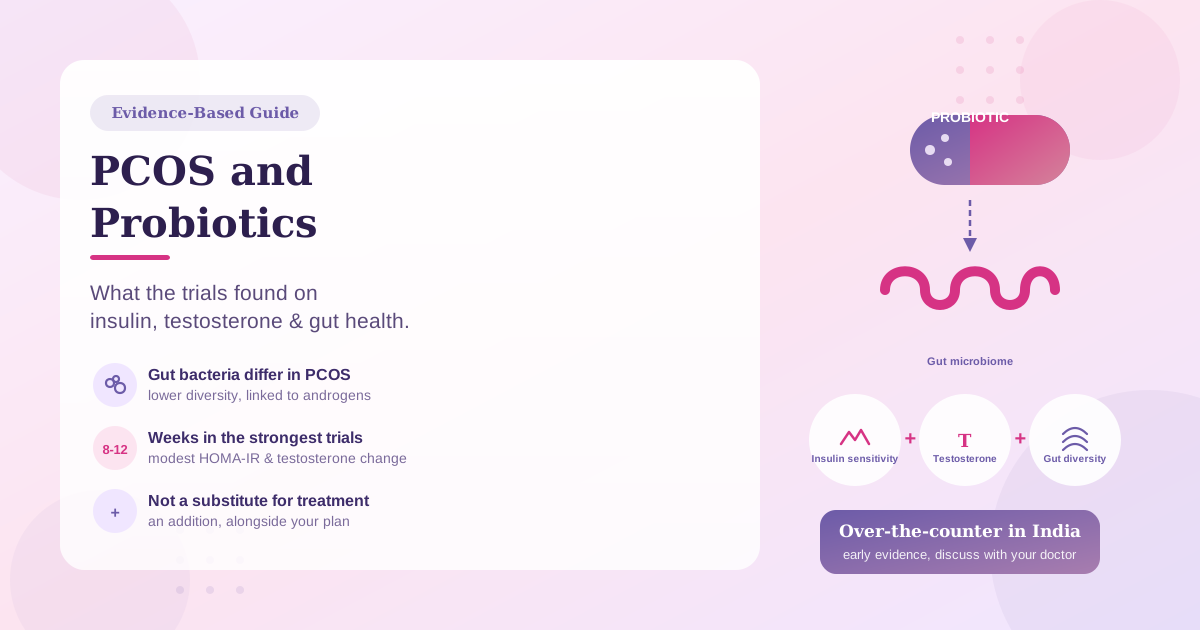
The short version: women with PCOS do show measurable differences in their gut bacteria compared to women without it, and small randomised trials of specific probiotic strains have shown modest improvements in insulin resistance and testosterone levels over 8 to 12 weeks. The evidence is real but early: the trials are small, mostly short, and haven’t shown that probiotics improve periods, fertility, or acne on their own. Below is what the research actually found, which strains were studied, what a reasonable approach looks like, and where food should come before any capsule.
Here is what this post covers:
- The gut-PCOS connection: what “dysbiosis” actually means
- What the trials found on insulin resistance and testosterone
- Which strains have been studied, and their limits
- Food-first: fermented Indian foods before supplementation
- A sensible way to think about trying a probiotic
- What the evidence does not support
The Gut-PCOS Connection: What “Dysbiosis” Means
“Dysbiosis” simply means an imbalance in the community of bacteria living in your gut, compared to what’s typically seen in a healthy gut. It isn’t a diagnosis you can be tested for in a routine clinic visit; it’s a research description of a pattern.
A 2018 study by Torres et al. (J Clin Endocrinol Metab, PMID 29370410) compared gut bacterial diversity between women with PCOS and women without it, and found that women with PCOS had lower gut microbial diversity, and that this lower diversity correlated with higher testosterone levels. A separate pilot study by Lindheim et al. (PLoS One, PMID 28045919) found altered gut microbiome composition and signs of altered gut barrier function in women with PCOS, alongside the reproductive and metabolic features of the condition.
Both of these are association studies. They show that PCOS and altered gut bacteria travel together; they do not prove that the bacterial changes cause PCOS, or that fixing the bacteria would reverse it. The proposed mechanism connecting the two runs roughly like this: an imbalanced gut may allow more bacterial fragments (called lipopolysaccharide, or LPS) to cross into the bloodstream, and this low-grade “leak” is thought to contribute to the chronic, low-grade inflammation and insulin resistance seen in many women with PCOS. This pathway is biologically plausible and actively studied, but it remains a proposed mechanism, not a proven one, in humans with PCOS specifically.
Insulin resistance itself is one of the PCOS drivers in roughly 70% of women with the condition (Dunaif, 1997), and it’s the reason gut bacteria became an area of interest at all: anything that plausibly affects insulin sensitivity is worth testing properly in trials, which is exactly what has started to happen.
What the Trials Found
This is the part worth reading carefully, because headlines about “probiotics for PCOS” tend to flatten nuanced findings into a single yes or no.
A 2022 meta-analysis by Tabrizi et al. (Probiotics Antimicrob Proteins, PMID 31165401) pooled the available randomised trials and found that probiotic supplementation was associated with improvements in glycemic control (blood sugar and insulin measures) and in hormonal parameters, including a reduction in total testosterone, compared to placebo.
A 2023 systematic review and meta-analysis by Li et al. (Crit Rev Food Sci Nutr, PMID 34287081) looked specifically at probiotics, prebiotics, and synbiotics (a combination of both) in PCOS, and found improvements in fasting glucose, fasting insulin, and HOMA-IR, the standard lab measure of insulin resistance, across the pooled trials.
An earlier 2018 meta-analysis by Liao et al. (Minerva Med, PMID 30256077) had already found improvements in glycemic and lipid markers with probiotic supplementation in PCOS, showing this signal has held up as more trials were added over time, not just appeared in one favourable dataset.
One Indian trial is worth naming specifically. Kaur et al. (Eur J Nutr, 2022) ran a randomised, placebo-controlled trial of a multi-strain probiotic (Lactobacillus and Bifidobacterium species) alongside diet and lifestyle changes in Indian women with PCOS, and reported improved menstrual regularity, reduced total testosterone, and reduced waist circumference compared to the placebo group, with no supplement-related adverse events. This matters because most of the trial evidence in this space comes from Iran, and it’s genuinely useful to see a similar signal in an Indian cohort with Indian dietary patterns.
What all of this adds up to: the most defensible finding across these reviews is a modest reduction in HOMA-IR and fasting insulin, meaning probiotics may genuinely help insulin sensitivity a little. Testosterone reductions show up consistently too, though the effect sizes are small, and these are lab values, not necessarily changes you would feel or see. None of these trials were designed or powered to show whether probiotics improve periods, ovulation, fertility, or acne directly. They measured blood markers, not those outcomes.
⚠️ A note on quality: these trials are mostly small (a few dozen to a couple hundred women), 8 to 12 weeks long, and used different combinations of strains and doses. That’s enough to say “the direction of the evidence is encouraging,” and not enough to say “this specific product, at this specific dose, will work for you.” Treat probiotics the way you’d treat any promising but early supplement: worth discussing, not worth expecting a guaranteed result from.
💜 Not sure whether a probiotic makes sense alongside your current PCOS plan? Message Dr. Suganya on WhatsApp to talk through what’s actually driving your PCOS before adding anything new.
Which Strains Were Studied, and Their Limits
The trials behind this evidence didn’t test “probiotics” as one generic thing. They tested specific combinations, most often multiple strains from two genera:
- Lactobacillus species (commonly L. acidophilus, L. plantarum, L. casei, L. rhamnosus, L. fermentum)
- Bifidobacterium species (commonly B. bifidum, B. lactis, B. longum)
Most trials used multi-strain formulations rather than a single organism, at doses generally in the range of a few billion to tens of billions of CFU (colony-forming units) per day, for 8 to 12 weeks. Doses on Indian pharmacy shelves range widely, from a few billion CFU per capsule up to over 100 billion, and a higher CFU count on the label is not automatically better; the trials that showed benefit did not use the highest available doses.
The real limitation here is that no single strain or exact dose has been established as “the one that works for PCOS.” If you’re comparing products, look for one that names its actual strains (not just “proprietary blend”), lists both Lactobacillus and Bifidobacterium species, and states a CFU count guaranteed through expiry rather than only at the time of manufacture.
Food-First: Fermented Indian Foods Before Supplementation
Before reaching for a capsule, it’s worth knowing that Indian kitchens already have several naturally fermented, probiotic-containing foods that don’t require a pharmacy visit:
- Dahi (curd/yoghurt), made the traditional way with a live culture, is the most accessible daily source. A cup with a meal is a reasonable habit for most women, probiotic evidence aside, simply as part of a balanced diet.
- Idli and dosa batter, fermented overnight with live cultures, undergoes real bacterial fermentation before it’s cooked, though cooking does reduce the live-culture content somewhat.
- Buttermilk (chaas/moru) made from fermented curd is another everyday option, particularly in the warmer months.
None of these have been tested in PCOS-specific trials the way the encapsulated multi-strain products above were, so they shouldn’t be assumed to deliver the same measured effect. But they’re low-cost, familiar, and worth building into your diet regardless of whether you also try a supplement. For a fuller look at gut-friendly, high-fibre Indian eating for PCOS, our high-fibre Indian foods guide covers the food side of gut health in more depth than a supplement-focused post like this one can.
A Sensible Way to Think About Trying a Probiotic
If you’re considering a probiotic supplement for your PCOS, here’s a reasonable, low-pressure approach:
- Treat it as a time-limited trial, not a commitment. Pick a product with named strains and a stated CFU count, use it consistently for 8 to 12 weeks (matching the trial durations above), and track what you’re actually trying to measure, whether that’s a lab value your doctor is already checking, or your own sense of digestive comfort.
- Keep everything else steady while you test it. If you change your diet, start a new medication, and add a probiotic all in the same month, you won’t know what actually helped.
- Mention it to your doctor, particularly if you’re on metformin or preparing for fertility treatment, so it’s accounted for in your overall plan rather than layered on quietly.
- Expect a supporting role, not a leading one. Based on the evidence above, a probiotic is reasonable to add alongside your existing PCOS care, in the same category as myo-inositol: genuinely evidence-backed, genuinely not a replacement for metformin or a structured PCOS diet when those are what your situation actually needs.
Most side effects, when they occur, are mild and temporary: some gas, bloating, or a change in bowel habit in the first few days as your gut adjusts, usually settling on its own. If digestive symptoms are more than mild, or don’t settle after a couple of weeks, that’s worth mentioning to your doctor rather than pushing through it.
Availability and Cost in India
Multi-strain probiotic supplements are widely available over the counter at Indian pharmacies and online platforms, no prescription required. As of August 2026, prices vary considerably by strain count, CFU dose, and brand: clearly labelled multi-strain products (naming specific Lactobacillus and Bifidobacterium strains, roughly 50 to 60 billion CFU) run approximately ₹1,300 to ₹1,400 for a month’s supply at major Indian online pharmacies, while simpler two-strain products cost less, around ₹400 to ₹450 for 10 capsules. Prices and formulations change often, so check the current listing, exact strain names, and CFU-through-expiry guarantee before purchasing. Fertilia has no commercial relationship with any brand.
What the Evidence Does Not Support
It’s worth being direct about what these trials have not shown, because online marketing tends to round “modest, measured improvement in a lab value” up to “cures PCOS”:
- Probiotics have not been shown to directly improve fertility or ovulation. If you’re not ovulating and trying to conceive, that’s a conversation for letrozole or clomiphene citrate, not a supplement aisle.
- Probiotics have not been shown to clear acne or reduce hirsutism in PCOS-specific trials, even though the testosterone-lowering effect seen in the pooled data is a plausible reason someone might expect it.
- Probiotics are not a substitute for metformin or inositol as first-line treatment when insulin resistance is significant. They can sit alongside those treatments, not instead of them.
- A probiotic will not fix PCOS as a syndrome. PCOS (now formally renamed PMOS, Polyendocrine Metabolic Ovarian Syndrome) is a chronic condition with a genetic basis; gut bacteria are one contributing thread among several, and even a well-chosen probiotic addresses only that thread.
At Fertilia, this is exactly the kind of question I work through with women in the 90-day PCOS Symptom Reversal program: sorting genuinely evidence-backed additions from well-marketed ones, and fitting each one into a plan built around what’s actually driving your PCOS. I’m Dr. Suganya Venkat, and after fifteen years as an OB-GYN, my approach to a promising but early-evidence supplement like this is the same as with any other: use what the trials actually tested, at a dose in that range, as one part of a fuller plan, not the whole plan.
💜 Want help figuring out what’s actually driving your PCOS, gut health included? Talk to Dr. Suganya on WhatsApp to build a plan around your actual PCOS drivers, not just what’s trending.
Frequently Asked Questions
1. Do probiotics really help with PCOS? Small randomised trials show modest improvements in insulin resistance markers and testosterone levels with specific multi-strain probiotics over 8 to 12 weeks. The evidence is encouraging but early: it hasn’t been shown to improve periods, fertility, or acne directly, so it’s reasonable to try as an addition to your care, not as a stand-alone treatment.
2. Which probiotic strain is best for PCOS? No single strain has been established as best. Most trials used multi-strain combinations of Lactobacillus (such as L. acidophilus, L. plantarum, L. rhamnosus) and Bifidobacterium (such as B. bifidum, B. lactis) species together, rather than one organism alone. Look for a product that names its actual strains rather than using a “proprietary blend.”
3. How long does it take for probiotics to show results in PCOS? The trials that showed benefit ran 8 to 12 weeks. If you’re trying a probiotic, give it that full window before deciding whether it’s helping, and track something measurable, like a lab value your doctor is already checking.
4. Can I take probiotics with metformin or myo-inositol? There’s no known conflict between probiotics and either metformin or myo-inositol; some doctors are comfortable with all three together. Mention what you’re taking to your doctor so it’s accounted for in your overall plan.
5. Is dahi (curd) as good as a probiotic supplement for PCOS? Dahi and other fermented foods like idli or dosa batter contain live cultures and are a reasonable everyday habit, but they haven’t been tested in PCOS-specific trials the way the encapsulated multi-strain supplements above were. They’re worth including in your diet regardless, alongside, not instead of, an evidence-based supplement if you choose to try one.
6. Are there side effects to taking probiotics for PCOS? Most side effects are mild and temporary: gas, bloating, or a change in bowel habit in the first few days, usually settling as your gut adjusts. Tell your doctor if digestive symptoms are more than mild or don’t settle after a couple of weeks.
7. What does gut bacteria have to do with PCOS in the first place? Studies have found that women with PCOS tend to have lower gut microbial diversity than women without it, and that this correlates with higher testosterone levels. The proposed mechanism involves gut bacteria influencing inflammation and insulin sensitivity, both of which are central to how PCOS behaves in most women. This is an active area of research, not a settled explanation.
Have questions about probiotics or building a full PCOS plan? Message Dr. Suganya on WhatsApp: wa.me/919940270499