If you’ve spent any time in a PCOS support group or searching online, you’ve probably come across myo-inositol. It’s the supplement women recommend to each other constantly, sold over the counter in every pharmacy and online store, and often described as a “natural” alternative to medication. Some of that enthusiasm is earned. Myo-inositol has genuine trial-level evidence behind it, more than most supplements marketed for PCOS. But “has evidence” and “does everything people claim” are two different things, and the gap between them is where most of the confusion sits.
The short version: 2 to 4 grams of myo-inositol a day, in a product that is mostly myo-inositol and not mostly D-chiro-inositol, has real trial evidence for improving insulin sensitivity and cycle regularity over roughly 3 to 6 months. It will not reliably make you ovulate on its own, and it is not a cure for PCOS (now formally renamed PMOS). Below is what it actually is, what the research does and doesn’t support, the ratio that matters more than most product labels admit, how it’s dosed, and where it fits alongside the rest of your PCOS care.
What Myo-Inositol Is
Inositol isn’t a hormone, a herb, or a drug. It’s a sugar-like compound related to the vitamin B family, and your body makes some of it naturally while also getting it from food (whole grains, citrus fruit, beans). Inside your cells, inositol plays a role in how insulin signals are carried through, and in how follicle-stimulating hormone (FSH) communicates with the granulosa cells that surround a developing egg. Both of these pathways are relevant to PCOS, which is why inositol supplementation has been studied specifically in this condition rather than as a general wellness product.
There isn’t just one form of inositol. The two that matter for PCOS are myo-inositol (MI) and D-chiro-inositol (DCI). They’re related molecules, and your body converts MI into DCI using an enzyme whose activity varies by tissue. This conversion, and where it goes wrong in PCOS, is the part most product marketing skips over, and it’s the part that actually decides whether a supplement helps you or works against you.
The Ratio That Matters More Than the Label
Here is the part that almost never makes it onto the box: more D-chiro-inositol is not automatically better.
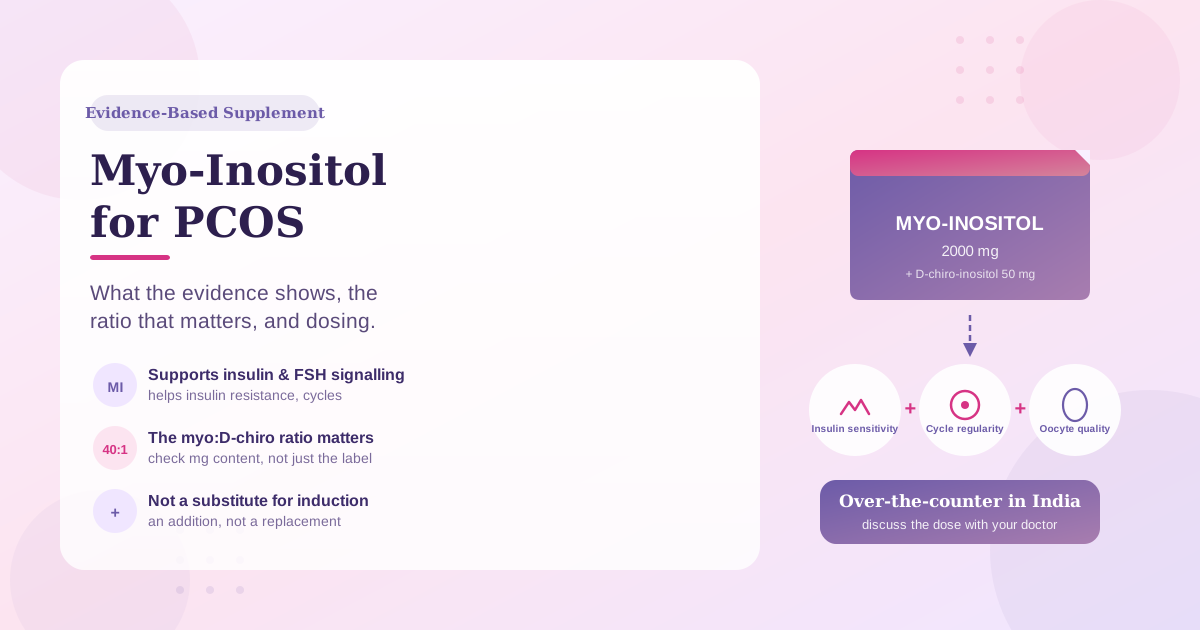
In the plasma of healthy women, MI and DCI sit in a physiological ratio of about 40:1 (myo heavily dominant), and inside the ovarian follicle the balance is even more myo-dominant, reported at roughly 100:1 (Lete et al., Gynecol Endocrinol, 2024). The combination trials were built around that 40:1 plasma ratio. Nordio and Proietti (Eur Rev Med Pharmacol Sci, 2012; PMID 22774396) found that combined myo-inositol plus D-chiro-inositol at 40:1 reduced markers of metabolic disease risk in overweight women with PCOS more effectively than myo-inositol alone. In other words, a small amount of DCI alongside myo-inositol did better than myo-inositol on its own, which is not the same as saying more DCI is better.
Why a DCI-heavy product can be the wrong choice connects to how PCOS ovaries handle these two molecules: some research suggests that in PCOS, the enzyme that converts MI to DCI is overactive specifically in ovarian tissue, so DCI accumulates locally and myo-inositol, the form the ovary actually needs for healthy follicle signalling, gets depleted where it matters most. That is a mechanistic hypothesis rather than settled fact, but it is why the products with the best trial track record are myo-dominant, not DCI-dominant.
So a supplement that’s mostly or entirely D-chiro-inositol, or one with an inverted ratio, is not simply “a stronger version” of the myo-inositol products in the trials. When you’re comparing products, check the milligrams of each, not just whether “inositol” appears on the front of the box.
In practice, this is the single most common thing I have to correct in consults. Women arrive having bought a “PCOS inositol” online that turns out to be D-chiro-inositol-heavy, or a tablet carrying a fraction of the dose the trials used, and they’ve taken it faithfully for months wondering why nothing shifted. I usually ask a woman to bring the actual box to our consult, so we can read the milligrams of myo- and D-chiro-inositol straight off the label rather than guess from the marketing on the front.
💜 Not sure which inositol formulation fits your PCOS picture? Message Dr. Suganya on WhatsApp to talk through which product and dose makes sense for you.
What the Evidence Shows
A 2016 systematic review of randomised controlled trials by Unfer, Nestler and Kamenov (Int J Endocrinol, PMID 27843451) looked across the inositol trials in PCOS and found consistent benefits in two broad areas:
Metabolic effects. Across the trials reviewed, myo-inositol supplementation was associated with improved insulin sensitivity and, in several studies, modest reductions in circulating free testosterone. Since elevated insulin is one of the drivers pushing the ovaries to overproduce androgens in PCOS (Dunaif, 1997), improving insulin sensitivity has a downstream effect on androgen levels for some women, similar in direction to what metformin does through a different mechanism.
Reproductive/ovulatory effects. Several of the reviewed trials reported improved menstrual cyclicity and ovulation frequency with myo-inositol compared to placebo, particularly in women whose PCOS has a strong insulin-resistance component. Separately, in women with PCOS undergoing IVF, a 2019 systematic review by Bhide, Pundir and Gudi (Acta Obstet Gynecol Scand, PMID 30993683) looked specifically at ovarian-reserve markers and concluded there was insufficient evidence that inositols improve those markers, or that they should be used as a routine pre-treatment before IVF or ICSI. Inositol is reasonable to discuss as part of IVF preparation, but it is not established as something that changes IVF outcomes.
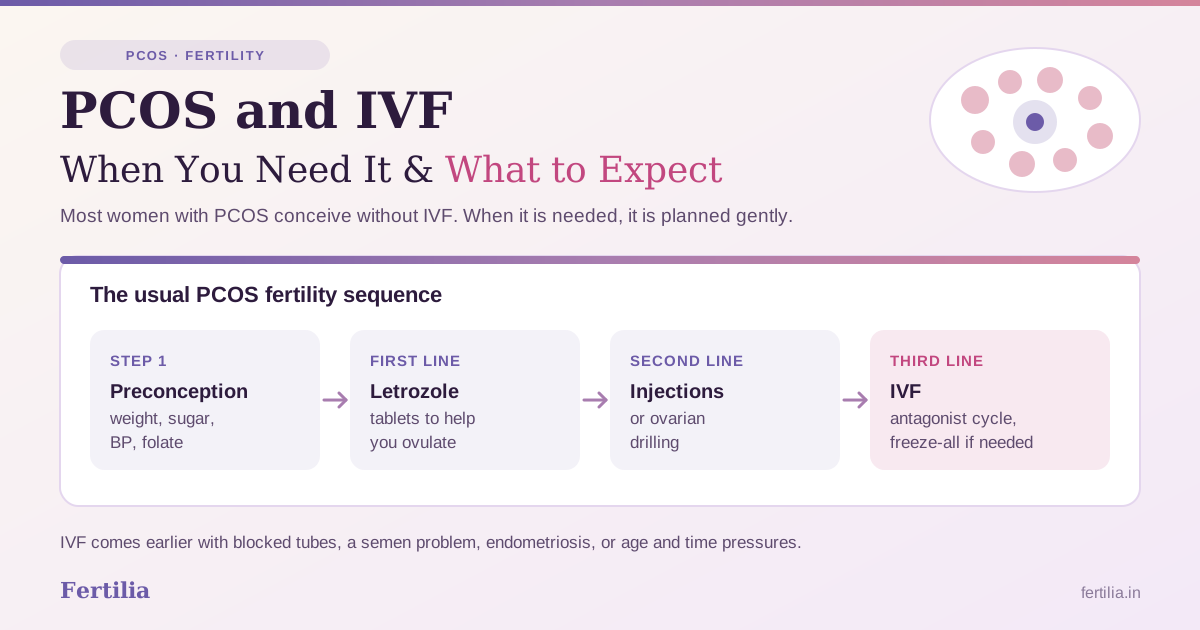
What the evidence does NOT support: myo-inositol is not shown to reliably induce ovulation in anovulatory PCOS as a standalone treatment comparable to letrozole or clomiphene citrate, the medications your doctor would actually prescribe if inducing ovulation is the immediate goal. If you are not ovulating and trying to conceive now, inositol is something you can add alongside your doctor’s plan, not something to try instead of it. Read more on how letrozole and clomiphene citrate work if ovulation induction is where you are right now.
⚠️ A note on quality: this is a supplement category with a wide range of study sizes and durations, and not every trial used the same MI:DCI ratio or dose. The direction of the evidence is consistently positive, but “genuinely useful for many women” is different from “guaranteed to work for you,” and myo-inositol is not a cure for PCOS as a syndrome.
Typical Dosing (What Your Doctor May Recommend)
The doses used across most PCOS trials cluster around:
- Myo-inositol: 2 to 4 grams per day, commonly split into two doses (morning and evening), often taken with meals to reduce mild stomach upset.
- D-chiro-inositol: 50 to 75 mg per day when combined, reflecting the physiological 40:1 ratio rather than a large standalone DCI dose.
- Folic acid is frequently co-formulated in combination products, since folate is already a standard preconception recommendation.
This is general information about what the research studied, not a personal prescription. Your actual dose should be confirmed with your doctor, especially if you’re also on metformin (the effects can be additive, so your doctor may adjust your overall plan rather than simply stacking both at full dose), if you have any kidney condition, or if you’re pregnant or trying to conceive under active fertility treatment.
Improvement is gradual. Most trials measuring metabolic markers ran 12 to 24 weeks before showing meaningful change, and menstrual cycle effects typically need at least a few cycles to become clear. This is consistent with how most PCOS interventions work, not a sign that the supplement isn’t working if you don’t notice a difference in the first few weeks.
Side Effects and How to Take It Comfortably
Myo-inositol is well tolerated for most women. When side effects do occur, they’re usually mild and digestive: some nausea, loose stools, or bloating, seen mostly at the higher 4 gram dose and mostly settling within the first week or two as your body adjusts. Serious reactions are rare.
A few simple things make it easier on the stomach:
- Start low and step up. Begin at 2 grams a day for a week or two, then move towards 4 grams only if your doctor has suggested the higher dose.
- Split the dose. Half in the morning and half in the evening is gentler than 4 grams at once.
- Take it with food, which reduces stomach upset for most women.
If loose stools or bloating don’t settle after a couple of weeks, or feel more than mild, tell your doctor rather than pushing through. Stepping back to the lower dose is usually enough.
Availability and Cost in India
Myo-inositol supplements are widely available over the counter at Indian pharmacies and online platforms, no prescription required. Formulations vary considerably, so check the actual milligram content rather than relying on the brand name alone. As of August 2026, a 40:1 combination sachet (myo-inositol 2000 mg plus D-chiro-inositol 50 mg, often with vitamin D3 added) runs roughly ₹55 to ₹65 per sachet at MRP at major Indian online pharmacies, working out to about ₹1,650 to ₹1,950 a month at one sachet daily; Suresitol from Intas Pharmaceuticals is one widely stocked example at this composition. (Fertilia has no commercial relationship with any brand named here.) Tablet-based combination products are also available, typically priced ₹230 to ₹330 for a pack of 10 to 12, though check the per-tablet inositol content carefully since some tablet formulations carry a much lower dose per unit than the sachet powders used in trials. Prices vary by retailer, city, and ongoing discounts, so confirm the current price and exact composition before purchasing.
Who Benefits Most
Myo-inositol isn’t equally useful for every PCOS presentation. Based on where the trial evidence is strongest, it tends to help most:
- Women whose PCOS has a clear insulin-resistance component, whether or not they’ve been formally diagnosed with insulin resistance. If you’re not sure where you stand, our guide on insulin resistance and PCOS covers the signs and how it’s assessed.
- Women already on metformin who want to understand how the two interact, rather than assuming more supplements automatically means more benefit.
- Women preparing for IVF or IUI who want an evidence-supported addition to their preparation, alongside (never instead of) their fertility specialist’s protocol. See our guide on improving egg quality through diet and supplements for the fuller picture.
It is a reasonable, low-risk addition for most women with PCOS to discuss with their doctor. It is not a fix for PCOS as a whole condition, and it does not replace ovulation-inducing medication when that’s what’s actually needed.
💜 Want a plan that puts inositol in its right place alongside the rest of your care? Connect with Dr. Suganya on WhatsApp to build a plan around what’s actually driving your PCOS, not just what’s trending online.
At Fertilia, sorting what actually helps from what’s just well-marketed is exactly the kind of question we work through with women in the 90-day PCOS Symptom Reversal program. I’m Dr. Suganya Venkat, and after fifteen years as an OB-GYN, my approach with inositol is the same as with any supplement: use what the evidence supports, at the dose the evidence used, alongside whatever your doctor has already prescribed.
Frequently Asked Questions
1. Is myo-inositol safe to take with metformin? Generally yes, and some doctors recommend the combination since both act on insulin sensitivity through different pathways. Because the effects can be additive, tell your doctor you’re taking or considering myo-inositol so your overall plan accounts for it, rather than adding it on your own without mentioning it.
2. How long before myo-inositol shows results for PCOS? Most trials measuring metabolic changes (insulin sensitivity, androgen levels) ran 12 to 24 weeks before showing clear improvement. Menstrual cycle regularity typically needs at least 2 to 3 cycles to assess. This is a gradual-effect supplement, not a fast-acting one.
3. Can myo-inositol help me ovulate if I’m not ovulating at all? It may help in women whose anovulation is linked to insulin resistance, but it is not shown to reliably induce ovulation as a standalone treatment the way letrozole or clomiphene citrate can. If you’re actively trying to conceive and not ovulating, talk to your doctor about ovulation-inducing medication; inositol can be an addition to that plan, not a replacement for it.
4. What’s the difference between myo-inositol and D-chiro-inositol, and do I need both? They’re related molecules with different roles. Myo-inositol supports insulin and FSH signalling in the ovary; D-chiro-inositol, in excess relative to myo-inositol, has been linked to disrupted ovarian steroid production. Most trial evidence favours combination products at close to the physiological 40:1 (MI:DCI) ratio rather than myo-inositol alone or D-chiro-inositol-heavy formulations.
5. Does myo-inositol cause weight loss? It isn’t a weight-loss supplement on its own. Some women lose weight more easily once insulin sensitivity improves, since high insulin can make fat loss harder, but the mechanism is indirect. If weight is your main concern, diet, movement, and sleep changes do the heavier lifting, with inositol as one supporting piece.
6. Is myo-inositol prescription-only in India? No. It’s sold over the counter as a nutritional supplement, not a prescription medicine. That doesn’t mean it’s risk-free for everyone; it’s still worth mentioning to your doctor, particularly if you’re on other medications or managing a separate health condition.
7. What is myo-inositol called in Hindi or Tamil, and how is it usually taken? There isn’t a distinct Hindi or Tamil name; it’s referred to by its English/scientific name (myo-inositol) even in Hindi and Tamil-language patient conversations, usually alongside “PCOS ke liye” (for PCOS) when women search for it. It’s most commonly taken as a powder dissolved in water, split into a morning and evening dose with meals.
Have questions about myo-inositol or building a full PCOS plan? Message Dr. Suganya on WhatsApp: wa.me/919940270499
Related Reading
- Metformin for PCOS: Who Needs It, Dose & Side Effects (the prescription insulin-sensitiser myo-inositol is often compared to)
- Insulin Resistance & PCOS: Signs, Diet & What to Do (the driver myo-inositol targets)
- Letrozole for PCOS: Dose, Success Rate & What to Expect (what to use when ovulation induction is the actual goal)
- Clomiphene Citrate (Siphene): Dose, Side Effects & Success (the other standard ovulation-induction option)
- How to Improve Egg Quality: Diet, Supplements & Lifestyle (where inositol fits in IVF preparation)
Dr. Suganya Venkat, OB-GYN with 15+ years of clinical experience. DNB OB-GYN (GKNM, Coimbatore) · MD Pathology (CMC Vellore) · MBBS with 5 Gold Medals (SRMC).