Your baby is three days old. In the soft afternoon light, you notice it first on the face, then the chest: a faint yellow tinge to the skin and the whites of the eyes. Your mother says it is normal, the neighbour says to put the baby in the sun, and somewhere underneath it all is a quiet worry you cannot shake. Is this okay? Do we need to do something?
If this is you, take a breath. Newborn jaundice is one of the most common things we see in the first week of life. Most of the time it is a normal part of a baby settling into the world, and it passes on its own. But a small number of babies need treatment, and a smaller number need it quickly. The job of this guide is to help you tell the difference calmly, and to know exactly when to pick up the phone.
What this post covers:
- Why so many newborns turn yellow in the first week
- Normal (physiological) jaundice versus the kind that needs attention
- Causes that matter especially in India, including G6PD deficiency and blood-group mismatch
- Breastfeeding jaundice and breast milk jaundice, which sound alike but are different
- The red flags that mean see a doctor today
- How jaundice is treated, and why the sunlight advice is best left in the past
Why Newborn Babies Turn Yellow
Jaundice is the yellow colour that appears when a pigment called bilirubin builds up in the blood and skin. Bilirubin is made when the body breaks down old red blood cells, which is a normal, everyday process. The liver then packages bilirubin so it can leave the body in the stool.
A newborn is in a particular situation for two reasons. Babies are born with more red blood cells than they need, and those cells have a shorter lifespan, so a lot of bilirubin is produced in the first days. At the same time, a newborn’s liver is still getting up to speed and clears bilirubin more slowly than an older child’s. More coming in, less going out: the level rises, and the skin takes on a yellow tint.
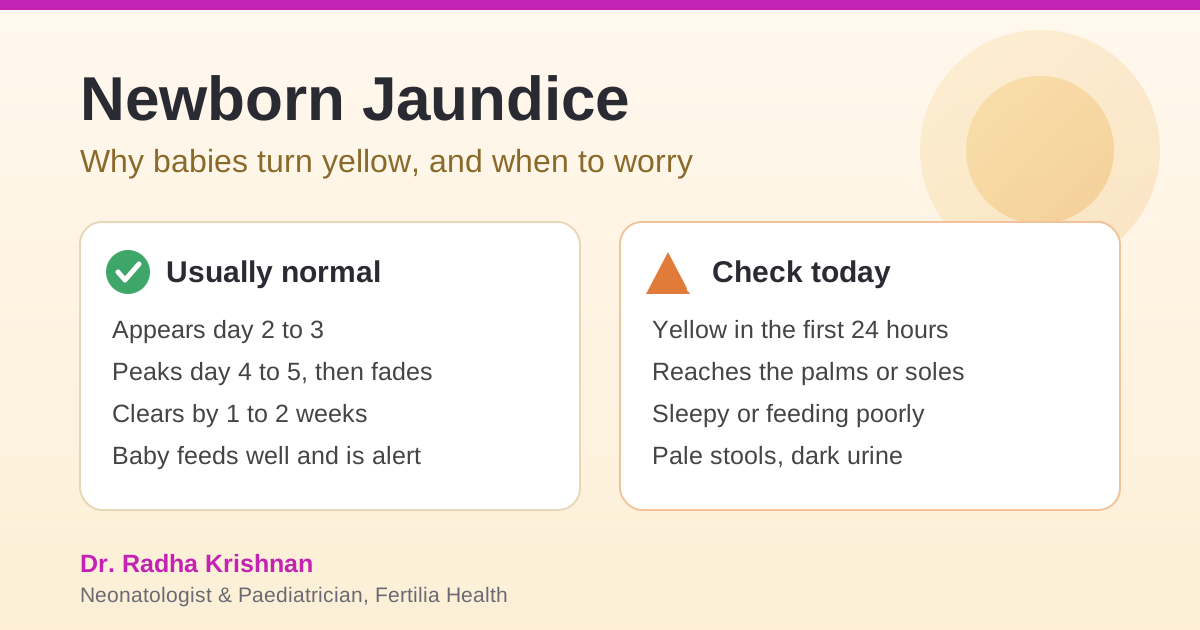
This is why physiological jaundice, the ordinary kind, follows a predictable pattern. It is not present at birth. It appears on the second or third day, rises to a peak around the fourth or fifth day in a full-term baby, and then fades over the next one to two weeks as the liver matures and feeding gets established. Roughly six in ten full-term babies, and a higher share of premature babies, show some visible jaundice in this window. For most, it is a passing phase that needs watching, not treating.
Normal Jaundice Versus the Kind That Needs Attention
The single most useful thing a parent can hold on to is timing. When the yellow appears, and how the baby is behaving, tells us far more than the shade of yellow itself.
| Feature | Usually physiological (ordinary) | Needs prompt review |
|---|---|---|
| When it appears | Day 2 to 3 | Within the first 24 hours |
| How fast it spreads | Face first, slowly downward | Reaches the tummy, palms, or soles |
| The baby | Feeding well, alert, normal cry | Sleepy, hard to wake, feeding poorly, high-pitched cry |
| How long it lasts | Fades by 1 to 2 weeks | Still there beyond 2 to 3 weeks |
| Stool and urine | Yellow stools, pale urine | Pale, chalky stools and dark urine |
Jaundice that appears in the first 24 hours of life is never considered normal, and it needs a bilirubin check the same day. Jaundice that spreads down to the palms and soles suggests a higher level. And pale, putty-coloured stools with dark urine point to a different problem in the liver’s plumbing that must not be missed. None of these mean disaster, but all of them mean a doctor should look today rather than next week.
Doctors do not judge the level by eye alone. A painless skin sensor (transcutaneous bilirubin) or a small blood test (total serum bilirubin) gives the actual number, which is then plotted against your baby’s exact age in hours. The 2022 American Academy of Pediatrics guideline sets the treatment line by age in hours, gestation, and any risk factors, rather than by a single fixed cut-off (American Academy of Pediatrics, Pediatrics 2022). This is why two babies with the same yellow colour can get different advice, and why the number on a chart at the clinic matters more than how the skin looks at home.
Causes That Matter Especially in India
When jaundice is higher or faster than the ordinary pattern, a paediatrician looks for a specific reason. A few are worth knowing about because they are common across Indian families.
G6PD deficiency. This is an inherited condition, carried on the X chromosome, in which red blood cells break down more easily. It is one of the more common genetic conditions in India, with reported rates varying widely by region and community, from roughly 2 to 27 percent in different studies. A baby with G6PD deficiency can develop jaundice that rises quickly, so many hospitals screen for it when jaundice is significant. If your baby is found to have it, you will be given a list of specific medicines, foods, and substances (such as certain mothballs and fava beans) to avoid, which keeps the child safe for life.
Blood-group mismatch (ABO or Rh). If a mother’s blood group and her baby’s differ in particular ways, the mother’s antibodies can cross into the baby before birth and break down the baby’s red cells faster. ABO mismatch has become one of the leading reasons for significant newborn jaundice and, occasionally, for more intensive treatment. This is one of the reasons your blood group is checked in pregnancy, and why Rh-negative mothers are offered anti-D injections, work your own obstetrician will already be guiding.
Other causes a paediatrician considers include infection, a collection of blood under the scalp from delivery (cephalohaematoma), prematurity, and an underactive thyroid, which is one reason the newborn screening heel-prick test is worth doing.
None of this is a reason to worry pre-emptively. It is the reason that, when jaundice is more than ordinary, the right response is a check-up and the right test, not a guess at home.
Breastfeeding Jaundice and Breast Milk Jaundice
These two names sound almost identical, which causes a lot of confusion, so let me separate them clearly.
Breastfeeding jaundice appears in the first days and comes down to one thing: the baby is not yet getting enough milk. In the early days, before your milk comes in fully, a baby who feeds infrequently or latches poorly passes less stool, and bilirubin that would have left in the stool gets reabsorbed instead. The treatment is not to stop breastfeeding. It is to feed more, not less: frequent feeds, around 8 to 12 times in 24 hours, with attention to a deep latch. Good feeding is one of the most powerful ways to bring an ordinary bilirubin level down.
Breast milk jaundice is a different picture with a reassuring story. It appears later, usually after the first week, in a baby who is thriving, feeding well, and gaining weight. A natural substance in breast milk slows bilirubin clearance a little, so the mild yellow can linger for several weeks. As long as your paediatrician has confirmed the baby is well and other causes are ruled out, this is harmless and is not a reason to stop breastfeeding. The milk that is keeping your baby healthy is not harming them.
If you are working through early latch and supply worries, our guides on the best breastfeeding positions for a newborn and why a newborn cluster-feeds cover the practical side, and the wider postpartum recovery guide brings the mother’s own recovery into the picture.
Worried about feeding in these early days, or unsure whether your baby is getting enough? Feeding well is closely tied to how quickly ordinary jaundice clears. Dr. Suganya’s team at Fertilia, including lactation support, is on WhatsApp to help you settle latch, supply, and the first-weeks questions.
When to Worry: The Red Flags
Most jaundice is gentle. But bilirubin at very high levels can, rarely, affect a baby’s brain, a condition called kernicterus. It is rare precisely because it is preventable, and prevention is simply catching a rising level in time. You do not need to measure anything at home. You need to know which signs mean call today.
Contact your paediatrician or go to the hospital the same day if:
- Jaundice appears in the first 24 hours of life
- The yellow reaches the tummy, palms, or soles, or clearly deepens day by day
- Your baby is difficult to wake, very sleepy, or feeding poorly (fewer than 6 wet nappies a day after day 4)
- There is a high-pitched cry, arching of the back or neck, stiffness, or floppiness
- Jaundice is still visible beyond two to three weeks
- Stools are pale or chalky white and urine is dark
A useful habit is to check your baby once a day in natural daylight, near a window, by gently pressing a fingertip on the forehead, chest, and then the thigh and watching the colour as you lift your finger. Jaundice that has clearly moved down toward the legs and feet is your cue to get a level checked, not to wait and see.
This list is here to empower you, not to frighten you. The overwhelming majority of babies never come close to these signs. Knowing them simply means that, if your baby is the rare one who needs help, you will get it early, when it is straightforward.
How Newborn Jaundice Is Treated
When a bilirubin level crosses the age-based threshold, the standard treatment is phototherapy: the baby lies under special blue lights (or on a fibre-optic blanket) wearing eye protection. The light changes the bilirubin in the skin into a form the body can pass out easily. It is safe, well-established, and usually needed for a day or two. Alongside it, the team will make sure feeding is going well, because milk helps carry bilirubin out.
A small number of babies with very high or fast-rising levels, often from blood-group mismatch or G6PD deficiency, may need more intensive care, including, very rarely, an exchange transfusion. These decisions sit with your paediatric team, who weigh the number, the baby’s age in hours, and the risk factors together.
A word on an old piece of advice. Placing a baby in direct sunlight is not a recommended treatment for jaundice. It is hard to control, exposes a newborn’s delicate skin to sunburn, and risks overheating and dehydration, while never being strong or measurable enough to rely on for a baby who actually needs treatment. If your baby needs light therapy, they need the controlled kind in a clinical setting. If your baby does not need treatment, they simply need good feeding and follow-up, not the window sill.
For the mother’s side of these first weeks, from feeding to your own healing, the postpartum recovery guide for Indian mothers and the exclusive breastfeeding guide are good companions to this one.
Frequently Asked Questions
Is newborn jaundice dangerous? For the large majority of babies, no. Ordinary physiological jaundice is harmless and fades on its own. The reason doctors take it seriously is that a small number of babies have levels high enough to need treatment, and catching those early prevents the rare complications. That is why timing and a proper bilirubin check matter, rather than judging by colour alone.
When does newborn jaundice go away? Physiological jaundice usually fades by one to two weeks of age. Breast milk jaundice in a thriving, well baby can linger for several weeks and is still harmless once a paediatrician has confirmed the baby is well. Jaundice that is still clearly visible beyond two to three weeks should always be reviewed.
Should I stop breastfeeding if my baby has jaundice? Almost never. In early breastfeeding jaundice, the answer is to feed more, not less, because milk helps clear bilirubin. In breast milk jaundice, the milk is not harming a healthy, growing baby. Stopping breastfeeding is very rarely advised and only ever on a paediatrician’s specific instruction.
Is it safe to put my baby in sunlight for jaundice? No. Direct sunlight is not a safe or reliable treatment. It risks sunburn, overheating, and dehydration in a newborn, and is not strong enough to help a baby who genuinely needs phototherapy. If treatment is needed, controlled light therapy in a clinical setting is the safe option.
What is G6PD deficiency and why does it matter for jaundice? G6PD deficiency is a common inherited condition in India in which red blood cells break down more easily, which can push bilirubin up quickly. Many hospitals screen for it when jaundice is significant. A baby found to have it is perfectly healthy with the right precautions, a list of specific medicines and substances to avoid that the doctor will provide.
How do I know if my baby’s jaundice is serious at home? Watch behaviour and timing, not just colour. Feeding well, alert, and passing plenty of urine and stool is reassuring. Jaundice in the first 24 hours, a baby who is hard to wake or feeding poorly, yellow reaching the palms and soles, or pale stools with dark urine all mean a same-day check. When in doubt, a bilirubin test settles it quickly.
My baby was born early. Is jaundice more likely? Yes. Premature babies have more immature livers, so jaundice is more common, can last a little longer, and is treated at lower bilirubin levels than in full-term babies. Premature babies are usually monitored more closely for exactly this reason, and your neonatal team will guide the thresholds for your baby.
Newborn jaundice is one of those parts of early parenthood that looks alarming and, in most cases, turns out to be ordinary. Knowing the pattern, feeding well, and keeping your follow-up appointments is almost always all that is needed. And for the small number of babies who need a little help, the help is safe, effective, and most powerful when it comes early.
Have a question about your newborn’s feeding, weight, or the first weeks at home? Message Dr. Suganya’s team at Fertilia on WhatsApp, and we will connect you with the right support, including lactation help and, where needed, the right paediatric guidance.
Medically reviewed and written by Dr. Radha Krishnan, Neonatologist & Paediatrician. This guide is general information for Indian families and does not replace an in-person assessment of your baby. If your baby looks jaundiced, please have a bilirubin level checked by your paediatrician.