The breast pump can feel like the least natural part of breastfeeding. It is plastic and clinical, it makes an odd rhythmic sound, and the first time you use it you are half-convinced you are doing it wrong. Add the looming question of going back to work, and pumping turns into one more thing to feel anxious about at a time when you already have plenty.
It does not need to be that way. Pumping is a skill with a few clear rules, and once you know them, it becomes a quiet, reliable part of your routine rather than a source of stress. This guide walks through choosing a pump, pumping well, exclusive pumping, going back to work in India, and the storage rules that keep your milk safe. My aim is to make the whole thing feel manageable, because for most mothers it genuinely is.
What this post covers:
- The types of pump and which suits your situation
- How to pump effectively, which matters more than which pump you own
- Exclusive pumping, and how to protect supply while doing it
- Returning to work in India, including your legal rights
- The safe storage rules for fridge, freezer, and travel
Types of Breast Pump
There is no single best pump. The right one depends on how often you will use it and why.
- Manual (hand) pump. Small, quiet, inexpensive, no electricity needed. Good for occasional expressing, easing a full breast, or keeping in a bag. It is slower and more tiring for regular use.
- Single electric pump. Expresses one breast at a time. Fine for occasional to moderate use, but slower than a double pump if you are expressing often.
- Double electric pump. Expresses both breasts at once. This is the workhorse for any mother pumping regularly, returning to work, or protecting supply, because it is faster and the double stimulation tends to draw more milk and support production.
- Hospital-grade pump. The strongest and most efficient, designed for establishing or building supply when a baby cannot yet feed directly, for example a premature or NICU baby. These are often rented rather than bought.
- Wearable or hands-free pumps. Cups that sit inside your bra so you can move around. Convenient at work or with an older baby, though many are gentler than a good double electric pump, so they suit topping up more than building supply.
If you are buying one pump for going back to work, a double electric pump is usually the most practical choice. A clean, well-maintained second-hand pump can work, but the parts that touch milk (valves, membranes, tubing, flanges) should always be your own and replaced as they wear.
How to Pump Effectively
Output depends far more on technique than on the brand of pump. These are the things that actually move the needle.
- Get the flange size right. The flange is the funnel that fits over your nipple. If it is too small it rubs and pinches; too large and it pulls in too much areola. Your nipple should move freely without rubbing the sides. The wrong size is the most common reason for pain and poor output, and an easy fix.
- Help your let-down. Milk flows when you are relaxed. Sit comfortably, take a few slow breaths, apply a warm cloth, gently massage the breast, and if you are away from your baby, look at a photo or a video or hold a piece of their clothing. Stress and watching the bottle both slow let-down.
- Use hands-on pumping. Massage the breast before you start, and during the pump, compress and massage from the outer breast toward the nipple. This simple habit can noticeably increase how much you remove and how well the breast is emptied.
- Pump as often as your baby would feed. Milk works on demand: the more often and more completely you remove it, the more you make. For regular removal, that usually means every 3 to 4 hours through the day. Our milk supply guide explains the demand-and-supply principle in full.
- Do not chase a number. What you pump is not a measure of what your baby gets at the breast, because a baby is more efficient than any pump. A low pump output does not mean low supply.
If pumping hurts, stop and check the flange size and suction strength first. Pumping should never be painful, and pain usually points to a fit or settings problem, not something you must endure. If your nipples are also sore from feeding, our guide to breastfeeding pain and nipple soreness may help.
Exclusive Pumping
Some mothers feed their babies only expressed milk, by choice or by circumstance: a baby who cannot latch deeply, a NICU stay, a tongue-tie awaiting review, or simply what works for their family. Exclusive pumping is absolutely a valid way to feed a baby, and it is doable with the right rhythm.
The key is to protect supply by pumping often, especially early on. In the first weeks, aim to pump about 8 times in 24 hours, including at least once overnight when the milk-making hormone prolactin is highest. As your supply settles over the weeks, many mothers can gradually drop to fewer, longer sessions while keeping production steady. Power pumping (a cluster of short pumps over an hour, once a day) can give supply a useful nudge if it dips.
Exclusive pumping is demanding, there is no pretending otherwise, because you are doing the feeding and the expressing both. Be gentle with yourself, set the pump up where it is comfortable, and get lactation support early if supply or the schedule feels overwhelming. Many mothers do this beautifully with a plan that fits their day.
Finding pumping painful, or unsure how to build a routine that protects your supply? This is exactly what lactation support is for. Message Dr. Suganya’s team at Fertilia on WhatsApp and we can work through flange fit, your pumping schedule, and a plan over a video call.
Returning to Work in India
Going back to work does not have to mean the end of breastfeeding. With a little planning, many mothers combine work and breast milk for as long as they wish, and Indian law is more supportive than many women realise.
Your rights under the Maternity Benefit Act (amended 2017):
- 26 weeks of paid maternity leave for your first two children (12 weeks for a third child onward, and for adopting or commissioning mothers), with up to 8 weeks able to be taken before delivery.
- Paid nursing breaks: you are entitled to breaks to breastfeed or express milk until your child is 15 months old.
- A creche facility in establishments with 50 or more employees, with the right to visit it during the day.
- Many employers also allow work from home after leave where the role permits.
It is worth speaking to your HR team before you return so you know where you can pump and store milk privately.
A practical plan for going back:
- Build a small stash 2 to 3 weeks before you return by adding one extra pumping session a day, usually in the morning when supply is highest. You do not need a deep freezer full of milk; a few days’ buffer is plenty.
- At work, pump when your baby would normally feed, roughly every 3 to 4 hours. This keeps your supply matched to your baby and avoids uncomfortable fullness.
- Carry a cool bag with ice packs for the commute home; milk stays safe in an insulated cooler with ice packs for about 24 hours.
- Brief your caregiver (often a grandparent at home in Indian families) on safe storage, gentle thawing, and paced bottle feeding so the baby is not overfed and still feeds happily at the breast when you are together.
- Feed directly when you are home, including in the mornings, evenings, and on days off. Direct feeds protect supply and keep the closeness that makes the effort worth it.
Storing Breast Milk Safely
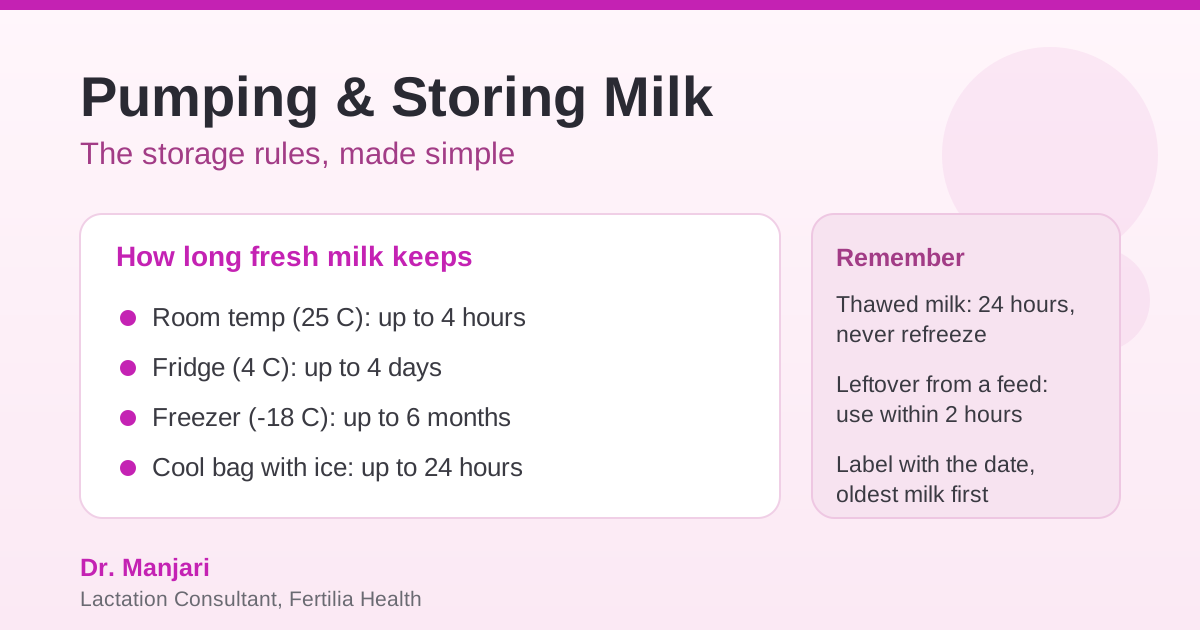
Expressed milk is a living food, and storing it correctly keeps it safe and nutritious. These are the current US Centers for Disease Control (CDC) home-storage guidelines, which are clear and widely used:
| Where | Temperature | Use within |
|---|---|---|
| Room temperature | 25 C / 77 F or cooler | Up to 4 hours |
| Refrigerator | 4 C / 40 F or cooler | Up to 4 days |
| Freezer | -18 C / 0 F or cooler | Best within 6 months; up to 12 months acceptable |
| Insulated cooler with ice packs | About 15 C | Up to 24 hours |
A few rules that go with the table:
- Leftover milk from a feed (milk the baby has drunk from) should be used within 2 hours, then discarded, because the baby’s saliva introduces bacteria.
- Thawed milk (previously frozen) keeps in the fridge for up to 24 hours and must never be refrozen.
- The Academy of Breastfeeding Medicine allows slightly longer in very clean conditions (up to 5 to 8 days in the fridge), but the figures above are a safe, simple standard for most homes.
Practical storage tips for the Indian home:
- Store in clean, sealed steel, glass, or food-grade BPA-free plastic containers, or in proper breast-milk storage bags. Wash and sterilise everything that touches milk.
- Store in small portions (60 to 120 ml) so you thaw only what you need and waste less.
- Label every container with the date and use the oldest milk first.
- Store at the back of the fridge or freezer, not in the door, where the temperature swings. Where power cuts are common, keep the freezer full and closed during an outage, and use a small thermometer if you can so you know it has stayed cold.
- It is normal for stored milk to separate into a creamy layer and a thinner layer, and to smell slightly different. Swirl gently (do not shake hard) to mix. Discard milk only if it smells truly sour or foul after swirling.
Thawing and warming: thaw frozen milk overnight in the fridge, or stand the container in warm water. Never use a microwave, which heats unevenly, creates hot spots that can scald your baby, and damages some of the milk’s protective factors. Warm to body temperature in warm water, swirl, and test a drop on your wrist before feeding.
For the bigger picture of these weeks, including your own recovery, see our newborn care guide for the first 30 days, the postpartum care program, and the exclusive breastfeeding guide.
When to Ask for Help
Reach out to a lactation consultant if:
- Pumping is painful despite checking the flange size and lowering the suction
- Your output is dropping or you are worried about maintaining supply for work
- You are exclusively pumping and want a sustainable schedule
- Your baby is refusing the bottle, or feeding very differently from the breast
- You want a return-to-work feeding plan that fits your job and your day
None of these are small problems to struggle through alone. A single session can save you weeks of guesswork and help you keep going as long as you want to.
Frequently Asked Questions
Which breast pump is best for returning to work? For regular use at work, a double electric pump is usually the most practical, because it expresses both breasts at once, is faster, and supports supply. A manual or single pump is fine for occasional expressing. Wearable in-bra pumps are convenient at a desk but are often gentler, so they suit topping up more than building supply. Always use your own milk-contact parts and replace them as they wear.
How long does breast milk last in the fridge and freezer? By current CDC guidance, freshly expressed milk keeps about 4 hours at room temperature, up to 4 days in the fridge, and up to 6 months in the freezer (12 months acceptable). Thawed milk lasts 24 hours in the fridge and must never be refrozen. Milk left over from a feed should be used within 2 hours. Label everything with the date and use the oldest first.
Can I add freshly pumped milk to already chilled or frozen milk? Cool the fresh milk in the fridge first, then add it to older chilled milk. Avoid adding warm milk directly to frozen milk, as it can partially thaw the top layer. When combining, label the batch with the date of the oldest milk and follow that storage limit.
Why do I get so little when I pump? A pump is far less efficient than a baby, so a small output does not mean low supply. Output improves with the right flange size, a relaxed let-down, breast massage and compression while you pump, and pumping as often as your baby would feed. If output keeps falling despite good technique, a lactation review can help.
How often should I pump if I am exclusively pumping? In the early weeks, aim for about 8 times in 24 hours, including at least one session overnight when prolactin is highest, to build and protect supply. As your supply settles, many mothers can move to fewer, longer sessions. Power pumping once a day can help if supply dips. Get support early if the schedule feels unmanageable.
Can I microwave breast milk to warm it? No. Microwaving heats unevenly, creates hot spots that can scald your baby, and damages some of the milk’s protective components. Warm thawed or chilled milk by standing the container in warm water, swirl gently to mix, and test a drop on your wrist before feeding.
Will using a bottle make my baby reject the breast? Many babies move between breast and bottle without trouble, especially after breastfeeding is well established. Using paced bottle feeding (holding the bottle more horizontally so the baby works for the milk and takes breaks) keeps the flow slow and breast-like and reduces the risk. If you can, offer the breast directly whenever you are together.
Pumping is not the natural-feeling part of feeding a baby, but it is a learnable, rule-bound one, which makes it easier than it first appears. Choose a pump that fits how you will use it, get the basics right (flange, let-down, frequency), lean on the law that protects your breaks at work, and follow the storage rules so your milk is always safe. Done with a little planning, it lets you keep giving your baby breast milk on your own terms.
Struggling with pumping, supply, or planning your return to work? Message Dr. Suganya’s team at Fertilia on WhatsApp. We offer lactation support over video call and can build a pumping and feeding plan that fits your baby and your day.
Written by Dr. Manjari, MBBS, a lactation professional at Fertilia Health who has supported 10,000+ breastfeeding mothers. This guide is general information and does not replace an individual assessment of you and your baby. Storage figures follow current CDC home-use guidance and may be updated; when in doubt, store conservatively.